Friday Fictioneers – Monument

stumps
Photo Prompt © Rochelle Wisoff-Fields

Arcu’tep didn’t need to go. He could have stayed in his kraal, tending his herd. But all the folk from the valley had volunteered.

“Come on, it’ll be fun. Drinking, feasting, and lots of rumpy-pumpy,” Senae’tep cajoled.

Arcu’tep shrugged. “Yeah, there’s nothing as fun as hefting buckets of earth all day and dumping them on a big mound,”

“You’re missing the point,” Senae’tep said. “It’s not about what we build, but that we work together, mountain folk and plains people.”

He went, and all summer the stockade rose. Then they feasted and burned everything to the ground. Arcu’tep brought home a mountain woman.


Sorry, I couldn’t quite get this down to 100 words. Friday fictioneers is a weekly challenge set by Rochelle Wisoff Fields to write a 100-word story in response to a photo prompt. You can find other stories here

97. My Writing Year

Personally I don’t make resolutions, but that may not be true of you. It may be important to resolve, for example, to make time to write every day, or to complete what you’ve started, or to edit more, or any number of things.

I do plan, though, what I can realistically achieve this year as a writer. Luckily, most of those decisions are already taken for me in 2018.

January 1 Make plans

I have a first draft of a novel, The Tears of Boabdil, that I’m really excited about AND that I believe has commercial possibilities. The year is book-ended by the opening and closing of a 12-month long mentorship I’ve been awarded by Cinnamon Press. In that time, I plan to get my novel into a publishable state.

January Enter short story competitions I’m more likely to win

For several years, I’ve been unsuccessfully entering some of the biggest competitions the literary world has to offer – the Bridport, the Sunday Times EFG, the Costa, for example. I will probably enter them again this year. But with the chances of placing ranging from just over 1% to less than a quarter of a per cent, the odds are not in my favour.

So this year I am also entering competitions with more favourable odds. I have sent stories to competitions where the odds of placing are around 4% to 5%:

·         Exeter, which closes on 28 February

·         Bath, which closes on 23 April

·         Yeovil, which closes on 31 May

I have entered all of these, as well as the BBC National Short Story Competition, which closes on 12 March and the Winchester Writers Festival short story competition, which closes on 11 April.

February – December Rework the novel

Comments from my mentor should be back by the end of February. If I enter the Bridport Novel Competition, I may want to concentrate in the first half of the year on the initial 15,000 words.

April – May Bridport Competition

This closes 31 May. I ‘m thinking of entering the novel competition rather than the short story.

June – August Sunday Times EFG Competition

Details not yet announced. But will probably open in June and close in September.

Winchester Writers’ Festival

15-17 June.

Costa Short Story Award

Details not yet announced. But will probably open in July and close in August.

September – November Farnham Short Story Competition

Not one to enter, but to run.

Writers’ Retreat

Ty’n y Coed, November, run by Cinnamon Press

Friday Fictioneers – Rooming House

derelict-building-sandra-crook
Photo Prompt © Sandra Crook

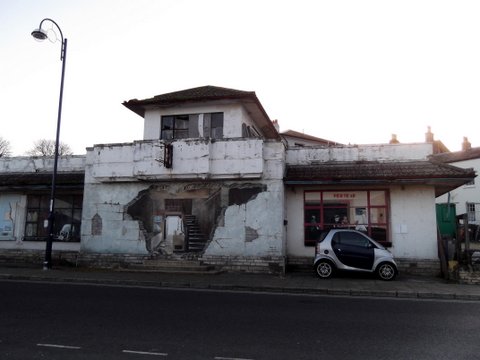
Molly’s house had many rooms, and you got the room Molly thought you deserved. Also, it has to be said, the room you could afford.

If you were specially favoured, she invited you into the grand salon with its sweeping staircase and chandeliers. Waiters circulated with flutes of champagne. And the ladies and gentlemen whirled in the dance.

I know because I peeped through the window once, but was never invited in. In the east wing where I had my dank room, snipers hunkered behind crumbling walls, and tanks rumbled through the corridors.


Friday fictioneers is a weekly challenge set by Rochelle Wisoff Fields to write a 100-word story in response to a photo prompt. You can find other stories here

Friday Fictioneers – Gravity

amusement-park-jhardy
Photo Prompt © J Hardy Carroll

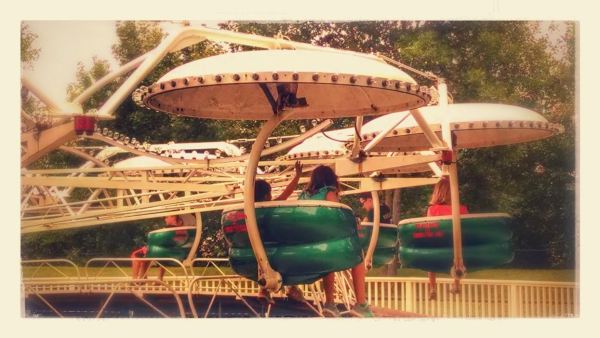
Henry’s life was dominated by a sudden whim that had crossed his mind age 14. In 1965 he conceived the dream of becoming the centre of his own planetary system with tiny objects orbiting him.

A single hydrogen atom would do! But Henry needed to isolate himself from everything perturbing his gravity. He eschewed friends and moved to a tent in the woods, but still the earth’s mass tugged at the nearby stuff.

Last Friday, he hurled himself in free-fall from the cliff, releasing a nail clipping. As he dropped, he calculated the clipping would take 21 hours to circumnavigate him.


Friday fictioneers is a weekly challenge set by Rochelle Wisoff Fields to write a 100-word story in response to a photo prompt. You can find other stories here.

A Mentee’s Journey 1: Anticipations from an arranged marriage

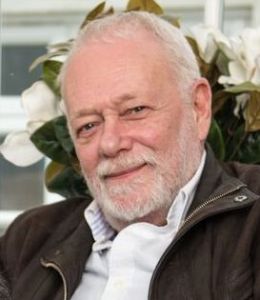
In December Cinnamon press awarded me a place on their year-long writers’ mentorship programme.  Last week I learned who my mentor for the year will be: Adam Craig. He co-runs Cinnamon Press, and is the author of two novels, a collection of short stories and a prose poetry sequence. His novels are literary, his short stories, he says, more genre “generally in a fantastic/SF/weird fiction vein.” I write this without our relationship having started yet, filled with excitement and anxiety, a little like a bride in an arranged marriage.


1464278100_8

The prospect is exciting and daunting. The last time I took my work to a published author, I was 18, and the author was the poet in residence at my University.

“Come back in a week,” he said.

A week later, he said. “I have to ask you a question first: are you serious about writing?”

I said I was.

“Then,” he thundered “who the f*** do you think you are? Do you believe you’re the first person who’s ever had those emotions? Get a grip, lad. Get some distance.”

It was brutal, but I learned a lot from him. I’m hoping Adam will be less brutal, but equally insightful.

The mentor-mentee relationship is a sensitive one. Sure, it’s about the transfer of knowledge and experience, but it’s also about building trust and understanding and establishing an agreed way of working. Perhaps, it’s a little like making a friendship, if not a marriage.

I think I can see why Cinnamon paired me with Adam. This is the blurb for his experimental novel Vitus Dreams:

“An explorer dreams of a sea and a land beyond that can be found on no map …

A naval officer becomes lost inside maps of his own making, his wife lost inside her pleas that someone search for her husband …

And, as a singer struggles to make sense of the ordinary things around her, a hitman is trapped in an endless bid to escape …

Meanwhile, two complete strangers plod through their day-to-day lives as they pour their hearts into writing a novel — but which one is the fictional character and which the author?

An ever-shifting kaleidoscope, by turns moving and funny, intense and tender, Vitus Dreams draws you into a place where our basic assumptions about the real and the concrete are shattered to leave us with no choice but to rely on instinct and the people around us, if they exist.”

My novel on which I’ll be working with Adam, The Tears of Boabdil, is also about uncertainty, though there are huge differences. Adam’s book is anti-narrative and poetic, while mine is a story, albeit a fractured one. My protagonist is an undercover policeman attempting to penetrate a jihadi cell. He embarks on a doomed taboo liaison with a beautiful quarry, and must choose to betray his love or his duty. This book, about politics and passion, tracks the magic and the tragedy of a lie. These stories are doubled by a magical tale of a fifteenth century Spanish nobleman who falls in love with a Muslim woman in Moorish Spain. Gradually, the magical rules of this tale permeate the policeman’s world, and reality becomes the story we tell about it.

I have sent Adam the manuscript. All will go quiet now until he gets back to me around the end of February. I will keep this diary updated as a chronicle of a mentee’s journey.
 

Friday Fictioneers – Cup

sarahs-spider-web-potter
Photo Prompt © Victor and Sarah Potter

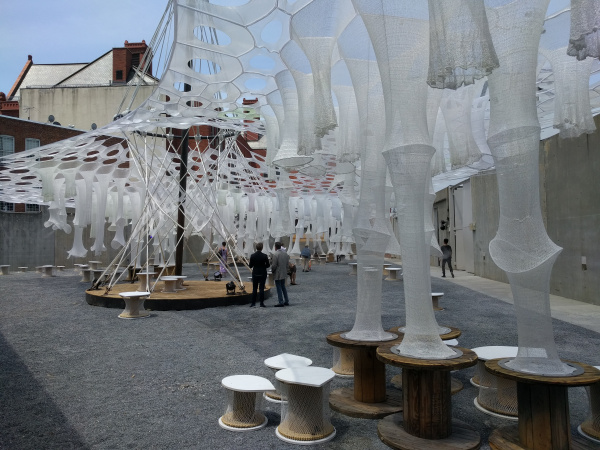
There was a white thing on the surface in front of him. Its outside tapered at the bottom and was open at the top.

“Hat,” he said. The word meant something, but he couldn’t remember what.

The woman handed him the thing. “Drink,” she said.

Actions he understood, and he drank. But the names of things swirled around him like a flock of flying things, and he couldn’t restore any to the places where it should roost.

He knew he loved the woman, but couldn’t remember what to call her.

“Knife,” he said.


Friday fictioneers is a weekly challenge set by Rochelle Wisoff Fields to write a 100-word story in response to a photo prompt. You can find other stories here.


Friday Fictioneers – Doing Time

roger-bultot-art-exhibit
Photo Prompt © Roger Bultot

“A whole month vanished,” Penny said.

January always came as a jarring surprise. The year ahead was shaped like a horseshoe, anchored to her forehead at 1 January and to her midriff by 31 December.

Penny was a synaesthete – she could see time. On any day of the year, the date was there, projecting from her body. Until she mentioned it to friends, she hadn’t known she was unusual.

But there was an abrupt jump at year-end from one prong of the horseshoe to the other. “There’s a gap,” she told me, “like something was there and I missed it.”


Friday fictioneers is a weekly challenge set by Rochelle Wisoff Fields to write a 100-word story in response to a photo prompt. You can find other stories here

The Scrivener’s Forge – finale

schmiedefeuer
Medoc


After a year, this writing tutorial has come to an end. Thanks to everyone who participated. There were some great stories. Though I will be closing the collection, here are two final exercises you can try on you own. Feel free to comment here about what you learned from these exercises.

Research

“Write what you know” is standard advice to writers. And it’s good advice. But some philosophers would say we never really know anyone except ourselves. We have to work to understand other people and other lives. So research is also part of a writer’s craft. Through research you can extend what you know.

Exercise:

interview a friend. Ask them to describe their workplace, including any machines, special furniture or equipment. Ask them to describe the skills involved in their work and how they learned them. Incorporate some (not all) of these details into a scene in which a character is tired of their job and longs to leave it. Don’t overdo the details – just provide enough to give an atmosphere of authenticity.


Resonance

Listeners of music enjoy rhythm and repeat elements. Readers do as well.  When elements of your story repeat and resonate with each other you can create a deeper sense of meaning. Resonance, in physics, is where a sound or vibration in one object is created by a sound or vibration in another. The reader feels rewarded when something they remember from the beginning of a story is repeated later on.  These links can be used as “hinges” where the storyline transitions to a different place or time. A well-known example is in the film, Schindler’s List, where the girl in the red coat provides the turning points for Schindler.

When characters, situations and timelines echo and resonate with each other, the writer can create an illusion of causal connection or bridges between elements that are, in the prosaic world, distinct. Stories where the ending resonates with the beginning are particularly satisfying.

This kind of resonance is usually added during editing stages, by carefully layering in additional detail. So this exercise will be a little artificial.

Exercise:

Revise a story you have already written or, if you don’t have a suitable one, write something new. You should add an element to the ending that repeats, echoes, or recalls in an altered form, an element from the beginning. This might be something like a colour, a sound, or an object. Objects, since they remain unchanged, are often useful devices for emphasising the passage of time. Consider how the resonance you’ve created adds to your story.