They emerge from the stadium, first a trickle, more anticipation than a presence. “We are the Rovers” carries like a tectonic rumble from inside. There’s a hint of bubbling, dusted with blue and burgundy team scarves.
The dribble becomes an ooze, then a torrent, flooding the empty streets. Sulphurous fumes hide the houses and church. The streets are choked. There’s no individuality anymore, only molten burgundy and blue rivers.
The stadium roof blows off, showering us in burning concrete. At last, the river slows, stops, freezes. One trapped face holds a howl. Someday vines will grow on this rich volcanic soil.
.
Friday fictioneers is a weekly challenge set by Rochelle Wisoff Fieldsto write a 100-word story in response to a photo prompt. You can find other stories here
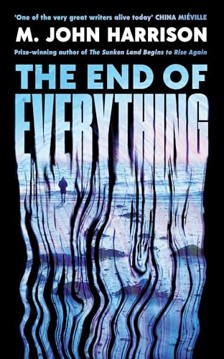
The End of Everything is a haunting tale of a genteel apocalypse. An alien species, the iGhetti have invaded, creating a catastrophe. A war continues, confined entirely to the financial district of London. On the Kent coast of England, people are muddling through. Phillip Tennant survives by beachcombing the iGhetti artefacts that wash up on the shore, reminiscent of The Picnic by the Strugatsky brothers. His aunt, Marnie, is a retired artist who plunders supplies from the abandoned holiday cottages. She’s confused and sweet, if occasionally murderous. Many people have set sail towards the shrouding mist in the hope that the Continent still exists and will offer sanctuary. Through it all, there’s a very British ethos of “Keep Calm and Carry On.”
The novel was longlisted for the Booker Prize 2026. This is no mean feat for a science fiction novel. What does it all mean? You decide. For me, it’s a baroque reflection on fallible human nature.
More tangibly, how does Harrison create his effects? First, the aliens. We meet them only at the end of the book, where they’re described as follows:
“Looking north, she made out a single vast procession of the iGhetti, towering above the houses of Catford, Lewisham and Blackheath, moving east towards the sea—sometimes like the pure white plums of a phosphorous explosion, sometimes like great glittering chandeliers.”
Up to this point, we haven’t been clear what they were, or even if they existed at all. Harrison achieves this by offering tantalising snippets of conflicting rumour:
“Competing authorities associated the iGhetti with dark matter or with the banking crisis of the late 2000s, while others believed it to be less an invasion than a ‘re-enchantment of the world’, a process of spiritual tourism and gentrification pursued by advanced civilisations from a mooted ninth planet. More popularly, they were seen as having ‘come out of the internet… The Truth was simpler. They had leaked into our world long before, from the astral plane’.”
Second, Harrisson creates a malleable and unsettling world, where things don’t remain stable but can transform. The biological artefacts that Phillip harvests gradually become doppelgangers of their owners. And here, in a memorable passage, there’s a murmuration of pensioners:
“Too soon it was the hour of the soft warm light just before dinner, when the tourists take their drinks on to the balcony so they can sit and watch the ghosts of old men drawn out to sea, released from the mysterious dawn-to-dusk confinement of their commemorative benches along the north shore, to rise until they face out towards the lost continent. They arrive in ones and twos at first, unsteady-looking, balancing infirmly in the air, then suddenly there are hundreds, perhaps thousands of them rising from the warped mouldy slats and mysteriously folded ironwork of all the other benches in all the other towns of the Henry the Eighth Heritage Trail, and they’re driven out to sea until they’ve lost all individuality and they go wheeling through the characteristic yet unpredictable swings, the sudden folds, and recursive figures of the murmuration.”
It was a lie, of course. No tells showed—his performance flawless—but I just felt it. For a long moment, I stared out the window. In the park beyond, my gaze playing on the dog-walkers, collars turned up, trekking stubborn, and on the wheeling birds and leaves. Let him sweat.
“Coffee?” I asked.
“Thankyou, no.”
Did he know I knew?
“So, why are you really here?”
He steepled long fingers and sighed. Would he deny the implication?
“Good. Enough pretence. Sadly, the task is to kill you.” He offered an inlaid wooden box. “It’ll be painless.”
“I appreciate that.”
.
Friday fictioneers is a weekly challenge set by Rochelle Wisoff Fieldsto write a 100-word story in response to a photo prompt. You can find other stories here
Henry’s too good for this world. Everyone says so. Shirt-off-his-back type. But Henry hides a secret, and I know it. Not to be disclosed to you, but I promise it’s juicy—the man is atoning.
Several courses of action are open—reveal, exploit, keep shtum. The choice will say a lot about my character.
If you lot are nice to me, I’ll leave your saint alone, how’s that? It’s in your hands now—nothing to do with me.
.
Friday fictioneers is a weekly challenge set by Rochelle Wisoff Fieldsto write a 100-word story in response to a photo prompt. You can find other stories here
The story passed from mouth to mouth. With each rendition, it changed subtly. The swaggering bully in the tavern became an evil baron or, sometimes, a dragon. But I remained myself, the unitary hero. The minor variations blended in as wrinkles, which faded with time.
Then my story reached the land of the river people. They are less keen on heroes. The tale branched, and now there were two of us. I met him, barring my way at the ford. How to win against myself?
Think! Truculence is my besetting sin. And his. I stepped to the side. “After you.”
.
Friday fictioneers is a weekly challenge set by Rochelle Wisoff Fieldsto write a 100-word story in response to a photo prompt. You can find other stories here
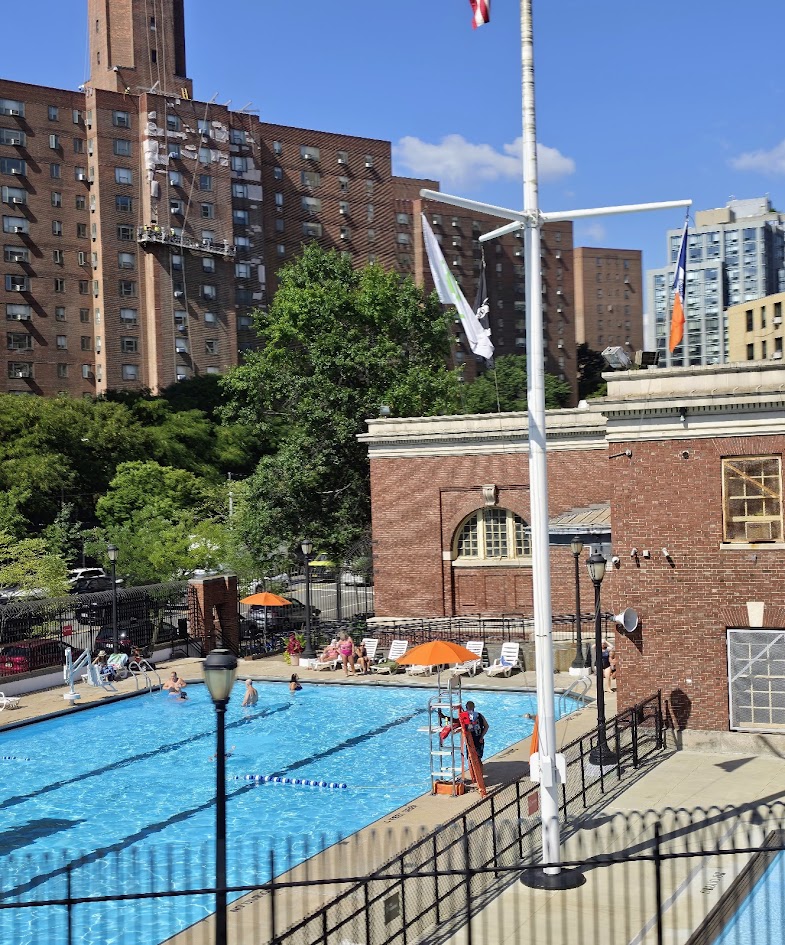
Nobody noticed. The swimmers splashed blithe, doggedly oscillating in laps. Nobody looked up as the breeze pulled the flags in three different directions. It made no sense. The façade of the monstrous edifice behind bubbled and peeled away like scabbed skin.
Surely, I said, some miracle is upon us. Nobody listened. The waters parted and a squad of Pharaonic chariots clove the pool. Great trumpets blew, and a murmuration of swallows wheeled above. Then everything snapped back into place with a tiny sucking plop.
I grabbed a passer-by, knocking the ice-cream from his hand. “Did you see that?”
“What?”
.
Friday fictioneers is a weekly challenge set by Rochelle Wisoff Fieldsto write a 100-word story in response to a photo prompt. You can find other stories here
What should we make of this? The first thing to say is that this is not a probability like the risk of dying in a car crash (around 1 in 100 over a lifetime in the UK) or from a meteor strike (1 in 700,000). We can estimate these probabilities because there’s a lot of data from past such events, and because we understand the processes involved.
There is no data behind the estimates of AI killing us all. There are no similar past events, and our understanding of the processes involved is sketchy. These are not probability estimates but scenarios, stories if you like.
But if these warnings are coming from people in the industry, shouldn’t we assume they know what they’re talking about? Maybe, but maybe not. It depends whether they’re speaking from within a corpus of expertise. When the team building the first atomic bomb in Los Alamos during the Second World War recognised, there was a chance the explosion could ignite the atmosphere, this was a potential risk indicated by the physics. The risk from AI comes from no such body of science. If anything, it’s an older body of fear: the fear of the End Days. It also needs to be said that invoking awe of the power of the technology probably does no harm to the prospects for Anthropic’s imminent stock market floatation (expected to be in the region of one trillion dollars), though this may be a cynical suggestion.
The term Artificial Intelligence is a misnomer. Chat-GPT and Claude and other AIs are not intelligent—they’re pattern recognising machines. This is what makes them so good at solving problems, like how proteins fold or how to construct sentences from prompts. They’re not smart (albeit not as smart as us yet) because that’s not what they do. They can find patterns that humans don’t see, and they can do it very fast. But this is not thinking.
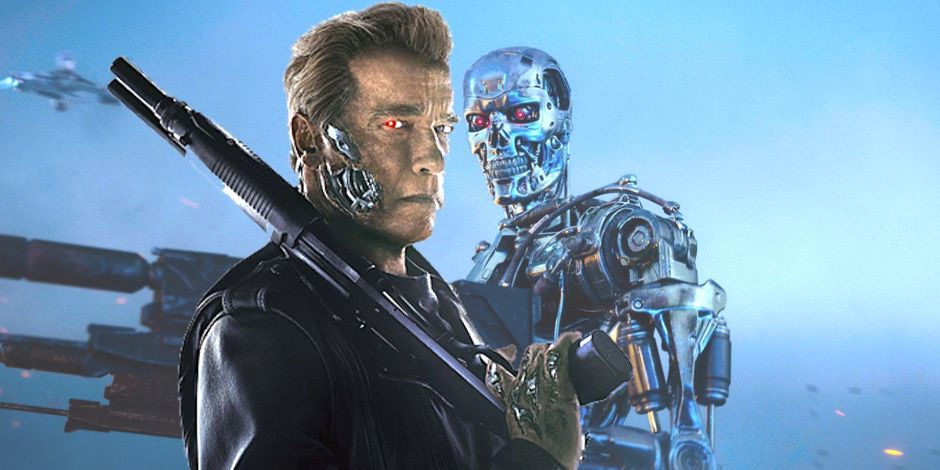
For AI to live up to the Terminator threat, we’d need a different kind of machine—an Artificial General Intelligence (AGI), one that can think and act like (or better than) a human.
Many teams are trying to build an AGI, but nobody’s quite sure what the term means https://www.newscientist.com/article/2432005-what-is-artificial-general-intelligence-and-is-it-a-useful-concept/, or even whether it means anything at all. There’s no scientific consensus on what intelligence is, even in living things. Nobody is clear how soon, if ever, an AGI will be built. The 10% P (E) scare looks like hokum. This is not to say there is no threat, but we simply can’t say how big or when.
To become a Terminator, AI would need to be able to think, form plans antithetical to ours, carry them out, and evade counter-measures. None of this is on the immediate horizon. Sure, as a writer, I could invent lots of scenarios. But it doesn’t make them real.
Does this mean we shouldn’t worry? No, there’s lots to worry about, but it’s not the stuff making the headlines:
UNEMPLOYMENT. AI is already threatening millions of jobs, from call-centres to radiographers, from actors to lawyers.
SERVICES. Power-hungry data centres may threaten electricity supplies to ordinary people.
MISINFORMATION. In addition to deep-fakes, AIs are prone to “hallucinate” (make stuff up). The spread of chatbots use may also spread this misinformation.
INEQUALITY. The technology is being developed by large corporations, concentrating more wealth in the hands of a tiny elite.
If an extinction event is not foreseeably on the cards in the immediate future, the same is not true of accidents, catastrophic and small. As more and more systems (including critical infrastructure) are run by AIs, glitches, outages and sabotage may take them down. As a trivial example, I have a smart hot-water tank that’s supposed to economise by learning my use pattern. I’ve had to take it offline because its learning was rubbish.
Arguably, all the End Days hype is distracting us from the real problem.
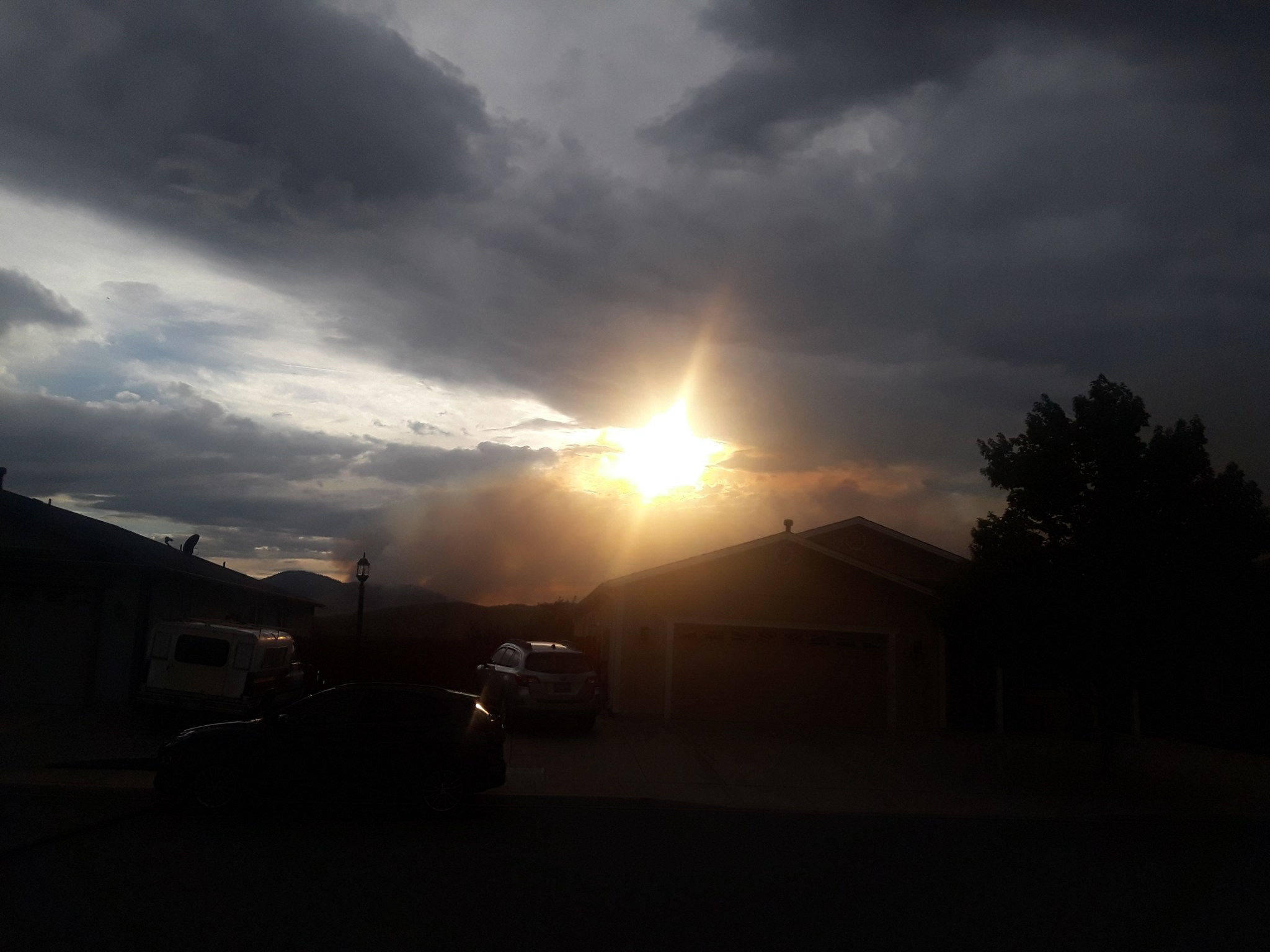
When the birds began to drop from the sky, it was weird, even spooky, but I didn’t know this was the end of everything. They littered the lawn like drifts of autumn leaves. Fish washed up dead on the shore. And over it all, the punishing dome of stilled, sweltering heat. The forests caught and burned.
Life’s limits are very finely set, you see. At a wet-bulb temperature of 30.5 ° C, we start to die. Those of us with air conditioning lasted longer. Until the power failed.
It’s been good.
.Friday fictioneers is a weekly challenge set by Rochelle Wisoff Fieldsto write a 100-word story in response to a photo prompt. You can find other stories here
He was merciless. “If you don’t understand the machine’s reasoning, you can’t tell it’s correct.”
All I knew was this felt right, but I had no answer.
“If the Ayeye does the grunt work, has the insight, and formalises the proof, but you don’t grasp the meaning, does it even mean anything?”
“Pah! Philosophy!”
“Well, here’s a philosophical question for you: what’s the point of people?”
.
Friday fictioneers is a weekly challenge set by Rochelle Wisoff Fieldsto write a 100-word story in response to a photo prompt. You can find other stories here
What do we need the gods for now? Oh, they strut and fume as we tear down their statues and temples. Zeus releases a stream of thunderbolts which fizzle and spark before plopping spent on the carpet. A mist of angels wring their little hands before evaporating. Legba holds a weeping Inti close as they thin and dissipate.
We are the masters now. The steam from our great engines blows across a sun hiding its face in shame.
If only the rains would come as they used to.
.
Friday fictioneers is a weekly challenge set by Rochelle Wisoff Fieldsto write a 100-word story in response to a photo prompt. You can find other stories here