

We notice only a fraction of the things that happen around us. But we see everything. And the things we see, but don’t consciously notice, affect our responses. That is the idea behind subliminal messaging. It’s also the idea behind literary motifs.
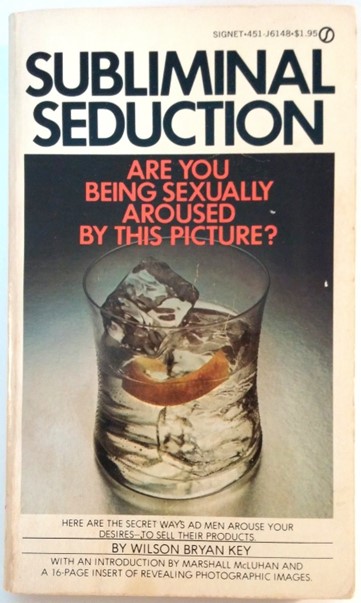
Ad-men, con-men and illusionists use subliminal stimuli. In a now-famous stunt, illusionist Derren Brown used the technique on two ad-men, manipulating what they had believed was their free creative choice.
Writers deploy a version of this too: motifs. Motifs are recurring elements in a story. The recurrence may be of images, words, sounds, ideas or phrases. They are often used to underline a theme, recurring like an “aura” before a migraine attack. We are not necessarily consciously aware of the repetitive pattern. But, so runs the theory, our subconscious mind takes it in and invests the scene with special meaning.
Take, for example, the green light in Fiztzgerald’s The Great Gatsby.
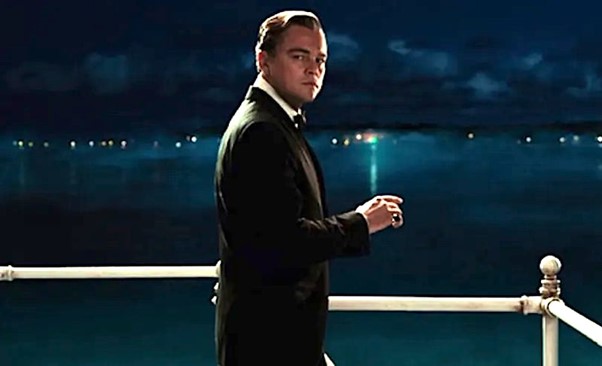
The light gets five mentions in the book. In Chapter 1, the light is mysterious, something Gatsby reaches towards. It next reappears in Chapter 5, shorn of mystery, when Gatsby understands it is the warning light that burns at the end of Daisy’s dock. At the end of the book, the narrator reflects “ Gatsby believed in the green light, the orgastic future that year by year recedes before us.”
The green light is the symbolic manifestation of what Gatsby craves and cannot have: acceptance into old-monied society. If you have read the book, did you notice the recurrence of the light? If so, did you spot all the other mentions of green? And of blue, yellow and other colours?
The whole novel is colour-coded[1]. Green is the colour of the American Dream, of envy and of renewal. The sad colour, blue, is the hue of Gatsby’s lawn and of the giant watching eyes of Dr. T.J. Eckleburg. Yellow, an aspirational colour, near gold, symbolises old money. Gatsby’s car is yellow.
You may not have noticed all these colour motifs (I didn’t). But, arguably, your brain did. If it didn’t, Fitzgerald went to a lot of construction trouble for nothing save to provide material for literary criticism theses.
Why would an author use motifs?
- To create a deeper layer, underscoring themes. The green light in Gatsby, is pointing to the unachievability and emptiness American Dream. Or, the mockingbird in Harper Lee’s To Kill a Mockingbird is a recurring symbol of innocence that underscores the theme of the loss of innocence.
- To provide a marker that summons a mood. In the same way that Derren Brown uses conditioned “anchors” to precipitate his subjects into particular mental states, the author may use a motif to trigger a state in the reader. For example, in Maaza Mengiste’s The Shadow King, the refrain “the only way is through it” summons up the characters’ pain and resolve.
- To provide a ready memory jog to the reader for an infrequently occurring character. If the character dresses in an unusual way, or has an unusual tic or distinctive speech patterns, it helps the reader place who they are. For example, Captain Carrot in Terry Pratchett’s Discworld books, being a person of some purity, smells of armour polish and soap, while Corporal Nobbs has a unique aroma of cigarettes, skin cream and old cabbage. This use of motif has no symbolic connection with theme. In contrast, the smell of cold possessed by the Others in George R.R. Martin’s Song of Ice and Fire, underscores the theme of existential threat.
How to add motifs to your story
First, consider what the themes of your story are. Themes are the issues the story addresses, like, for instance, goodness is its own reward, or why does the toast always land butter side down? Then think about a symbol that would stand for that theme: for instance, a lamb for goodness. Then find several appropriate moments in the story to layer in the symbol. Voila! You now have a motif.
[1] Vera Palawska, Colour Symbolism in F. Scott Fitzgerald’s The Great Gatsbt https://www.diva-portal.org/smash/get/diva2:1636853/FULLTEXT01.pdf
 Neil MacDonald Author