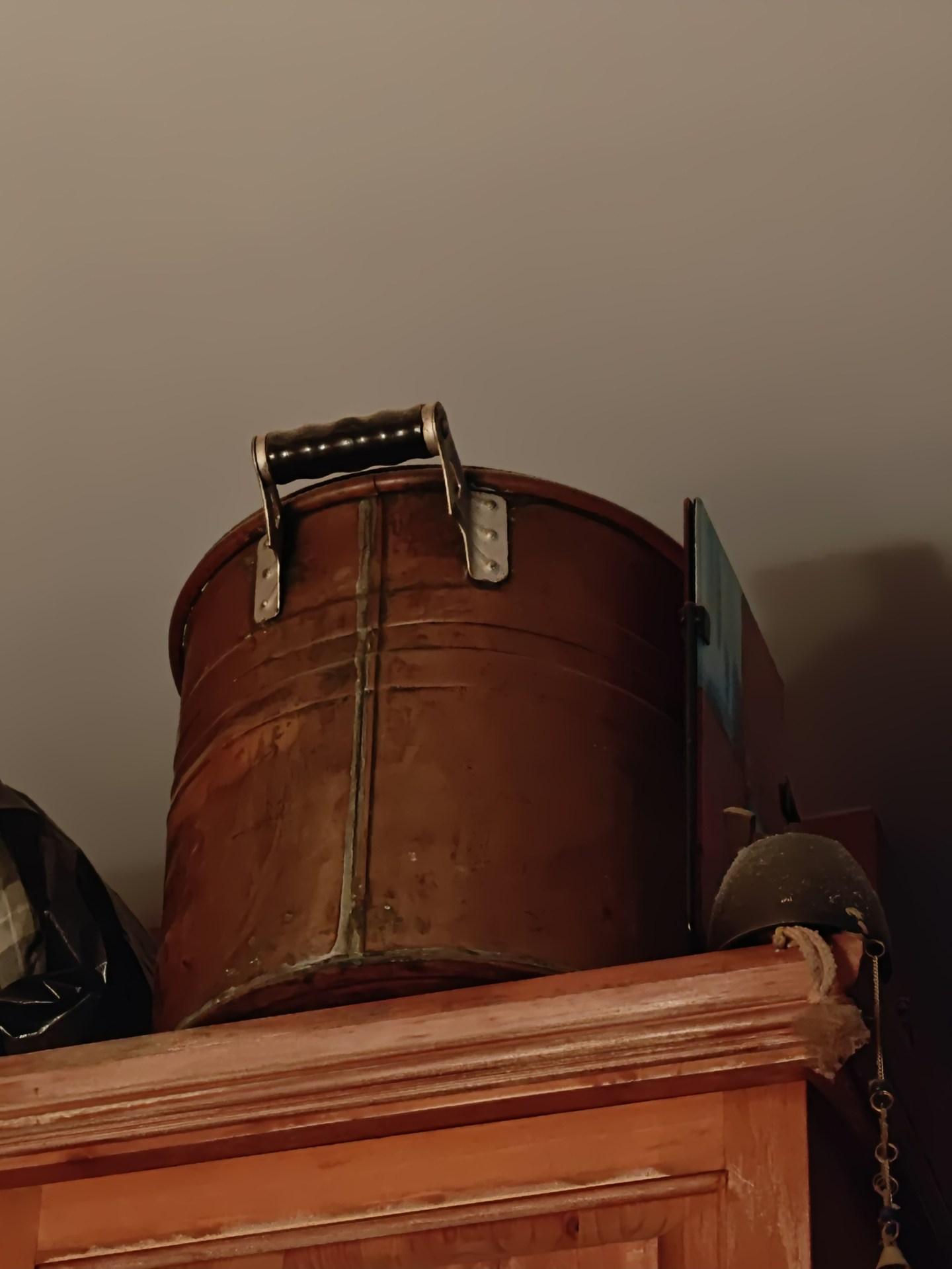
For forty years it sat atop the chestnut wardrobe. She forbade us to look inside.
“My crown’s in there,” she always said. “The only thing I saved when we fled Russia,”
Now she’s gone. My brother and I open the hatbox. No crown. Just a brittle, folded paper. One line only, in her looping script. “Ha! Fooled you.”
.
Friday fictioneers is a weekly challenge set by Rochelle Wisoff Fields to write a 100-word story in response to a photo prompt. You can find other stories here
Friday fictioneers is a weekly challenge set by Rochelle Wisoff Fields to write a 100-word story in response to a photo prompt. You can find other stories here
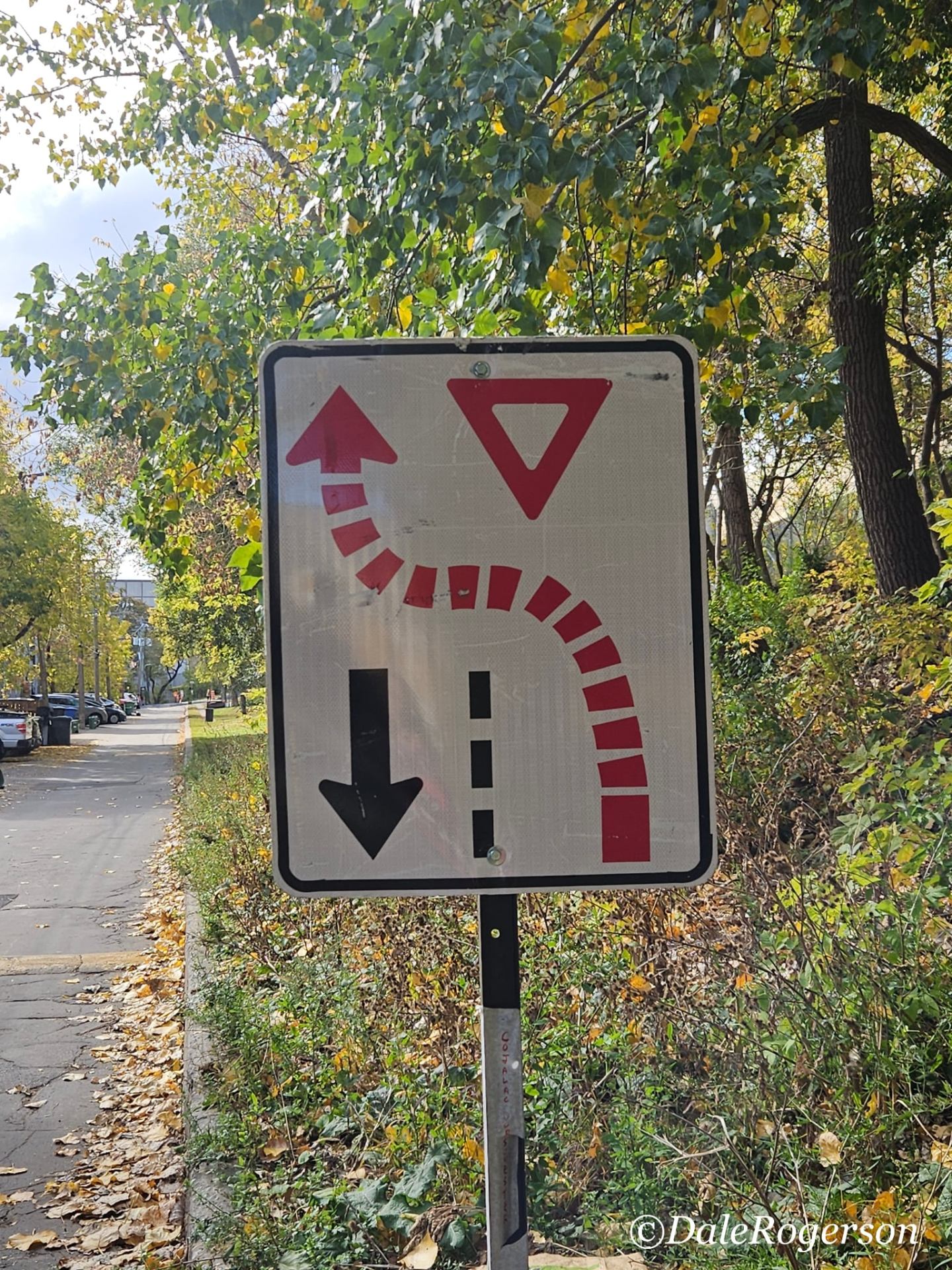
Well, that’s definitive, and now I face a choice. I can meet immovable objection with irresistible force or capitulate and seek a way round. Cogs grind and wheels spin as I imagine the possible outcomes. Force is all or nothing—if he doesn’t cave in to counter-pressure, all that remains is to walk away. Capitulation allows evasion and new attempts. The choice seems obvious.
As I open my mouth in reply, it feels clogged with a chewy, bitter substance. Words form as if from nothing.
“Well, fuck you.”
.
Friday fictioneers is a weekly challenge set by Rochelle Wisoff Fields to write a 100-word story in response to a photo prompt. You can find other stories here
“Don’t you see? The magenta tones, the swirling brush strokes, signify a tempestuous dawn approaching. Surely.”
“Those are not swirling brush strokes. That, my good sir, is scrumbling. You mistake the artist’s technique as you do his meaning. The painting shows aurora.”
“There are none so blind as those who will not see. It is dawn, I tell you, a terrible dawn.”
“Aurora.”
“Nonsense.”
“How dare you! I will have satisfaction, sir. Pistols at aurora.”
.
Aurora is a Latin for dawn, and scumbling is a brush technique of applying paint in a circular motion
Friday fictioneers is a weekly challenge set by Rochelle Wisoff Fields to write a 100-word story in response to a photo prompt. You can find other stories here
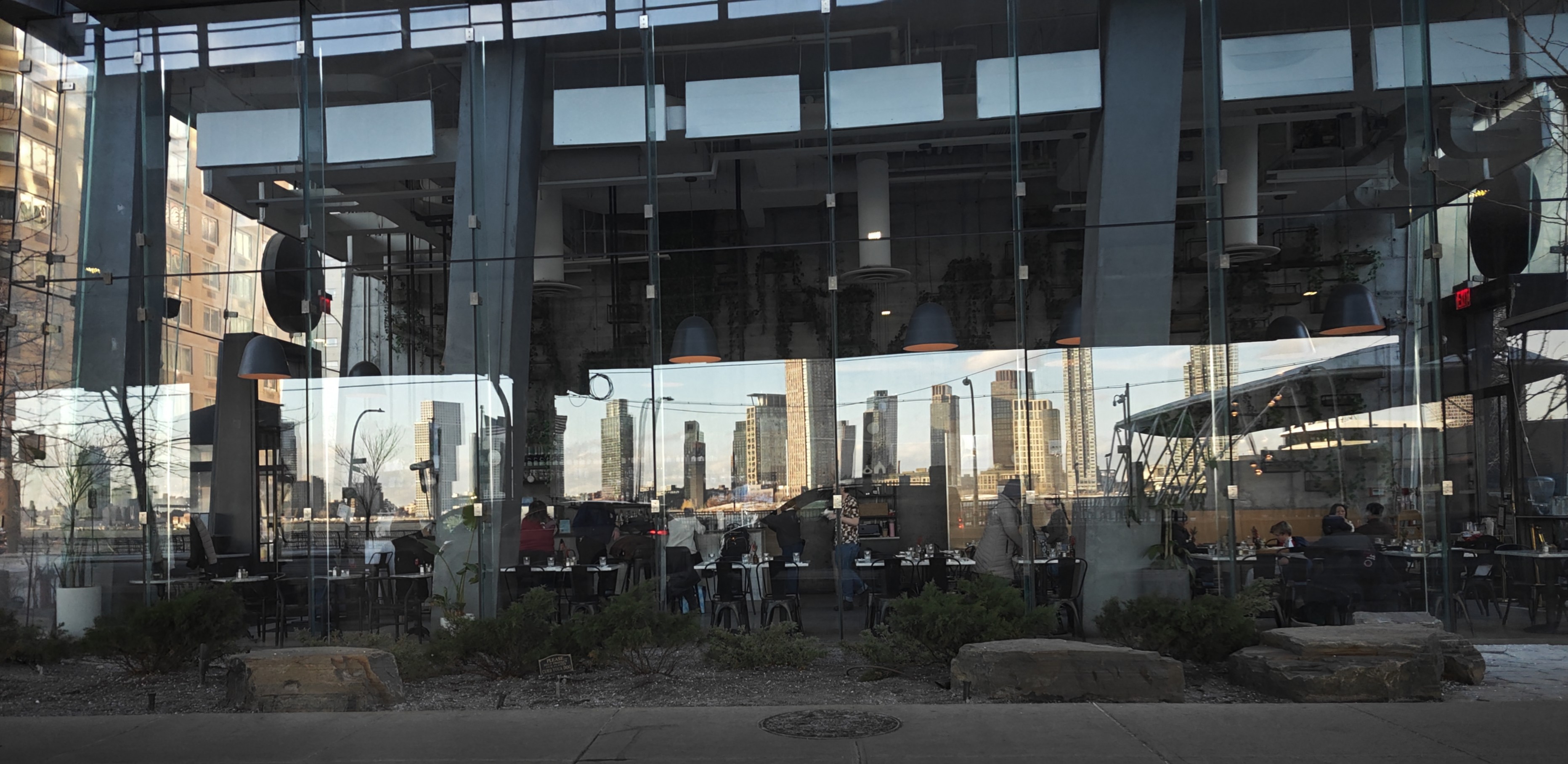
I woke with the most intense craving for cheese. As luck would have it, the fridge had registered there was only a hardening heel of Stilton left and ordered a divine selection. The Sainsbury’s drone dropped it off as I punched for an espresso on the auto-chef.
As I nibbled on the edge of an oatcake brimming with rich and creamy brie, wisps of my dream came back. Cheese. The theme had been cheese. Possibly, I’d been a mouse.
What didn’t come back was the advertiser’s message I later found embedded in my dream-maker. ”Lovely creamy brie.”
.
Friday fictioneers is a weekly challenge set by Rochelle Wisoff Fields to write a 100-word story in response to a photo prompt. You can find other stories here
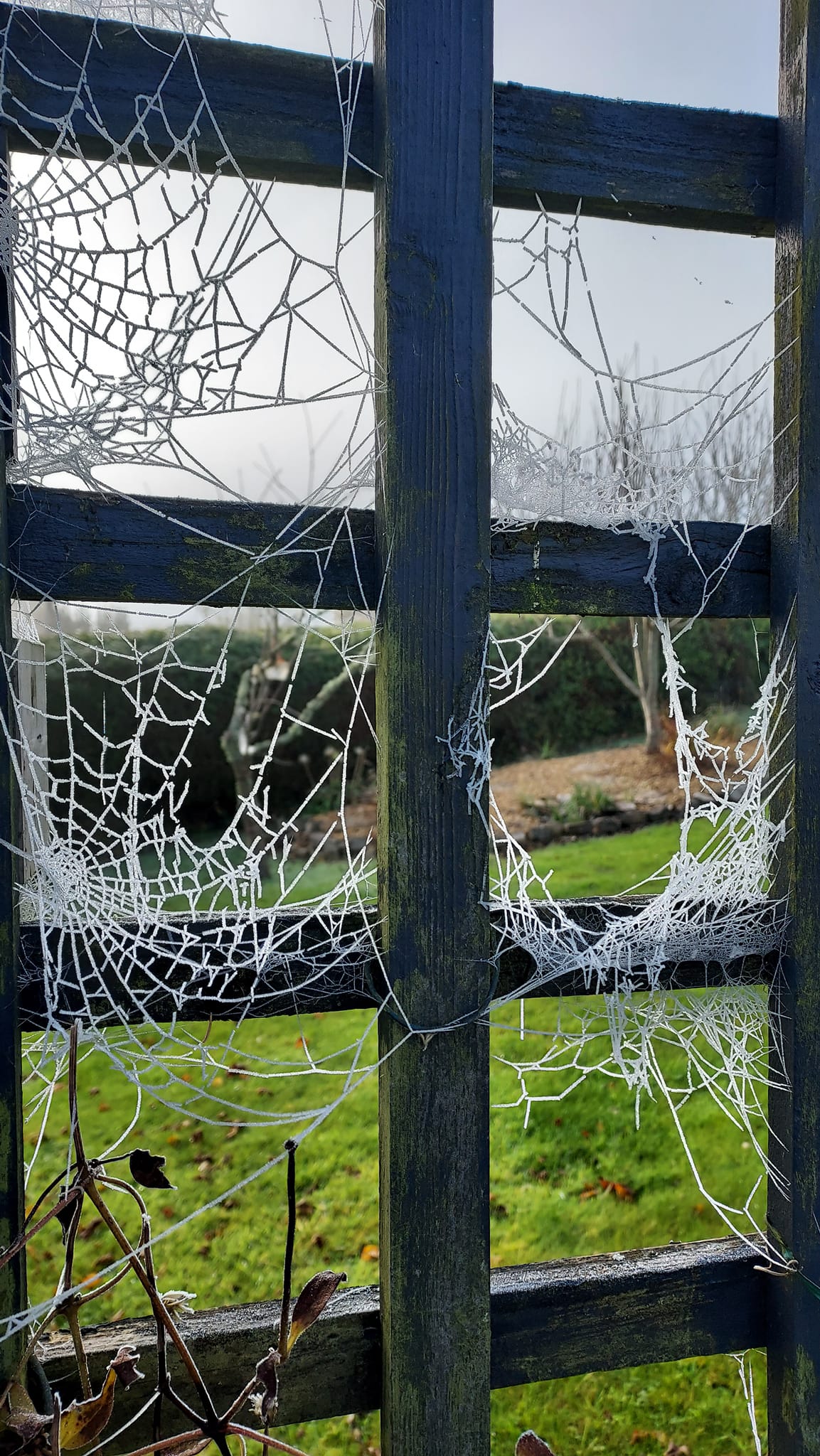
In the beginning, the elders say, formless chaos lay upon the face of the universe, roiling and spitting. Now I see strings of galaxies arcing across the void as gas clouds collapse under their own weight—stardust. As the inchoate future becomes past, matter condenses into pattern.
Time, that’s the remedy. It’s time which gives form and certainty to possibility.
Some of the matter swims, then sits up and crawls—the secret at the heart of the bud—slow and always straining back towards the stars.
Will we get there? Only the moving finger of time knows.
.
Friday fictioneers is a weekly challenge set by Rochelle Wisoff Fields to write a 100-word story in response to a photo prompt. You can find other stories here
Friday Fictioneers is a weekly challenge to write a 100 word story based on a photo prompt.
My first prompt and resulting story wre the following:
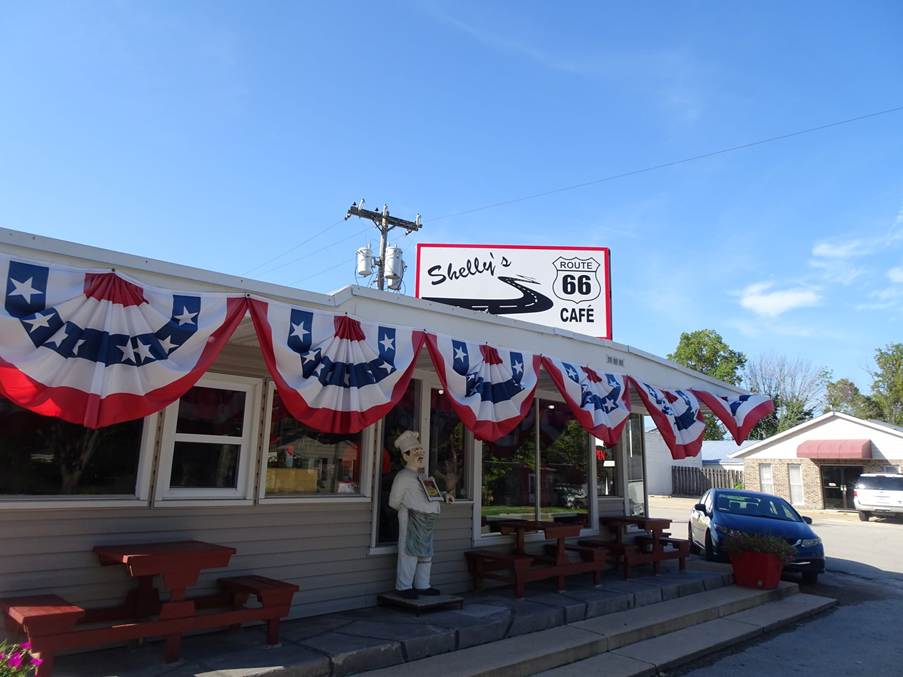
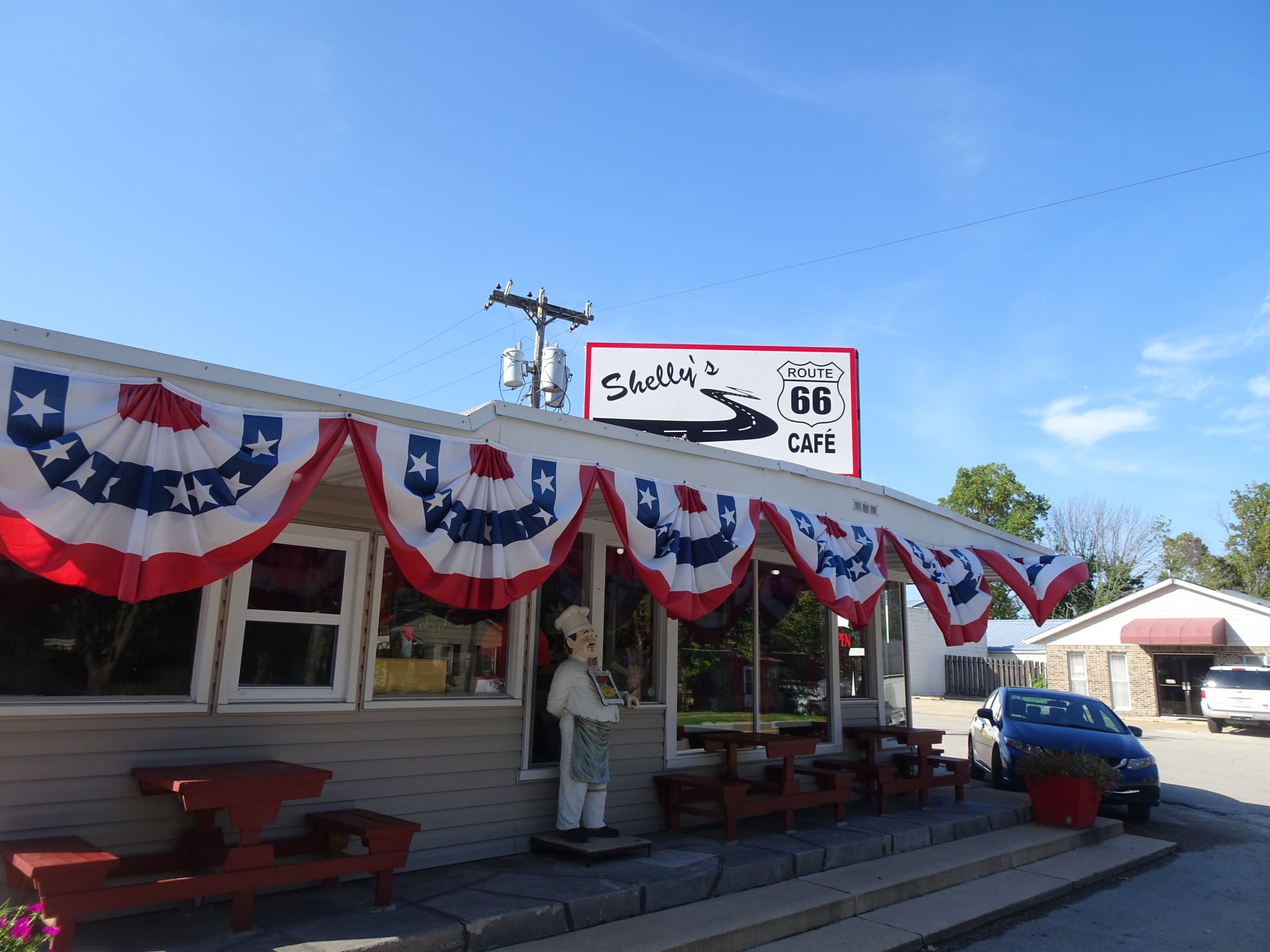
Write me a 100 word story based on a small diner called Shelly’s Route 66 cafe. which is covered in red, white, and blue bunting with a statue of a chef and two trestle table outside
1.
Shelly’s Route 66 Cafe squatted beside the highway like it had grown there, wrapped in red, white, and blue bunting that fluttered in the desert wind. A plaster chef stood guard by the door, mustache proud, spoon raised in eternal welcome. Two trestle tables waited outside, sun-bleached and carved with initials from travelers chasing somewhere better.
Every morning, Shelly brewed coffee strong enough to wake the ghosts of old road trips. Truckers, dreamers, and runaways found their reflections in her chrome counter. By night, the neon hummed softly, and the little diner held the road’s secrets close.
Microsoft’s Copilot delivered a similar story in response to the prompt. The stories were about the café rather than people so I altered the prompt to foreground the people and got the following output:
Write me a 100 word story about Shelly’s suitor, set in a small diner called Shelly’s Route 66 cafe. which is covered in red, white, and blue bunting with a statue of a chef and two trestle table outside
2.
Shelly’s suitor arrived at dawn, parking his dusty pickup outside Shelly’s Route 66 Cafe, where red, white, and blue bunting fluttered like nervous flags. He paused beside the chipped statue of a chef guarding the door, smoothing his tie in its metal reflection. Two trestle tables waited outside, still damp with morning dew, as if expecting witnesses. Inside, coffee hissed and the jukebox hummed softly. He had rehearsed his speech all night between miles of highway. When Shelly looked up from the counter and smiled, he forgot every word—except her name, which felt like home.
It still felt a bit mechanical so I tried a third prompt:
Write me a 100 word story in the style of Jack Kerouac about Shelly’s suitor, set in a small diner called Shelly’s Route 66 cafe. which is covered in red, white, and blue bunting with a statue of a chef and two trestle table outside
3
He blew in like a freight train ghost with dust in his cuffs and a grin stitched from the long American highway, and Shelly watched him from behind the counter at Shelly’s Route 66 Cafe, where the red, white, and blue bunting fluttered like patriotic heartbeats against the windows. The statue of the chef out front kept its porcelain smile while two trestle tables baked in the noon sun. He talked about Tulsa mornings and desert stars, coffee shaking in his hand, calling her “baby” like a prayer, and she felt the road humming in her bones, wild and wanting.
Some observations on these stories:
The quality of the story, to some extent, depends on the quality of the prompt. The AI emphasises the things that seem important from the way the prompt is crafted. In the first example, the story opens with the diner, while in the second it opens with the suitor. The third changes the voice to something less mechanical.
The algorithm throws in the odd metaphor and descriptive detail. These may sound writerly but they tend to be a bit off. Freight trains, for example, do not blow in. And I have no clue what trestle tables expecting witnesses might mean.
The structuring of the ending is where the AI really goes to work to create an upbeat vibe. In the first story, the little diner holds the road’s secrets close. In the second, Shelly’s name feels like home to the suitor. In the third, more interestingly, the interiority shifts to Shelly, who feels the road wild and wanting. It would have been possible, of course, to prompt for a sad ending.
For comparison, my own story for this prompt was:
The diner’s unremarkable. Could be anywhere, and almost anywhen. But Shelly, she is remarkable—tough, with a head of hair like springs and a tongue like a buzz-saw. I’ve had a thing for Shelly for near on thirty years.
“You can get anything you want in Alice’s Restaurant, exceptin’ Alice,” as the song goes. That’s Shelly’s. I turned up once with a mariachi band and a convertible full of red roses, like that Richard Gere movie. Woman only sniffed and muttered, “damn fool boy.”
Suppose you might call me a stalker, except the relentless pursuit really tickles Shelly. One day she’ll succumb.
The diner’s unremarkable. Could be anywhere, and almost anywhen. But Shelly, she is remarkable—tough, with a head of hair like springs and a tongue like a buzz-saw. I’ve had a thing for Shelly for near on thirty years.
“You can get anything you want in Alice’s Restaurant, exceptin’ Alice,” as the song goes. That’s Shelly’s. I turned up once with a mariachi band and a convertible full of red roses, like that Richard Gere movie. Woman only sniffed and muttered, “damn fool boy.”
Suppose you might call me a stalker, except the relentless pursuit really tickles Shelly. One day she’ll succumb.
.
Friday fictioneers is a weekly challenge set by Rochelle Wisoff Fields to write a 100-word story in response to a photo prompt. You can find other stories here
Others have walked this way before me, down the long processional. From the Land of the Living to the Land of the Dead we come, torches bright in the last curtain of the night. Happiness, awe, and fear walk with me, but I am one of a host, and the druids shield us as we enter the great circle.
The solstice sun stabs out through the dark and brushes a finger to the guide stone. A terrible brightness. I cannot look as the year is reborn.
.
Friday fictioneers is a weekly challenge set by Rochelle Wisoff Fields to write a 100-word story in response to a photo prompt. You can find other stories here
You know the feeling: you’re reading and something seems important but you don’t get it; or there’s a scene with a character but you’ve forgotten who they are.
In the past, you might turn to summaries of the book or to literary analysis for help. You might, for instance, ask, “what does the green light in The Great Gatsby mean?” And literary analysis might answer, “ the green light symbolizes Jay Gatsby’s unattainable dreams, particularly his longing for Daisy Buchanan, and represents the broader themes of hope, ambition, and the elusive nature of the American Dream.”
Now things can be more seamless. Amazon is introducing a feature into Kindle called “Ask This Book.” This is not a summary or a redirect to the part of the book that relates to your query. It’s an AI-generated interpretation. Authors cannot opt out of this feature, which currently only runs in the US but will be rolled out more widely this year.
Is that an important change? It would be an issue for the reader if it were prone to generating spoilers or hallucinating false answers. Because, of course, you’re not asking the book, the book the author wrote; you’re asking Amazon’s AI. So far, tests by Kindlepreneur (What Amazon’s ‘Ask This Book’ Feature Means for Authors | Kindlepreneur) have not found such faults. For authors, the feature affords a more complex challenge. Amazon is arguably producing a new edition of the book (comparable to an annotated edition) without the author’s consent.
Yet even for readers, there might be concerns. A reading is the text produced by the interplay of the author and the reader. Readers bring their own interpretations and visualisations to what the author offers. If that interpretation is outsourced to Amazon’s AI, both the author and the reader may be the poorer.
Lest this seem an author’s carping, let me say that the understanding of the green light above comes from Microsoft’s Copilot AI and is in line with the common critical understanding of Gatsby. I have had to use the Copilot AI because Amazon’s Ask the Book feature is not yet launched in the UK. But consider Copilot’s response to the question “what does the mistletoe in William Golding’s The Spire mean?”: the AI’s answer is “The mistletoe in The Spire functions as a deeply symbolic element tied to pagan myth, death, and the corruption underlying Jocelin’s ‘holy’ project. Its meaning becomes clearest when read through the Norse myth of Balder, which Golding deliberately echoes.”
In fact, literary analysis is much less unanimous about Golding’s mistletoe than about Fitzgerald’s green light. Though mistletoe is, indeed, a clear pagan symbol, its function in the Spire may (or may not) be to signal that Pangall has been sacrificed by the Cathedral builders to ward off bad luck. Golding never tells us this explicitly. Pangall simply disappears. Copilot gives a nod to this in secondary commentary: “Pangall’s persecution and eventual death are symbolically linked to the mistletoe.” But this commentary omits the possible connection between Pangall’s disappearance and his death at the hands of the builders constructing the spire. Jocelin, Dean of the Cathedral, in his vanity and madness, insists the spire must be constructed, even though the builders warn him the foundations will not support it. The builders have good reason to fear bad luck.
If the AI fails to signal this reading, it narrows the possible comprehension of Golding’s work. I look forward to being able to test this in Amazon’s AI.
If you are in the US and use Amazon’s Kindle iOS app, I’d love it if you’d ask it about the meaning of the mistletoe in The Spire and let me know the answer.



 Neil MacDonald Author