I am the very model of a modern, civic gentleman. Bestriding the world like a colossus, honour and power are mine. I dine with the rich and famous.
These people understand me and I understand them. To coin a phrase, we have an understanding. Between friends, I share state confidences, and they reciprocate with offerings. This is the oil that keeps the wheels of the real world turning. The little folk we serve would never comprehend. So, far better they never know. And I trust you as always, to keep my secrets.
.
Friday fictioneers is a weekly challenge set by Rochelle Wisoff Fields to write a 100-word story in response to a photo prompt. You can find other stories here
The setting was perfect. Candlelight sparked on the elegant wine glasses and smugly heavy cutlery. Waiters in long aprons glided effortlessly between the tables with impossible numbers of plates balanced on their arms, as if they were walking some unseen tightrope.
My waiter placed a bowl in the centre of the exquisitely geometric place setting. Inside the bowl, a crust of ginger fur respired slowly, rising and falling.
I can take a joke as well as the next man. Crouching low, I bit into the succulence of the waiter’s leg.
.
Friday fictioneers is a weekly challenge set by Rochelle Wisoff Fieldsto write a 100-word story in response to a photo prompt. You can find other stories here
The sun hid behind a cloud, casting the gorge into deep shadow. The rushing river laughed because it was now invisible. Ansna could no longer see the bull thundering towards her, but her ears spoke to her, and her legs knew when to begin the run. She’d trained her feet well.
“Alright, great bull,” her voice called. “Let’s dance.”
She raced towards the booming hooves, calculating closeness, dug her pole into the ground and took off.
As she sailed over the beast’s back, the sun sidled back into the valley. The hillsides hooted back the hunters cry. “Ansna, Bull Leaper.”
.
Friday fictioneers is a weekly challenge set by Rochelle Wisoff Fields to write a 100-word story in response to a photo prompt. You can find other stories here
I’ve had a brilliant idea! To write music with words as notes. This will be the making of me. Yes, scales—seven notes and then a repeat at higher pitch—chords, transpositions.
“The cat lightly on the mat sat.”
They’ll shower me with awards and offers.
“On the mat, deviously skulked the panther.”
Hmm, I’m not sure this is quite working yet.
.
Friday fictioneers is a weekly challenge set by Rochelle Wisoff Fields to write a 100-word story in response to a photo prompt. You can find other stories here
Something with tiny legs crawls over my sprawled hand, a thrush chitters, and water chuckles nearby. I know myself connected by a thousand tiny threads to this place, a part of its rich loam, a piece of the tracery of roots and branches. Somewhere a woodpecker jackhammers and the roots pulse with alarm. The water and my heart confess to one another in the same ancient tongue.
I am content. Here, there will be rest, and I will become something else. The good earth suckles at my wound, and the sounds of the battle dim. Today is a good day to die.
.
Friday fictioneers is a weekly challenge set by Rochelle Wisoff Fields to write a 100-word story in response to a photo prompt. You can find other stories here
We are so very tired. Half a world we’ve walked, through snow, rain, and baking sun. And everywhere they say, go back. The unwanted—that’s what we are.
The border post looms ahead. There are men there with dogs—hard men with grim faces. Even at this time of year, when they’re celebrating the birth of a baby to a refugee couple. Bells toll and sirens blare.
Am I not a person too? But of course I am not. I am just a problem, without face or history. And there is nobody to part the Red Sea for us.
.
Friday fictioneers is a weekly challenge set by Rochelle Wisoff Fieldsto write a 100-word story in response to a photo prompt. You can find other stories here
There are mirrors bouncing light back and forth. Some reflect doors, or what seem to be doors, though they may just be other mirrors.
Space expands explosive to infinity. Time slows to treacle as I turn and turn. A chorus of selves, perfectly synchronised, pirouette with me.
After a time that may have been aeons, I make to leave. Approaching the door, another me steps up to bar my way. Trapped! But I know how to get round myself.
“Would you be so kind as to step aside?” I ask meekly.
“Sorry, not a chance,” replies the mirror self.
.
Friday fictioneers is a weekly challenge set by Rochelle Wisoff Fields to write a 100-word story in response to a photo prompt. You can find other stories here
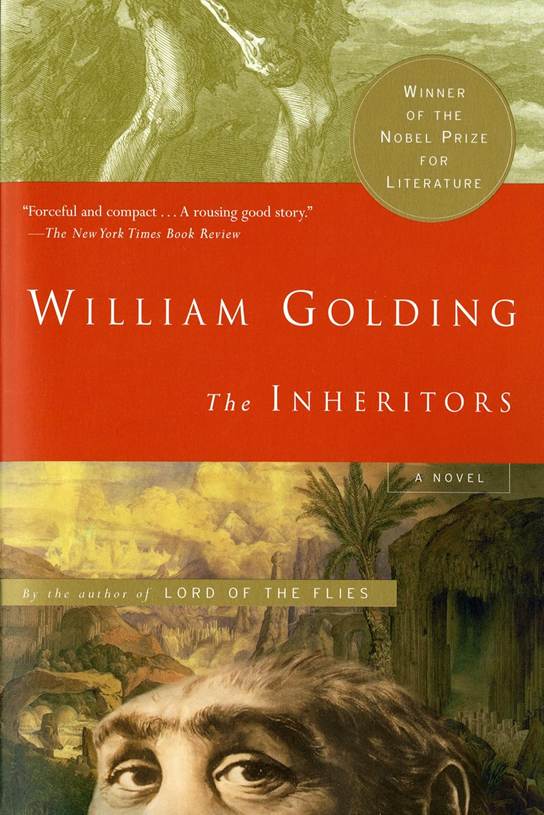
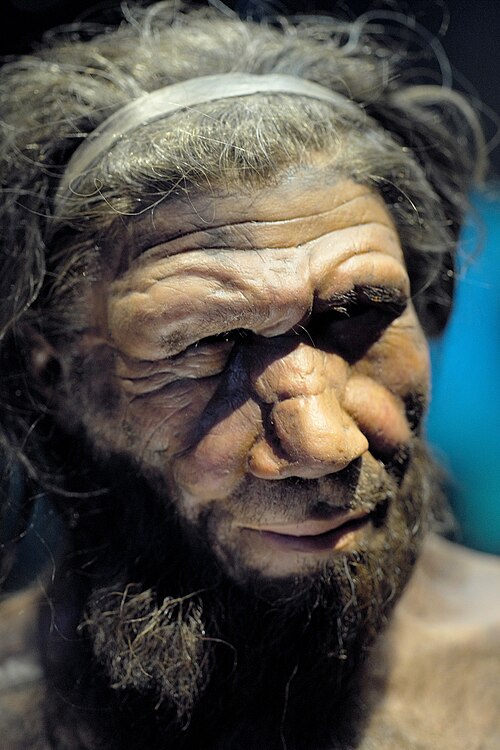
Golding thought The Inheritors was his finest novel. It tells the story of a band of people about to be displaced by stronger incomers. The twist is the people are Neanderthals, and the incomers are modern humans,
Like all of Golding’s work, there is a moral subtext. Lok, Fa and the other Neanderthals in this tale of The Fall are innocent and without sin, while the Homo Sapiens are licentious, drunk, and violent.
What makes this book extraordinary is the language Golding uses to craft Lok’s inner world. His Neanderthals inhabit a rich sensory world heavily imbued with life force, capable of almost telepathically sharing images, and without much in the way of concepts. We are immersed in a strange and charmed world.
How does Golding achieve this effect?
The grammar of an alien mind
When we are in Lok’s head, sentences are short and staccato. The book opens “Lok was running as fast as he could.” The Neanderthals’ speech is simple and declarative, dealing with the immediate and the concrete.
Of course, a novel composed entirely of such clipped sentences would be like a child’s reading primer. So Golding complements this with highly sensory and lyrical description, especially of colour.
By contrast, the Homo sapiens use longer sentences with subordinate clauses. This is a speech capable of conveying abstract thought, of understanding the relations between things. Consider the metaphoric quality of :
“His teeth were wolf’s teeth and his eyes like blind stones.”
Transitive and intransitive verbs
The passages dealing with Lok and the Neanderthals rarely (18.47%) uses transitive verbs, while in the passages from the perspective of modern humans such verbs are more common (40%)[1] Transitive verbs are those which require an object to complete them (for example, “Vivani was doing her hair”) whereas intransitive verbs are complete actions in themselves (for example, “Lok ran”). Clearly, we use transitive verbs to express more complex ideas and understand our being in the world.
Fa, the cleverest of the Neanderthals, almost imagines the idea of container for carrying water from the river. But the mental effort proves too much for her and the picture vanishes. Lok is often unable to piece together complex cause and effect. This is clearest in the passage where Lok first encounters a man from the new species:
The man turned sideways in the bushes and looked at Lok along his shoulder. A stick rose upright and there was a lump of bone in the middle. Lok peered at the stick and the lump of bone and the small eyes in the bone things over the face. Suddenly Lok understood that the man was holding the stick out to him but neither he nor Lok could reach across the river. He would have laughed if it were not for the echo of the screaming in his head. The stick began to grow shorter at both ends. Then it shot out to full length again. The dead tree by Lok’s ear acquired a voice.
Clop!
His ears twitched and he turned to the tree. By his face there had grown a twig: a twig that smelt of other, and of goose, and of the bitter berries that Lok’s stomach told him he must not eat. This twig had a white bone at the end. There were hooks in the bone and sticky brown stuff hung in the crooks. His nose now examined this stuff and did not like it. He smelled along the shaft of the twig. The leaves on the twig were red feathers and reminded him of goose. He was lost in a generalised astonishment and excitement.
Lok is unable to work out that the man has shot an arrow at him.[2]
Identity
The uncanny sense of being in an alien mind isn’t just about sentence structure. Lok’s sense of identity is also different from ours. Parts of his body lead an autonomous life:
Lok’s ear spoke to Lok.
“?”
But Lok was asleep.
Or:
Lok’s feet were clever.
Everything has a life
Everything in their world is alive and participates in a common animation. The log, for example, has agency and has “gone away”, as if of its own volition, and the sun “hid again”.
Lok finds it difficult to stay focused on a task for long, being easily distracted by needs for food and sex. The others say “Lok has many words but few pictures.”
When the group discuss something they share mental images. If they don’t get it, they say “I do not see this picture.” They can even merge their consciousnesses to a shared picture in a kind of hive mind.
When things become confusing for Lok, particularly when the new people attack, he defaults to a genial optimism. He is unable to conceive that they have killed his comrades and abducted the two young ones. He looks forward to the girl, Liku, coming back when the new ones return her. It is Fa who works out that they are under mortal threat.
Homo neanderthalis and Homo sapiens
Unlike the modern humans, these people live gently on the earth, never killing to eat, subsisting on a diet of plants and roots, and meat only when they can scavenge from a predator’s kill.
By contrast, we see the Homo sapiens through Lok’s eyes as incomprehensible creatures who inspire wonder and fear. Their actions are rapacious and chaotic, while their bird-chirp language seems full of admonishment, sly manipulation, and domination.
The outcome
We already know that Lok and his friends will not survive this encounter, because they are gone, and only we are left. Golding is questioning whether that has been a good thing, whether we are a good thing, though he does not suggest we had a choice. For him, we belong on the upsweep of the evolutionary trajectory, represented by the river that runs like time through the novel’s landscape. But perhaps he mourns the fall of that innocence.
[2] See Sam Browse (2018) From functional to cognitive grammar in stylistic analysis of Golding’s The Inheritors,Journal of Literary Semantics, 47 (2), 121-146 https://shura.shu.ac.uk/23149/
The waves rushed in as the Thames Barrier was breached. Water laps around Buckingham Palace, and Greenwich Hill has become an island. The King has moved to Scotland, and rowing boats ply the Chelsea road.
It’s not like we weren’t warned. But there was always something more important. And the hotter things got, the less we listened. When throngs of desperate people began to bang on our door, we turned them away. Full up, we said.
Is it too late now? For London, yes. But not for you. Yet.
Can we come to yours?
.
Friday fictioneers is a weekly challenge set by Rochelle Wisoff Fields to write a 100-word story in response to a photo prompt. You can find other stories here
The walls are closing in, and there is hardly enough space now for me to transit the room. The table and chairs have become strangely elongated, affording me length and height but a shrinking breadth. All around me, hordes are panicking, wailing and rushing hither and thither as the world becomes two-dimensional.
I am calm. This just cannot be happening—therefore, it’s an illusion, something I ate, no doubt, and I can quell it by my will.
Odd. Now the ceiling is coming in. I wonder how I will fare in lineworld.
.
Friday fictioneers is a weekly challenge set by Rochelle Wisoff Fieldsto write a 100-word story in response to a photo prompt. You can find other stories here




 Neil MacDonald Author