Friday Fictioneers – Bar girl

taffys-sewing-pic
PHOTO PROMPT © Jean L. Hays

The pressure of his gaze weighs on me, like the compression of the machines in the dress factory. I switch on my face, but nothing I do can affect the outcome. He will chose me or he will reject me. I choke. In this bell jar, evacuated of love, it is hard to breathe. But at least, he might promise a bed for the night.

Friday fictioneers is a weekly challenge set by Rochelle Wisoff Fields to write a 100-word story in response to a photo prompt. You can find other stories here


Friday Fictioneers – Skin Deep

ssi-lights-of-jerusalem
PHOTO PROMPT © Rochelle Wisoff-Fields

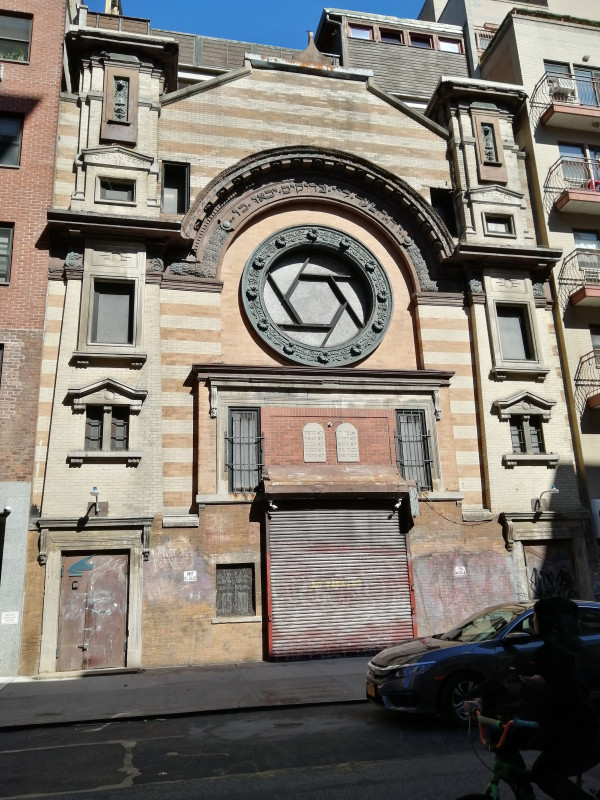
It was wrong, I know, but I was angry. I struck out, at a Master. My nail caught in his cheek, and a layer of skin sloughed off.

Underneath, not bone and blood, but levers and pinions.

I ran and ran.

In the dormitory, my workmates crowded round.

“The Masters,” I babbled. “They’re machines, not people.”

“Okay,” Slabbert said,” and so?”

“And so we have to do something.”

“What can we do? Better to concentrate on the things you can control. Like the choice between skinny latte and macchiato.”


Friday fictioneers is a weekly challenge set by Rochelle Wisoff Fields to write a 100-word story in response to a photo prompt. You can find other stories here

Friday Fictioneers – Vocabulomancy

photos-ted-strutz
PHOTO PROMPT © Ted Strutz

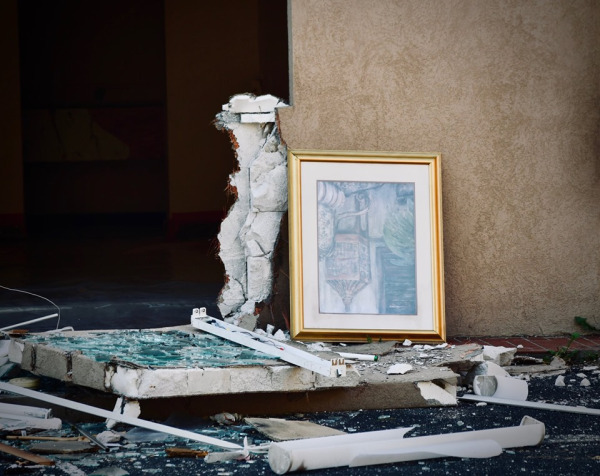
He opens the book, grabs its spine, and shakes. A heap of words tumble onto the table. Some verbs skitter and roll, ending up lost behind the pepper grinder. The scent of azaleas assails him from the vase. With the long forefinger of Michelangelo’s Cistine God, he stirs the lexical mound. Subjects swirl, encounter objects, and bind. Predicates zip on.

The battleship, the shoreline …. bombards.

Henry, the dog …. eats.

Nowhere is there love because that is one of the verbs that rolled away.

His brow dampens and his hands shake.


Friday fictioneers is a weekly challenge set by Rochelle Wisoff Fields to write a 100-word story in response to a photo prompt. You can find other stories here

Friday Fictioneers – All

dales-field
PHOTO PROMPT © Dale Rogerson

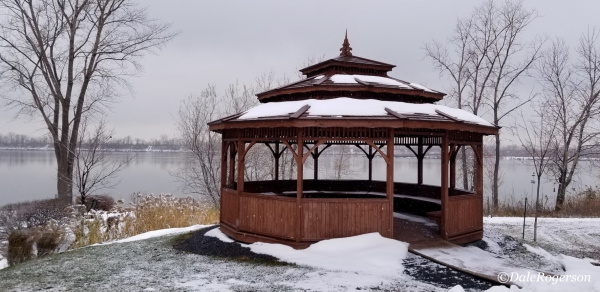
The first shaft of morning sun lifts the courtyard from shadow, like an old-time cinema organ rising from the stage. Yes—another message. I smell gardenias and a hint of sulphur.

Hunkering down, viewing from a distance, turning round suddenly. I try stratagems to decipher the chalked words, but I can make out only the word all.

A threat or a promise? Give me all your money? You have been naught, you shall be all?

Of course, I could wait through the night to catch my mystery correspondent. But if you peek, Santa doesn’t come.

Perhaps the word is allo?


Friday fictioneers is a weekly challenge set by Rochelle Wisoff Fields to write a 100-word story in response to a photo prompt. You can find other stories here

Friday Fictioneers – the Line

line-naama-yehuda
PHOTO PROMPT © Na’ama Yehuda

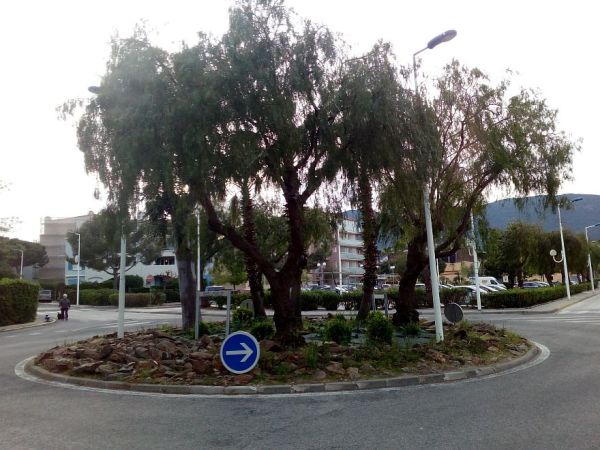
It might, of course, have been pure chance—a group who happened to be standing one behind the other. But I didn’t think so. This looked purposeful. These people were waiting for something. I joined the back of the line.

Leaning forward, I caught hints from the conversation of those ahead of me.

“Well, that one’s no better than she ought to be ….”

“Five-nil. What a  ….”

It started raining.  Some raised umbrellas but nobody left the queue. This must be important.

I rejoiced I’d chosen the right line, as water streamed down my face.


Friday fictioneers is a weekly challenge set by Rochelle Wisoff Fields to write a 100-word story in response to a photo prompt. You can find other stories here

123. How to Win Writing Competitions. Fifteen great tips

Dickens

There are many articles about winning writing competitions. Just do a web search to see them. This piece will take most of that advice as read, and concentrate on things that may be less obvious. These flow from my experience as creator and administrator of a writing contest and as reader for a literary magazine. I’ve also won a couple of competitions.


A brief summary of the obvious

  • Read the rules. If there’s a prompt or theme, use it. If there’s a maximum word length, don’t exceed it. If judging is anonymous, don’t put your name on it. If there’s a required format, follow it. If no format is specified, use something standard and easy-to-read like Times New Roman 12 pt., double-spaced.
  • Proofread. Nothing will annoy a judge more than spelling and grammar mistakes, poor punctuation, and uncorrected typos. They may well decide, if you can’t be bothered to proof the thing, they can’t be bothered to read it.
  • Write well. Use active voice and strong verbs. Avoid clichés, strings of adjectives, and overlong sentences. Read it aloud to yourself so you can hear the rhythm of the prose. Leave yourself plenty of time to edit.


The less obvious stuff

  • Devote time to researching the interests of the judges, if you can find out who they are. Look at previous winners to get a sense of what the judges like. Craft your story, if possible, to fit this brief.
  • Select your competition. Again, research counts. Your chances of winning or placing in a competition vary widely from contest to contest. The most prestigious competitions like the Bridport have thousands of entries, while smaller competitions like the Yeovil have hundreds. Accordingly, your chances of placing in the Bridport are 0.22%, while in the Yeovil your chances rise to 4.9%. I’ve researched the stats for some major competitions and you can find them here.
  • Understand the contest. Is it a “literary” competition or a “fiction” competition? “Literary” is likely to mean they’re looking for character-driven stories with depth, subtext, and beautiful language. “Fiction” or “Writing” is likely to mean that popular fiction will do well, and here, plot is central.
  • Make sure you have a beginning, middle, and end. Sounds obvious doesn’t it? But somewhere between 40% and 50% of the stories submitted to my competition and to the magazine I read for are not full stories. Often, this is because they lack a proper ending. If you have a full story, you’ve already reached the top half of the pile.
  • Write something unusual. By the time the judges have a short list of, perhaps, twenty entries all the stories will be good. But they won’t all be winners. And they’ll begin to merge into each other in the judges’ minds. Make sure your story has something unusual and memorable about it. Maybe this will be the character, or perhaps the setting. Don’t go with the first idea you think of—other people will generally have written something similar, particularly if there’s a prompt.
  • Pay attention to cast and point of view. If you’re writing a short story, don’t overburden it with too many characters and shifts in point of view. These will just confuse the reader. Unless you’re feeling very brave, stick to one point of view character and keep the cast list down to two or three other characters.


The final secrets

  • Submit early. Why? Most entries will come in as a rush at the end. In our case, about half the entries arrive in the last week. So, the judging will take place in a rush at the end too, If you submit early, you’ll be read more thoroughly and perhaps more sympathetically.
  • But don’t rush it. After you’ve written and edited a draft you’re satisfied with, let it settle for a few days. When you read it over again, you may notice mistakes or opportunities for changes you didn’t see before.
  • Writing tricks. Readers really like stories that loop back on themselves or where the ending echoes the beginning. Recurrent motifs may also help to make a story stand out.
  • Think like a judge. Understand what’s happening in their minds. Judges are not looking for reasons to accept your story—they’re looking for reasons to reject it. Don’t give them a reason.
  • Understand what judges are looking for. Many competitions don’t have standardized judging formats, but my competition developed one to make the assessment fairer. This is what our judges are looking for:

Judging criteria

  • Judging is still a subjective process. The winning story will usually be one that lingers in the judges’ minds hours or days after they’ve read it. You can enhance your chances that this one will be yours by choosing an unusual character, location or theme and by using the writing tricks noted here. As an example, I’ve been a reader for a magazine for a year and a half. In that time, I’ve read around 1,500 submissions. I selected 45 of them. I can still remember one. That one stands out for its superb atmosphere and characterization.

Friday Fictioneers – Obedience

overhead-window
PHOTO PROMPT © J Hardy Carrol

When things started falling upwards, I knew it wasn’t going to be an ordinary day.  The colander and the beer tankard whirled above my head, making a tiny planetary system.

If life gives you lemons, as they say, make lemonade. I spread my arms and prepared to float into the roof lantern. We’ve all dreamed of flying, right? But my feet remained planted.

That’s my failing. If there’s a rule, I obey it. The law of gravity held me sullen in its grip as the cat began slowly to ascend the blue dome of the sky.


Friday fictioneers is a weekly challenge set by Rochelle Wisoff Fields to write a 100-word story in response to a photo prompt. You can find other stories here

122. The robot will see you now: writing apps reviewed

We’re a long way from robots writing compelling stories, but software can make an author’s life simpler. There are three broad classes of software intended to help writers.

  • Planners help you plan a story,
  • Organisers help you write it,
  • Editors help you edit it.

I list some of the main alternative here.

As I’ve said before, though I love software, I’m not a big fan of the Organisers for authors. I’m just as happy using an ordinary word-processor and a spreadsheet. So none of the programs in the Organiser category is in my toolkit and I haven’t attempted to test and review them. Remember, a computer program won’t write a single word of your novel for you. I do however recommend Beemgee from the Planner category and ProWritingAId from the Editor group. I’ve also tried Contour from the Planner group and it’s pretty good. I was less persuaded by the usefulness of Contour’s companion program, Persona, compared with Beemgee.

beemgee

Planners

Most of the software in the organiser group below includes some planning functions. However, there are more dedicated planners

  • Contour is aimed at screenwriters supporting them in developing an outline. It’s based on four key question: Who is the main character? What is the main character trying to accomplish? Who is trying to stop the main character? What happens if the main character fails? It costs US$39.95
  • Persona is character-creation companion software to Contour. It’s based on archetypes and costs US$39.95
  • Beemgee offers a very detailed series of prompts for defining character and plot outlines. I like the way Beemgee links plot to character. The basic version is free. The premium version with more functionality costs €59per year.
  • Dramatica, like Contour, is based on a writing theory. In this case, the central idea is that “every complete story is a model of the mind’s problem solving process”. It costs US$99.95.
  • Storyweaver is a simplified version of Dramatica. It costs US$29.95
  • Snowflake Pro.  This is Randy Ingermanson’s famous method turned into software. It will cost you US$100. Or you can just read the ten steps of the Snowflake on his blog for free.


Organisers

This type of software acts as a word-processor and filing cabinet. They conveniently store your plot outline, timeline, notes on background research, and your stray snippets. Some include prompts for generating characters. All include a stripped-down and uncluttered word-processor. The particular advantage of word-processors for writers is that they’re designed for you to move chapters and chunks around easily. Scrivener is the best known of these.

In addition some include templates or other devices to help you build your story arc.  I’d recommend treating this facility with some caution. Following templates may lead to mechanical stories.

writenow storyboard
WriteItNow storyboard

For ease of presentation, I’ve listed all the features and the costs of the main products in a table.

story organisers

Editors

In a previous blogpost I reviewed Fictionary (which implausibly claims to give your novel a structural assessment), and copy editors Autocrit and ProWritingAid, as well as some free alternatives.  I recommended ProWritingAid as best value for money.


The bottom line

Many of the story Planners can be copied out as question templates. So you could try the demo version, copy the questions, and create your own tool. There’s pretty much nothing in the Organiser group you can’t do with a word-processor and a spreadsheet, or indeed paper and pencil. Only the Editing tools depend on algorithms and databases you can’t copy.

Friday Fictioneers – Until Yesterday

book-ceayr
PHOTO PROMPT © CEAyr

Yesterday was Tuesday. Much like Monday, nothing special. But today is totally changed. Until yesterday, you were in the world, and now you’re not. I don’t know how to comprehend this.

I pick up the book you were reading. Sniff it. But it smells of printers’ ink, not you. I try to read the words, the last words you saw, the same ideas that passed through your mind filling mine, as if some semblance of you might remain in them.

Until I reach the word “yesterday”, such an innocent word. But I cannot continue.


Friday fictioneers is a weekly challenge set by Rochelle Wisoff Fields to write a 100-word story in response to a photo prompt. You can find other stories here

Friday Fictioneers – Cracks

penny-gadd-shelves
PHOTO PROMPT © Penny Gadd

The day before yesterday, it was charming—a sport of nature. I popped it into a wine glass and provided water to drink.

The seed grew so fast, tendrils unspooling and feeling along the walls. Even when I realised, I did nothing. Perhaps it was already too late, but I didn’t try.

These were not branches but emptiness, spreading cracks in reality. You’d expect to feel terror, but the mind adjusts, as if to an ache. I can admit only to curiosity about events.

Maybe the cracks will widen and something will come through.


Friday fictioneers is a weekly challenge set by Rochelle Wisoff Fields to write a 100-word story in response to a photo prompt. You can find other stories here