196. Stories need not have an inciting incident

I recently noted that at least one main novel competition was looking for stories driven by an inciting incident. An inciting incident is the event or thing that forces the protagonist to leave the status quo and which drives the rest of the story forward.

Many stories are impelled by inciting incidents. But not all. The following books have no inciting incident.

  • Virginia Woolf’s To the Lighthouse
  • Harper Lee’s To Kill a Mockingbird
  • Dostoeveksy’s Notes from the Underground
  • Gordon Lish’s Peru
  • Proust’s A La Recherche du Temps Perdu

The question now is what sets a story in motion if it lacks an inciting incident? Does it also lack change and momentum?

Let’s consider the most widely loved of the example stories, To Kill a Mockingbird. There’s certainly change and momentum as Scout grows up and learns the truth behind her father’s advice to understand other people. Particularly so as the dreadful events of the rape accusation and the trial unfold. But what drives the story is no  “call to action”  setting in motion a “quest”, or any other variant of the inciting incident. Rather,  the driver Lee uses is repeating cycles of rejection and acceptance (or defeat and recovery) at the levels both of personal behaviour and of social structures.

Part 1: Boo. Scout her brother and her friend mock the reclusive Boo Radley. He returns only kindness. Scout’s father, Atticus, tells her that she should learn to see the world through others’ eyes. When the children sneak into the Radley house, Boo’s brother shoots at them. In their flight,  Scout’s brother tears his trousers and loses them. They later find the trousers repaired and hanging on the fence.

Part 2: The Trial. When a black man is accused of raping a white woman, Atticus agrees to defend him, causing the community to shun him. The family’s black maid takes the children to her church where they are welcomed. They watch the trial from the “coloured” balcony. Though Atticus marshals evidence to disprove the charge, the all-white jury finds the accused guilty.

The aftermath: Boo again. The accused man runs and is lynched. The accuser’s father holds a grudge against Atticus and sets out for revenge. He attacks the children. Boo fights in their defence and kills the attacker. The sheriff agrees to pretend it was an accident. Scout understands her father’s advice.

Though the rape accusation is perhaps the most dramatic part of the story, raising the issue of racism. the real motif is the reclusive Boo Radley. He is mocked by Scout, her brother, and their friend at the beginning yet returns only kindness to them. By the end, when Boo saves the children, Scout learns to truly understand and respect him.

This does not make the children’s contact with Boo an inciting incident. It does not light the touchpaper to the chain of events that follow.

All the works in the list could be described as literary. So perhaps  the conclusion is that genre stories will usually (perhaps always) have an inciting incident while literary stories do not necessarily need one. I might argue that among the inciting incident’s functions is telling the reader what kind of story to expect. If there’s a body in the library, you can be sure this is a mystery. If the protagonist feels a palpitation in her bosom when a brooding stranger appears, you can be sure this is romance. In other words, inciting incidents are reassuring genre signals. But they are not necessary for a story full of change, conflict, and momentum.

195. Novel Prizes and what it takes to win them

Well, I didn’t reach the longlist with my novel The People of the Bull in any of the competitions I entered. I am, of course, surprised. But on reflection perhaps I shouldn’t be. I can console myself with the thought that perhaps the judges just didn’t understand the story, written in a simulation of the ancient language of the setting. Was it too literary? Not literary enough? Then again, perhaps it just wasn’t good enough.

How does a writer deal with rejection? Rejection or acceptance are nebulous categories—what one person enjoys, another may dislike. You can tell yourself you were just unlucky. But, better still, acceptance can be quantified.

If you divide the number of entries to a competition by the number of places in its shortlist, you get a measure of the probability of gaining a place in that shortlist.

CompetitionNumber of entriesLonglist OddsShortlist oddsWin odds
Bridport3,0380.66%0.16%0.16%
Bath2,4520.86%0.16%0.03%
Cheshire1,9840.76%0.45%0.10%
Blue Pencil1.4611.37%0.34%0.20%
Exeter1,3791.81%0.44%0.15%
Yeovil1,0482.96%0.95%0.29%

The number of entries was estimated from published data for past competitions, with an assumed increase year-on-year. The more entries there are, all things being equal, the lower your chance of placing. However, all things are not equal.

I can also quantify roughly how good I am as a writer. That’s one of the benefits of publishing short stories. You can find the acceptance rates of different publications through services like Duotrope (https://duotrope.com). The most demanding publication I was ever accepted by was Structo, with an acceptance rate of 3.85%. So that doesn’t quite qualify me to get into the longlist of any of these competitions until I improve the rating.

On the other hand, one of the competitions (Cheshire) does provide an individual critique, though not until later in the year. In the meantime, they did provide an interesting list of what they were looking for.

The Cheshire Novel Prize criteria  

“I often get asked why certain novels made the longlist. Here are a few pointers as to why some novels sailed through and some did not:
1. An immediate strong and compelling voice; we need to know who is telling the story.
2. A strong sense of time, place and setting in the opening chapters plus seasons always help too to add atmosphere.
3. Good worldbuilding particularly for fantasy, dystopia and science fiction.
4. A little bit of status quo so we can see the character as they are now before the inciting incident happens to ignite the engine of the story and change your character’s world as they know it.
5. Conflict.
6. Stakes.
7. Ideally the inciting incident happens in the first 1000 -2000 words.
8. A quest – the journey your characters go on after the inciting incident changes their status quo.
9. Propulsive story – whether that be character driven or plot driven depending on genre. We need something to keep us wanting to turn the pages.
10. Profluence – cause and effect of events that happen. For example instead of having a list of things that happen (this happens and then this happens) we like to see, this happens and then BECAUSE of this, this happens and then BECAUSE of this, this happens etc. This was originated by John Gardner in his book, ‘The Art of Fiction.’
11. Good description that adds depth and texture and moves the story on.
12. Dialogue that moves the story on and feels authentic
13. Questions raised for the reader to keep us reading on!
14. Some questions answered in the first 5000 words and more raised!
15. Does the synopsis start where the story starts?
16. Does the synopsis have a clear plot that is outlined with spoilers and the ending explained?
17. Good character arcs shown in the synopsis?
18. Can you show us in the synopsis how the character has changed?

The interesting thing about this list is points 4, 7 and 8. All the others are generic issues, but these three are tied much more explicitly to what appears to be the Hero’s Quest model of story structure. An inciting incident is the event or thing that forces the protagonist to leave the status quo and which drives the rest of the story forward (for example, engaging in a quest).

It is entirely true there is no traditional inciting incident in my novel, certainly not one that occurs in the first 2,000 words. The story is driven forward by two things that become intertwined: the material forces that are slowly changing the society and the way these become expressed by two battling siblings, one espousing change and the other revering continuity. Though there is a first chapter that leaps forward in the storyline, showing the consequence of the rivalry between the sisters, the unveiling of the material forces is on a slow burn. It might be argued that the introduction of the grandmother’s mummified corpse is the inciting incident. In fact, the grandmother is merely a motif for the struggle between the sisters.

I would argue that an inciting incident is not necessary for a story. I’ll be posting more about this later.

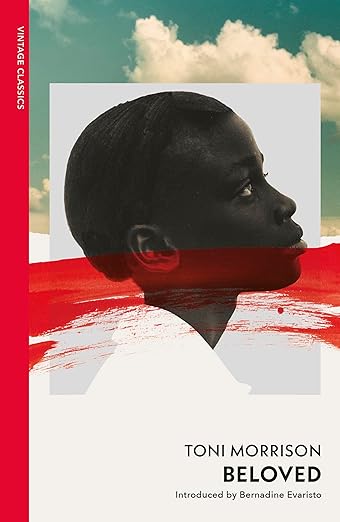
194. How did she do that? Toni Morrison’s “Beloved”

Beloved is a masterwork. It takes its inspiration from a true story of an escaped slave who killed her baby rather than let it be taken back from the north of the US to the slave south, It is a novel about slavery, yes. But more, it’s about humanity and the enduring wounds injustice inflicts. Baby Suggs, for example, reflects on the danger of loving:

“The last of [Baby Suggs’] children, whom she barely glanced at when he was born because it wasn’t worth the trouble to try to learn features you would never see change into adulthood anyway. Seven times she had done that: held a little foot; examined the fat fingertips with her own—fingers she never saw become the male or female hands a mother would recognize anywhere. She didn’t know to this day what their permanent teeth looked like; or how they held their heads when they walked.”

 And also it’s about memory. The past is not done and buried in Sethe’s world. It lives on, most particularly in the form of Beloved, who she believes is the baby she killed, and who first returns as the poltergeist that haunts her home, then as the creature  that sucks her dry.

These are strong, deeply human characters. Not just Black characters but people who show us what it means to be a person. There is, of course, the many-headed hydra of racism and the lies racists tell themselves to justify their oppression:

 “Whitepeople believed that whatever the manners, under every dark skin was a jungle. Swift unnavigable waters, swinging screaming baboons, sleeping snakes, red gums ready for their sweet white blood. In a way, he thought, they were right…. But it wasn’t the jungle blacks brought with them to this place from the other (livable) place. It was the jungle whitefolks planted in them.”

But there is also the ambiguity that is at the heart of all of us:

“Sethe learned the profound satisfaction Beloved got from storytelling. It amazed Sethe… because every mention of her past life hurt…. But, as she began telling about the earrings, she found herself wanting to, liking it”

Is there redemption in Sethe’s easing of her isolated pain? Or is it capture?

How does Morrison achieve these effects?

She does this in a variety of ways.

The existence of the past in the present is not just something Sethe asserts. It’s built into the structure of the novel with flashbacks and point of view changes that constantly braid past and present. The past, of course, is not a comforting time of fond memory, but one of humiliation and pain. Paul D’s tobacco tin of repressed memories exemplifies this:

“It was some time before he could put Alfred, Georgia, Sixo, schoolteacher, Halle, his brothers, Sethe, Mister, the taste of iron, the sight of butter, the smell of hickory, notebook paper, one by one, into the tobacco tin lodged in his chest. By the time he got to 124 nothing in this world could pry it open.”

Like Sethe, there is much about the past that is dangerous to him, Paul D’s tobacco tin is one of a number of recurring symbols. Another symbol is the whipping scar on Sethe’s back, which is described as being like a chokecherry tree. Does it symbolise the fraudulent beauty of “Sweet Home”, the place of Sethe and Paul D’s enslavement? Does it symbolise the ability of beauty to grow, even in horror? Or does it, perhaps, convey both meanings?

Biblical images and references are scattered through the story. The horsemen who come to take Sethe back to slavery are four in number. Baby Suggs’ sin of pride (if such it is) that restrains the community from warning Sethe of the coming of the four horsemen, is a huge feast that evokes the miracle of the loaves and the fishes.

And finally there is the symbol provided by Beloved herself. Dead baby, poltergeist, cunning and vengeful reincarnation. Sethe and her daughter Denver are seduced by Beloved, wanting her for themselves. Paul D is driven away by the apparition. What is she? Perhaps the burden of guilt, perhaps the desire for connection, perhaps … well you decide.

193. Speech and imagination: the roots of our stories

Culture shapes (and constrains) how we understand the world. For example, in a hierarchical society, the perception of groups of things tends to be ranked. Language both expresses and shapes culture, as well as, in turn, changing as culture changes.

A Portuguese friend once remarked, as we shared a bottle of rum on a beach, that the trouble with English speakers is that they only know one way of being. Portuguese, of course, has two verbs “to be”  —  one used for permanent states (like “I am Portuguese”) and the other for temporary states (like “I am ill”).

Grammar alters our understanding in quite profound ways. Many languages have gendered nouns. The word for bridge in Spanish, for example, is masculine, while its German equivalent is feminine. This does not happen in English. There are also languages that dispense with the need for gendered pronouns (“he” and “she”). Proto-Indo-European, the root language of whole families of present-day tongues, distinguished in pronouns only between living and non-living.

More profoundly, some languages (Hopi, for instance) lack a future tense, complicating conjectures and plans for the time to come. The same was true of Anglo-Saxon and of Proto-Indo-European—they had present and past tenses, but no future. Such a grammar probably reflects a society in which the future was likely to be pretty much like the present.

In turn, while many of us today conceive time as an arrow, a lack of a future tense may well favour a cyclic notion of time. This is, of course, more than a matter of the simple existence of tenses. Other factors are at play too. In European-speaking cultures, we tend to picture time as horizontal, with the future ahead of us and the past behind. Not so in Mandarin, where earlier events are “up” and later events “down”.

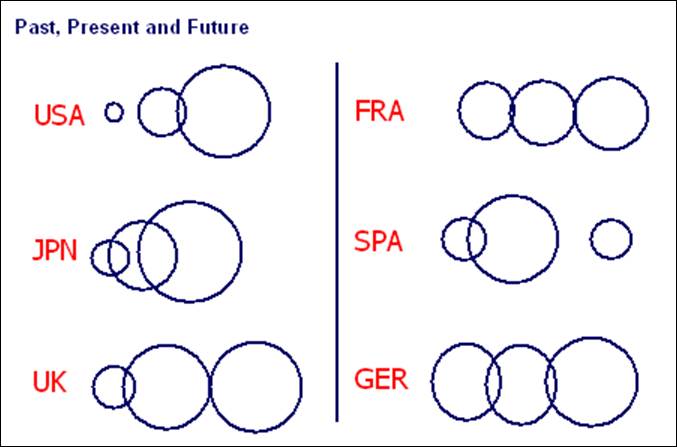
As an aside, not all features of our sense of time are coded in language. Research shows that different cultures, even within the same language group, may have different senses of how important the past is compared with the future. Compare the future orientation of US respondents to those from the UK in this diagram, which comes from the book Riding the Waves of Culture by Fons Trompenaars and Charles Hamden-Turner.

What of some other basic features of grammar? There can be little in English more fundamental to an elementary education than learning to distinguish between subject and object. A subject is a noun describing the originator of an action. In the sentence “The man ate the dog”, the subject is “the man”. Likewise, an object is a noun upon which the action happens, in this case “the dog”. The separation of the universe into active subjects and acted-upon objects is a philosophical fundamental. From it, arguably, a whole worldview flows. We cannot say which came first, the grammar or the worldview, but they buttress each other to create an understanding of how the world works that appears to us unquestioned commonsense. In reality, of course, it is a cultural convention, albeit one with deep roots in the dominion over nature and over other people.

Likewise, it is commonsense for us to distinguish between the actor (the noun) and the action (the verb). But not all languages do this. For example, though there is controversy about the claim, it is said that the Salishan language family of the Pacific Northwest of North America does not have this actor/ action distinction.

So how does all this affect the stories we tell?

1. The separation of subject and object

      The grammar here entices us to see the world as divided into subjects who act and objects which are acted upon. This convention provides the soil from which spring knights errant and tales of derring do—in short, the heroic protagonist.

      Alternatively, we might tell stories that do not depend on identification with a protagonist, but perhaps those that focus on the situation and on the society. Arguably, some Asian story forms are of this nature. Here, for example, is a summary of the Japanese story The Gratitude of the Crane.

      Once upon a time, an old man finds an injured crane in the woods and nurses it back to health. One day, a beautiful girl comes to his doorstep, saying she is lost. The old man takes her in, and the girl tells him not to open the door at any noises. The old man opens the door anyway when he hears strange noises and finds a crane using its feathers to weave an extraordinary piece of cloth. Having been seen, the crane flies away. 

      Western stories are rational, and depend on clear ideas of cause and effect, and distinctions between what is objective and what is subjective. But this is not necessarily true of the literature of other cultures. Ming Dong Gu, in his Chinese Theories of Fiction, argues that Chinese fiction is fantastical rather than realistic. Things arise out of nothing; the Chinese story is full of interconnections and transformations between the world of humans and the world of nature.

      2. The separation of actor (noun) and action (verb)

      The consequences here are more subtle. They nudge us towards perceiving entities and events rather than underlying processes. We say, “the cat sat on the mat”. But from a different perspective, we might view the entities (cat and mat) as processes, extended in time and subject to change: catting and matting. We might also see the event (sat) as a process (sitting). If we adopted this perspective, what stories might arise? They might be stories with a stronger sense of transformation and of great time spans. Here, for example, is an experimental piece, The Quantum Cat, I wrote, exploring this possibility.

      The catting satting on the matting, ideaings passing through their heading: ideaings of dinnering and of hunting. A womaning was arriving. They were holding out feeding to the catting.

      The wave function collapsed. And the cat sat on the mat.

      To be clear, I’m not arguing that language determines consciousness, but it does play a part in shaping how we imagine the world.

      192. A Mystery

      Perhaps you can help resolve this mystery.

      It started on 4 July. The number of reads on my site jumped five-fold. This continued through the next two days. Why, I wondered? Usually when this happens, it’s one person or a couple of people liking what they’ve found and reading around the site. Not this time. Each visitor read, on average, 1.03 articles. They were from 43 different countries, so it didn’t look like a network of friends who’d found my site. The top three countries were Brazil, the US, and India.

      I put on my deer-stalker and settled-in for a three pipe problem.

      These readers are interested in fiction, not non-fiction. With one or two exceptions (which are probably unrelated to this wave), the reads were the 100-short stories I post, rather than the literary commentaries. And the coverage of stories was not random: almost all were from a distinct three-year period One tale, in particular, stood out: Legend.

      Perhaps it was because his parents called him Darius. Bearing the name of an ancient conqueror carries its own risks. At all events, Darry played a long game only he understood.

      “Who does it harm?” he’d say when we questioned his project. For 25 years he quarried and shaped, assembled and carved. In secret, he overwrote the landscape of his extensive estates with temples and amphitheatres, statuary and canals.

      “Darry,” I said to him one day, “this is a Disneyworld, a fantasy.”

      “Now.” He nodded. “Sure. But in a thousand years, who’ll be certain?”

      Darius was inventing a legend.

      This story received almost the same number of reads as the combination of the next three most frequently hit stories. However, no story received a sufficient number of hits to be identified as a “landing page” from some referrer.

      In all, between 4 July and 7 July,  there 504 new reads (excluding those who don’t appear to be part of this group). Between them, they read 97 stories, all of them published between 13 April 2016 and 6 November 2019. The one story published later than this may not have been due to this group. These 97 stories comprised around half the stories I published over these three and a half years. But they only accounted for around a fifth of all the stories on the site,

      A referrer does still seem the most likely explanation for this spike in reads. If someone with a considerable number of followers posted a reference to my site (though not to any particular story), this would partially explain the phenomenon. It would not, however, explain the distinct time focus of the reads. My own blog analysis tools offered no help in identifying possible referrers. I tried a Google search, but found no reference to my site from an internet celebrity.

      Probably coincidentally, this strange new phenomenon has reversed a trend over the past three months of falling readership. I say coincidentally because I know what’s caused that fall: a decline in following of the site that drives most traffic to my site.

      Some of you reading this will know the answer. If you’ve been attracted to my site for the first time recently, please leave me a comment on this article, telling me what it was sent you here. Particularly if you’re from Brazil or India.

      Update

      Looking in more detail at the referrers, one stands out: ed2go. This is an online provider of adult education (including writing courses), part of the Cengage group. It has made 164 references to my site since the start of the year. It is consistently the fourth most common referrer to my site after search engines, the WordPress reader, and inklinkz, the service that supports Friday Fictioneers.

      190. What is the oldest story? Part 2: The contribution of archaeology

      A previous post looked at techniques borrowed from biology to reconstruct ancients stories. If biological analogies are suspect, can archaeology perhaps provide clues?  The picture below is taken from an 11,000 year-old wall in a communal enclosure at the Neolithic settlement of Sayburç in Türkiye.

      Does this represent an 11,000 year-old story? According to the discoverer, yes[1].The frieze occurs on a bench 60-80 cm high and 60 cm wide. The whole thing is 3.7 m long, Two humans, two leopards, and a bull are depicted side by side in a long scene, or a set of two scenes. Among the reasons for suggesting that this is a story is that all the figures, animal and human, are on one horizontal level. Other carvings from this culture, such as the T-pillars at Göbekli Tepe, have a vertical relationship between human and animal, The orientation of the figures from two main sections is like the panels from a comic strip or like bible scenes from a church mural.

      The one on the right is the most striking at first glance, with a man standing in the centre and a leopard facing him on either side. Unlike the others, this male figure is rendered in high relief and does not face either of the leopards, but looks straight ahead into space, indicating perhaps that he is not threatened. The figure is depicted in a seated position, holding his phallus with his right hand. He wears a triangular neck adornment similar to those seen on the Yeni Mahalle sculpture (also known as Urfa man) and on some T-pillars from Göbekli Tepe. The leopards on either side of him are depicted in a state of attack, with their forelegs slightly raised, their mouths open and their teeth visible.

      The panel on the left is a man with his back to the leopard scene and a bull, head down, opposite him. The man is shown in a slightly crouched position and motion. His arms are raised and bent at the elbow. In his open left hand, six fingers can be counted, while in his right hand, he holds something that has been variously interpreted as a sling, an inverted snake, or a rattle.

      The bull facing him is shown in an attacking position, like the leopards, with its front legs slightly raised. Though the body of the bull is depicted side-on, its head and dangerous horns are shown from above. The man may be recoiling from the bull or perhaps preparing to leap onto it. One of the main features of the Sayburç reliefs is that the movement is just as important as the figures which suggests that events are as prominent as figures, whether human or animal.

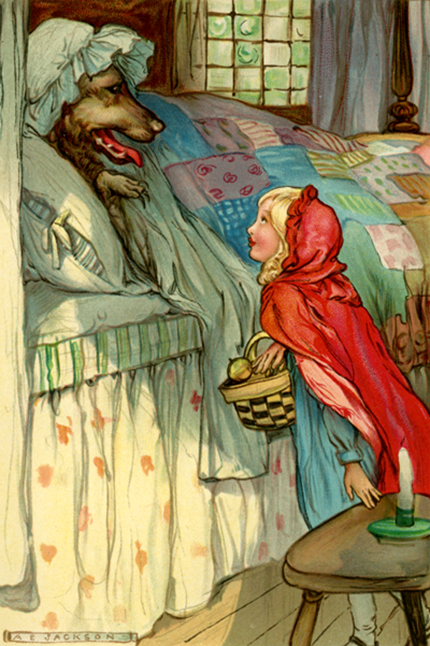
      People at the time would undoubtedly have recognised the figures and what was happening, much as we would instantly recognise the story of Little Red Riding Hood from the single image below. Today, we can only speculate.  

      Phalluses are the only elements that identify the sex of the Sayburç  figures, and the emphasis is on the predatory and aggressive features of the animal world, such as teeth and horns, which has also been observed at other sites in the area. The Sayburç reliefs, however, differ in that the figures can be interpreted as forming a narrative, with the two individual scenes appearing to be related to each other as scenes in a story or set of stories. The comparable stature of men and animals in the Sayburç relief may suggest a new dimension recognised in the narratives of pre-Ceramic Neolithic people.

      Again, the claim that these scenes form a story can be questioned. What really Is the evidence? That the relationship between the figures are arranged horizontally, rather than vertically? Well, they are inscribed into a horizontal feature, a bench, so a vertical arrangement was not possible. That the figures are shown, dynamically, in motion? The same might be said of the birds from pillar 43 in nearby Göbekli Tepe, one possibly playing with a  human head.

      Features of the panels

      • The animals (leopards and a bull) are wild and savage
      • Both humans are male
      • The high relief human figure on the right between the leopards is different from the crouching human on the left.
        • The high relief may signal a different status to the other human
        • He is not perturbed by, or even interacting with, the leopards. Is he in control of them (a Master of Animals)? Note, however, that he in not resting his hands on the animals as in other depictions of Masters of Animals). In some myths, the Master of Animals controls the game animals, releasing a few to humans as food
        • He wears a V-shaped neck adornment, a motif also found at Göbekli Tepe, and on Urfa Man and a similar statue at Karahan Tepe.  Martin Sweatman (2022)[2] interprets this symbol as representing a lunar month and the V necklace as indicating controller of time, but this interpretation is highly contested.
      • The Master of Animals figure is not the centre of the story. He is rendered as nothing other than  his status. It is the other figure who is in motion and individualised with six fingers and s held object. The object may be a sling (is he therefore hunting?) or perhaps an inverted snake (similar to the Gilgamesh carving above) or a rattle.
        • If he is the centre of the story, it seems plausible to suggest that he has come into conflict with the Master of Animals or the proper behaviour the Master represents. Perhaps he has failed to engage in the correct rites before the hunt and now is alone, confronted by the bull.
        • If so, how this story ended might depend on the location in which it is graved. What was this enclosure for? The enclosure has still only been partly excavated. But other sites. such as Göbekli Tepe, have been more fully explored. There is much debate about the function of the large enclosures there: sanctuaries, cultic centres, communal houses?. If these enclosures were spiritual in purpose, the role of the story might have been to underscore what was fitting to do. If they were domestic or recreational, the story might have been more mischievous. In all probability, these societies did not make a distinction between the sacred and the profane.
        • So, perhaps an interpretation of the story, if there is a story, might be something as follows.

      A man desires to hunt for meat, but, being impatient, sets out without consulting the Master of Animals. [This is a serious violation of the natural order. It is the role of the Master of Animals to ascertain where the herds are and to propitiate their spirits before any hunt]. The man is a giant, with six fingers on each hand and six toes on each foot and believes he can do just as he wishes.

      The man treks all day, finding only a rabbit. Though he is after bigger game, he is hungry and brings the rabbit down with his sling. He skins the animal and skewers it over the fire to cook. Tired, he finds his eyes closing, and leaves his arse to guard his prize. While he is asleep, foxes come and steal the cooking coney. When the man awakes and finds the bounty gone, he is furious. “I left you to guard the rabbit while I slept,” he says, “and now look what’s happened. I’ll teach you.” He grasps a burning log from the fire and rams it into his bottom. The pain is intense. “What?” he cries, “Must I bear your punishment too?”

      The man proceeds gingerly on his way.  The Master of Animals sends a deer into his path. “I am yours,” says the deer to the man. Haughtily, he replies, “Though your antlers are magnificent, I am after more dangerous game than you.” So the Master of Animals has a ferocious boar stray into the man’s path. “I am yours, if you have the courage,” says the boar. The man strokes his great chin, “It is true your tusks are sharp and deadly,” the man says, “but I am after bigger game than you, something that can feed my whole clan.”

      So, the Master of Animals decides to teach the man a lesson and sends a huge aurochs, taller than two men standing on each other’s shoulders, charging at him. “Ho, man,” says the bull, lowering his horns, “what do you think you are doing, walking the hills armed only with a sling?” The giant bull charges, forcing the man to jump out of its way at the last moment, narrowly avoiding being gored. At the next charge, the man cries out in alarm, “Oh save me, for I will surely die.”

      The Master of Animals takes pity, summoning the spirits of the sky to lift hunter and beast up into the heavens, where they still confront each other today.

      This story is built on three elements. The first is the analysis above of the carving, which provides the set-up of the tale. The second, to add scatological humour that might have been expected around the night fires, is the theft of the rabbit and the burning stick from the fire. This element has been borrowed from the North American Crow myth cycle. The third element, the intervention of the Master of Animals to save the man by transforming him and the bull into constellations, is, of course, the Cosmic Hunt, described above. This provides a satisfactory ending.  It is all entirely speculative.


      [1] https://www.cambridge.org/core/journals/antiquity/article/sayburc-reliefs-a-narrative-scene-from-the-neolithic/3A35B54B3265C7224CB225FE70EBDD02

      [2] https://www.tandfonline.com/doi/full/10.1080/1751696X.2024.2373876#abstract

      189. What is the oldest story? Part 1

      What is the oldest story in the world?

      Stories are a miraculous technology. They tell us what is important and what unimportant, what goes with what, who to praise and who to blame. And they afford us the experience, denied in real life, of experiencing life from inside somebody else’s head. Imagine if we could excavate the stories told at the equinox within Stonehenge, or the stories told at night in the first city. Or, even, the stories we told in the mother continent of Africa before we fanned out around the world. Imagine imagining as our ancestors did!

      The oldest story recorded in writing is probably the Epic of Gilgamesh, inscribed in Sumerian cuneiform around 2,000 BCE.

      Writing, of course, is a fairly recent invention in the span of human history. Stories would have been transmitted orally before that innovation.

      One proposed method for finding even earlier stories is to trace the ancestry of stories today. If two distinct cultures tell the same story, it might reasonably be inferred that the story must have been told by the common ancestors of both cultures. In this way, a tree of descent can be constructed, similar to evolutionary trees in biology.

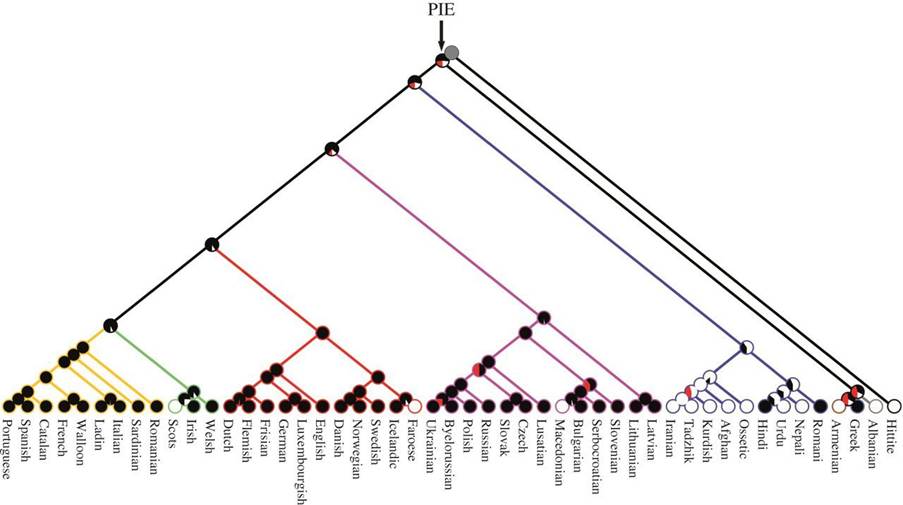
      The next figure shows the tree of descent from the hypothetical Proo-Indo-European language of one common story found across many modern languages of the Indo-European family created by researchers Da Silva and Tehrani[1].

      The story in question is “The Smith and the Devil”. 

      A smith makes a pact with a malevolent being—in return for his soul, he is granted the ability to weld any materials together. The smith then tricks the devil out of his prize by sticking him to an immobile object, such as a tree or a rock.  Some versions of the tale include three foolish wishes. Some end with the smith being denied entry to heaven or to hell. One version of the story is here https://vocal.media/geeks/the-devil-and-the-smith

      If da Silva and Tehrani are right, this may the oldest traceable tale, going back to the Bronze age some 6.000 years ago. Naturally, there will older tales. Our ancestors must have come out of Africa tens of thousands of years ago already painting, dancing and telling stories.

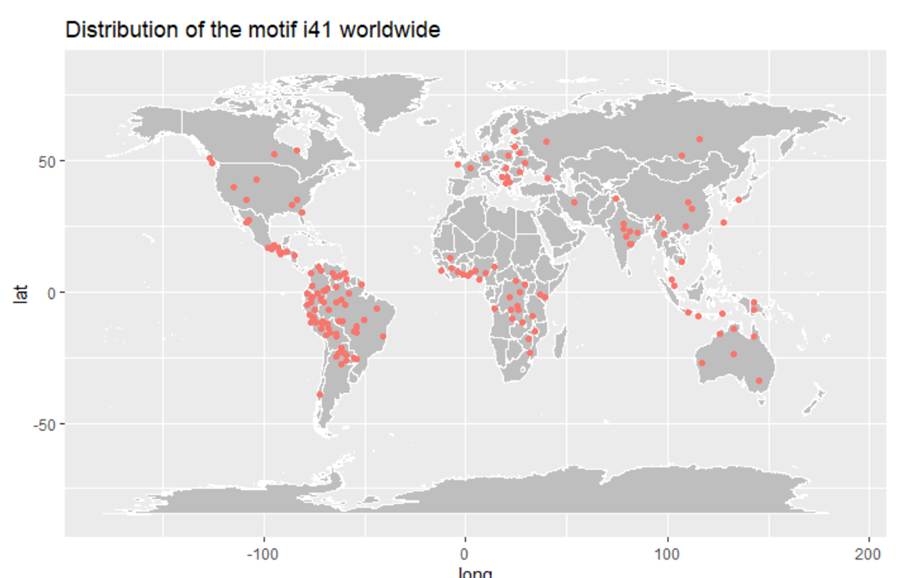
      Efforts to reconstruct such tales include the rainbow serpent motif. The map below shows its distribution to be global, as described in a preprint paper that is yet to be peer reviewed.

      From:  Hélios Delbrassine, Massimo Mezzavilla, Leonardo Vallini, Yuri Berezkin, Eugenio Bortolini, Jamshid Tehrani, Luca Pagani Worldwide patterns in mythology echo the human expansion out of Africa https://doi.org/10.1101/2025.01.24.634692

      The elements of this proto-narrative are described by Julien D’Huy in a 2016 Scientific American article[2] as follows:

      “Mythological serpents guard water sources, releasing the liquid only under certain conditions. They can fly and form a rainbow. They are giants and have horns or antlers on their heads. They can produce rain and thunderstorms. Reptiles, immortal like others who shed their skin or bark and thus rejuvenate, are contrasted with mortal men and/or are considered responsible for originating death, perhaps by their bite. In this context, a person in a desperate situation gets to see how a snake or other small animal revives or cures itself or other animals. The person uses the same remedy and succeeds.”

      The basic technique is borrowed from evolutionary biology: the idea is that we can track the evolution of myths and folktales with the same techniques that we use to establish evolutionary relationships and evolutionary history.  The method used for the identification involves tracing stories or story motifs (mythemes) across the world.

      If two distinct cultures tell a common, or related, story, there are three possible mechanisms that may explain this.

      1. The story moved with the migration of peoples and their descendants.
      2. The story diffused and was exchanged between distinct peoples.
      3. The story is universal because it expresses something about a fundamental human condition.

      There is evidence for both the first two possibilities. In some cases, similarity of stories between cultures follows the degree of genetic relatedness. In other cases, geographical proximity better explains the distribution of the story. The third possibility makes a strong prediction that Is not borne out in the data. If a story is universal, it must be universal: in other words, it should appear everywhere in all cultures. Even in such a widely distributed mytheme as the Rainbow Serpent, the map shows significant gaps: in north Africa, north Asia and is rare in north America.

      Some researchers are sceptical about the underlying narrative inferences, arguing this is subjective. When we say stories are similar, how similar are they really? Are we forcing the evidence into preconceived boxes? Is the Greek myth of Callisto really the same Cosmic Hunt  story as in the Iroquois tale of the three hunters pursuing a bear?

      The Cosmic Hunt (from D’Huy)

      A woman breaks a taboo; A man is hunting an ungulate; the hunt takes place in the sky or ends there; a divine person stops the hunter and transforms the animal into a constellation (sometimes,  the one we know as Ursa Major),

      Perhaps, yes. In both stories (and in many other variants) a quarry is turned into a constellation. On the other hand, perhaps, no, The strong claim that widely distributed stories (such as the Rainbow Serpent or the Cosmic Hunt) must link back to the time before modern humans emerged from Africa needs strong evidence. It would be seductive to believe we can reconstruct tales told around Palaeolithic fires, but diffusion may be a more plausible explanation than that stories can persist for 100,000 years[3]

      A subsequent post will look at archaeological evidence for ancient stories


      [1] Sara Graça da Silva and Jamshid J. Tehrani (2016) Comparative phylogenetic analyses uncover the ancient roots of Indo-European folktales, R. Soc. Open Sci.3150645 http://doi.org/10.1098/rsos.150645

      [2] https://www.scientificamerican.com/article/scientists-trace-society-rsquo-s-myths-to-primordial-origins/

      [3] Andrew Cutler (2023) Contra d’Huy on Snake Myths https://www.vectorsofmind.com/p/contra-dhuy-on-snake-myths; Bortolini et al (2017) Inferring patterns of folktale diffusion using genomic data. PNAS 114 (34) 9140-9145 https://www.pnas.org/doi/10.1073/pnas.1614395114

      187 How did he do that? “Sunset Song”

      Sunset Song by Lewis Grassic Gibbon is, in my view, one of the great books of the twentieth century. Re-reading it now, I am struck by how achingly beautiful and how angry it is, and by how cleverly it is constructed.

      “She walked weeping then, stricken and frightened because of that knowledge that had come on her, she could never leave it, this life of toiling days and the needs of beasts and the smoke of wood fires and the air that stung your throat so acrid, Autumn and Spring, she was bound and held as though they had prisoned her here. And her fine bit plannings!–they’d been just the dreamings of a child over toys it lacked, toys that would never content it when it heard the smore of a storm or the cry of sheep on the moors or smelt the pringling smell of a new-ploughed park under the drive of a coulter.”

      If it has any parallel in it picture of the bustling small life of the folk of Kinraddie, it can only be Dylan Thomas’ Under Milk Wood.

      Themes

      Above all, the theme is the land. The land which abides when all the folk who till it are dead and gone. Both the prelude and the epilude which bracket the book have the same title, “The Unfurrowed Field”,  representing the unworked land. The book is a lyrical, brawling, angry and tormented paean to the dying age of the Scots peasant. And here too is a theme: of change and changelessness.

      The protagonist, Chris Guthrie is herself the land (or perhaps all of Scotland).  In Chapter 1, Ploughing, she is new ploughed for the immense changes that are coming. All the chapter titles represent the cycle of the growing season and the maturation of Chris. Chapter 2 is Drilling (in which her mother commits suicide and her abusive father is stricken with paralysis). Chapter 3, Seed Time, sees Chris’ father die and her inherit the croft. She marries Ewan. In Chapter Four, Harvest, Chris gives birth, Ewan leaves Chris after an unresolved argument to soldier in the First World War, where he is shot as a deserter. Many of the chapters open and close with Chris at the ancient standing stones, a symbol of deep time that brings Chris peace.

      There is the theme of ambiguity. Chris is continually loving and hating things, afraid and intrigued. This replicates the author’s ambivalent feelings towards the birthplace he shunned.

      And there is also the theme of social justice, a thrumming disdain for those who put on airs or who exploit others.

      “Maybe there were some twenty to thirty holdings in all, the crofters dour folk of the old Pict stock, they had no history, common folk, and ill-reared their biggins clustered and chaved amid the long, sloping fields. The leases were one-year, two-year, you worked from the blink of the day you were breeked to the flicker of the night they shrouded you, and the dirt of gentry sat and ate up your rents but you were as good as they were.”

      Humour

      None of this makes it a dour book. It is full of humanity and the bantering humour of the dying crofter folk.

      “John Guthrie himself got a gun, a second-hand thing he picked up in Stonehaven, a muzzleloader it was, and as he went by the Mill on the way to Blawearie Long Rob came out and saw it and cried Ay, man, I didn’t mind you were a veteran of the ’45. And father cried Losh, Rob, were you cheating folk at your Mill even then? for sometimes he could take a bit joke, except with his family.”

      The author’s craft

      Grassic Gibbon uses several devices to achieve his effect. The main one is, undoubtedly, the use of the Doric Scots dialect of the northeast. In his hands, there is nothing of Walter Scott’s invention of a romantic Scotland. It is the real people of Scotland we hear, small minded, big-hearted, dreaming and dying. The language, of course, has a sad and lyrical music to it. And it also creates the illusion that we are part of a gossipy chat around a fireside, the true stream of consciousness of the narrators. This effect is strengthened by summary sentences that end many sections which begin “So that was how ….”

      There are three narrators: an unnamed voice, Chris Guthrie herself, and Greek chorus of the whole gossiping community. And the telling uses a combination of first, second and third person. The use of the second person augments the conversational and confessional nature of the read: Chris is telling us how she feels and acts.

      Deep time is another of his devices, creating the sense that this brief flickering and dying of the light of his cast of characters is part of a longer story of constant change. The Prelude sketches a huge antiquity that links Cospetric and his slaying of the gryphon through all the ages of Scotland from William Wallace’s rebellion against English occupation, through the Reformation and French Revolution and finally the clearances and on to the coming of John Guthrie and his family to the croft at Blawearie. And older still are the standing stones by the loch, the place of peace and safety to which Chris repairs in times of turmoil. Many of the chapters open and close at the standing stones.

      A lyricism of nature pervades the detail of all the writing, with the call of the birds, the smell of the new-ploughed earth and the feel of the snow and the wind.

      Grassic Gibbon frequently makes use of repetition:

      “As the gnomons of a giant dial the shadows of the Standing Stones crept into the east, snipe called and called”

      The effect of the repeated words is, at once, powerfully poetic and reassuringly conversational.

      Character

       The central character is Chris. And an extraordinary character she is, for a male author to have had such insight into the life and dreams and fears of a woman. Chris is strong and determined and fearful and doubting. The book opens with her dreaming of becoming a teacher. But this Chris fades and dies. She thinks of this one as the English Chris. When her mother commits suicide she becomes the second Chris, the Scots Chris of the land who must tend to the house. Released by the death of her sour and abusive father, the third Chris is claimed by that coarse tink Ewan Tavendale:

      “He looked over young for the coarse, dour brute folk said he was, like a wild cat, strong and  quick, she half-liked his face and half-hated it”

      Ewan loves and marries her and then, gone for a soldier in the First World War, returns and ill uses her before being shot as a deserter. Though there is love, it is a love as clear-sighted and hard-headed as the folk of Kinraddie.

      Vivien Heilbron as Chris and James Grant as Ewan in the BBC television series

      “She felt neither gladness nor pain, only dazed, as though running in the fields with Ewan she had struck against a great stone, body and legs and arms, and lay stunned and bruised, the running and the fine crying in the sweet air still on about her, Ewan running free and careless still not knowing or heeding the thing she had met. The days of love and holidaying and the foolishness of kisses–they might be for him yet but never the same for her, dreams were fulfilled and their days put by, the hills climbed still to sunset but her heart might climb with them never again and long for to-morrow, the night still her own. No night would she ever be her own again, in her body the seed of that pleasure she had sown with Ewan burgeoning and growing, dark, in the warmth below her heart. And Chris Guthrie crept out from the place below the beech trees where Chris Tavendale lay and went wandering off into the waiting quiet of the afternoon, Chris Tavendale heard her go, and she came back to Blawearie never again.

      … Turning to look at him, suddenly Chris knew that she hated him, standing there with the health in his face, clear of eyes–every day they grew clearer here in the parks he loved and thought of noon, morning and night; that, and the tending to beasts and the grooming of horses, herself to warm him at night and set him his meat by day. What are you glowering for? he asked, and she spoke then at last, calmly and thinly, For God’s sake don’t deave me. Must you aye be an old wife and come trailing after me wherever I go?

      None of these Chrises are offered by the widow Chris Tavendale to her new husband, the Reverend Robert Colquohoun, who spirits her from Kinraddie and into the next book of the trilogy, Cloud Howe.

      Though Colquohoun appears in the book only at the end, it is his voice, giving the dedication to the fallen of the place,  that words Grassic Gibbon’s meaning.

      Nothing, it has been said, is true but change, nothing abides, and here in Kinraddie where we watch the building of those little prides and those little fortunes on the ruins of the little farms we must give heed that these also do not abide, that a new spirit shall come to the land with the greater herd and the great machines.

      For greed of place and possession and great estate those four had little head, the kindness of friends and the warmth of toil and the peace of rest–they asked no more from God or man, and no less would they endure.

      So, lest we shame them, let us believe that the new oppressions and foolish greeds are no more than mists that pass. They died for a world that is past, these men, but they did not die for this that we seem to inherit. Beyond it and us there shines a greater hope and a newer world, undreamt when these four died. But need we doubt which side the battle they would range themselves did they live to-day, need we doubt the answer they cry to us even now, the four of them, from the places of the sunset?”

      It is a testament to the greatness of the book that I find myself dreaming in Kinraddie, and its rich vocabulary coming, unsummoned, to my tongue. And the word that comes to mind is “blithe”. It’s a blithe book and no mistake.

      184. On surprise and delight in writing

      Do all stories (let alone all scenes) need surprise? No. But it is essential to some genres. There is no joke without a punchline, and no punchline without surprise. Or consider the classic mystery tale—we should be surprised by the unveiling of the murderer’s identity in the denouement.

      Let’s consider what surprise is. Our brains are (among other things) pattern recognition machines. The story sets up a pattern of expectations, and then a twist violates those expectations and reveals a different pattern of meaning lurking beneath. We see the world in a different light. The brain judders as it shifts frame. Our experience of this is surprise.  

      Take the example of the joke. Two elderly gay men are sitting at a booth in a bar. A beautiful woman walks past, with all the attributes heterosexual men find attractive (you can spin out this description at some length to reinforce the pattern of expectation). One man turns to the other with a sigh, saying “You know, it’s a times like this, I wish I’d been born (add a dramatic pause here) lesbian.” You see? The heteronormative pattern is subverted. Our laughter is the physiological expression of the surprise.

      But this is not the only way in which pattern shifts work. If the surprise comes at the beginning rather than the end, our response is different. World-building in fantasy or sci-fi might be an example here. We are told from the start that the rules here are different from those in our world. Consider, for example, The Other Valley by Scott Alexander Howard (simply because I happen to be reading it at the moment). In this world, time is literally a dimension like space. There are a series of valleys, each with a similar settlement. As you go west, each valley is ten years into the future. As you go east, each is ten years in the past. The gendarmerie  patrol the borders between the settlements to prevent temporal meddling. Our attention here is not captured by the headlong rush to the denouement, but by curiosity about how the consequences of the set-up will unravel. I would describe my emotional response to this as delight, not surprise.

      Several years ago, I was given a pattern-changing piece of writing advice—“If you’ve got a surprise, give it away right from the top.”  It’s worth noting that this is exactly what Dostoevsky does in Crime and Punishment. We know that Raskolnikov has murdered the pawnbroker. What makes the story gripping is his subsequent reactions.

      The idea of delight is, I think, an interesting way of framing the question of whether you should build a story out of a chain of surprises. If every chapter, scene, paragraph and sentence contained a surprise, it would rapidly become exhausting to read. But what if they all contained a delight, a slight shifting in our sense of the world?  Howard offers such delight in The Other Valley through the wordcraft. To take an example from the point in the book I happen to have reached, “My bedside lamp illuminated raveled nests of hair and grit on the floor.” Not perhaps the best example, but it shows the poet’s eye in the image of the “raveled nests”. The metaphoric assimilation of detritus to bird nests is a small moment of delight, an amuse bouche between courses.

      Metaphor can, I suppose, be considered a form of surprise, shifting our patterned expectations. When we say “My love is like a red, red rose,” our understanding of both the love and the rose change. Sometimes, this poetic play of perception can have world-changing consequences. When James Clerk Maxwell perceived light, electricity, and magnetism as being waves in an underlying medium, he achieved the second great unification in physics.

      Metaphor is at the heart of creative reperceiving of the world, both in the arts and the sciences. Oftentimes, it is the small delights of metaphor rather than the headlong dash to the denouement which keep me gripped.

      182. Retelling Ancient Myths: Emily Wilson’s Sumerians

      Emily H. Wilson has performed a heroic feat of retelling in her Sumerian trilogy.

      If you were setting out to retell a classic tale from the ancient world, you’d have many problems to surmount. Understanding the customs and meanings of that world would not be simple. But, more than this, you’d come to realise that what constitutes a story was also different in the olden days. There are many cultural reasons for this, but fundamentally they boil down to one thing. Fiction had not yet been invented, and, as we’ll see, would not be invented until the twelve century of the current era, at least in the West. Almost certainly, earlier stories were intended to be received as descriptions of events, as histories.

      Consider what Beowulf, the Icelandic Sagas, The Iliad, and The Odyssey all have in common—they are tales of heroic deeds. There are heroes and monsters, but all these characters are “flat”. By that I mean, they have no internal life. We occasionally see their reactions to things—love, anger, grief—in between the slaying, but we don’t have access to their thoughts and feelings. And, of course, we wouldn’t if these are intended to be understood as true accounts. Everyone knows the bittersweet sadness of never being able to know what goes on in another person’s head and heart. It would therefore be absurd to pretend to know what was in Achilles’ mind or Beowulf’s. Such a conceit would break the reader’s or listener’s belief in the story. Nor was there any reason to wonder what was in the hero’s mind. It follows logically from their character. When Achilles mourns the death of Patrocles by dragging around Hector’s body—an offence to men and gods—the listener understood it as an expression of his heroic character.

      Nor is there ever any doubt that Odysseus will free himself from Circe’s spell, reject her, and continue on to be reunited with his wife, Penelope. To do anything else would be a disharmony in the tale and a contradiction of his fundamental nature.

      We are so used to fiction now that we don’t remark on its strangeness. To us, there is nothing remarkable about this passage from Jane Austen’s Pride and Prejudice:

      Darcy only smiled; and the general pause which ensued made Elizabeth tremble lest her mother should be exposing herself again. She longed to speak, but could think of nothing to say…” 

      Yet here we are inside Elizabeth’s mind, experiencing what she experiences, though it is betrayed by no action. For fiction to come into existence, with its pretence that we can live inside another person’s thoughts and feelings and, indeed, believe that there is anything worthy of interest in those thoughts and feelings, several things have to happen.

      These conditions are eloquently argued by Laura Ashe in her 2018 article The Medieval Invention of Fiction. They came together in Europe, and specifically England, in the twelfth century.  There came into existence a class of people, the feudal elite. with the wealth and the leisure to become patrons of storytelling. In medieval England, this elite was educated in French, English and Latin. Before the Norman conquest, Anglo Saxon literature had cared nothing for individuals or their wants. What mattered was that the warrior held his place in the shield wall and made good on his boasts in the mead hall. Ango-Norman feudalism overturned this, celebrating the individual knight for his own sake.  At the same time, theological interpretation of the nature of sin began to move from the act to consideration of the intention. This opened the way to interest in the interior life and a consideration of selfhood.  Selfhood, Ashe points out, is not yet individuality, and the Church was, indeed, profoundly suspicious of the prideful sin of individualism. The final piece of the puzzle is the invention of “courtly love”. Note, she is not saying that love did not exist in the literature of previous ages. It did, but often as an ambivalent, or even destructive, force that distracts the hero from his duty.

      Courtly love was a new thing, a new idea, carried in the songs of the troubadours. Love becomes the purpose of the knight’s actions. The duty the knight owes to his liege lord becomes metaphorically displaced to submission to his lady.  Ashe writes.

      “Love takes the place of the higher cause which the hero serves and yet simultaneously represents his own self-fulfilment as the ultimate goal of the narrative. Now and only now is fiction made possible, for now the individual is justified for his own sake; his achievement of self-fulfilment is enough in itself to feed narrative representation. The love-plot is fictional, for it requires attention to the inner lives of at least two distinguishable individuals and asserts that their emotional experience, in the author’s imagination, is valuable for its own sake. This is the literary paradigm which gives us the novel: access to the unknowable inner lives of others, moving through a world in which their interior experience is as significant as their exterior action.”

      So, how now does an author retell a classic tale that is both modern and yet true to the original? The core of the problem lies in how to give interiority to the flat characters of the ancients. Emily H. Wilson faced this dilemma in writing her retelling of the Sumerian Epic of Gilgamesh.  This epic is perhaps the earliest written story in the history of literature, coming down to us in cuneiform inscribed on clay tablets. Before talking about Wilson’s magnificent books (two volumes of her trilogy have now been published), let me say something about the original story.

      Gilgamesh is a hero, so what he does is the work of heroes. He braves perils, he slays monsters, he treats with gods and goddesses (being two thirds god himself). The Sumerian version of the epic comes down to us in five fragmentary tales on clay tablets. The later Akkadian version collects together some of these tales and includes others. The goddess Innana makes brief appearances in this epic, and becomes central to Wilson’s retelling. Innana is a seriously cool and long-lived deity. She is not only the goddess of love, but also the goddess of war, is later known as Ishtar, and survives all the way into the classical period as Aphrodite and Venus. The relationship between Gilgamesh, King of Uruk, and Innana varies from tale to tale. In Gilgamesh, Enkidu and the Netherworld Innana is Gilgamesh’s sister. By the time we get to Gilgamesh and the Bull of Heaven, she is his jealous foe, thwarted in her desire for Gilgamesh. In Wilson’s version, the two are allies and sometimes lovers, though their paths rarely cross. To be clear, it’s not that Gilgamesh lacks character. In fact, a surfeit of character is what distinguishes ancient literary figures. They do what they do because that is their character. To quote Virginia Woolf in her essay On Not Knowing Greek,

      “In six pages of Proust we can find more complicated and varied emotions than in the whole of Electra.  But in the Electra or in the Antigone we are impressed by something different, by something perhaps more impressive–by heroism itself, by  fidelity itself.  In spite of the labour and the difficulty, it is this that draws us back and back to the Greeks; the stable, the  permanent, the original human being is to be found there.”

      Ancient protagonists need no internal life because their motives are inscribed in their character, which, in turn, expresses archetypes rather than individual people. So Gilgamesh has emotions and traits. He starts the Epic of Gilgamesh, as a cruel and capricious ruler. The gods punish him by creating the wild man, Enkidu to humble him. The pair wrestle and Gilgamesh prevails, but they develop a bromance, setting out on adventures to prove their mettle. When Gilgamesh spurns Innana’s advances, she unleashes the Bull of Heaven against him and Enkidu. Because they slay the Bull of Heaven, one of them must die, and the gods decree the victim must be Enkidu. Gilgamesh mourns his friend, travelling into the wilderness dressed in animal skins. So far so intelligible. The proud man finds love, loses love, and is humbled by his grief. But none of this is really motivation in the modern sense. The ending of the Epic makes this clear. Gilgamesh seeks out Utnapishtim, survivor of the great flood and the only mortal men on whom the gods bestowed immorality. He wants to learn the secret of immortality. Why does he do this? Not, surely, so that his grief can endure through all the ages of Man. Rather, it’s a result of his nature: born part god, part mortal man, he seeks immortality. His quest need not be driven by any internal dialogue—it’s given in what he is.

      How then does Wilson animate and flesh out Gilgamesh? Her retelling follow four main characters: Gilgamesh, Innana, Ninshubar (Innan’s vizier and a goddess herself); and Marduk (of whom more later). Wilson’s Gilgamesh is a bit of a Jack-the-lad—cheeky, cheerful, and trying his luck. But, as Wilson tells us herself, it was the desire to resuscitate Innana that motivated her. And why not, indeed? Innana is probably the great survivor among the ancient gods. Worshipped in Sumer around 4,000 BCE, she became Ishtar to the conquering Akkadians, Astarte to the Egyptians, and then Aphrodite and Venus to the Greeks and Romans. Her cult survived until around the fourth or fifth century of the current era.

      Whereas Gilgamesh leaps from the page, Innana is on a slower burn, only gradually becoming herself. She starts the trilogy as a child, aware that she is the goddess of love, but not yet the goddess of war. This contradictory nature is a gift to any modern storyteller. At first, Innana is docile, sexually abused by her grandfather and then handed over as wife to an oafish husband. Relatively passive and indeed weakened after her descent into the underworld, she is dependent on Ninshubar’s help and vigilance. Only gradually does she come into herself, becoming something powerful and terrible towards the end of the second book. Ninshubar is the most exotic of the main characters, a huntress from the far south, wild and mortal-born who becomes a goddess only after being saved from death. And Marduk is the most mysterious. Pale-skinned and red-haired, he is rescued and adopted and then lost again to Ninshubar, who spends much of the first two books seeking him. He has been enslaved. But there are hints that he is much more than he seems.

      It’s not all sandals and swords though. There are teasing hints of sci-fi, particularly in the underworld’s gates and the fact that it can also fly.

      Gilgamesh is probably the most developed character in Wilson’s cast list. But she has other tricks up her sleeve. This is a thoroughly modern re-telling, yet it retains some of the feel of the original, with subtle nods to the Sumerian storytelling tradition. As in the original, the characters go off on quests, wandering and battling around the landscape of Sumer. And, with hints of the original, there are repeating refrains, such as Ninshubar’s “one step and then the next.”

      The first book, Innana, is arguably closest to the original, incorporating several of the ancient stories. Here we get Gilgamesh’s bromance with Enkidu, and here too we get Innan’s descent into the underworld (which is the subject of a different surviving myth). The mes, which Innana steals from the god Enki in Sumerian myth, are the attributes of civilisation (positive and negative). They reappear in Wilson’s hands as mees. amulets of power. The cities and fields of ancient Sumer are there, the temples and palaces, even the smells.

      By book two, Gilgamesh, great forces are in motion, devastating the lives of the humans and gods of Sumer. Sumer’s enemies overrun the city states and we learn that the gods, the Annunaki, are not the only gods in Heaven. Another, older, group of gods seek revenge on their kin.  Here too, Wilson draws on antique sources, plaiting together stories that ran through Mesopotamian legend, creating a huge mythological landscape. The Enuma Elish is the earliest complete creation myth that has come down to us. In this myth, the primordial being, Tiamat, Mother of All Things, fights her grandchildren and is overthrown by her grandson, Marduk. By the end of the second of Wilson’s book, Tiamat is there and seems to have declared war on the Annunaki. My bet is that Marduk is going to slay her in the final book of the trilogy.