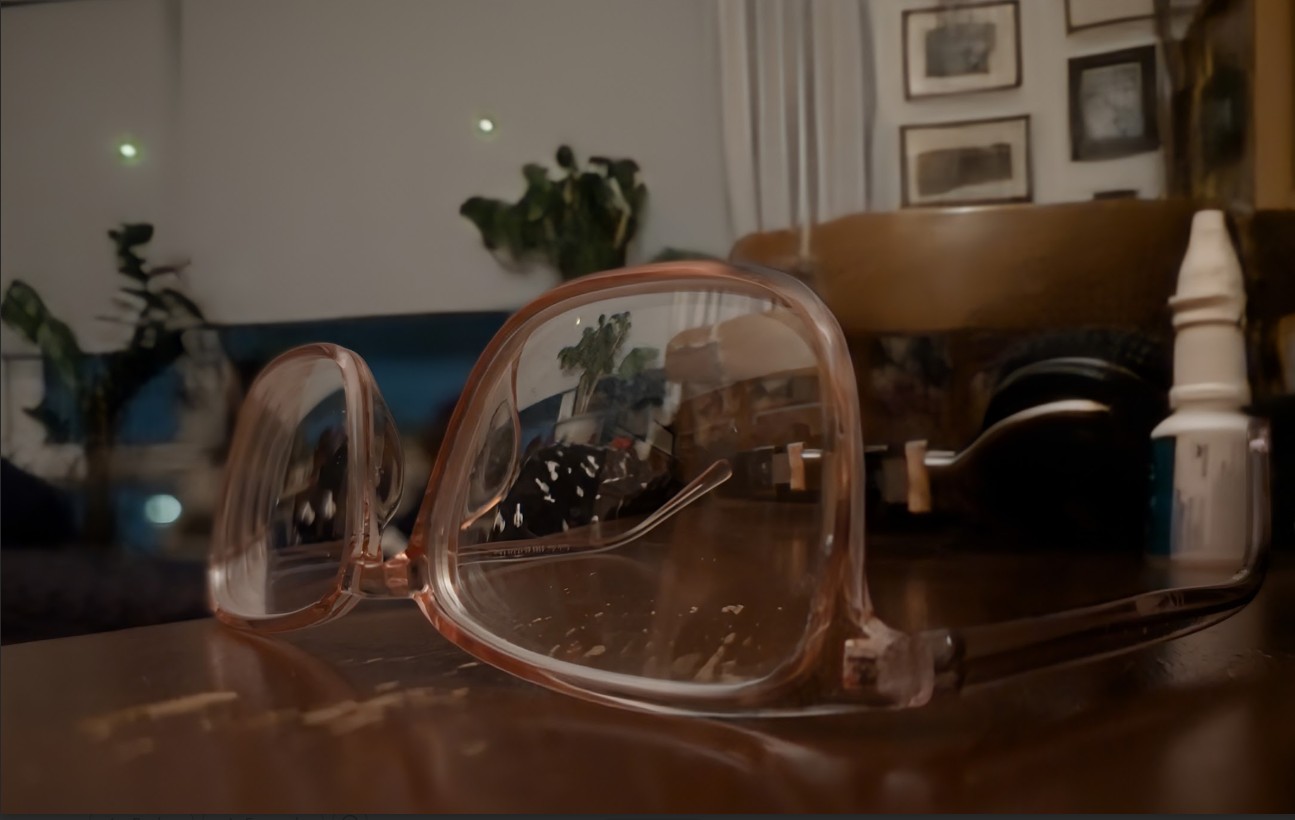
What do you mean, ambience? Do I not make a perfect Imam Bayildi? Do you even know what that means? The Holy Man Fainted: that’s the English translation. A dish so delicious the imam fainted when he sampled it. Aubergine stuffed with tomato and onion, slow-braised in olive oil. Delicate and beautiful—a taste of home. One mouthful and you are back among the olive groves on a cedar-scented evening, bright stars pricking the cloth of night. Now this, my love, is ambience you can’t buy. I tell you, the guests will come without any fancy decor.
.
Friday fictioneers is a weekly challenge set by Rochelle Wisoff Fields to write a 100-word story in response to a photo prompt. You can find other stories here
The face she wears is not her only face. Though she performs the role well, smiling and agreeable, every now and again the skin coruscates for a moment and I glimpse an altogether different creature beneath. This thing has teeth.
She will come for me one day—I know it.
.
Friday fictioneers is a weekly challenge set by Rochelle Wisoff Fields to write a 100-word story in response to a photo prompt. You can find other stories here
Look, mate, I’m not runes—I’m Cadoc. What the bloody hell do you think you’re doing, grubbing around in the dirt beside me? I’ve had a nice kip these last three thousand years, and then you come along. Some eternal rest! I would’ve preferred eternal feasting, but we can’t have everything, can we? Anyway, bugger off and leave me in peace. Oi! You can’t be lifting my skull. Put me back right now or I’ll curse you unto the tenth generation with the magical lore of the Celts. Oh, all right, I don’t know a curse from a warding spell. But show some sodding respect, mate.
Oi!
.
Friday fictioneers is a weekly challenge set by Rochelle Wisoff Fields to write a 100-word story in response to a photo prompt. You can find other stories here
I recently noted that at least one main novel competition was looking for stories driven by an inciting incident. An inciting incident is the event or thing that forces the protagonist to leave the status quo and which drives the rest of the story forward.
Many stories are impelled by inciting incidents. But not all. The following books have no inciting incident.
Virginia Woolf’s To the Lighthouse
Harper Lee’s To Kill a Mockingbird
Dostoeveksy’s Notes from the Underground
Gordon Lish’s Peru
Proust’s A La Recherche du Temps Perdu
The question now is what sets a story in motion if it lacks an inciting incident? Does it also lack change and momentum?
Let’s consider the most widely loved of the example stories, To Kill a Mockingbird. There’s certainly change and momentum as Scout grows up and learns the truth behind her father’s advice to understand other people. Particularly so as the dreadful events of the rape accusation and the trial unfold. But what drives the story is no “call to action” setting in motion a “quest”, or any other variant of the inciting incident. Rather, the driver Lee uses is repeating cycles of rejection and acceptance (or defeat and recovery) at the levels both of personal behaviour and of social structures.
Part 1: Boo. Scout her brother and her friend mock the reclusive Boo Radley. He returns only kindness. Scout’s father, Atticus, tells her that she should learn to see the world through others’ eyes. When the children sneak into the Radley house, Boo’s brother shoots at them. In their flight, Scout’s brother tears his trousers and loses them. They later find the trousers repaired and hanging on the fence.
Part 2: The Trial. When a black man is accused of raping a white woman, Atticus agrees to defend him, causing the community to shun him. The family’s black maid takes the children to her church where they are welcomed. They watch the trial from the “coloured” balcony. Though Atticus marshals evidence to disprove the charge, the all-white jury finds the accused guilty.
The aftermath: Boo again. The accused man runs and is lynched. The accuser’s father holds a grudge against Atticus and sets out for revenge. He attacks the children. Boo fights in their defence and kills the attacker. The sheriff agrees to pretend it was an accident. Scout understands her father’s advice.
Though the rape accusation is perhaps the most dramatic part of the story, raising the issue of racism. the real motif is the reclusive Boo Radley. He is mocked by Scout, her brother, and their friend at the beginning yet returns only kindness to them. By the end, when Boo saves the children, Scout learns to truly understand and respect him.
This does not make the children’s contact with Boo an inciting incident. It does not light the touchpaper to the chain of events that follow.
All the works in the list could be described as literary. So perhaps the conclusion is that genre stories will usually (perhaps always) have an inciting incident while literary stories do not necessarily need one. I might argue that among the inciting incident’s functions is telling the reader what kind of story to expect. If there’s a body in the library, you can be sure this is a mystery. If the protagonist feels a palpitation in her bosom when a brooding stranger appears, you can be sure this is romance. In other words, inciting incidents are reassuring genre signals. But they are not necessary for a story full of change, conflict, and momentum.
When the world went dark, I was frying bacon and eggs. I didn’t even notice for an hour. The breeze continued to stir the sycamore leaves, and the dog next door barked insouciantly. Only when I needed to make a phone call did I discover the internet and power were down. Annoying, but not terrifying. It would be back up soon. Wouldn’t it?
When the taps ran dry, I began to panic, to the rising clamour of gridlocked motorists leaning on their horns.
My neighbour is a prepper. Pulling out his radio, he called, “Can you hear me?”
.
Friday fictioneers is a weekly challenge set by Rochelle Wisoff Fields to write a 100-word story in response to a photo prompt. You can find other stories here
They don’t celebrate Christmas. No lights, no inflatable Santa in the front garden. The lack of ostentation is ostentatious. What kind of person doesn’t embrace the festive season? A bad person, obviously. These are bad people, and bad people should not live in the best house on the street. I think they may be foreign.
Comings and goings disturb the peace at all times of the day and night, and giggling on the darkened porch. Low morals, definitely.
It’s my duty to report them, that’s for sure. Then maybe I’ll get to move into the best house on the street.
.
Friday fictioneers is a weekly challenge set by Rochelle Wisoff Fields to write a 100-word story in response to a photo prompt. You can find other stories here
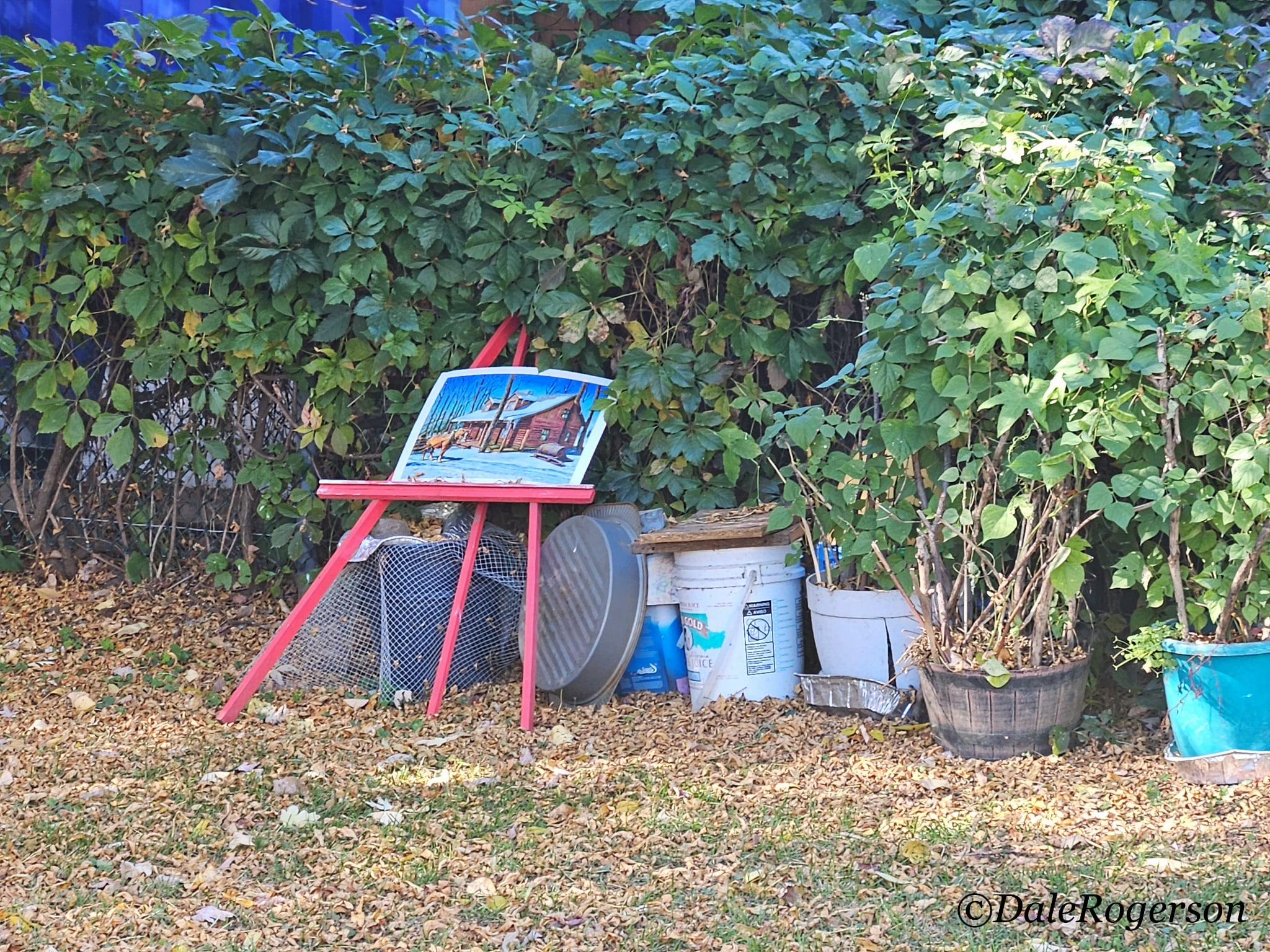
To the side of the trash, they’d stacked a red easel among the desiccated pot plants and old paint tins. On the easel, a hyper-realist painting depicted a cabin in the snow. I couldn’t help myself. Turning as I walked up the path to the door, no footprints showed. Of course—I was in a picture.
The cabin was empty, and the back door stood open. In the yard, a row of desiccated pot plants and old paint tins flanked an easel with a painting of a wooden house.
I couldn’t help myself.
.
Friday fictioneers is a weekly challenge set by Rochelle Wisoff Fields to write a 100-word story in response to a photo prompt. You can find other stories here
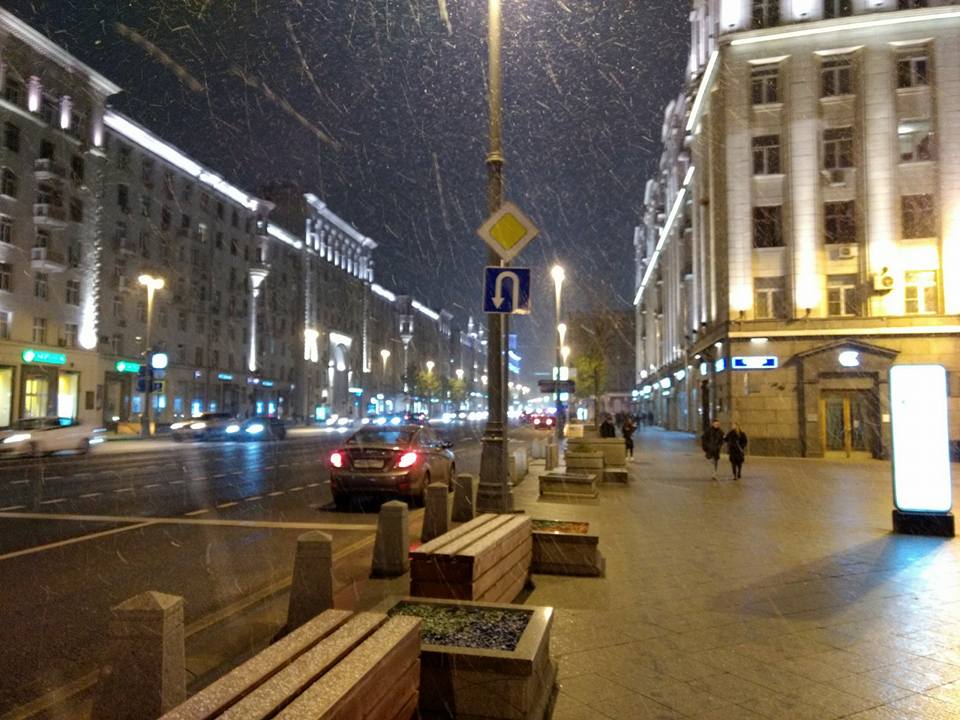
When the tendrils began to fall, it felt like light warm rain. At first. Only later did we realise what they can do. In the beginning, all was joyous, like snow on Christmas Day. We experienced bliss as the things dewed our skin. It was rapture.
Now we know that they secrete chemicals that trigger our neurotransmitters. Perhaps too late we’ve started to resist. Our homes are sealed tight, and we go out now only in hazmat suits.
But I’ve made a terrible discovery. The tendrils are not sentient—they’re weapons. After them, something else is coming.
.
Friday fictioneers is a weekly challenge set by Rochelle Wisoff Fields to write a 100-word story in response to a photo prompt. You can find other stories here
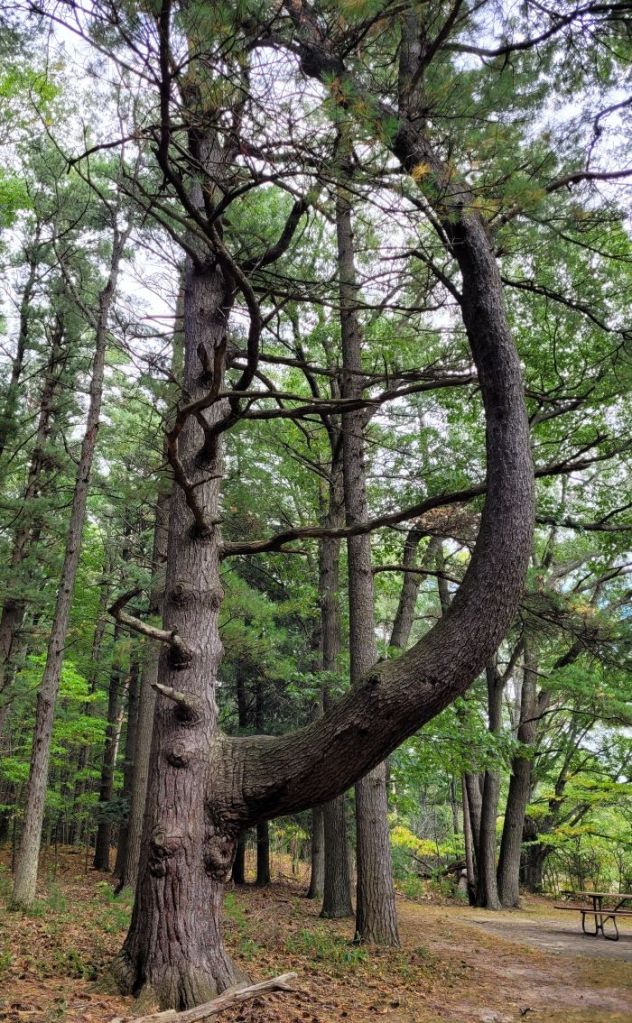
There’s a rhinoceros in the woods. I know—I saw it grazing quietly, supremely indifferent to the fact we don’t have rhinos here. Either my sighting’s mistaken, or we’re wrong about the rhino’s range. This dilemma must be where that awful phrase “my truth” comes from.
Truth is truth. But then we must consider the chain of deduction too. Perhaps a zoo escape? That would solve my existential crisis.
Phoning the zoo would verify the possibility. But if the escape didn’t happen, my crisis returns. Maybe better not to find out.
I’ll make a nice cup of tea and ponder
.
Friday fictioneers is a weekly challenge set by Rochelle Wisoff Fields to write a 100-word story in response to a photo prompt. You can find other stories here
He was in the presence of a miracle. Not the burning bush kind. No angels swooped down with fiery swords. But a miracle nonetheless. The air coruscated, and nothing was quite like it had been a moment before.
A voice which issued from no mortal mouth sounded the bell of his skull. “Go forth and slay my enemies.”
That was disconcerting.
Though feeling a little foolish, he answered, “I’m really not sure that would be the right thing to do.”
“So be it,” the voice replied. “Many are called, few are chosen.”
.
Friday fictioneers is a weekly challenge set by Rochelle Wisoff Fields to write a 100-word story in response to a photo prompt. You can find other stories here






 Neil MacDonald Author