Friday Fictioneers – War

photo-by-piya-singh-bittercharm-6
Photo prompt. Piya Singh

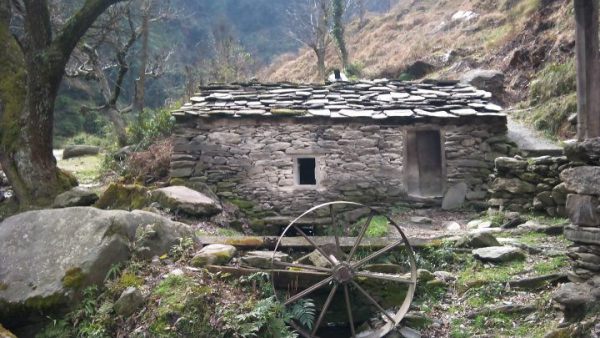
Reuven watched in horrified fascination as Tolbert’s white buttocks heaved between the girl’s legs. She struggled, and Tolbert slapped her face, then pinned her arms to the table. In moments it was over.

“Your turn, mate,” he said cheerfully, pulling up his breeches.

In an agony of shame, Reuven fumbled with his laces. He didn’t want the girl. And yet in war you could do anything, take anything. He wasn’t hard. But he didn’t want his friend to make fun of him.

“Come on, lads, gotta get this grub back to camp,” Carnvel called from the door.


Friday fictioneers is a weekly challenge to write a 100-word story in response to a photo prompt. You can find other stories here.

70. Developing an author platform

We aspiring authors are constantly advised to develop an author platform. In fact some publishers make it a requirement. So what is an author platform, and how do you make one?

A platform is a means for you to reach out to a target audience. In part, it’s the main thing about you as a writer – your published work. In part, it’s your profile on social media – whatever form of it appeals to you, blogging, tweeting, Facebook. Goodreads. I blogged about this in my tenth post, and I decided to take a re-look at what had worked for me on this blog.

author platform.png

When I wrote that first post, the blog had been going a month. It had received 90 views from 30 visitors, and had garnered three followers. Now, a year later, I’ve just passed 1,600 reads, with 588 unique visitors. As you can see, it’s a slow process, and, though slow and steady, the progress is not stratospheric. So it’s a good idea to get started and have your platform in place and growing before you’ve published your first book.

From May 2105 to February 2016, the blog chugged on, bumping along the bottom. On average, every month it attracted around 53 views from 23 visitors. Around three new people followed me every month. Then it all changed in March 2016. Average monthly views went up around seven-fold to 383. Each post is now read by 58 people, instead of the previous nine. Visitor numbers rose over four-fold to 119 a month. And follows more than doubled to eight a month. What was the secret? I joined a network, Friday Fictioneers, built around a challenge to write a 100-word story in response to a photo prompt every week.

blogstats

The boost came from two elements: firstly, I was posting stories; and secondly I was connected to a network of around 150 people who write for the challenge every week. So I was buying into an established readership. It’s not magic. Some of the new visitors are reading other blog posts as well as the stories. Views of non-story posts almost doubled from an average of 53 a month to 98. While it does promote my visibility, it certainly doesn’t allow me to post stupid messages like “follow me” or “read my book”.  Though the links are there on my site, only nine new people have clicked through to my publications.

I can’t suggest what will work for you. It will be different for every writer. But the general message is probably

  • However you start your platform, take it slow and give it time
  • Link up with existing networks

Friday Fictioneers – Beside the seaside

waves
PHOTO PROMPT © Rochelle Wisoff-Fields


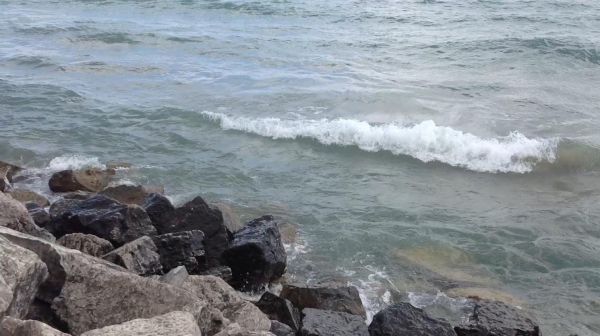
Brighton shingle crunching beneath toes, ice cream melting, deckchairs flapping in a sudden wind. Seaside holidays populated Vince’s memory of childhood.

This holiday was different, illicit, thrilling. Away from her family, he would finally lie with Ayesha. The one bed in their apartment offered a shocking promise.

Her transformation created the real shock. She entered the bathroom wearing hijab and enveloping abaya, and emerged in a wraparound floral skirt, her nipples visible against the T-shirt. She was beautiful.

“Don’t you feel undressed, without your normal clothes?” he asked.

“Those aren’t my clothes,” she laughed. “That’s my sexual Chemical-Biological Warfare suit.”


Friday fictioneers is a weekly challenge to write a 100-word story in response to a photo prompt. You can find other stories here

Friday fictioneers – Waiting

jhc7
PHOTO PROMPT © J Hardy Carrol

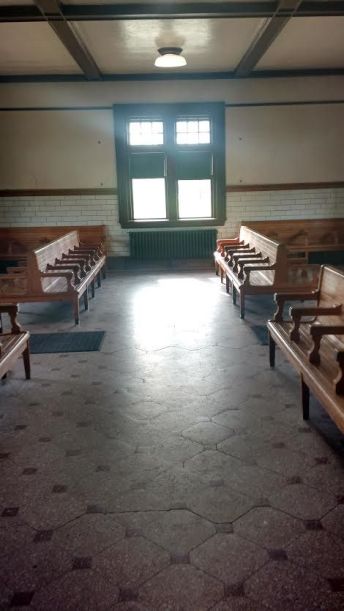
Waiting is the mother of change.  Zami reached to scratch his beard but touched new-shaven flesh. Change, he nodded. No longer bearded – no longer Zami, in fact. After testifying against Rashid, he could return to being Vince. At least until he was re-assigned. He shifted in the seat, the wood aching his buttocks. These benches asserted the court’s grandeur, offering little comfort.

The swing doors opened and Zami’s heart lurched. Ayesha was here to support her brother. Darling Ayesha. Her glare poisonous, she pointedly sat on the other end of the room. Never again!  Zami slumped and resumed waiting.


Friday fictioneers is a weekly challenge to write a 100-word story in response to a photo prompt. You can find it here.

69. The art of descriptive writing

Some simple tips can make your prose more vivid. This week it was my turn to lead an exercise in my writing group on the elements of description.  This what I said:

We use descriptive writing to describe a person, place or thing so that a picture is formed in the reader’s mind. This connects to the difference between showing and telling. When a writer tells something s/he merely communicates what happens. When s/he shows, the reader is drawn into the scene.

There are four main things to remember for good descriptive writing.

Use vivid sensory details

sensory

  • Use precise language. Avoid general nouns, adjectives and verbs. Use specific words and strong verbs to build the picture. For example, “he scrambled up the scree” is more powerful than “he ran up the hill”.
  • Make use of images, similes and metaphors.
  • Use all the five senses – sight, touch, smell, hearing, taste. Practice just observing quietly.


Less may be more. When describing a landscape, you’re trying to portray it comprehensively and precisely but not necessarily exhaustively.

less_is_more

  • Think about what’s important. A telling phrase to encapsulate a scene or a character can be better than a paragraph. For example. For example, this description of a distressed soldier in a story I wrote: “As he spoke, he drank, like he was firing and reloading a rifle, technically, methodically.”
  • Hemingway, famous for sparse descriptions of his characters, held that “action is character” and that “dialogue is also action and a projection of character”.


 It’s not just exteriors. Link to feelings too.

chair

  • You’re not simply describing a landscape within which your characters move. Allow the physical and emotional worlds interact. Description is more powerful when you show the gears turning inside those psyches.
  • Leslie Jamison advises “If you’re describing a chair, let your mind play with all the different things that chair could mean to various characters. Whose feelings were hurt in that chair? Who was betrayed in that chair? Who broke into his estranged father’s property to chop down the tree whose wood was used to build that chair?”


It’s not only about the words. Think, like a poet, about rhythm. The sound and rhythm of the words can capture a description.

rhythm

  • For example, look at how the rhythm captures the soul of these two ships in John Masefield’s poem, Cargoes:

Quinquireme of Nineveh from distant Ophir,

Rowing home to haven in sunny Palestine.”

And

Dirty British coaster with a salt-caked smoke stack,

Butting through the Channel in the mad March days.”


Exercise

This exercise is a technique for observing quietly.

Sit quietly for 5 minutes. Try to clear your mind. Don’t judge, just observe. DON’T WRITE DURING THE OBSERVATION PERIOD. Then write down, for each of the senses, the things you saw, heard, felt, smelled and tasted.

When you’ve done that, take another five minutes and try to come up with some great words or short phrases than would summon up a few of those things.

Friday Fictioneers – Blue is the colour

arena
Photo Prompt CEAYR

Blue is the colour of fear. That’s how it’s been ever since I saw the turquoise mother ship hovering over the city. I hid my face against Mum’s breast, not comforted by reassurance it was a concert hall. I’d seen the dark blue anti-grav beams, and I knew not to look into the light.

Red is the colour of greed. Well, of greed and anger. But the two go together, don’t they?

At twenty-seven I met you, haloed in forest glow. Green is the colour of safety. We lived green and happy until our son’s birth.  He was ultramarine.

Friday fictioneers is a weekly challenge to write a 100-word story in response to a photo prompt. You can find it here


Friday Fictioneers – Missing

grey-day-with-pigeons-roger-bultot
PHOTO PROMPT © Roger Bultot

A grey day, cloud lowering, lines of pigeons brooding on the wires above the blank eyes of empty windows. A glum prospect Harve had viewed a thousand times as a child. Yet something was missing, something not right about the photo.

“What is it? What’s different?” he asked Peter, but Peter couldn’t answer, He had never visited Harve’s home town.

Perhaps it was simply that the picture didn’t capture the bicycles, the laughter, the hopscotch, and Mrs. Brown’s washing hanging from her window. Images and memories are different.

But you know what’s missing, don’t you? Will you ever tell Harve?


Friday fictioneers is a weekly challenge to write a 100-word story in response to a photo prompt. You can find It here

67. Road-testing agents and publishers listings, and avoiding scams

How do you find an agent or publishers who will accept manuscripts without an agent? How do you know which ones are scammers, or vanity publishers? When I was around fourteen or fifteen, I got a Writers and Artists Yearbook for Christmas. It was a hefty book even then, listing agents and publishers.

In the era of online databases, you can find much of this information on the Internet, and more. A lot of it is free. Authors Publish, which will e-mail you a useful update every week, is a resource I use a lot. Last week, they published a useful article on all aspects of submitting a manuscript, full of links to other resources.

There are guidelines on things like writing query letters and constructing pitches. There are also databases for finding agents and publishers and checking their credentials. I test-drove a couple of these. The results were disappointing.

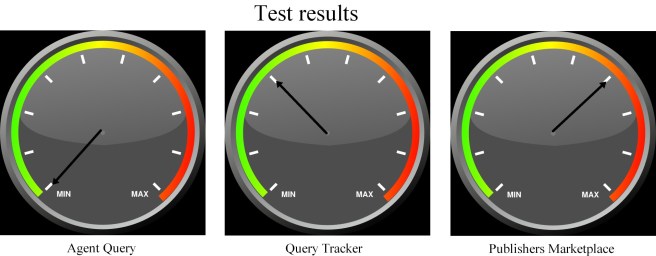
AgentQuery is billed as a reputable search engine for agents. Also listed were Querytracker, and Publishers Marketplace. All are free, though Querytracker requires you to join. Querytracker seemed the most useful for finding agents, because it lists country. Both QueryTracker and Publishers Marketplace contain listings of who represents who – a useful feature if you decide your writing is like someone who is already published, though they failed to find the agents for the two authors I tried.

AgentQuery is the only one that allows you to search by genre, but not so helpful if you’re outside the US, since it seems to list only US agents. I tested it on agents for my current book, and it returned precisely none of the agents I had selected to pitch to, all of whom are in the UK. Query Tracker found two of five agents I selected for testing, while Publishers Marketplace found three. I wasn’t convinced any of these sites would replace my own diligent research.
test results

Then there are some websites against which you can check the credentials of agents and publishers. Anyone can set up and agency or a publisher. Some are not very good, and some are scams. Anyone who charges a reading fee should probably be avoided. And some publishers are vanity publishers where you pay them to publish your work rather than the other way round.

Preditors and Editors identifies those who are not recommended, as requiring fees or offering vanity publishing. I tested the site on four small publishers, and it had no listing for any of them. Index to Agents, Publishers and Others is a community resource, driven by postings from users. It listed three of the four test publishers, though the information on one was out of date. You should bear in mind that user postings may or may not be accurate and dispassionate. Again. I felt it was probably better to rely on my own research.

With both agents and publishers, you can take a look at their websites. Ask yourself, do they look professional? Check out their authors – are they people with whom you’d feel in good company? Are they interested in your genre? Do they offer editorial and, in the case of the publishers, marketing and distribution? What are the royalty arrangements? Databases can help, but remember they are neither complete nor fully accurate.

Friday fictioneers – the fall of an angel

mary-shipman1

PHOTO PROMPT © Mary Shipman

The dresses hung pale from the trading post ceiling like angels descending, frozen in mid-fall. That fascinated and scared Padraig. The boy would lie, staring up at the reverse heaven of tables and chairs suspended from the roof. Until Ulrich found him in some fragrant corner, and shooed him back to work.

Padraig served. “Wire and nails, Mr. Johannsen.”

“Yes, Mrs. Franklin, one rolling pin.”

Ulrich had whatever you wanted. Until the whiskered stranger arrived.

“A diving compressor,” he demanded.

The shop seemed to shudder, and an angel fluttered to earth. Padraig hiked out the door into bright sunlight.


Friday fictioneers is a weekly challenge to write a 100-word story in response to a photo prompt. You can find It here.

Friday Fictioneers – Mud

barbed2bwire2bprompt1

PHOTO PROMPT © Madison Woods


It’s raining again as I leave the chateau. Bloody rain! It’s been raining since late July, halting our advance on Passchendaele.  Nothing can move through this mud. Before reaching the line, I’m already rehearsing my report.

But the battlefield vanquishes me. A bog, pocked by oozing shell craters, which sunk and drowned a quarter of a million men. Sticking from the mud, an arm that had once belonged to a living man, that had raised a pint with mates or caressed a sweetheart’s cheek.

God! What have we done?  I put my service revolver to my temple, squeezing the trigger.


Friday fictioneers is a weekly challenge to write a 100-word story in response to a photo prompt. You can find It here