Friday Fictioneers – Mystery

kent-b

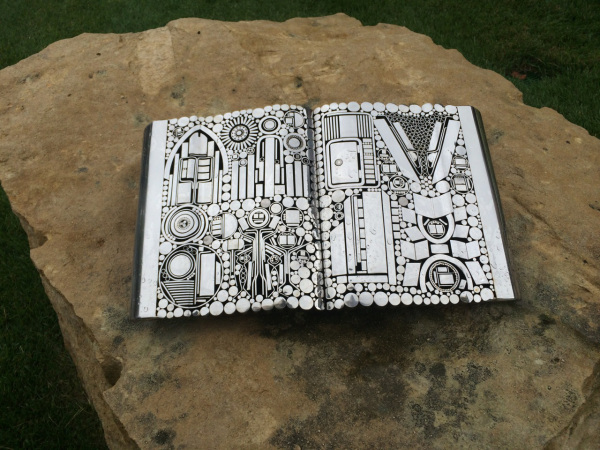
Photo Prompt: (C) Kent Bonham


“But how do we build it?”

Zack scratched his tousled head and smiled his goofy grin, spreading the vellum over the rock table.

“That’s not the question, Zack,” said Sparky. “The question is what will it do?”

Etched on the ancient parchment were arches and wheels, columns and sprockets.

Zack passed the plan under the scanner –a battered dustbin lid suspended on the bare ribs of an old umbrella – but the readout remained blank.

“I dunno,” Zack said, “is this a building or a machine?”

“Maybe both,” said Sparky. “Don’t matter. It’s the making that counts.”

Friday fictioneers is a weekly challenge to write a 100-word story in response to a photo prompt. You can find It here.


66. The curse of self-doubt

The second time is easier, like heartbreak. I’m no longer sure that my novel The Golden Illusion, which I’m pitching now, is good enough.  Two years ago I went through this with my book A Prize of Sovereigns. I had loved writing it, the characters whispering their stories in my ear. Friends had offered critiques, and I’d revised and revised. At last I was ready for the book to make its way in the world.

I sent it to a dozen agents, and a couple of publishers – they rejected it. Yeah, you’re supposed to believe in yourself and really, really want it. I’ve read all the stories about best-selling authors being rejected over and over again. Including the hapless publisher who rejected J.K. Rowling twice, once as J.K Rowling and then again as R Galbraith. But the thing is, I’m an evidence-based kind of guy, even where the evidence quality isn’t that great. And it’s not enough to believe in yourself, you actually have to have some talent too. Maybe I lacked ability.

Doubt

No matter how many of my writer friends told me the book was good, I discounted their views. Only a positive response from someone in the industry was going to work for me. I reckoned I had two choices – to press ahead pretending I had faith in the book, or to junk the thing and start on another one. I took the first option, and about a year ago it was accepted for serialisation by Big World Network. And my short stories started to get accepted by literary magazines. These magazines are useful because you can measure yourself against their acceptance rates, published in Duotrope.

So there was the evidence I needed that I had some talent and the book was okay. Two years out from writing it, as I record the weekly audio versions of each chapter, I have enough distance to read objectively – it seems pretty good.

The trick is to tread the high wire between on the one hand being open to criticism, and on the other retaining belief in your work. This doesn’t always work, and I wobble off the line in one direction or the other.

When the dreaded writer’s doubt has struck again, I realised instantly what to do – ask a professional. I sent it, and Prize of Sovereigns, to a literary consultancy and asked them to tell me which one I should major on. Personally I feel Prize is the better book, but harder to do an elevator pitch for. But what do I know? I’m just the author.

Friday Fictioneers – Wasteland

jhardy

Photo Prompt: (C) J Hardy Carroll

Grandpa scratched his thin beard, the turkey wattle flapping on his neck.  “Dammit, we used to make things, we were somebody.”

I didn’t know why he’d brought me to this derelict building, or what he wanted to teach me. Grandpa was just an old man, to be humoured.

“Can’t see how you’re ever going to amount to anything, Josh.” A sad shake of his head. “You can’t make a world out of selling each other insurance policies and burgers.”

Now, fifteen years on, with the DNA price crashing, Grandpa’s message makes sense.  I stare bleakly at my own wasteland.


Friday fictioneers is a weekly challenge to write a 100-word story in response to a photo prompt. You can find It here.


65. Flower viewing

Viewing the blossom in cherry season is a Japanese tradition, as is writing haiku in response. Here’s my take on the cherry blossom haiku.

cherry2

Blossom

The cherry came early this year

The world and I keep different time

Friday Fictioneers – Metropolis

mg-buildings

Photo Prompt: (C) Marie Gail Stratford

“From up here you can see more clearly.” The mayor steered Vincent out onto the viewing platform.

Wind whipped the patriarch’s improbably black coif, creating a wild buccaneering air.

“Look at my city, Vincent,” he said. “From here you inspect the whole animal. Where it’s snarled, which bits are diseased and must be replaced. You’ll never grasp that from ground level.”

“Father,” said Vincent, “you and I will never think alike. You picture profit while I see lives.”

“That’s too bad, boy. I always hoped you would take over from me.”

With a tender shove, he toppled the diseased branch.


Friday fictioneers is a weekly challenge to write a 100-word story in response to a photo prompt. You can find It here


64. The unknown reader

Know your reader, they say. What makes him or her read? How do you take their biggest problem and fashion a book around it? You have to understand more than the demographic your readers fit into, and what genre they read. That’s how the advice goes. Don’t just write, communicate – adapt your writing to your audience.

Am I the only one who stands helpless in the face of this advice? Is it even true?

Reader 1Reader 2

The truth is, I have no clue who my readers are.  I guess they’re the people who like what I write. My book, A Prize of Sovereigns. which is still being serialised, has had around 1,100 reads. But I didn’t write it for them – I wrote a book I’d want to read. The way power works, and what its limits are, was what interested me at the time. I set it in a fictionalised Medieval Europe. Any comparison with Game of Thrones was conscious. I wanted to see if I could manage a story told, like Game of Thrones, through multiple characters. But it was the book I would like to have read. One in which ordinary folk are protagonists along with the nobles, and where the high folk devise cunning strategies to bend events to their will.

I don’t mean I wasn’t interested in my readers. Quite the reverse.  The first draft is always written for me alone, but all subsequent drafts are for the readers, with errors removed, words honed, and storyline engineered. It’s just that those readers are unknown. And I see no way to find out unless I get lucky enough to be famous enough to have fans who communicate with me.

I guess you could pick a genre, look at what’s selling in it, and try to copy that formula. But that would be to break another fundamental rule of writing – write what you enjoy, because if you don’t enjoy it why would anyone else? If you write experimental literary fiction, then of course you must settle for fewer readers. I’ve read of writers who share early drafts of chapters with their fans and rewrite in response to the comments they get. Oh to be in such a position! To some extent, joining online writing communities, like Friday Fictioneers gives me a little of this feedback.

For now, all I can do is write what I care about at the time, and write it the best I’m able.  I share drafts with the one or two readers and other writers who like my work. Writing with those couple of people in mind is the closest I can get.

If you’re one of my readers, and I guess you are if you’re reading this, I’d love to hear from you. Tell me what you like to read, and what you don’t like, also any comments about my writing.  Derek, Paula, Sue, Toni, and a few others, I know you, so I’ll be able to spot if you’re fibbing. Please leave your comments here.

Friday fictioneers – The Mice

ted-t

Photo Prompt: (C) Ted Strutz


Patrick was a hoarder.

“Never can tell when something could come in handy,” he would say, scratching his chin and grinning. “They call it upcycling now.”

Rubbish, other people called it.

But the heaps grew. What happened was inevitable. They emerged, composed at first entirely of sound, not substance. In drifts of old papers and precarious castles of rust they rustled and scampered. Moving inexorable, always along the edges of sleep, always on the borders of consciousness, they came. Patrick knew now just that embarrassment God must have felt, noticing the first stirrings in some untidy little swamp.

Friday fictioneers is a weekly challenge to write a 100-word story in response to a photo prompt. You can find it here.


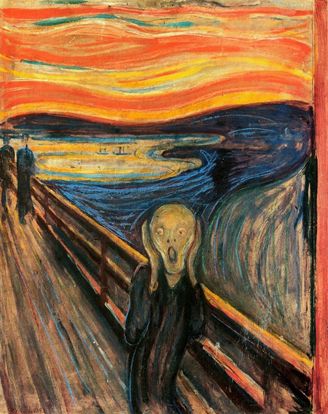
63. Writing a character with post-traumatic stress

They say write about what you know about. And that’s good advice. But your characters are slippery little eels. They start to live lives of their own and do things you’ve never experienced.  I had this difficulty with Reuven, the everyman character in my novel A Prize of Sovereigns. In this week’s serialised chapter  published on Wednesday, he returns from war, suffering from post-traumatic stress disorder. I have never been to war, though I have worked in conflict zones. I have never suffered from post-traumatic stress. How was I going to write that?

scream

Research, of course, is the answer. I read extensively, both clinical accounts and memoirs of war induced stress.  Reuven suffers most of the standard symptoms, which are, as listed on a veterans’ website:

  • Feeling upset by things that remind you of what happened
  • Having nightmares, vivid memories, or flashbacks of the event that make you feel like it’s happening all over again
  • Feeling emotionally cut off from others
  • Feeling numb or losing interest in things you used to care about
  • Becoming depressed
  • Thinking that you are always in danger
  • Feeling anxious, jittery, or irritated
  • Experiencing a sense of panic that something bad is about to happen
  • Having difficulty sleeping
  • Having trouble keeping your mind on one thing
  • Having a hard time relating to and getting along with your spouse, family, or friends

Plus, Reuven is prone to taking excessive risks.

Apart from research, the big help was writing the chapter not from Reuven’s point of view, but that of his wife, Jyoti (though an earlier chapter takes Reuven’s point of view).

“The man who came back from the war to Jyoti the second time stumbled to a broken rhythm. He limped on a stick. He found it difficult to grasp things with the remaining two fingers of his right hand. He could not hold a mattock or a hoe so easily anymore, and fieldwork came hard to him. Swinging a scythe was near to impossible. It wasn’t just his amputated fingers that made a scythe impossible. His broken ribs had healed wrong, and when he swung his body, the pain in his side was as if the scythe was cutting through his own flesh, not the hay. Jyoti had to do the hay-making for him.

But this was not the thing that troubled Jyoti most. Something was broken inside her man. He started at sounds. In any room he insisted on positioning himself with his back to the wall, facing the door. He would say with a laugh that this was so nobody could sneak up on him. But Jyoti did not think he was joking. He was alert the whole time to dangers that only he perceived, as if he was still at war.”

Writing from Jyoti’s point of view simplified the problem. This is Reuven, as she sees him. She suffers because he is withdrawn and snaps at her. She blames herself. And then one night he confesses the incident that is at the root of his self-loathing. He has still not told her everything that the reader already knows – not about the battles, nor about his fear of what he might do, nor still yet about his pathological risk-taking.

It’s through Reuven that we see the excitement of war. “For common folk like us, war is exciting,” he tells Jyoti . “You can do anything, take anything. It felt like I had some power.” And, it is through Reuven that we see the cost of war.

Friday fictioneers – river of stars


antiques-along-the-mohawk

Photo Prompt: (C) Rochelle Wisoff Fields

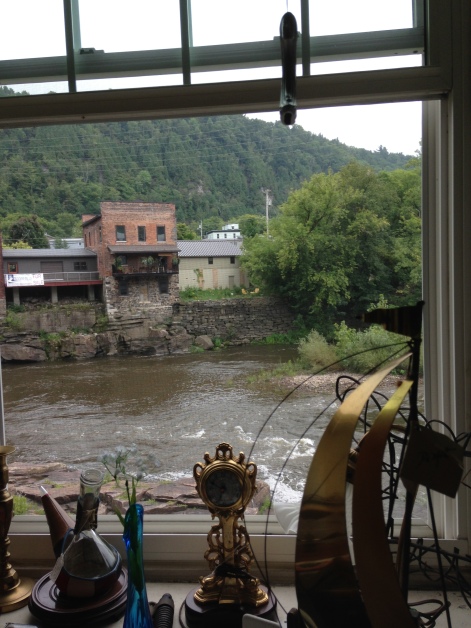
Below Jeno’s window, three girls washed clothes in the Vltava River. Voices raised in teasing laughter drifted through the open casement, along with the first warm breeze of spring. He ignored them, bending to his astrolabe and astrological calculations. The new Dutch telescope was trained, not on the stars but on Prague Castle across the river, on Countess Maria’s window. Jeno’s mind could span the heavens, but his heart feared the short crossing of the Vltava. This horoscope had to be without error if it was to gain him entry to the Emperor Rudolf’s court.

Friday fictioneers is a weekly challenge to write a 100-word story in response to a photo prompt. You can find It here.

62. How did she do that? – The Girl on the Train reverse engineered

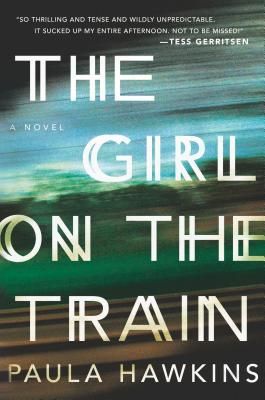
The Girl on the Train was one of the big publishing sensations of 2015. So it’s worth paying attention to how Paula Hawkins did this (apart from good writing and the normal quota of luck, of course). The novel is a thriller. But it’s a women’s thriller. By that I mean that it’s a confessional first-person glimpse of the emotional mess of the three main female characters. There’s a murder, but there’s also voyeurism, and the Barbie and Ken fantasy Rachel constructs about the couple she sees from the window of her commuter train every day.

Girl on the Train

Two things probably explain the book’s novelty. The commuter train is a masterstroke. We’ve all done it – peering from the train windows down other people’s back gardens and through their patio doors, comparing their lives with ours. This is a book written to be read on commuter journeys. The other thing that makes the book distinctive is that nobody, absolutely nobody, is likeable. Some readers hated that, but the truth is successful characters don’t have to be likeable, they just have to be interesting. That’s on trend. These days, we like our characters dark – black is the new white.

The requirements of the thriller format are scrupulously followed – secrets, mysteries, red herrings and danger. The plot gradually develops, folded-in with care like egg whites to the meringue of the confessional. In truth, the plot is not that complex, and it’s possible to glimpse the outcome from early in the read. But the inter-weaving is skilful.
The confessional style is also not new, though it is more Sylvia Plath than Brigid Jones.

And so, what about character? The story is told through three different points of view. Their narratives follow distinct timelines, converging on the climax. But the three characters, despite their different lives, are all very much the same person. This is probably intentional.

There is little by way of character development, which also disappointed some readers. Though, to be fair, Rachel emerges stronger at the end. Yet Hawkins’ crisp writing manages to keep us interested in the characters and the unfolding plot. She even manages, and this is no mean feat, the conceit of describing the murder in a first-person diary account by the victim and make it convincing.

Next long rail journey, pick up a copy of The Girl on the Train.