30. How sticky is glue? Footnote on editing software

Following on from my last post about the perils of slavishly following the dictates of a machine editor, I had this salutary lessons. I was editing a story in which a character quotes Shakespeare’s speech from As You Like It:

“All the world’s a stage, And all the men and women merely players; They have their exits and their entrances, And one man in his time plays many parts, His acts being seven ages.”

My editing software says the Bard of Avon made some schoolboy errors here. The whole thing has a “glue index” of 51.4%. Glue words are the 200 or so most common words in English, which slow the reader down. Worse still, the first sentence has 71.4% of “glue” words – all, the, world. ‘s, a, and, men.

Ha! Much ado about nothing.

29. Machina ex Deus

deus_ex_machina_2

Are machines stupid? Yes, of course. And here’s proof.

I love my editing software. I use Pro Writing Aid to ferret out all those repetitive words, sneaky adverbs, and missing commas. It speeds up my editing and never tires. BUT …….

It’s a machine – the programme has no clue what the words mean. The first line of the chapter from A Golden Illusion that I’m working on at the moment is

“The night was long and adventurous, the morning easy and languorous.”

I was rather pleased with this, and the way it got me out of having to write another sex scene.

Pro Writing Aid wasn’t so impressed, and picked this out as a “sticky sentence”, containing 63.6% of “glue” words. The target figure for such words is below 40%. The software explains glue words as follows:

“Glue words are the 200 or so most common words in English (excluding the personal pronouns). Glue words are generally used to link nouns, verbs, adverbs and adjectives. You can think of the glue words as the empty space in your writing. The more of them there are the more empty space you readers have to pass through to get to the actual meaning.”

Unthinkingly I obeyed since I was in the midst of correcting lots of mistakes. The revised sentence was

“The hours before dawn were prolonged and adventurous, the morning easy and languorous”,

which successfully banished the stickiness by paraphrasing the glue words “night” and “long”. Success! Except that it’s a terrible sentence and doesn’t convey the meaning I wanted. On re-reading, I reverted to my original.

Another thing the software searches for is sentence length. The target for the average number of words per sentence is between 11 and 18, and the maximum length for any sentence is set at below 30 words. Again, this is a reasonable rule, but when followed mechanically, it led to unreadable sentences.

For example, the programme drove me to amalgamate the following sentences into one.

“‘No, not exactly, but it’s a trivial private matter. As I understand it, something to do with a stain on the Parris family reputation.’”

The resulting 24 word sentence was grammatical and within the maximum word limit, but it was harder to read.

Another set of algorithms confirmed the reading difficulty of the sentence. Hemingway App (http://www.hemingwayapp.com/) checks the readability of text, though it will only analyse around 5000 words at a time. The long sentence required a reading age of 14-15 years, while the original corresponded to a reading age of 11.

So, the moral of the tale is don’t allow the god of creativity to become a slave to the machine. I’m a big fan of the machine editor, but make sure your human eye reads everything over afterwards. Correct the text to what you intended to say, even if that breaks a rule or two.

28. To publish or not to publish?

Who knew there were so many tactical decisions in a writer’s life? As earlier posts attest, I keep having to make decisions. The gentle escapism into the creative craft is only the first step on a long journey. My dilemma may strike a chord with you. The decision I have to make now is whether to continue the serialised publication of A Prize of Sovereigns. Sixteen chapters have already appeared, and I’m committed to publication of the first 24. Do I agree to the next 12 (which would mean around three quarters of the book has been published online)?

prizesovereigns_squclean_01I made up a list of pros and cons. I consulted friends. The pros are:

  • Since I’ve decided to switch to pitching my mystery novel The Golden Illusion, it will continue to provide exposure for A Prize of Sovereigns and a readership for my work.
  • Some publishers like to see demonstration that a book has enjoyed online success
  • Along with the serialisation, the book gets an edit

The cons are:

  • The readership this site attracts is not large. The first 12 chapters attracted 555 unique page views, and about 20 regular readers
  • Some publishers will not touch a book which has already appeared online
  • The edit is a micro copy-edit, not a strategic macro-edit.

Decisions, decisions!

27. Editing – am I a craftsman?

Do you love the craft of editing or do you have it? I’ve just had a first class carpenter working on building me new shelving units for my office at the moment. I asked him which bit of the design, manufacture and assembly of the units he enjoyed. He said that his pleasure came from a satisfied customer, but that the bits he most enjoyed were the highly technical intricate work I would never notice, except by their absence if he got them wrong. He’s a craftsman of the old school. That made me wonder whether I’m a literary craftsman.

I’m taking a break from micro-editing. By this I mean copy-editing – going through the text and checking the word use. For me, this is the most tedious part of being a writer. I struggle to find it creative. I have removed 39 instances of the words ‘was’ or ‘were’ and 24 instances of ‘know/knew’ from Chapter 13 of The Golden Illusion. I’m entitled to a rest.

When we write, which part of the process do we enjoy? The big-picture act of writing is a buzz for every author. You have an idea in your mind, and behold it comes to life as your story.

Different authors feel differently about what happens next. After you’ve written your first draft, you then have to revise it, and revise it again. You have to edit, cut, rewrite, hone, and polish. The first draft is one you write only for yourself. Usually, nobody else ever sees it. Subsequent drafts are for the reader. You have to revise with an audience in mind. Some hate the editing process, some love it. Some like bits of it but not others.

I enjoy macro-editing. This is where you’re working on the big picture – does your story work? Are your characters right? The main macro-editing issues are here (https://neilmacdonaldauthor.wordpress.com/2015/08/23/macro-editing-points-character-and-story).

On the other hand, I find micro-editing a pain. This is where you’re working on the nuts and bolts of the writing. This is the heart of wordcraft. The main micro-editing issues are here (https://neilmacdonaldauthor.wordpress.com/2015/08/23/micro-editing-points-writing/)

Both macro-editing and micro-editing are essential if you want your story to sing, and to be the best it can possibly be. To use the analogy of sculpture, it’s not enough to find the form hidden in the rock, you also have to shape it and smooth it and polish it.

I don’t get a buzz from the highly technical stuff, though I can force myself to do the micro-editing because I know it’s essential. I enjoy the texture and savour of finding exactly the right word, just as much as any other member of the wordcraft folk. But done repetitively over the whole 65,000 words of the current draft, it’s just a chore. I guess I’m not a craftsman at heart. Damn! There goes another delusion!

Micro-editing points: Writing

The reader
Who is the reader? Who do you want to read the book? Is it intended for adults or children? Will it appeal more to women than to men? Is there too much description and not enough action for your intended reader? Or too little?

Location
How have you used location? Readers today generally don’t want a lot of description, but every scene takes place somewhere. The location may make a difference to how the scene proceeds. A rocking boat may make movement uncertain. A noisy cafe may impede conversation.

Dialogue
Is all the punctuation correct, with quote marks, commas, full stops in the right places? Is there a new paragraph for each new speaker? Is it clear who is speaking? Endless repeats of ‘he said’ and ‘she said’ get tiresome, and you can miss them out for two or three paragraphs if you only have two speakers.

However, don’t make the mistake of using lots of synonyms for ‘said’ to create variety. Variety is essential in descriptive words but they make the reader stop and stumble if you use them for speech tags. Provided there aren’t too many speech tags, the mind skims over ‘he said’ easily.

As an alternative to the ‘he said, she said’ speech tags, you can use beats, small bits of action to label who is speaking. For example, ‘Tom scratched his head. “What should we do about it?”’
Inserting bits of action into long chunks of dialogue is essential. People rarely just sit and talk without interacting with their environment in some way. One of my bad habits is writing pages of dialogue without action that punctuates it.

Wordcraft
This is where micro-editing becomes really micro. You need to go through your text word-by-word. This is what I’m doing at the moment with The Golden Illusion. Obviously you want to check for spelling mistakes. But there’s a host of other things you need to check for too.

  • Favourite words: We all have favourite words or constructions we tend to overuse. Seek them out and destroy them. For example, I tend to writing ‘I’m not going to do that’ when it would be much simpler to say ‘I won’t do that.’
  • Overused words: Some words are routinely overused. All of us tend to overuse words such as can/could, seem, think/believe, feel/feeling/felt, was/were, know/knew, hear/heard, look, see/saw, watch/notice/observe, it, that, just and maybe. Slash them down. You can’t eliminate every one, but make sure you don’t overuse them.
  • Words that aren’t working for their keep: Also on the hit list, words that aren’t doing any work. For example, ‘It seemed to him that she was interested.’ The phrase ‘It seemed to him that’ is just padding. Eliminate words that aren’t pulling their weight.
  • Adjectives and adverbs: Look out for overuse of adjectives and adverbs. It’s often a sign of weak writing. Why say ‘She looked at him angrily’ when you can use a stronger verb and say ‘She glared at him’?
  • Sentence length: Don’t make it hard for your reader. Hunt down sentences that are too long, and break them up. As a rule of thumb, keep sentences below 30 words. Same thing with paragraphs – break them if they’re running to more than 5 sentences.
  • Pronouns: Overuse of pronouns at the beginning of sentence is another common fault. I’m often guilty of in first draft of having up to 40% of my sentences start with pronouns – “I opened the door and stared at her”. “She looked at me”. It makes for boring writing. Varying the sentence structure makes the writing flow – “Once inside the door, I stared at her.” As a general rule, keep those initial pronouns to 30% or less of sentences.
  • There are many other technical elements, such as avoiding the passive voice – it’s weaker to say ‘Tom was invited by Sue’ than to use the active voice ‘Sue invited Tom.’

Going through all these checks is time-consuming, but it’s worth it to improve the readability and power of your writing. I automate detection of problems by using editing software. This saves some time, but it still takes me the best part of a day to copy edit a chapter.

Macro-editing points: Character and Story

Soul
What is the book’s soul? What was the kernel of truth you wanted to communicate when you first had the idea? When you look at comments you’ve got from readers, do they advance or impede this soul? This may help you decide which comments to work on, and which to ignore.

Character

  • Are your main characters the right ones for telling your story? Usually you’ve got this right, but not always.
  • Is the motivation clear? What do your main characters want? Without motivation, the story won’t move forward. Is the behaviour of the main characters and the interaction between them consistent?
  • Are your main characters interesting? They don’t have to be likeable, but there must be something about them that resonates with the reader and makes him or her want to find out what happens to them.
  • Are your main characters’ voices distinct and consistent? Check that you haven’t introduced your own voice by mistake.
  • What role do the minor characters play? Do they have a purpose in the story? What would happen to the story if you cut them out? If the answer is ‘nothing’ then consider removing the characters who serve no purpose. Be ruthless. Kill your darlings.

Story
Does the story structure work?

Beginning and ending

  • Have you written a page-turner opening that makes the reader want to continue?
  • Does the opening set up the problem and does the ending resolve it? If not, do you need to remove or relocate the opening and the ending? One reader pointed out that she though the real beginning of The Golden Illusion comes in Chapter 3, and I have a horrible feeling she may be right.
  • What’s the inciting incident? Does it happen because of something the main character does, or is it external?
  • Is there a climax? Does it come at the appropriate place, just before the ending? Is there a denouement which ties up the loose ends and resolves the plot? I have a recurring tendency to stop too soon and not write a proper denouement.

Middle

  • Is there an arc of rising action, including setbacks?
  • Do scenes end on cliffhangers to keep the reader motivated?
  • Is there a logical connection between each scene and the next in this middle part? Can you say for every scene ‘this happens because ….’?
  • Does each scene move the story forward? If not, you know it, kill your darlings.
  • Do you need to raise the stakes? Have you pushed your main character as far as he or she will go? In the early drafts of The Golden Illusion, I hadn’t given my hero nearly enough of a hard time.

26. Pithy pitches that woo for you

woo

Words motivate. We all want to get better at writing motivating prose. I want to tell you about the EMV, my latest toy that helps with writing motivating words. EMV stands for Emotional Marketing Value. The toy is the Advanced Marketing Institute’s Headline Analyzer (http://www.aminstitute.com/cgi-bin/headline.cgi). It has nothing to do with creative writing, but rather it analyses advertising copy. We may think we don’t write marketing copy, but the elevator pitch and the blurb of your book is advertising copy. It aims to secure a sale. This is also true of the first sentence of your book. If you don’t hook the reader’s attention, they may stop reading.

The EMV Analyzer scores your headline or your elevator pitch according to the number of words with emotional resonance, in relation to the total number of words. It also tells you whether the appeal is primarily intellectual, empathetic, or spiritual. The explanation says the English language has around 20% EMV words. A professional copywriter will have 30-40% of these words in their headline, while a gifted copywriter will achieve 50-75%. The blurb claims “While many marketers ‘guess’ how people will react to various words and offers, we have determined a test which will give you an actual rating that you can use to judge how well received your copy will be to others.”

For fun, I ran the elevator pitch for The Golden Illusion through the Analyzer. I had to run it in two bits because the maximum word length is 20.

The pitch reads:

“A mystery story with a difference, in which a conjurer turns detective. Believing he is on the trail of an ancient illusion, he is, in fact, uncovering a conspiracy that hides a crime 150 years old.”

The EMV score was 22.22%. Probably not enough to capture the attention of that busy publisher in the elevator. The EMV words were all intellectually appealing

So then I rewrote it, trying out different words, finally reaching a score of 60.87% with this version:

“An unusual mystery story. An illusionist turned sleuth, believing he hunts an ancient illusion, reveals a conspiracy hiding an atrocity spanning the centuries.”

The EMV words were a mixture of intellectual and spiritual appeal. I’m not sure I’m going to trust my fate to an algorithm and I may tweak it further, but I like the change.

There is some academic fruit-loopery that accompanies the tool, if you’re that way inclined. It is said to derive from the work of US language scholar Dr Hakim Chisti. He “found that there are these basic underlying harmonics, a tonality that flows through language, which are in many ways more profound and powerful than the dictionary meaning itself.” Or if you prefer, you can ignore that, and just use the tool.

By the way, I also tried out the Analyzer on various headlines for this post.
“Getting maximum punch from your pitch” had a score of 0%.
“Making pitches work for you” scored 20% and was spiritual
“Pithy pitches that woo for you” got 50% and was spiritual

25. Frogs – paring down to the core of meaning

I’ve just finished editing a 750 word story down to 250 words for a flash fiction submission. Such editing is a good discipline – it forces every word to earn its keep. And that’s what tight writing is all about. When you have 5,000 words to play with (let alone the 80,000 of a novel) the writer can be profligate – many of those words are just along for the ride. This is how superfluous adverbs slip in, along with any number of lazy elongated clauses.

It occurred to me that at some word length, to be experimentally determined (see below), the number of words, smelted and tempered, must be so small that the piece transitions from prose into poetry. My 250 word story is still prose. But what if I reduced it to 100 words, or 50, or 25? At some point an alchemical transmutation must occur. It must become haiku, the Japanese 17-syllable poetry form.

Take for example the poem that is probably the most famous of all the haiku, Basho’s frog. I don’t speak Japanese, so I have no idea what the original is like. But the translation I first came across as a teenager was Nobuyuki Yuasa’s

Breaking the silence
Of an ancient pond,
A frog jumped into water —
A deep resonance.

On my shelves is also an early Victorian translation where the same poem receives this baroque rendering:

From out the depths
Of some old time pond
Is heard the plash
Where some lithe frog leaps in.

And then there’s James Kirkup’s brutally modernistic

pond

frog

 plop!

frog

You get the idea. It’s twilight, it’s eternal, it’s serene. Everything is ripe for realisation. And every word is doing really heavy lifting.

I looked on the Internet to find examples of very short stories. Fifty word stories were at a point of transition somewhere between prose and poetry. For example, this one by Brighid Ó Dochartaigh (http://scottishbooktrust.com/writing/love-to-write/the-50-word-fiction-competition/previous-winners)

I saw it through the swirling crowd. The red carnation tucked into your black wool jacket, just as you’d promised. Then he reached out and plucked it, lifted it to his lips, and smiled. You laughed and slipped your arm through his. I was only ten minutes late

But when you get down to ten words, the alchemy has occurred. For example, this one by pastelbitchquotes (https://www.tumblr.com/tagged/10-word-story):

I can’t keep kissing strangers and pretending that it’s you.

That’s haiku.

This led me in turn to wonder what the technical difference is between poetry and prose. In poetic writing, the words have to do double duty. Basho’s words are describing a frog jumping into a pond, but they are also evoking a sense of serenity. They carry a heavy charge of meaning. Perhaps that is one difference between prose and poetry – in prose, words mean what the mean, while in poetry words mean more than one thing. If you condense a piece of prose, like pressure on a lump of a coal, at some point the residual words take on a new form, and the coal becomes a diamond.

Metaphor, likening a thing to something else (‘shall I compare thee to a summer’s day’), seems to be central to this process. Metaphor goes to the core of how creativity and invention work.

I’m not just talking about poetry here. The same thing happens in science. One of the great unifying theories in science was James Clerk Maxwell’s electromagnetic theory, which showed that electricity, magnetism and light were all manifestations of the same thing. He demonstrated that electrical and magnetic fields move through space as waves travelling at the speed of light. He borrowed the equations for wave motion from the study of water. It was a metaphor to say light is like a wave. This is how we understand new things, by seeing that they are “like” something we already know. Or take Darwin’s key realisation that the competitive struggle for survival drove evolution. He wrote The Origin of Species at a time when the competitive struggle for survival was all around him in industrial Britain.

Metaphor helps us understand the new thing, but it also transforms our understanding of the thing we already know. It creates a new tension between the things, which is not a relationship of identity but rather of kinship.

This may be how words come to take on a double cargo of meaning in poetry – they reveal a kinship we haven’t seen before. A work needn’t rhyme, or even scan, to be poetry, but it must have that double cargo.

Of course, new metaphors fade back into prose. They become so over-used they lose any revelatory power, and become clichés. ‘Emotional roller coaster’, for example. Eventually we forget they’re metaphors at all, and they become literal labels. We’ve forgotten that the words ‘bonnet’ and ‘boot’ for a car were anthropomorphic metaphors. Sadly, in Japan, Basho’s frog is so well known it has lost its power. We are fortunate that, for the rest of us, it still resonates.
24. Inner Voices – where do stories come from?

I almost didn’t write this particular blog. And that was the clearest signal that it might be important to do so. I felt, and I still feel, there might be something perilous in it.

The topic is simple – where ideas for stories come from. The peril is more complex – the danger of playing the author, that of being thought fey, but perhaps most of all the fear of transgression. But it has interested me this week, and so it might interest you too.

An idea has been coming to me. It has felt powerful, so much so that I’ve roused myself from half-sleep to write notes, which are often incomprehensible the next morning. I think the thing that fascinates me is that I still have no clear sense of what the idea is. There’s a powerful sense of mood, and glimpses of a few scenes. See what I mean about the danger of being thought fey? I’m not a mystic, and I’m not subject to visions. But that’s what it sounds like when I try to describe the process.

The idea is strongly connected with an untrustworthy narrator, something I’ve been intrigued by for some time. The narrator conducts the reader through the story with godlike omniscience. But what if the reader knows the narrator is not to be trusted, because he’s a fool, a liar, or clearly deluded? How do they make sense of the story then? Can they form an independent judgement of the events the narrator is confusing? I don’t yet know who the narrator is, or what the plot is. But I know it has something to do with the way we spin stories to make sense of our world, or to create an impression of ourselves we want others to have. So the theme is something to do with the idea that we are stories we tell to ourselves and to other people. The structure is one of stories within stories, each mirroring the same tale. I know also that it has something to do with time, and with luck. I’ve had glimpses of a winding alley in a souk somewhere, in which sit two vendors, one selling time and the other luck.

Here’s where the danger comes of playing the author. I would like to be able to say “my characters appear to me, and whisper their stories in my ear” – that sounds so authorial. But it’s not quite like that for me. What comes first to me is an idea, a world if you like. The plot and the characters emerge out of the idea, sometimes only after quite intense interrogation of what the idea means. Somehow that seems inferior. It shouldn’t. Indeed, when I read what I’ve written here, it sounds as if should be quite authoritatively masculine. Nonetheless, to me it’s not how I imagine the act of writing. But, it’s the way I create, and there’s nothing I can do about that.

And I’m intellectually fascinated by the way this story is coming to me, in moods, in fragments. As if the story isn’t mine, but is something out there that I’m catching glimpses of. And this is the third danger, that of transgression. If I’m impatient, if I close on my prey too soon, I fear destroying it. I will give it words which are not its own, but mine.

You know that image of the writer who has struggled for ten years with his book? He spends hours at his typewriter (it’s always a typewriter not a computer). He types furiously, then tears the paper from the rollers and crumples it into the bin. He tears his hair. The words are not the right words – he searches for the perfect words. After ten years, his novel is one page long. At the top of the page is written “Chapter 1” and then a carriage return and then one word, “The”. I identify with that story.

That’s not say that I have writers’ block. Quite the reverse, I write quite fluently. I have a compulsion to write. What I identify with in that image of the writer is the concern not to transgress, not to distort the idea with clumsy inelegant words and sentences of grotesque shape and colour. Close your hands too soon, and the real story will vanish between them like fog.

For the moment, I’m able to be patient. I’m letting the idea come to me. I’m transcribing my handwritten night scribbles into computer files, and resisting the temptation to put too much order on them. I allow myself to believe that eventually they’ll form a pattern I can recognize as a plot, and that from the scenes will step the characters who alone could have performed those actions or had those thoughts. But patience is hard. The temptation of transgression is always there.

I’m holding the temptation at bay with the aid of other writers. At the moment, before I sleep, I’m reading a little bit of Songs from the Laughing Tree by A.U. Latif. A style less like mine would be hard to imagine. His imagery and confection of words is rich and more for tasting than reading. The prose doesn’t flow linearly but is wild as an enchanted forest. In other moments, in other moods, this might irritate. I could imagine being wanting to get on with the plot, and casting the book aside. But at the moment, it’s just right. I’m reading it less as a story than as a tool for exploration. Nightly, I slip into his world, and plunder my own subconscious with snares wrought by Latif. Perhaps, he is writing my story too. I know for sure that I’ve already purloined from him the merchant who sells time.

23. The kindness of other writers

I still haven’t resolved the dilemma I mentioned in the last post, about whether to switch to pitching The Golden Illusion. But I’m keeping my options open by working on polishing the existing rough draft. Only four people have read it so far, and it wouldn’t be where it is without them. Showing your work at early stages to others can really help.

When I finished the first draft, I had an uncomfortable feeling that the ending didn’t work. My wife was the first to confirm that. I also tested it out as a short story on Webook, and I got the same response. I can’t tell you what didn’t work about it, or I’d give the mystery away.

Then three other writers had a go at it. I want to acknowledge how important their criticism has been. My friend Toni from my writing group gave me a great edit of the first chapters. I posted the first five chapters on Webook and got some really useful feedback. Two of my Webook community, Trina and Alina, have been real champions of the book, convincing me to carry on with it. Alina even persuaded Webook to promote the project on their Facebook page.

Trina helped me make real improvements to the first chapter. The first draft started rather tamely with the main character, a conjurer, performing a card trick. With Trina’s input, I changed this. It now opens like this:

“The man raised the revolver, pointing it straight at my head. His arm didn’t waver. His finger tightened on the trigger.

I stared at him, unblinking, through the sheet of glass that separated us. There was a moment of utter silence.

As he pulled the trigger, I opened my mouth, and then all was noise. The gunshot cracked, echoing round the auditorium, with the tinkling cascade of breaking glass as the plate smashed.

I staggered, my neck snapping backwards. Then I drew myself upright, my lips curled in a triumphant smile that framed the bullet clamped between my teeth.”

Much punchier.

Alina went above and beyond the call of duty. She helped me identify what was weak about the ending. The antagonist wasn’t villainous enough, the final revelation wasn’t believable, and it lacked a concluding chapter. I’m very prone to the bad habit of failing to write the last chapter, and stopping too abruptly. I rewrote the last two chapters, and added a final chapter. And she not only told me the change worked, but spend two days closely editing them.

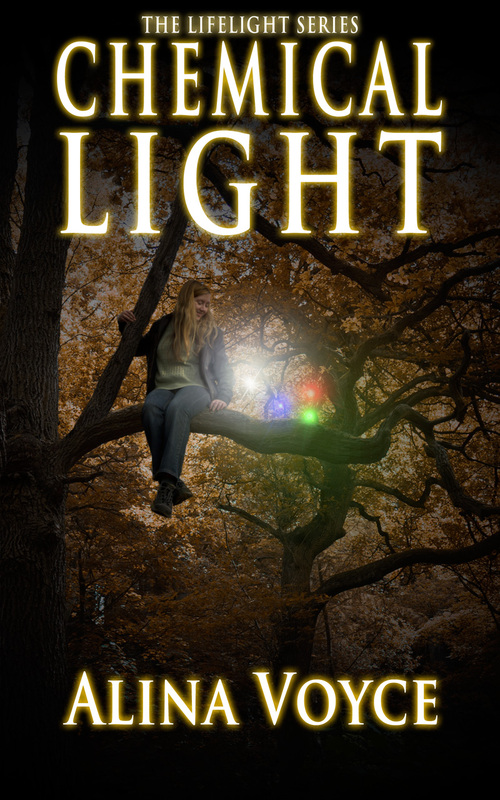
Alina is Alina Voyce, the author of the Lifelights series, beautifully written sci-fi romance. And I say that as someone who doesn’t even like romance. You can find out about Lifelights on her website http://www.alinavoyce.com/the-series.html.

Lifelight

Thanks so much to all four of you.