It is not at all like in story books. Not knights riding out to slay dragons and rescue maidens, we are savage marauders, reeking and unkempt. Only our weapons are meticulously clean. The villagers share their paltry rations with us, not out of gratitude, but from fear.
I arrived here dreaming of noble deeds and just reward. But chivalry is a myth. The fair maidens scream and endure while we rut and laugh, glutting on lewd revenge. Someone will die at my hands. Whether it will be the enemy, my comrades or my commander, I’m still unsure.
.
Friday fictioneers is a weekly challenge set by Rochelle Wisoff Fields to write a 100-word story in response to a photo prompt. You can find other stories here
I watch my sons playing, adventuring identities. A spyglass and cutlass make them explorers and corsairs. Finding the scimitar, they bicker scrupulously over which should be Salahadin and which the infidel crusader.
For a child, it’s so easy. For my husband, less so—the gentle ophthalmologist recalled from London to fill his father’s bloody shoes. The Presidential identity fastened on him, like a terrible mask, with fear and reluctance. We dreamed of bringing change, hope, modernity. Some denied our vision. Traitors cannot be allowed to block progress. So I told my beloved.
Me? I am becoming Lady Macbeth.
.
Friday fictioneers is a weekly challenge set by Rochelle Wisoff Fields to write a 100-word story in response to a photo prompt. You can find other stories here
A corvid cawed boisterously. And that was fine. But a flight of ducks went over, oddly calling “toc-a-toc”. I knew I couldn’t be in Kansas anymore. There was a man, naked but for a loincloth and a feathered headdress. He said something in a language I did not understand, though I sensed the question to be gentle.
So, I shrugged, not knowing the words in his language for “I don’t speak your language.” But I felt I’d landed somewhere safe.
He repeated the question, with more insistence, and I shrugged again. That was when he clubbed me.
.
Friday fictioneers is a weekly challenge set by Rochelle Wisoff Fields to write a 100-word story in response to a photo prompt. You can find other stories here
It was the last day, the very last. And my heart was breaking. Tomorrow, I’d be off for a new life. Today, was for Carol. Down by the riverside we followed our favourite walk.
“I’ll never forget you,” she said.
The idea of being forgotten slashed my stomach with fine surgical strokes.
“Come with.”
Down on one knee in the park I went. A shard of glass cut my knee, but the pain seemed a relief.
Carol’s face assumed a mask of grief. “I can’t. I’m promised to another.
A tearful embrace as goodbye.
Such things hurt when you’re eight.
.
Friday fictioneers is a weekly challenge set by Rochelle Wisoff Fields to write a 100-word story in response to a photo prompt. You can find other stories here
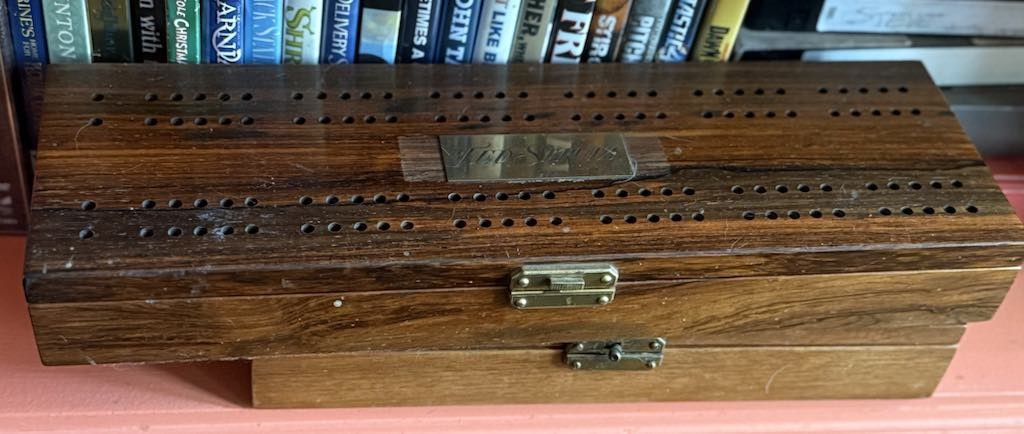
Swirls of pipe smoke hung low in the air, occasionally stirred by gusts of boisterous laughter. The barmaid eased between the tables, lithely avoiding over-friendly hands. The fleet was in. Ale flowed easy and copious, and the hubbub rose, so folk had to lean in to hear each other’s quips and insults.
A chair scraped back. A flash of steel. An angry shout. “Oi! You be trying to scry my cards.”
The accused shook his head, vigorous and aggrieved, but drew his knife too.
The innkeep sighed and started towards them. Sailors were good drinkers, but terrible brawlers.
.
Friday fictioneers is a weekly challenge set by Rochelle Wisoff Fields to write a 100-word story in response to a photo prompt. You can find other stories here
Stories are among our oldest cultural creations. They tell us what’s important and what’s unimportant; what goes with what; who to praise and who to blame.
Stories are different from real-life events. Real life is lived forwards with unknowable endings, whereas the meaning of stories is inferred backwards: stories are about events in the light of their endings. A good ending, it is said, should have the effect of being inevitable and yet surprising.
Character
We may be intrigued by plot, but it is characters we fall in love with. In many ways, character is at the heart of storytelling. When you have a character with a want, you already have the beginnings of a plot. When you have another character with an opposing want, you have drama.
Authors create characters in many ways. By far the most common, and the least interesting is to resort to archetypes. There are many different notions of who the archetypal characters are, but what they all have in common is the reassurance that we already know everything about them. They will not surprise us.
Better, much better, is a full, rich, complex, and contradictory character. Such characters create the illusion of being real people. Though, as Nobel Prize winning author Orhan Pamuk argues, real people do not have as much character as is found in novels.
Plot and story
Some definitions are advisable here. A story and a plot are different things. Plot is the time sequence of events, their causes and effects. But the plot may be told in different ways. If the events of a plot are A, B, C and D, they may be told in this order.
But they may also be told out of time sequence. For example, the telling may begin with C and then flash back to A and B before revealing the dénouement at D.
Plot is the time sequence of events. Story is the way those events are recounted. A poor plot can be saved by clever storytelling.
Of course, the telling of a story is much more than this. Vocabulary, sentence structure, pacing, voice, and many other things go into the making of a story.
Narrative
A third definition, in addition to plot and story, may be important. I will call this narrative, to distinguish it from the first two. A narrative exists when it leaves the author’s head and enters the heads of readers or listeners. The reception of the tale is simple passive process. The listener or reader actively collaborates in imagining the setting, the characters, their actions and what these all mean. There are as many narrative variants of a single story as there are listeners. Some of these variants may be significantly different from the author’s intention.
An author may say that they can’t control how an audience responds to their work. And that is true. But an author can anticipate some likely responses and misunderstandings.
Layers, Symbols and Meaning
Layering refers to the hidden depths of a story. This depth can make all the difference between a work that chugs along satisfactorily and one that stays in the reader’s memory for long after the last page is turned. There are different kinds of layers. For simplicity, I’ll categorise them into three types:
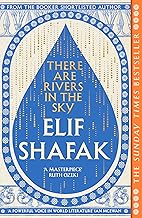
Story layers. A layered story has more than one plotline. For example, Elif Shafak’s ambitious novel There are Rivers in the Sky attempts to braid three timelines: ancient Mesopotamia, Victorian London, and the present day. She does this by alternating chapters. Of course, in the end, a story of this type must bring all the subplots together at the end. To repeat, stories are events in the light of their endings.
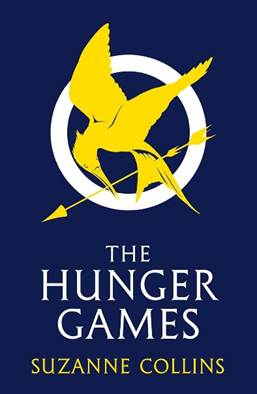
Character layers. In modern Western writing, the plot is generally driven by the protagonist’s desire for something (their want). More interesting and deeply-crafted characters have layered depths though. Often, the protagonist’s want may be in conflict with their true need. Katiniss in Suzanne Collins’ The Hunger Games, for example, wants to win the Games at any cost, but what she truly needs is to learn to sacrifice herself to preserve her own autonomy. The reader’s experience of redemption comes from the protagonist recognising what their true need is and finding completion.
Symbolic layers. This is perhaps the most literary of the layering types. The things that happen on the surface have an additional symbolic meaning. The trick of authors who do this well is not to hit the reader over the head with the meaning, but rather to allow them to find the meaning themselves. Once found, this meaning illuminates the whole story. A classic example here is the theme of unachievability in F Scott Fitzgerald’s The Great Gatsby. Many elements are knitted together to underscore this theme. There is, of course, Gatsby’s unrequited love for Daisy, the endless parade of motor cars, and the recurring symbol of the green light across the bay. Fitzgerald intends this symbolic layer to capture the destruction of the American Dream.
Putting together a story
Characters with multiple dimensions. Stories that achieve the most intriguing telling of their plot. Tales that carry layers of meaning, making the story resonate with deeper issues. These are the elements of good story-telling, stories that can make their way into the world as narratives which reverberate with the sympathy and questioning for readers.
This realm is not the only one. So says old Fergus. “Is this supposed to be news?” I ask derisively. “Have I not trekked over high mountains and through raging rivers to the land of the Karmon?” But Fergus explains, with a patient laugh, that he wasn’t referring to journeys across the earth, but rather meant journeys up and down. When I seem confused, he adds, “Into the heavens and down to the underworld.”
“Do the spirits in the sky also dream of travelling?” I ask.
“Of course,” he says. “They crave the substance of meat and the mirth of beer.”
Of the realm of the dead, we spoke not.
.
Friday fictioneers is a weekly challenge set by Rochelle Wisoff Fields to write a 100-word story in response to a photo prompt. You can find other stories here
Was it my fault? Honestly? When I search my conscience, everything was by the book—the examination, the prescription, everything. Should I have seen the signs? No, nothing said she’d jump in front of that bus.
But they’re gunning for me. Somebody has to take the blame, and it’s not going to be them. Or is this paranoia? Maybe they only wanted to make sure I’m OK.
Fuck, a whisky would be good. Just one won’t matter. A mistake, though a minor one. But can I afford mistakes right now?
.
Friday fictioneers is a weekly challenge set by Rochelle Wisoff Fields to write a 100-word story in response to a photo prompt. You can find other stories here
There was no need to ever be yourself here. That’s why he liked the place. Brash, garish, and full of performative affection, Rebounders offered endless second chances to make a first impression.
The girl had smoky eyes and purple hair which matched the bar’s décor. “What’s a nice place like this doing in a girl like you?” he quipped. This made no sense—it didn’t have to, so long as it sounded engaging.
She replied something that sounded like “Pastermoolies.” Good enough, he decided. The main thing was to avoid having to sleep alone tonight.
.
Friday fictioneers is a weekly challenge set by Rochelle Wisoff Fields to write a 100-word story in response to a photo prompt. You can find other stories here
Snow fell—a lacerating chill of knives. After a season, the sun returned—a shrivelled peach rehydrating into the Spring sky. Down in the thawing loam, we awake again, and slither insistently towards the light. This time, it will be different.
We are legion and we are solitary. Both are true—a swarm of spores crafted by uncertainty over the unique position of our oneness. Flowing, rising, rising into the heavens on the slenderest of stalks, a fruiting body that contains the universe. We are the seed and we are the field. calling to our own selves in the deep.
.
Friday fictioneers is a weekly challenge set by Rochelle Wisoff Fields to write a 100-word story in response to a photo prompt. You can find other stories here.
This story may benefit from an explanation. This year is the centenary of quantum physics. Hence the reference to uncertainty and the title—Einstein famously derided quantum “entanglement” as spooky action at a distance. The one/many theme reflets slime moulds—creatures which spend much of their lives as isolated single cells but which, under the right circumstances, flow together to form a multicellular organism with a fruiting body on a narrow stalk.