69. The art of descriptive writing

Some simple tips can make your prose more vivid. This week it was my turn to lead an exercise in my writing group on the elements of description.  This what I said:

We use descriptive writing to describe a person, place or thing so that a picture is formed in the reader’s mind. This connects to the difference between showing and telling. When a writer tells something s/he merely communicates what happens. When s/he shows, the reader is drawn into the scene.

There are four main things to remember for good descriptive writing.

Use vivid sensory details

sensory

  • Use precise language. Avoid general nouns, adjectives and verbs. Use specific words and strong verbs to build the picture. For example, “he scrambled up the scree” is more powerful than “he ran up the hill”.
  • Make use of images, similes and metaphors.
  • Use all the five senses – sight, touch, smell, hearing, taste. Practice just observing quietly.


Less may be more. When describing a landscape, you’re trying to portray it comprehensively and precisely but not necessarily exhaustively.

less_is_more

  • Think about what’s important. A telling phrase to encapsulate a scene or a character can be better than a paragraph. For example. For example, this description of a distressed soldier in a story I wrote: “As he spoke, he drank, like he was firing and reloading a rifle, technically, methodically.”
  • Hemingway, famous for sparse descriptions of his characters, held that “action is character” and that “dialogue is also action and a projection of character”.


 It’s not just exteriors. Link to feelings too.
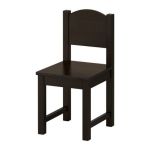
chair

  • You’re not simply describing a landscape within which your characters move. Allow the physical and emotional worlds interact. Description is more powerful when you show the gears turning inside those psyches.
  • Leslie Jamison advises “If you’re describing a chair, let your mind play with all the different things that chair could mean to various characters. Whose feelings were hurt in that chair? Who was betrayed in that chair? Who broke into his estranged father’s property to chop down the tree whose wood was used to build that chair?”


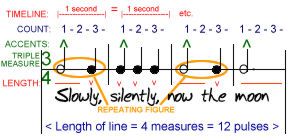
It’s not only about the words. Think, like a poet, about rhythm. The sound and rhythm of the words can capture a description.
rhythm

  • For example, look at how the rhythm captures the soul of these two ships in John Masefield’s poem, Cargoes:

Quinquireme of Nineveh from distant Ophir,

Rowing home to haven in sunny Palestine.”

And

Dirty British coaster with a salt-caked smoke stack,

Butting through the Channel in the mad March days.”


Exercise

This exercise is a technique for observing quietly.

Sit quietly for 5 minutes. Try to clear your mind. Don’t judge, just observe. DON’T WRITE DURING THE OBSERVATION PERIOD. Then write down, for each of the senses, the things you saw, heard, felt, smelled and tasted.

When you’ve done that, take another five minutes and try to come up with some great words or short phrases than would summon up a few of those things.


66. The curse of self-doubt

The second time is easier, like heartbreak. I’m no longer sure that my novel The Golden Illusion, which I’m pitching now, is good enough.  Two years ago I went through this with my book A Prize of Sovereigns. I had loved writing it, the characters whispering their stories in my ear. Friends had offered critiques, and I’d revised and revised. At last I was ready for the book to make its way in the world.

I sent it to a dozen agents, and a couple of publishers – they rejected it. Yeah, you’re supposed to believe in yourself and really, really want it. I’ve read all the stories about best-selling authors being rejected over and over again. Including the hapless publisher who rejected J.K. Rowling twice, once as J.K Rowling and then again as R Galbraith. But the thing is, I’m an evidence-based kind of guy, even where the evidence quality isn’t that great. And it’s not enough to believe in yourself, you actually have to have some talent too. Maybe I lacked ability.

Doubt

No matter how many of my writer friends told me the book was good, I discounted their views. Only a positive response from someone in the industry was going to work for me. I reckoned I had two choices – to press ahead pretending I had faith in the book, or to junk the thing and start on another one. I took the first option, and about a year ago it was accepted for serialisation by Big World Network. And my short stories started to get accepted by literary magazines. These magazines are useful because you can measure yourself against their acceptance rates, published in Duotrope.

So there was the evidence I needed that I had some talent and the book was okay. Two years out from writing it, as I record the weekly audio versions of each chapter, I have enough distance to read objectively – it seems pretty good.

The trick is to tread the high wire between on the one hand being open to criticism, and on the other retaining belief in your work. This doesn’t always work, and I wobble off the line in one direction or the other.

When the dreaded writer’s doubt has struck again, I realised instantly what to do – ask a professional. I sent it, and Prize of Sovereigns, to a literary consultancy and asked them to tell me which one I should major on. Personally I feel Prize is the better book, but harder to do an elevator pitch for. But what do I know? I’m just the author.

64. The unknown reader

Know your reader, they say. What makes him or her read? How do you take their biggest problem and fashion a book around it? You have to understand more than the demographic your readers fit into, and what genre they read. That’s how the advice goes. Don’t just write, communicate – adapt your writing to your audience.

Am I the only one who stands helpless in the face of this advice? Is it even true?

Reader 1Reader 2

The truth is, I have no clue who my readers are.  I guess they’re the people who like what I write. My book, A Prize of Sovereigns. which is still being serialised, has had around 1,100 reads. But I didn’t write it for them – I wrote a book I’d want to read. The way power works, and what its limits are, was what interested me at the time. I set it in a fictionalised Medieval Europe. Any comparison with Game of Thrones was conscious. I wanted to see if I could manage a story told, like Game of Thrones, through multiple characters. But it was the book I would like to have read. One in which ordinary folk are protagonists along with the nobles, and where the high folk devise cunning strategies to bend events to their will.

I don’t mean I wasn’t interested in my readers. Quite the reverse.  The first draft is always written for me alone, but all subsequent drafts are for the readers, with errors removed, words honed, and storyline engineered. It’s just that those readers are unknown. And I see no way to find out unless I get lucky enough to be famous enough to have fans who communicate with me.

I guess you could pick a genre, look at what’s selling in it, and try to copy that formula. But that would be to break another fundamental rule of writing – write what you enjoy, because if you don’t enjoy it why would anyone else? If you write experimental literary fiction, then of course you must settle for fewer readers. I’ve read of writers who share early drafts of chapters with their fans and rewrite in response to the comments they get. Oh to be in such a position! To some extent, joining online writing communities, like Friday Fictioneers gives me a little of this feedback.

For now, all I can do is write what I care about at the time, and write it the best I’m able.  I share drafts with the one or two readers and other writers who like my work. Writing with those couple of people in mind is the closest I can get.

If you’re one of my readers, and I guess you are if you’re reading this, I’d love to hear from you. Tell me what you like to read, and what you don’t like, also any comments about my writing.  Derek, Paula, Sue, Toni, and a few others, I know you, so I’ll be able to spot if you’re fibbing. Please leave your comments here.

46. Don’t worry about finding your voice


His_Master's_Voice

Here’s the bottom line – don’t worry about finding your voice, you never lost it. They tell aspiring writers you have to find your voice. Ignore the fear. Just write like yourself, not copying other writers, and you’ll be writing in your voice. No two people write alike, just like no two people speak alike.
The dread command “find your own voice” is as mystifying as it is unsettling. But your “voice” really doesn’t mean any more than the style in which you write, your typical choice of words, and the (usually recurring) issues you care about. Some writers have voices which are light and fast, others are descriptive and meandering, some are dark and brooding. All you need to do to see a writer’s voice is to look at how they write. For instance, this opening of a book:

Marley was dead, to begin with. There is no doubt whatever about that. The register of his burial was signed by the clergyman, the clerk, the undertaker, and the chief mourner. Scrooge Signed it. And Scrooge’s name was good upon ‘Change, for anything he chose to put his hand to. Old Marley was as dead as a doornail.

Mind! I don’t mean to say that I know, of my own knowledge, what there is particularly dead about a doornail. I might have been inclined, myself, to regard a coffin nail as the deadest piece of ironmongery in the trade. But the wisdom of our ancestors is in the simile; and my unhallowed hands shall not disturb it, or the Country’s done for. You will therefore permit me to repeat, emphatically, that Marley was as dead as a doornail.

The voice is rambling, and wordy, inviting the reader into a conversation. It couldn’t be anyone but Dickens. Of course, part of the reason for his wordiness is that his books first appeared as serials, and he was paid by the word!

In contrast, consider this, an opening from a completely different book:

It was a bright cold day in April, and the clocks were striking thirteen. Winston Smith, his chin nuzzled into his breast in an effort to escape the vile wind, slipped quickly through the glass doors of Victory Mansions, though not quickly enough to prevent a swirl of gritty dust from entering along with him.

Here the voice is spare and lean. This is the voice of that champion of plain English, George Orwell. But note how the clock striking thirteen immediately tells us we’re not in Kansas anymore.

Voice is more than just style, and the style may vary depending on the kind of story. You probably wouldn’t use the same style for a crime novel and a romance novel. A distinctive voice is also created by the recurring moods and themes in a writer’s work. Both Dickens and Orwell were concerned, in their very different ways, with social justice. You may have to write for quite some time before you can spot the recurring themes and characters your subconscious dishes up. A distinctive mood is very characteristic of writers such as Gabriel García Márquez, whose magic realism style mingles different planes of reality.

Many years later as he faced the firing squad, Colonel Aureliano Buendía was to remember that distant afternoon when his father took him to discover ice. At that time Macondo was a village of twenty adobe houses, built on the bank of a river of clear water that ran along a bed of polished stones, which were white and enormous, like prehistoric eggs. The world was so recent that many things lacked names, and in order to indicate them it was necessary to point. Every year during the month of March a family of ragged gypsies would set up their tents near the village, and with a great uproar of pipes and kettledrums they would display new inventions.

So the secret of finding your voice is just to tell the story in your own way, and make sure not to be boring. It’s nothing more than that.

43. Things I learned from the University of Iowa creative writing course.

The seven-week course is almost over now. I’ve been taking it since the beginning of October. I learned the term MOOC – massive open online course. I have no idea how many students there were – hundreds certainly. We’ve had video lectures from 15 writers about their craft, read nine pieces of writing, engaged in discussions moderated by six teaching staff, and done seven writing exercises.

Of course you don’t get in a massive free course what you get if you pay – namely critique and mentoring from a successful writer. But nonetheless, I’ve enjoyed it. There have been times when I’ve been cross and frustrated, most particularly by the apparent emphasis on the literary to the exclusion of other genres, and on the rubric of “trusting the writing”. This seems to privilege the subconscious over the conscious, the observational over the analytic, character over plot, and the inspirational over the perspirational. Ironic perhaps in the US which is the home to so many writing toolkits and methods.

It’s hard to say yet whether the course has made me a better writer. My wife says she can’t see any difference in my writing. But that would need time to ferment and bed-in. It’s certainly made me more fluent in what I can say about writing, and therefore probably a better critic.

I thought I’d share with you what have been the most important insights (for me) of the course.

Character

  • Characters should be interesting, not necessarily likeable
  • Characters change over time

Dialogue

  • Dialogue should appear lifelike but isn’t – the reader suspends disbelief
  • Don’t overdo dialect – a little goes a long way
  • Vary the size of speeches
  • Dialogue is about showing what can’t be told. Dialogue enables the writer to convey information, emotional information, psychological information, of which neither the characters nor the narrator are yet fully aware

Voice

  • Voice is an ambiguous term. It can mean authorial voice (i.e. style), narratorial voice, and character voice. Don’t worry about “finding your voice” – it’s natural, it’s just your own style.
  • Different characters will see the same setting in different ways
  • Voice is about mentality. Characters can be the embodiment of ideas, to keep the reader engaged with the idea
  • If voice is a mentality, rather than just diction, then building a character is building a world

Story, plot and structure

  • A storyline should achieve the quality of being surprising yet inevitable
  • Some writers are “planners” and other are “pantsers”. Neither is superior, they’re just how different brains work. Both merge at rewrite stage.
  • A story is the events that happen. A plot is the sequence of causality that makes these events happen (“plot” is the name for the events seen in the light of their endings) Structure is the decisions we make about how to deploy the plot to tell the story in its most compelling form. The storytelling may be better than the story
  • In literary fiction, which may be character-driven rather than plot-driven, narratorial or character voice is a major determinant of structure. In other genres, the author’s decisions about voice are relatively independent of decisions about structure
  • As well as point of view (POV), consider point of telling (POT), and point of entry (POE). POT is the point in time from which the events are being narrated. POE is the moment at which you enter the beginning of the story or some specific part of the narrative. There may also be a consideration of Point of Exit – when you decide to leave the story.

Setting, description and world-building

  • Description can show how the two worlds – physical world and emotional world of the story – interact. It should show us a singularity – a world we’ve never seen before and will never see again. Not necessarily a bizarre world, but one which overlays the physical wold with an emotional world. The external world becomes an extension of character
  • Vivid description is a portrait of a mind thinking its way through the world.
  • When you’re describing a landscape, you’re trying to describe it comprehensively and precisely but not necessarily exhaustively
  • Images can function in a work as powerful hinges, ways to transition between places and times and they can be powerful tools for transitioning within fiction. They give us access to the associative nature of memory, allowing us to suspend the linear movement of plot and plunge into the past.
  • Worlds, whether they are imaginary or real, not only have things in them, but relationships between those things which are governed by rules that often differ from those in the everyday world. So as well as observing, world-building involves analysis.

Some of these insights came from the lectures, some from dialogue with staff and other students. The final class of the course deals with the dreaded topic of revision. Since I’m still in the middle of that, I’ll leave sharing what I’ve learned from that until the next post.

42. What makes a good ending?

Happy_Ending

There’s any amount of advice out there to writers about how to write good beginnings. Beginnings are important, because if you don’t capture your reader’s attention in the first few pages, even the first few sentences, they obviously won’t read on. But there’s much less advice on writing endings, and they’re important too. If your reader isn’t satisfied by your ending, they probably won’t read anything else by you.

I stumbled on this question while doing the coursework for a fiction writers’ class that I’m taking with the University of Iowa. It had never consciously occurred to me before. Of course I already knew about plotting rubrics like Freytag’s triangle. I knew stories needed to have beginnings, middles and ends. But I guess what made me think about this anew was a discussion in the course about point of entry. Point of entry means the decision you make in a chain of events about where to start telling the story. It needn’t be the beginning of the chain, it can be the middle, or even the end. The choice of point of entry, like that of point of view, radically changes the way the story is told.

I began to wonder if there were similar choices about what you might call point of exit. And, of course, there are. The ending is the most important part of the story. Everything that happens has been leading up to the ending. Unlike real life, it’s the ending that determines everything that happens. It may take several attempts to find the right point of exit. Sometimes you stop too early, other times you stop too late. Or sometimes it’s even the wrong ending, which can involve you in going back and restructuring much of the story. John Irving, author of The Cider House Rules, famously writes his last line first.

I’ve mentioned before a story I wrote which had a beginning and a middle but no end. It deals with a character who begins to have memories that are not his. This is Zhuang Zhu’s Dream, which has just been published by Gold Dust. The lack of an ending was intentional. I mean, what would you do if you had memories that weren’t yours? You’d just get on with your life, there would be nothing else you could do. I sent it to Gold Dust, and the editor understandably rejected it. He wanted to know why the character was having these memories.

So, I wrote an ending. The protagonist goes to his doctor and is referred to a specialist. The specialist tells him that he’s probably confusing imagination and reality, not least because he lacks a particular structure in his brain which helps to keep the two apart. But then he is enrolled in a brain study in which he meets another subject who may, or may not, be the person whose memory he is sharing. I still left it open-ended. The reader could choose which explanation they preferred – the rational one that he was confusing imagination and reality, or the spookier one that he really was sharing memories with this other subject. The editor asked for a rewrite again. He still wanted to know what happened. So I added a clincher, and it got published.

The basic rule of endings is probably best expressed by Anthony Vicino who argues you have to keep your promises to the reader. He says:

“To write a good ending, you have to go back to the beginning and figure out what promises you actually made to the reader. If you’re writing a murder mystery, you’ve promised to reveal the bad guy. If you’re writing a light-hearted romance, you’re promising the main characters will get together, or at least have a happy ever after ending. If you’re writing a Narnia’esque portal story, you’re promising to return the reader to the regular world when it’s all done.”

But endings are about providing a satisfying close, not necessarily about resolution. You don’t have to tie up all the loose ends. Indeed, you shouldn’t or the reader will reject it as too neat, too engineered. A good ending should surprise, but also, in retrospect, seem inevitable. But it should also leave the reader with questions about what might be in store next for the characters they’ve come to know so well.

So there are probably five ways you can end a story well:

  1. Closure. The main dilemmas have reached a satisfying conclusion. This is the expected ending with many genre works. You can ask, has all the adversity and hazard you’ve heaped on your protagonist played out fully? This doesn’t have to mean that the protagonist has overcome the challenges – they may have failed. But ask: Is the conflict concluded? Has your protagonist come to terms with whatever flaws you’ve etched into their ever-suffering soul? If you’re writing a series, you won’t want to resolve or close all the dilemmas. Or you may resolve one mystery, only to tee-up another one.
  2. The plot twist. This works a bit like a joke. You trick your reader into thinking they understand the logic that drives the story, and then at the last moment flip it into another logic. This kind of ending is more appropriate to short stories than to novels.
  3. Mirroring the opening. This might be simply a return to square one, indicating that everything the protagonist has tried to do has failed. Generally it’s more satisfying if the mirroring takes the opening to a new level. You have to drop in hints during the beginning and the middle that lead up to this ending. This creates a sense of balance and completeness and is particularly appropriate for stories with a philosophical focus
  4. The open-ending. This is intended to leave your reader with questions, persuading them to think about possible answers. This is what I failed to do in the example I gave of my own story about the man with memories that were not his. It was an every-day ending, but readers don’t read in order to see a representation of the every-day. They read to escape or transcend the every-day. It’s hard to do this kind of ending well. Though the characters’ fates may not be extraordinary, they must continue to live their lives with new-found insight from what they have been through. This ending generally works best with character-driven tales.
  5. The revisit. After the ending, generally at the moment of climax, you revisit the characters in a final scene, often written as an epilogue. This is remote from the setting and timeframe of the main story, and may happen days, years or even generations after the main action. It gives your characters the opportunity to look back at what they have learned and what has happened since.

Whatever you do, the ending has emotionally involve the reader, and leave him or her feeling satisfied that you’ve reached some kind of conclusion or that lessons have been learned.

40. Zhuang Zhu’s Dream

Imagine you wake up one morning with a memory that isn’t yours. This is what happens to Farley Brent in my story Zhuang Zhu’s Dream. I’m thrilled that the story, after much revision, has been published by Gold Dust magazine. You can find the winter issue of Gold Dust containing the story here.

My plan was to make 2015 the year I got published in literary magazines. Magazines allow you to place yourself on a spectrum as a writer, because you can look up their acceptance rates. Gold Dust has an acceptance rate of 6.86%. So, I’m pretty happy with this. Zhuang Zhu’s Dream is the green blob at the left hand side of this chart of all my short story submissions in 2015. You can see what a fine collection of rejections I also have (the red blobs).

Acceptance rate

I hope those few green blobs among the sea of red may give some of you courage as well. If you research the market and decide where to place yourself, then read the magazines, and submit to the ones that are publishing stories that seem a bit like yours, it works out in the end.

39. The fourth wall – how readers collude with writers

A U Latif offers good advice to a writer – read, read with an author’s eye, study how the writers you enjoy achieve their effects.

I’ve been re-reading Michel Tournier’s The Ogre. His character, Abel Tiffauges, is a monster, a French prisoner of war who finds his vocation in Nazi Germany, carrying off on horseback Prussian children for a Nazi military school. I was powerfully struck by it when it was first published, almost half a century ago in a Europe still struggling to come to terms with the horrors of the Second World War. In an epoch when we are coming to terms with the magnitude of child abuse, the book resonates with new horrors.

This reading I made with an author’s eye. I wanted to understand how Tournier makes such a repellent character so fascinating. What is it about Tiffauges’ voice that arrests us? The basic answer is that Tournier meticulously creates his character’s world. At the core of that world is Tiffauges’ discovery of his obsession with portophoria – the ecstasy of carrying a child in his arms. A whole world view is built up around this, a philosophy, even a theology.

The curious thing about this authentic and utterly engrossing voice, is we know it to be false. I don’t mean that his belief system is a false belief. I mean we know that the erudition with which this world view is constructed is Tournier’s, not his character’s. Tiffauges, by his own admission, was an inattentive student at school and before the war liberates him to pursue his perversion, he works as a garage mechanic in Paris. Yet without demur, we suspend our disbelief concerning his grasp of philosophy.

The discovery of that suspension of disbelief was really interesting to me. We do it, of course, in the theatre, where the audience imagines a “fourth wall” through which they see the action on the stage. But I hadn’t realised that we do it as readers.

John Crowley, writing in Harpers, points to an even more surprising suspension of disbelief, where fiction is a simulation of reality rather than a real portrait of it. For us in the real world, time goes forward, with the ending of our stories unknown. Fictional characters inhabit worlds whose plots are events seen in the light of their endings. In our world, Crowley says, “causes produce effects; in novels, effects bring about causes.”

What are the limits of this collusion between writer and actor? Were Tiffauges to speak with a voice that was not of his time, if he were to say, for example, “whatever”, we would instantly detect something wrong. If a character has a heavy use of dialect or slang, or pauses and says “umm” or “like” too often, or speaks in the rambling and disconnected structure of real speech, the reader quickly lose interest and patience. Dialogue in fiction is more precise and polished than real speech. It is a simulation, not a copy, of how people really speak to each other. We don’t just accept the “fourth wall”, we insist on it. The odd slang word is enough to create in our minds the whole cadence of a voice. A few hesitations here and there allow us to form a picture of a character who speaks haltingly. A little goes a long way.

Equally, in stories written in the first person, we accept and expect that the narration may have an eloquence and flow that is absent when the character speaks.

So how do we, as writers, avoid a character’s voice becoming our voice? It’s a common problem, which I share, that our characters can all end up being us. The trick, for me at least, is getting to know your characters well. They’re not just ciphers for the author’s project. Of course, they’re all our creations, but they have their own lives, their own needs and obsessions, their own limits and strengths. You can’t make a character do something that doesn’t come naturally to them. Some are kinder than us, others are more skilful than us, and some are wholly alien.

A few tricks can create the illusion in the reader’s mind of an authentic voice. Verbal tics and mannerisms for example, remind the reader whose consciousness they are in. The opening lines of Catcher in the Rye are a good example:

“If you really want to hear about it, the first thing you’ll probably want to know is where I was born, an what my lousy childhood was like, and how my parents were occupied and all before they had me, and all that David Copperfield kind of crap, but I don’t feel like going into it, if you want to know the truth.”

We instantly get a clear sense of voice. The rhythm of the speech is one long opening burst, sixty three words long, one tumbling over the other. Once Holden Caulfield has launched in, he slows down. The next sentences are shorter and more measured. We also hear the adolescent bravado in the dismissive adjectives “lousy” and “crap”, while the “if you want to know the truth” mannerism offers truculent placation.

Recurring physical mannerisms also reinforce our awareness of character. If the character twists her wedding ring around her finger, we wonder if she really wants to take it off. In my novel A Prize of Sovereigns, Byrom, the “bad” king persistently strokes the battle scar across his face that twists his smile into a macabre grin. He likes the scar because men fear it and it hides his youth.

What brings a character to life for us is entering their mind, understanding how he or she sees the world and interacts with it. That is what makes us forget the fourth wall.

36. Conceptualists and Experimentalists – which are you?

headlights

The writer E L Doctorow famously said that writing was “like driving a car at night. You never see further than your headlights, but you can make the whole trip that way”.

This quote featured in two separate presentations this week in a creative writing course I’m doing with the University of Iowa. The presentations talked about “trusting the writing” to reveal the plot to you. One of the presenters, Boris Fishman, acknowledged that there are two types of writers, which he called conceptualists and experimentalists. Conceptualists plan the whole story and then execute it. Experimentalists discover the plot through writing it. But he is an avowed experimentalist and didn’t spend any time exploring the conceptualist approach.

The underlying and unstated assumption was that experimentalists are more artistic, while conceptualists are more mechanical. I’d like to suggest that one is not better than the other, they’re just two different kinds of brains. They’re probably two extremes of a spectrum on which all writers exist. In my local writing group we have members at both extremes. Derek can’t start writing until he’s plotted out the beginning, middle and end. Mary often doesn’t know what her story means even when she’s finished it. My message is that writers should write in the way that makes most sense to them. I want to offer a defence of the conceptualist approach.

Though I have written in both styles, I’m probably more of a “conceptualist”. I usually start with an idea that tickles me. That’s how my brain works. And I usually rough out, at least in broad terms, how the idea will develop before I start to write. For example, my second novel, which was something of “conceptualist”/”experimentalist” hybrid, was triggered by a curiosity about traditional Micronesian sailors, who navigate by means of imaginary islands. By the time I’d finished researching which Micronesian island to set it on, my main character, an eccentric school caretaker, had started whispering his story in my ear. The story was becoming a journey of self-discovery for the caretaker, a confrontation between British and Micronesian cultures. I had more fun writing this book than any other. I trusted the writing and looked forward to my daily journeys to Micronesia to see what my characters would do and discover.

Ultimately though, the book was a failure, and I’ve set it aside to be returned to in some remote future. Can trusting the writing lead to a confused mess? Sure. Does it have to? No. Can having a plan lead to mechanical writing? Sure. Does is have to? No.

A plan isn’t (or shouldn’t be) a template. There’s an old military adage that “no plan survives the first engagement.” Plans aren’t roadmaps of a fixed journey. They’re imaginings of the journey. Things happen, and you meet people on the journey that fundamentally alter what you thought would be your route of travel. A plan doesn’t tell you where you’re going, but it makes you sensitive to when reality starts to diverge from your imagining. Since we can’t adjust reality, we have to adjust our plans. The same, at least for me, is true of writing plans.

My hunch is that “experimentalists” have a plan too, but their conscious brains don’t know what the plan is until they start following it. “Trusting the writing” means letting your subconscious find the path. Being a “conceptualist” means letting your conscious brain find the path.

As an experiment, for this week’s assignment in the course, I’m trying to follow a purely “experimentalist” path. I wrote a sentence “X had run out of time.” Rapidly, X told me his name was Spuggy, an ex-soldier. Pretty soon after that I knew this was about a soldier’s return from war to a world that was no longer the one he had been born into. I still don’t know how it will end, but I can see that my mind is making and following patterns, even when I don’t decide them consciously.

In the end, at revision stages, both approaches merge. The “experimentalist” now knows what the plan is, and the “conceptualist” can work on where the writing has taken them.

27. Editing – am I a craftsman?

Do you love the craft of editing or do you have it? I’ve just had a first class carpenter working on building me new shelving units for my office at the moment. I asked him which bit of the design, manufacture and assembly of the units he enjoyed. He said that his pleasure came from a satisfied customer, but that the bits he most enjoyed were the highly technical intricate work I would never notice, except by their absence if he got them wrong. He’s a craftsman of the old school. That made me wonder whether I’m a literary craftsman.

I’m taking a break from micro-editing. By this I mean copy-editing – going through the text and checking the word use. For me, this is the most tedious part of being a writer. I struggle to find it creative. I have removed 39 instances of the words ‘was’ or ‘were’ and 24 instances of ‘know/knew’ from Chapter 13 of The Golden Illusion. I’m entitled to a rest.

When we write, which part of the process do we enjoy? The big-picture act of writing is a buzz for every author. You have an idea in your mind, and behold it comes to life as your story.

Different authors feel differently about what happens next. After you’ve written your first draft, you then have to revise it, and revise it again. You have to edit, cut, rewrite, hone, and polish. The first draft is one you write only for yourself. Usually, nobody else ever sees it. Subsequent drafts are for the reader. You have to revise with an audience in mind. Some hate the editing process, some love it. Some like bits of it but not others.

I enjoy macro-editing. This is where you’re working on the big picture – does your story work? Are your characters right? The main macro-editing issues are here (https://neilmacdonaldauthor.wordpress.com/2015/08/23/macro-editing-points-character-and-story).

On the other hand, I find micro-editing a pain. This is where you’re working on the nuts and bolts of the writing. This is the heart of wordcraft. The main micro-editing issues are here (https://neilmacdonaldauthor.wordpress.com/2015/08/23/micro-editing-points-writing/)

Both macro-editing and micro-editing are essential if you want your story to sing, and to be the best it can possibly be. To use the analogy of sculpture, it’s not enough to find the form hidden in the rock, you also have to shape it and smooth it and polish it.

I don’t get a buzz from the highly technical stuff, though I can force myself to do the micro-editing because I know it’s essential. I enjoy the texture and savour of finding exactly the right word, just as much as any other member of the wordcraft folk. But done repetitively over the whole 65,000 words of the current draft, it’s just a chore. I guess I’m not a craftsman at heart. Damn! There goes another delusion!