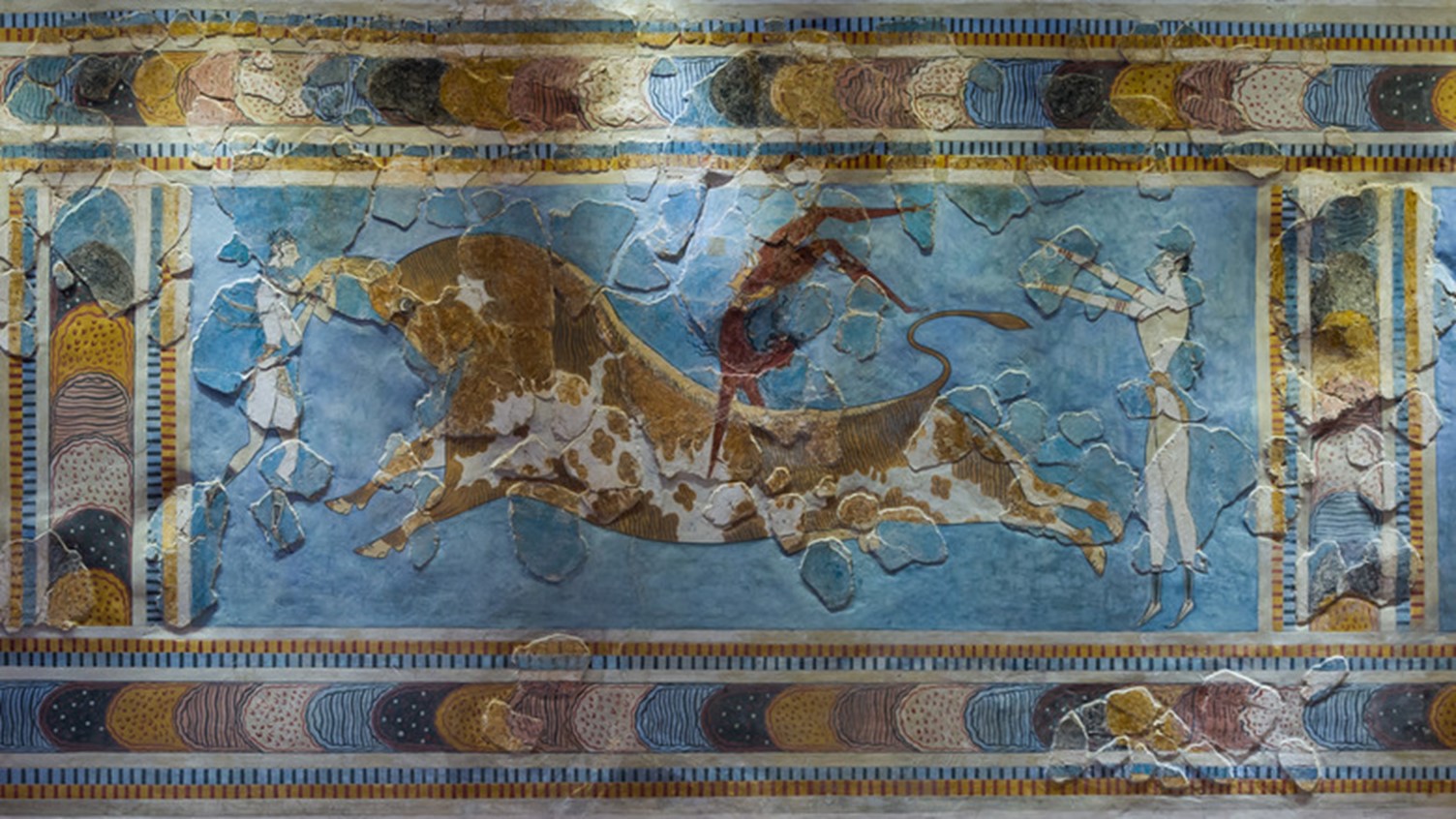
Hah! Think I’m trapped in this labyrinth, just waiting to be hunted-down by a bloke with a ball of thread and a stabby thing? Nah, I’ve got tricks, me. How do you escape a maze? Simply turn left at every choice point (or right if that’s your political inclination).
It would work, except this puzzle isn’t two-dimensional. There’s up-and-down as well, stairs ending blind, and abyssal falls.
And that’s not all. The walls move around—the place operates in four dimensions, changing over time. The nifty wheeze will be ensuring that when Theseus is, I am not.
.
Friday fictioneers is a weekly challenge set by Rochelle Wisoff Fields to write a 100-word story in response to a photo prompt. You can find other stories here
The probe took 148,000 years to reach the star, and the return signals need over 4 years. You might think, in all that time, we’d master quicker space travel. Wormholes, maybe; but no—we’re saddled with the ancient probe’s capabilities.
My avatar can roam anywhere around planet Proxima B: almost as good as being there, though without sensuous contact. And that is a big problem. The specific issue is Kr’Kara. First contact turned to scientific collaboration, and collaboration to intimacy. I love Kr’Kara, and they love me. Or did. Turns out they dumped me two years ago.
.
Friday fictioneers is a weekly challenge set by Rochelle Wisoff Fields to write a 100-word story in response to a photo prompt. You can find other stories here
Memory is an odd thing. It is nothing like a photo album. Every time we take out a memory to look at it, we change it, until all we’re left with of the original is a story constructed in the present.
I say this because the BBC’s rescreening of Jacob Bronowski’s trail-blazing The Ascent of Man series, 50 years on, has been an opportunity to compare past and present.
First aired in 1973, the 13-part documentary series is infused with Bronowski’s desire to put scientific literacy on a par with cultural literacy: an odyssey of the evolution of knowledge to parallel the 1969 series, Civilisation, by Kenneth Clark on the evolution of art. As a mathematician and a poet, Bronowski was eminently well-placed for this task. I remember being enthralled by the series.
Seen again, half a century on, there is much that seems fresh and modern in the intention and the production values. There is also much that obviously reminds us that “the past is another country: they do things differently there.” For instance, the lavish use of locations and the use of computer graphics (albeit clunky) is strikingly modern. And yet the very title comes from another age, as well as sentiments such as “”Man is a singular creature. He has a set of gifts which make him unique among the animals: so that, unlike them, he is not a figure in the landscape – he is a shaper of the landscape.” Not a mention of woman.
There are also some details where the science has changed. The suggestion in episode 1 that Homo sapiens evolved in the Middle East would no longer be made. Despite this, Bronowski’s profound humanity shines through in his recognition that earlier species of Homo were tool users, not so different from us.
All these connections and disjunctures from today’s thought, I had expected. It was in episode 2 that I began to be aware of a gulf I hadn’t anticipated, though I should have. It was, perhaps, no accident that the treatment of rock art in the first episode was located in a European cave. There is no visit to the prehistoric rock art of Africa or of Australia. Art, that defining physical evidence of symbolic appreciation of the world, was reserved a special place in the scholarship of the time. It had emerged, so the account ran, in Europe because it was European humans who took the first leap towards civilisation. There is, of course, a post-imperial project at work here, preserving and transmitting the earlier imperial idea of European exceptionalism and destiny.
I am not arguing that Bronowski was racist: episode 11 was partly filmed in Auschwitz. What I am arguing is that ideas which struck me on the rewatching as part of a racist canon were common scientific currency back then. In episode two, Bakhtiari nomads are described as fixed in an eternal and recurring present, repeating the same patterns and unable to innovate or develop, a life without futures. This dismissal shocked me. Today, our trope about such peoples has changed 180o. If anything, we romanticise them as living lightly on the land, close to nature, and being deeply spiritual. In fact, the Bakhtiari make stone carvings to guard their posterity into the future.
What episode two made me realise was how much, in the last 50 years, we have questioned and rejected the idea of development and progress. A voice from another age of optimism spoke to us in that episode as Bronowski moved on to the invention of agriculture. In the following episode, he tracks the rise of civilisation, literally the move to live in cities. He traces the move from mud houses to stonemasonry as intellectual: “the distinction between the moulding action of the hand and the splitting action of the hand … nothing has been discovered about nature herself when man imposes these warm rounded feminine artistic shapes on her.” He contrasts this with the splitting of wood or stone to reveal the pattern that nature has put there. This, he says, is the origin of science. A laying bare of nature which parallels our own ascent: “We, human beings, are joined in families. The families are joined in kinship groups, the kinship groups in clans, the clans in tribes, the tribes in nations. And that sense of hierarchy, of a pyramid, in which layer is imposed on layer.” All of this is accompanied by the sound track of a periodically tolling bell.
Let’s follow Bronowski and split this open to reveal the pattern within. He wants to argue that every city follows the same recipe: an agricultural hinterland yielding a surplus on which rises a strong central authority. The ascent of man is linear and inevitable. It runs from stone tools through the invention of agriculture, to cities, craftsmen, kings and soldiers, and on to increasingly sophisticated knowledge and art. And I remember now how natural and seductive this evolutionary schema seemed to me half a century ago.
We know now, of course, from archaeological investigation there was agriculture without cities, cities without agriculture, and cities without kings or hierarchy. The ascent of man was not linear and inevitable but rambling loops of creative experimentation with different ways of living together, of making meaning, and of making a living. Though Bronowski celebrates the experimentation and imagination of the inventions of the set-square, the plumbline, the arch and the flying buttress in the fashioning of civic structures like cathedrals, he ignores our equal inventiveness with social structure.
I grew up with this idea of set stages in social evolution and progress that led ever-upward. It was written into the history I learned and the books that I marvelled at. The confident idea of progress had its apogee in the Victorian era and its swan song in the world of the 1950s and 1960s after the Second World War. This idea too was a cultural invention.
He is no apologist for the hierarchies of civilisation. At the end of episode three, he says “The monuments are supposed to commemorate kings and religions, heroes, dogmas, but in the end the man they commemorate is the builder.” Nonetheless, watching The Ascent of Man again is an archaeology of the mind, a picking through and reconstruction of a world that has gone or is vanishing.
Josh was always a joker. “Shall I tell you the tale of how the guitar got its stripes?”
But I wasn’t listening—rapt in another tale as the instrument called to me. I had been born for this.
“For a thousand years,” I breathed, “This instrument slumbered in the stone. Champions have come and tried to draw it. And they failed, because I am the rightful king.”
Stretching out a shaking hand, I grasped the hilt.
“What stone?” Josh asked. “It’s on a rack, dummy.”
“Excalibur,” I intoned as the thing drew loose and heavy in my grip.
.
Friday fictioneers is a weekly challenge set by Rochelle Wisoff Fields to write a 100-word story in response to a photo prompt. You can find other stories here
Aromatic tobacco smoke circled his head—a cloud of knowing. The Great Detective regarded me with amusement. “You know my methods. All the clues are there. What do you see?”
He could be an annoying git. “Two rickshaws,” I muttered,
“And?”
“Nothing.”
“Exactly. Two rickshaws, sans drivers and passengers. And a river sans sampans. Where did they all go? The young ladies have disappeared down-river with the drivers in the sampan.” He puffed smugly on his calabash pipe. “The drivers were, in fact, lovers. This is a double elopement.”
Git! “Umm, very clever. But shouldn’t we check whether they’ve just drowned?”
.
Friday fictioneers is a weekly challenge set by Rochelle Wisoff Fields to write a 100-word story in response to a photo prompt. You can find other stories here
When you left, you took my certainty. You accuse me of betrayal, and I can see why, on consideration. But I dare not contemplate this. To do that would erode the precarious ledge of footing, risking a catastrophic plummet.
So, I must blame you, and counter this betrayal to mine. I should have known—your eyes were always too close together.
The truth is, I don’t know what to believe, or who. Trusting has become so hard, including in the story I imagined was mine—I am no longer made of whole cloth.
.
Friday fictioneers is a weekly challenge set by Rochelle Wisoff Fields to write a 100-word story in response to a photo prompt. You can find other stories here
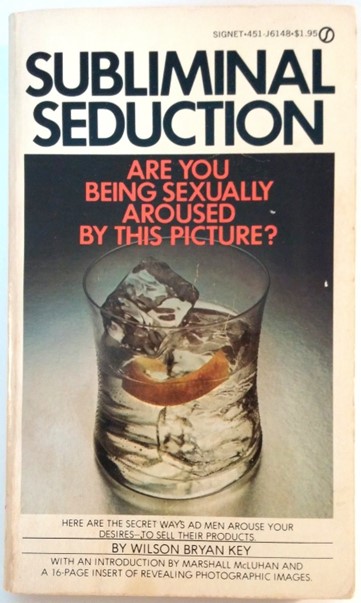
We notice only a fraction of the things that happen around us. But we see everything. And the things we see, but don’t consciously notice, affect our responses. That is the idea behind subliminal messaging. It’s also the idea behind literary motifs.
Ad-men, con-men and illusionists use subliminal stimuli. In a now-famous stunt, illusionist Derren Brown used the technique on two ad-men, manipulating what they had believed was their free creative choice.
Writers deploy a version of this too: motifs. Motifs are recurring elements in a story. The recurrence may be of images, words, sounds, ideas or phrases. They are often used to underline a theme, recurring like an “aura” before a migraine attack. We are not necessarily consciously aware of the repetitive pattern. But, so runs the theory, our subconscious mind takes it in and invests the scene with special meaning.
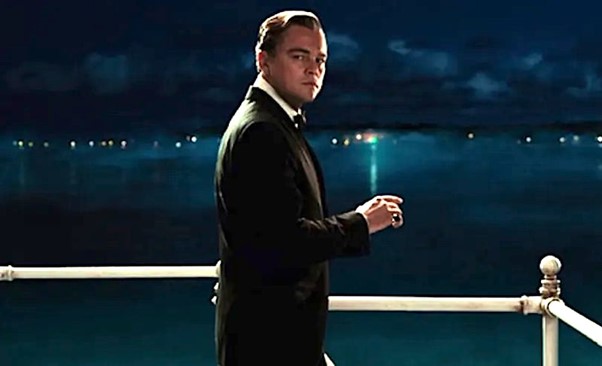
Take, for example, the green light in Fiztzgerald’s The Great Gatsby.
The light gets five mentions in the book. In Chapter 1, the light is mysterious, something Gatsby reaches towards. It next reappears in Chapter 5, shorn of mystery, when Gatsby understands it is the warning light that burns at the end of Daisy’s dock. At the end of the book, the narrator reflects “ Gatsby believed in the green light, the orgastic future that year by year recedes before us.”
The green light is the symbolic manifestation of what Gatsby craves and cannot have: acceptance into old-monied society. If you have read the book, did you notice the recurrence of the light? If so, did you spot all the other mentions of green? And of blue, yellow and other colours?
The whole novel is colour-coded[1]. Green is the colour of the American Dream, of envy and of renewal. The sad colour, blue, is the hue of Gatsby’s lawn and of the giant watching eyes of Dr. T.J. Eckleburg. Yellow, an aspirational colour, near gold, symbolises old money. Gatsby’s car is yellow.
You may not have noticed all these colour motifs (I didn’t). But, arguably, your brain did. If it didn’t, Fitzgerald went to a lot of construction trouble for nothing save to provide material for literary criticism theses.
Why would an author use motifs?
To create a deeper layer, underscoring themes. The green light in Gatsby, is pointing to the unachievability and emptiness American Dream. Or, the mockingbird in Harper Lee’s To Kill a Mockingbird is a recurring symbol of innocence that underscores the theme of the loss of innocence.
To provide a marker that summons a mood. In the same way that Derren Brown uses conditioned “anchors” to precipitate his subjects into particular mental states, the author may use a motif to trigger a state in the reader. For example, in Maaza Mengiste’s The Shadow King, the refrain “the only way is through it” summons up the characters’ pain and resolve.
To provide a ready memory jog to the reader for an infrequently occurring character. If the character dresses in an unusual way, or has an unusual tic or distinctive speech patterns, it helps the reader place who they are. For example, Captain Carrot in Terry Pratchett’s Discworld books, being a person of some purity, smells of armour polish and soap, while Corporal Nobbs has a unique aroma of cigarettes, skin cream and old cabbage. This use of motif has no symbolic connection with theme. In contrast, the smell of cold possessed by the Others in George R.R. Martin’s Song of Ice and Fire, underscores the theme of existential threat.
How to add motifs to your story
First, consider what the themes of your story are. Themes are the issues the story addresses, like, for instance, goodness is its own reward, or why does the toast always land butter side down? Then think about a symbol that would stand for that theme: for instance, a lamb for goodness. Then find several appropriate moments in the story to layer in the symbol. Voila! You now have a motif.
An object has been found. A citizen riding a horse encountered the aforementioned in the forest. This has rendered it impossible for your government to continue in its previous of policy of not noticing the object’s existence. A committee has been formed to officially notice and classify the thing. Experts will be called. We shall be making no comment on theories in social media about what the object is and whence it came. Citizens are advised that there is no danger.
.
.Friday fictioneers is a weekly challenge set by Rochelle Wisoff Fields to write a 100-word story in response to a photo prompt. You can find other stories here
There’s special spots around this world. If you know how to look, you can find them—places where the barrier’s worn thin between here and afar. One lies at the confluence of the White and Blue Nile, Others are set into quite ordinary streets.
Don’t frown at me that way, mate—I’m not funning you. Buy me another beer and I’ll tell you. Oh, you’re a gent, that’s better. How do you recognize them? Perspective. The perspective’s off, like, foreshortened.
What can you do there? Why, walk through, of course. But there’s always two doors. Don’t choose the wrong one.
.
Friday fictioneers is a weekly challenge set by Rochelle Wisoff Fields to write a 100-word story in response to a photo prompt. You can find other stories here
OK, I’m lazy. But why put in the work when a machine can do it for you?
It’s not like I don’t know how. I span golden webs of emotional prose for two decades, ever since the online world matured. Believe me, I understand how to craft a tale to tug at the heartstrings and evoke exactly the response I want.
Now, I only have to slip-in the right query. “Write me a series of letters that will get a rich widow to part with her savings.” And then I pop it into the mailer.
.
Friday fictioneers is a weekly challenge set by Rochelle Wisoff Fields to write a 100-word story in response to a photo prompt. You can find other stories here






 Neil MacDonald Author