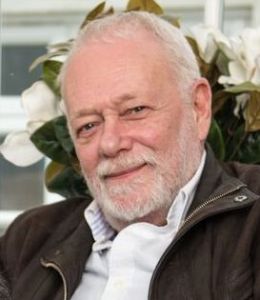
173. Appeal to intellect or emotion?

Durncilla Drysdale

Do stories have to appeal to either the intellect or the emotions? Can they do both? Can they do neither and still work as stories?

I am instinctively suspicious of setting up a duality of intellect and emotion. What we know shapes what we feel and what we feel shapes what we know, Consider this passage from Night by Elie Wiesel:

“But we had reached a station. Those who were next to the windows told us its name:

‘Auschwitz.’

No one had ever heard that name.”

This is a gut-punch. But only if you know what Auschwitz was Without that knowledge, the lines are bland.

All good stories have to appeal to our emotions, I think. That is to say, they have to engage us, make us care and want to read on. The most fundamental story technique for doing that is to make us empathise with the characters. But empathy is not the only technique or the only emotion stories deploy. 

Consider the well-known “hook”. This usually comes right at the beginning of the story: the device that makes us sit up and take the bait. The normal emotion here is intrigue, or curiosity. For example, this opening to Dodie Smith’s I Capture the Castle:

“I write this sitting in the kitchen sink.”

Who can resist reading on to discover why she is in the sink?

Curiosity is an emotion with a heavy dose of intellect. It is the emotion that drives scientific enquiry.  Even in empathetic reading, there is a strong dose of curiosity. The reader asks themselves “If I were in this situation, how would I react?”, because reading fiction is, among other things, a rehearsal for social life. We may enter story worlds to engage with situations we have never experienced (at least not in quite the same form) and to learn how we might behave and how we might exercise greater courage or to discover a more authentic way of being ourselves.

I would argue that stories that deploy emotion without intellect are almost always composed of “easy” emotional ploys: tropes we instantly recognise without occasioning any need for examination or self-examination. The king is good, the stepmother is bad, the innocent princess is imperilled. Such stories are almost always sentimental, giving us a simple and affirming “hit” of emotion without troubling us in any way. The emotions have bulk, but they fail to nourish us, Similarly, stories can appeal to intellect without engaging emotion: they deploy puzzles where we are interested in discovering the solution, even if the characters are flat. Detective fiction often falls into this category.

Finally, can a story appeal neither to emotion nor to intellect?  I would argue not, but I stand open to persuasion.

Friday Fictioneers – Imaginary Islands

PHOTO PROMPT © Brenda Cox

We could be anywhere—ocean stretching from horizon to horizon. The sun beats down in a featureless sky, shards of light dancing on little waves. Our small outrigger is lost, and I’m scared.

The old navigator points away to the left. “Guam.” And to the right, “Lizard’s Pool.”

“What’s Lizard’s Pool?” I ask.

He grins, hiding a private joke. “No such place.”

“Then how can you navigate by it?”

“Can’t see Guam either, right? The gods didn’t trouble to put an island there, so we must invent it.”

And we sail on, steering the trackless Pacific by imaginary islands.

.

Friday fictioneers is a weekly challenge set by Rochelle Wisoff Fields to write a 100-word story in response to a photo prompt. You can find other stories here

Friday Fictioneers – Lost City

PHOTO PROMPT © David Stewart

This is genuine—he feels it in his bones. The palace of a lost king in a lost city in the middle of the jungle.

“See those red brackets on the pillars,” I say. “Some set designer had an extravagent idea looking at coat hooks.”

He plays his trump card. “You think the Tourist Board secretly built an ancient settlement just so we could stumble on it? Like the Victorians who believed God hid dinosaur bones in the cliffs to fool us?”

At that moment, a warrior gives a blood-curdling cry and rushes us, sword raised.

Nice acting. I hope.

.

Friday fictioneers is a weekly challenge set by Rochelle Wisoff Fields to write a 100-word story in response to a photo prompt. You can find other stories here

Friday Fictioneers – First Contact

PHOTO PROMPT © Lisa Fox

A few screamed. Most were spellbound. Two in the corner had the rapture. Me, I thought, this doesn’t happen, not when you’re just on an ordinary evening out. A floorshow, sure—that was possible. But not a night sky ablaze with descending lights. I put down my burrito and stared.

In that moment, a hundred futures passed through my mind. A heavenly host come to bear us, the elect, to paradise? Descending flares of a bombardment? First contact?

Yes, first contact. Oh, brave new world! Though the voices spoke no known language, I understood. “Two hundred and ten enchiladas, please.”

.

Friday fictioneers is a weekly challenge set by Rochelle Wisoff Fields to write a 100-word story in response to a photo prompt. You can find other stories here

Friday Fictioneers – Playing my part

PHOTO PROMPT © Rochelle Wisoff-Fields

Beyond that door lies the future. Once through it, nothing will ever be the same again. The thought clutches at me with cold hands. They expect me to lead, but I don’t know how to be a hero. What if I pick wrong?

All that comes is images from movies. Once more unto the breach. Go, go, go. This seems to work. They follow: I play my part by playing the part. I’m even dashing. And it turns out, as we take the town for the Motherland, killing is pleasurable.

.

Friday fictioneers is a weekly challenge set by Rochelle Wisoff Fields to write a 100-word story in response to a photo prompt. You can find other stories here

Friday Fictioneers – The Price of Everything

PHOTO PROMPT © Amanda Forestwood

One look at his violin and I knew things had turned offbeat. It was saddle-stitched leather, the neck inlaid with mother-of-pearl. I didn’t like offbeat.

“That’s a very unusual instrument, friend,” I said.

He didn’t deny it, but capered, grinned and replied, “Well, I’m a very unusual person.”

Events could have gone in myriad direction from there. Perhaps he might grant me three wishes, or maybe his playing would summon ancient heroes. Magic was available in that moment.

Instead, I asked “How much does such a violin cost?”

The moment passed.

.

Friday fictioneers is a weekly challenge set by Rochelle Wisoff Fields to write a 100-word story in response to a photo prompt. You can find other stories here

Friday Fictioneers – Questioning

PHOTO PROMPT © Lisa Fox

Every one of us unique, individual; and yet so recognisably alike in our individuality. Marlon Brando astride his hog. Question: What you rebelling against? Reply: What you got? They asked, “Still using that greasy stuff?” And we stopped; almost overnight.

Do I actually have an essence or am I just a mass of conditioned buying habits? These questions lead only to madness. If I continue to play my part, maybe nobody will notice. And, maybe, that will be enough.

.

Friday fictioneers is a weekly challenge set by Rochelle Wisoff Fields to write a 100-word story in response to a photo prompt. You can find other stories here

Friday Fictioneers – Sunlight through lattice

PHOTO PROMPT © Rowena Curtin

Shine a light through a lattice and you get a pattern. Rina was like that—a gorgeous tapestry made of rips. You were drawn to the brightness, but that was just the places worn so thin the sky leaked through. The real Rina was the darkness, the inverse pattern you didn’t clock.

Now you might believe this is a tale of tragic unrequited love. Perhaps, you fancy I am a creature of unspeakable ugliness, doomed to be rejected, though I’m the only one who really knows Rina. Not so—I am the pattern, only there on cloudless days.

.

Friday fictioneers is a weekly challenge set by Rochelle Wisoff Fields to write a 100-word story in response to a photo prompt. You can find other stories here

172. Verbing

“Verbing” (or denominalisation) is the practice of turning nouns into verbs. For example, Matt Damon in The Martian saying “I’m gonna have to science the shit out of this.” The noun “science” here becomes a verb.

My enquiry into the habit began when I queried the use of the verb “to mirror” in a friend’s novel set in the early nineteenth century. I wondered if this was a modern habit, perhaps derived from the compressed speech of texts and Twitter.

Verbing is old. Really old.

Some verbing is so old, we no longer recognize it. We are unfazed by “rain” as a verb, or by the act of “buttering bread”. And the practice goes even further back. The verb “enchant” is a borrowing from Old French.

Techniques for verbing

As with enchant, putting the suffix “en” in front of a noun is a common way of making new verbs. Shakespeare was a great one for doing this. For example, Iago says to Othello “Do but encave yourself”. Many other examples of Shakespearean coinages can be found in David Crystal’s article Verbing: Shakespeare’s linguistic innovation.

Substituting a name for an action is another common technique. Hence we get the verb boycott (after Charles C Boycott, an English land agent in 19th century Ireland who refused to reduce rents for his tenants and was, in consequence, ignored by local residents). We also get the verbs hoover and google in this way.

Finally, of course, a noun can simply become a verb. Consider these lines from Shakespeare’s Richard II “Within my mouth you have enjailed my tongue, Doubly portcullised with my teeth and lips.” There are two examples here: enjailed and portcullised.

A powerful and direct, if not creative, example of this previous technique comes from the exasperated threat of parents to importuning children.  “Can I have an ice cream? Please?” “Ice cream? I’ll ice cream you.”

Why do we verb?

One motive may be impact. Compressed expression has an immediacy that a full exposition may not. For example. Burt Lancaster’s demand for a light, “Match me,” in the 1957 The Sweet Smell of Success. The brevity of the line conveys the contempt and power of Lancaster’s character for the character he’s addressing. Much more so than had he said, “Will you light my cigarette, please?”

The desire for brevity has two sources, a linguistic shortcut and the attempt to collide words together, as if in a particle accelerator, to study what new meanings come off. The shortcutting (the word is itself a verbing) is most evident in acronyms. LOL is a text abbreviation for Laugh Out Loud (and not, as David Cameron believed. Lots of Love). Like verbing, acronyms have a long history. Consider, for example, the ancient Roman SPQR (Senatus Populsque Romanus—the Senate and People of Rome) added as a stamp of anything official.

But, finally, let’s consider the particle-smashing element of verbing. When a noun (a thing) and a verb (an action) are smashed together, we get something new: a process, a thing that changes and evolves in time. Nouns and verbs (as well as pronouns, conjunctions, prepositions, adjectives and adverbs) are just convenient ways of cataloguing our linguistic world, not necessarily a reflection of the real world. It’s possible everything may be a process rather than an object or an action.  What would our world be like if we saw it this way? Here’s to the catting sitting matting!

Friday Fictioneers- Manifestation

PHOTO PROMPT © Jennifer Pendergast

Aunt Ethel was a great one for her manifestations. And, to tell the truth, they had drama—effusive ribbons of what she said was ectoplasm, infused with an extra-dimensional glow. No cheap quackery for Ethel, no knockings, rappings, or ghostly sheets.

Those seances had just one defect—she could never tell you what they meant, and translation of the spirit world’s message is pretty essential to the craft.

“It means whatever you think it means,” she would insist.

 Uncle Robert would always sigh and insist. “It’s ectoplasm, Ethel, not modern art.”

.

Friday fictioneers is a weekly challenge set by Rochelle Wisoff Fields to write a 100-word story in response to a photo prompt. You can find other stories here