There is a part of me that is different. I am not like the rest of you. But you can’t see it—I can pass. The dogs can’t smell me—I smell like you. The men with callipers will find no difference in my skull, or the shape of the nose, or the thickness of the lips. They’ll never make me wear a star. So, I walk among you, and hear how you talk about us. I live twice: once as myself, and again as one of you.
.
Friday fictioneers is a weekly challenge set by Rochelle Wisoff Fields to write a 100-word story in response to a photo prompt. You can find other stories here
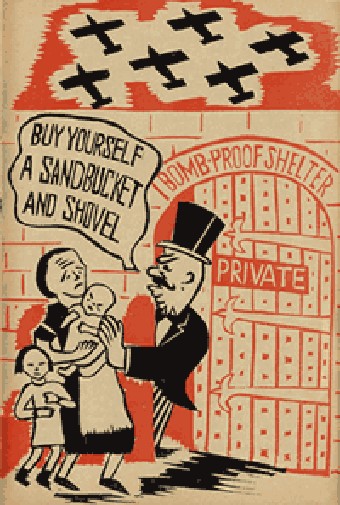
Eighty one years today, on 14 September 1940, the air raid shelter of the swanky Savoy hotel was taken over by working class families from east London.
The workers had a name for the wartime experience of the rich: the Ritzkreig. During the London Blitz of 1940, the rich crowded into hotels where there was opulence to be enjoyed, and whose deep reinforced basements allowed luxurious shelters from the German bombs.
The east end of London was on fire. For the poor, conditions could not have been more different from those enjoyed by the patrons of the Savoy, the Ritz and other top class hotels. One of the few deep shelters available at Tilbury was built for 1,600 people and was holding 10,000. Stepney people started to line up at midday to get a place. There were an estimated 200,000 safe shelter places available in London, but most were closed at night.
The stations of London’s underground railway system, the Tube, would have provided sanctuary. But they too were locked at night.
Phil Piratin, one of the organisers of the invasion of the Savoy describes what happened on 14 September.
“We gathered some seventy people, among them a large sprinkling of children, and we took them to the Savoy Hotel. We had heard from building workers of the well-constructed and luxurious shelter which had been built for their guests. We decided that what was good enough for the Savoy Hotel parasites was reasonably good enough for Stepney workers and their families. We had an idea the hotel management would not see eye to eye with this proposition, so we organised the ‘invasion’ without their consent.”
I’ve used this event in the novel I’m working on, Boundarising. The protagonist, Sol, and his companion, Greta, arrive at the Savoy hotel in late 1944, just after the D-day landings. The Germans are launching V1 rockets at London, so the pair take to the Savoy’s cellar:
“This is a paradise,” I said. “Not at all what I thought air-raid shelters were like.”
She laughed. “That’s what the good folk of east London thought four years ago, at the height of the Blitz, when they broke in here.”
“Why did they do that?”
She put her finger to her lips and glanced about her in a pantomime of secrecy. “To highlight the lack of shelters for the poor. The Communist Party declared that” and here she quoted “‘what was good enough for the Savoy Hotel parasites was reasonably good enough for the Stepney workers and their families.’”
The way she described it made me feel she was sympathetic to the trespassers.
She laughed, “ The management tried to get them out, but there was an air raid on, and they couldn’t very well turn children out into the streets under the bombs. The waiters were having the time of their lives, and gave them tea and buttered bread. The normal price was two shillings and sixpence. The raiders agreed to pay tuppence.”
“Are you a Communist, Greta?”
“Heavens, no. But I do like fairness. A few days later, the government agreed to open the Tube stations at night as air raid shelters. So, that was fair.”
It has always been thus. We sow the land and plant the seed. The sun shines, the rain falls, the crop grows. Nourished by the virtuous soil, our harvest finds a ready market. Bakeries fragrant with yeasty smells form it into bread. The brewer’s alchemy spins flax into gold. Coin changes hands, glasses clink, and the laughter of good neighbours warms and comforts. This is how life was.
Today, scorching sun parches the cracked soil, leached by winter deluges. How can we live now? All we can do is venture north in little boats and hope for refuge.
.
Friday fictioneers is a weekly challenge set by Rochelle Wisoff Fields to write a 100-word story in response to a photo prompt. You can find other stories here
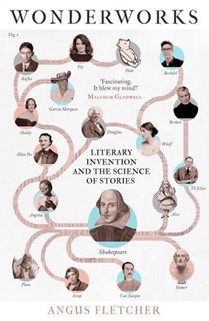
What are stories for? According to a provocative book by Angus Fletcher, they are technologies invented (or discovered) to help us deal with life experience. They are psychotherapeutic tools.
Wonderworks: The 25 Most Powerful Inventions in the History of Literature reviews the blueprints for literary technologies that Fletcher claims can be scientifically shown to alleviate grief. trauma, loneliness, anxiety, numbness, depression, pessimism, and ennui, while sparking creativity, courage, love, empathy, hope, joy, and positive change. He argues that they can be found throughout literature from ancient Chinese lyrics to Shakespeare’s plays.
His aim is to subvert centuries of literary scholarship, asking not “what is this story about” but rather “what are its effects on us”. You might say, at the risk of anti-intellectualism, narrative are not to be studied but experienced.
He gives each of these technologies an annoying name. For example, the Hurt Delay (giving us distance on trauma), with which he explores Sophocles’ Oedipus; and the Almighty Heart (instilling courage), with which he explores Homer’s Iliad. He explores the neurobiology of fear and courage through the origins of fear in the amygdala, and the neuropharmacological response in the counterbalancing releases of adrenaline and oxytocin.
I have to first acknowledge that it is beautifully and engagingly written. And to applaud his sentiment that stories are there to be enjoyed. And then I have to confess to a strong distaste for its underlying framework.
The distaste isn’t that of a literary scholar. Granted, Fletcher takes immense liberties with the context of the works he cites and of their authors’ probable intents. He claims, for example, that Shakespeare’s Hamlet stages a play about a king murdered by his brother as a tribute to his dead father. Generations of literature students have known that the play’s purpose is so that Hamlet can observe his uncle’s reaction and gauge his guilt for the murder.
He may well also be accused of playing fast and loose with the chronology of literary creation. But these sins would be easily forgivable if they serve to expose a deeper reality.
Nor is my distaste for the neurobiological exploration of narrative. Any thing in the universe is a potential object for scientific investigation. Though I’m not always persuaded by Fletcher’s piecing together of the neuronal circuitry.
These were ideas of their time, when the world, and consequently scholarship, were in the grip of totalizing systems. They were superceded by ideas of a later time, which emphasised context and cultural diversity. I make no claim that the earlier ideas were wrong and the modern fashion right. Merely that they are more to my taste. I’m not even sure it’s possible to prove literary criticism ideas right or wrong.
What concerns me about Fletcher’s reprise of an earlier era’s concerns is that it is forced to strip stories of their specificity. And that specificity is the source of their delight. The one-sentence summary “The spoiled Emma’s pride makes her prejudiced against Mr. Darcy, though they eventually realize they’re perfect for each other” https://www.huffpost.com/entry/one-sentence-guides-to-16_b_98480 tells the reader little about whether they’ll enjoy Pride and Prejudice. The specificity of the story-telling is everything.
Stories are produced by cultures, not neurons, as Laura Miller observes in a critical essay on the book https://slate.com/culture/2021/03/wonderworks-angus-fletcher-review.html. She notes that culture determines “who in a society is permitted to read and write, who (if anyone) pays the author for her work, how the work is circulated, what its audience expects of it, etc.” She accuses Fletcher of a “calculating utilitarianism” which reduces literature and reading to a feel-good therapy. His enterprise rests on the totalising universalism that argues that human beings face relatively unchanging problems created by the way our brains work and that a set of enterprising literary entrepreneurs have been steadily inventing solutions to these problems.
He has ignored all the specificity and cultural diversity that created the epic poetry of the classical and pre-classical eras. These epics were about gods, about fate, about heroism. He has ignored all the factors that had to come into existence before stories could be about individual people and their feelings. Laura Ashe https://www.historytoday.com/miscellanies/invention-fiction, for example, argues that for fiction, as we know it today in the West, to come into existence, we had first to develop the notion that individuals and their feelings mattered. She writes:
“In Old English poetry, to be an individual, cut off from these collective bonds, is to be lost. More than this, there is no attention to an inner life that can be meaningfully distinguished from exterior action. Will the warrior make good on his boasts in the mead hall? Only in action is a man’s value known; intention is nothing.”
What changed, she argues is a set of economic, political and theological conditions in twelfth century England that permitted a literature in which The Romance could flourish. “This,” she says “is the literary paradigm which gives us the novel: access to the unknowable inner lives of others, moving through a world in which their interior experience is as significant as their exterior action.”
This is not to ignore the fact that in other places and at other times, writers have explored the theme of love, its joys and its sadness. But let us not forget that literary forms are inventions that partake of their cultures. Many story traditions in Asia are still indifferent to the idea of a “protagonist” and the changes he or she undergoes. Rather, stories are about the unfolding of circumstances.
There are many other cultural variations in story-telling. For example, while the normal Western story is composed of three parts (beginning, middle or climax, end or resolution) some Asian cultures have a four-part form, known as Kishōtenketsu in Japanese. The structure here is beginning, middle, twist, end. All of this specificity and cultural detail is irrelevant to Fletcher’s project. And, the acid test is whether, as a writer, it equips me to write better stories or, as a reader, to gain more enjoyment. The answer to both is no
The river slips away languid beneath the punt. Clare College stands sentinel. Oh, I belong here where Bertrand Russell and Wordsworth once lazed.
“We never step in the same river twice,” I declare grandly.
She yawns and nods. “Heraclitus.” Then adds, “Trying not to step into the river is best.”
The pole sticks. In a moment I will have to choose: let go; or hang on, balancing atop while she and the boat drift away. But, with a heave, it pulls loose. I stagger, rocking the punt. She giggles.
This is not how it was supposed to be.
.
Friday fictioneers is a weekly challenge set by Rochelle Wisoff Fields to write a 100-word story in response to a photo prompt. You can find other stories here
I wake with a start. The dream fades. But not totally. I still remember its terror, the loss of an anchor for my identity.
I wake from sleep and am myself again. But how do I know I am myself? Sure, I can remember who I was yesterday; blowing out the candles on my fifth birthday cake; the wedding ceremony with Irene. But memory is not the reality. Maybe I was only born now, this instant, equipped with all the memories to make it seem I have lived before.
I will ask Irene. But she’s asleep. If I wake her, will she be the same Irene?
.
Friday fictioneers is a weekly challenge set by Rochelle Wisoff Fields to write a 100-word story in response to a photo prompt. You can find other stories here
Better to make a deal than fight, far better. The zealous boys on their mopeds won’t be here forever. They’ll age, they’ll mellow and take the little presents. And then I’ll be back. Me or my sons. We can afford to wait. We endure, like the mountains. So yes, I’ll treat with them; have them in for tea; smile and smile.
Meanwhile, the helicopters swarm back and forth, frantic little bees, bearing the proud generals to safety Don’t they know? Remember Saigon—it’s only a matter of waiting.
.
Friday fictioneers is a weekly challenge set by Rochelle Wisoff Fields to write a 100-word story in response to a photo prompt. You can find other stories here
The pine cones may have been a mistake. The squirrels steal them, you see. But I needed something with the vital essence, to breathe life into my creature. Anyone can make a robot these days, calculating engines with grabbers. But to build a living creature, with a soul! Now, wouldn’t that be something!
Do you think I need to change up the pine cones? It’s true, trees have exceedingly contemplative souls. Do you think something nimbler would be an improvement? A human heart perhaps?
.
Friday fictioneers is a weekly challenge set by Rochelle Wisoff Fields to write a 100-word story in response to a photo prompt. You can find other stories here
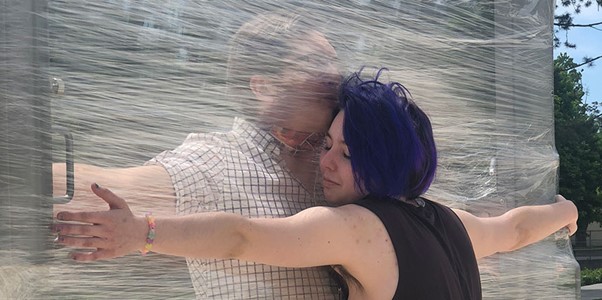
I write a flash fiction piece of 100 words every week. Some of these weekly stories are, of course, about the pandemic. A year and half into it, I wondered how living through this history had changed the way I thought and felt. So I collected all the stories that had been directly or indirectly about the pandemic and put them together, wondering what, if any, pattern they made.
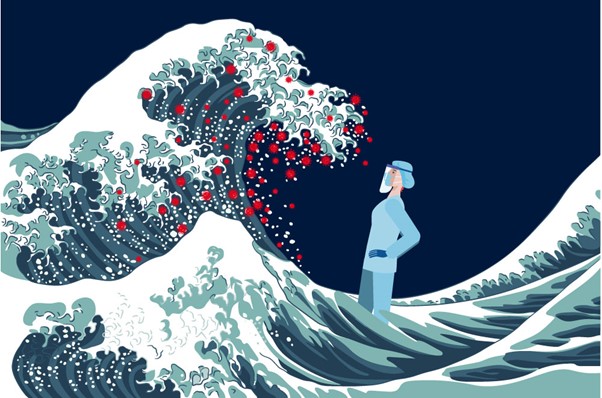
Art piece made by Sophia Black
The pattern I discern was a surprising one: fear, followed by tranquility and hope, then doubt, and finally a search for meaning.
Fear
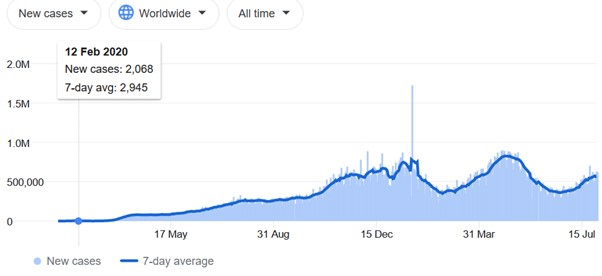
It was February 12, 2020. There had been just over 2,000 cases of covid worldwide and 97 deaths. None yet in Britain.
We knew something was coming. But we could only watch what was happening in China and wonder if this isolation was our future. I wrote Meal By Cloud.
Meal by Cloud That’s what we’ve come to name it—meal by cloud. Quarantined in our own homes, we take to inviting virtual guests for dinner over Skype. We call from window to window across the city “stay strong”. Only ambulance sirens and the rumble of military vehicles echo between buildings in the empty boulevards.
The pandemic and hope for change
A recurring theme of my writing about covid became the way the world might be different on the other side of the pandemic. On March 4, 2020, when there were 56 cases in the UK, I wrote the first of these: Seed Bank.
Seed Bank “That’s such a great idea,” Pfennig said. “A seed bank.” And it was true. The metal shelves held hazelnuts, garlic cloves, and lumpy nodules I couldn’t identify. We’d survive, Pfennig decided. Dig up the parks, plant the seeds, harvest our own food. When the soldiers at last removed the barriers around the city, they’d find us healthy and thriving. Then we’d walk out proudly into the sunshine of the new world. He clapped me on the back, and I beamed with pride, unable to confess a squirrel had done the collecting. All I’d been gathering was graffiti.
As the pandemic got closer, I got more frightened. On March 11, I wrote this:
The Knock It cannot be so terrible, so decisive. Look! The sparrows continue their squabbling in the branches. A thin rain is falling, like yesterday, warm and gentle. The sun continues its climb up the wall of the sky as always, and the water plays in the fountain. Nothing decisive has happened. When the summons comes, I will open the door.
And then came outrage. There was much discussion in March of “herd immunity” as a strategy. I wrote this:
The Experiment I am aghast. “It’s monstrous,” I say. He seems faintly amused by my outrage and turns from the keyboard with a shake of his silver head. “It’s necessary,” he says. “The way we stop this disease is to isolate the vulnerable and let the healthy catch it. Most will recover and when they do, we’ll have a shield of herd immunity.” “You can’t know that,” I say. “You’re running a terrible experiment with millions of lives.” His mane tosses like a lion’s. “The peak will be sharp, but it’ll be short.” Somewhere, faintly, a phone is ringing.
Everything went quiet
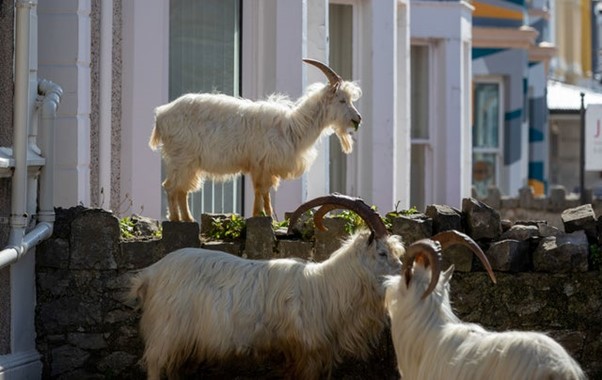
We were locked down in the UK for the first time on 23 March 2020. And suddenly it all went quiet. We stayed home, apart from our daily one hour walks, and watched TV pictures of empty streets. There was no cataclysm. Contrary to what some pundits expected, though it was hard, people didn’t become stir crazy and go walkabout. Goats took over Llandudno in Wales.
On April 8, there were 5,129 cases in the UK and 73, 639 worldwide, when I wrote this:
Earth Abides The air holds a limpid clarity. A goat, nibbling my hedge, looks in the window at me looking out. Birdsong resounds over empty streets. I skype my neighbours, even those I don’t like. In the highway’s asphalt, a crack widens and a seed takes root. There will be no going back to “normal” after this is over.
A week later, the strange sense of peace and of hope was still with me.
Dreaming Spires The city dreams, respiring slowly—the outbreath no longer poison, but blossom-perfume. I sniff the reveries, and they’re heady. My head swims, and lips curl in a smile. From window to window we call and birds swoop from among the towers carrying our cry like pollen. Buds break on spires and pinnacles. Basements put out roots and taste the earth. Newness is being born.
But of course, this peace was the privilege of being comfortably off and living in the developed world. As the first wave in the UK peaked and began to subside in mid-April 2020, I began to reflect on how this was playing out elsewhere in the world. On May 13, there were 81,576 cases worldwide. I wrote this piece about a Pacific islander.
Jesus wen cry I look out to sea. Gentle waves stay all the way out to an empty horizon. No cruise boats. Nobody come. For the fourth time, I rearrange the wire bush of tourist hats, bobbing in the breeze like shrunken heads. Gaudy shirts billow and cowrie shell necklaces clack. My feet do an anxious little dance. Maybe I’ll go tend my taro patch instead. Jesus wen cry.
Life was becoming more and more like normal again in the UK. Yes, we still had social distancing and mask wearing, but cases had dropped from around 4,000 a day in the UK to around 400 by mid-June. Yet, things were far from normal. For about two months, none of my stories featured the pandemic. Then on July 15, about two months before the second wave, I wrote Strangers. Some of us had remained safe, but changed.
Strangers Up to the edge of my hedge, I am safe. I stare out into the empty road—no cars, no people, only increasingly bold foxes. Then there, at the bottom of the lane, a figure silhouetted by the early morning sun. It walks towards me, as if out of a dream. Another person. Tentatively, I raise my hand. “How do,” it says, stopping at my gate. Stranger danger! Who knows what the creature carries? I run inside and bolt my door.
And some of us lacked the choice of remaining safe. On August 12, with cases still low in the UK, I wrote Defining Moment.
Defining Moment Harvey was appalled. The street below pullulated with people, jostling and pushing noisily through each other. “Mum,” he said, “Those folk are idiots. No social distancing. Don’t they know they’re going to die?” Taking him by the shoulders, she gave him that look, the one that said she had something important to teach him. “Those folk don’t have the option of staying home. If they don’t go out and earn money, they’ll certainly die.” Harvey asked why. Because they’re poor, she explained. But this only led the lad to ask why they were poor. Her answers ran out then. And that set the course of his life.
The second and third waves: doubt
The second wave in the UK began to grow in September 2020. But the second national lockdown didn’t happen until 5 November. Cases had reached almost 25,000. Perhaps oddly, I still thought we’d come out changed and better as a society. But I wasn’t quite so sure now. On 2 December, I wrote The Future.
The Future I sense it. I can almost grasp it. The future. Sitting just outside my window, like my first shiny new car on a festival. That time is not here yet, but anticipation brings it into the present. One day, soon, this will all be over. We’ll emerge, blinking in the sunshine, laugh and greet old friends. Now it’s clear who we really depend on. We’ll put an end to misery and want. We can build back better. Can’t we?
The third lockdown followed hard on the heels of the second on 6 January 2021. The wave peaked at around 60,000 cases a day in the UK. By then, there were almost three quarters of a million new cases worldwide. But the vaccines had arrived. And with them, the bizarre politicisation of public health, which left me bewildered and angry. On 10 February 2021, I wrote Anti-Vax.
Anti Vax There ain’t no pandemic. I seen inside the hospital. Empty. It’s all a lie. Probably, you’ll decide I’m one of those nutjobs. Think you’re better than me, don’t you? You’re certain, right? You seen it on the news. I got a big shock for you—the media lies. All them wards full of sick people? Actors. They do that, you know. Why would they? To stop us finding out what they’re up to, of course. I’m talking deep state here. The vaccine ain’t no cure, cause there ain’t nothing to fix. They made it up so’s they can inject everyone with trackers.
What did it all mean?
If 2020 had been the year of adjusting to, and indeed embracing change, 2021 became the year of trying to discern meaning. I thought about the history of other pandemics, and about the way we were responding to ours. On 24 March, thinking about Shakespeare’s experience of the Plague, I wrote Writer in Lockdown.
Writer in lockdown Cries and moans punctured the sky, a flight of bats escaping into the night. The church bells tolled and tolled ceaselessly for the dead. The scent of rosemary burning in the chafing dish irked Will’s nostrils, but at least it kept the stench of rotting corpses at bay. Mayhaps, Mistress Tomkins next door had succumbed, along with her babes, boarded as they were into their quarantine house. And yet, the closure of the theatres gave Will time to write. His quill poised over the page. “A plague on both your houses,” he wrote. Aye, it had a ring to it.
For many of us, living through history, we just tried to keep to the old patterns. On 31 March, I wrote Baking.
Baking The past occupies my present. I make tea, bake biscuits, cut the grass. The change is too vast to comprehend. I take the garbage out, go to the shops, do the laundry. The machine runs out of control and the engineers panic. Old gods shake their shaggy heads and snuffle in the underbrush. When it’s all over, when today has become yesterday: maybe, then, we’ll be able to tell what it meant.
Others, as the vaccination campaign accelerated, decided they knew what it all meant. On 16 June, I wrote Hero.
Hero I’m a hero, me. They oughta give me a bleedin’ medal for what I done, mate; saved the country, din’t I? Sat on me arse for fourteen months, never going out, never letting any bugger in; it was hard, I can tell you; but I stuck it out, ‘cause that’s what an Englishman does. Fourteen months! That was my war. Double vaccinated, I am. Stopped the virus in its tracks, so we did. So where’s me bleedin’ medal now, and me war pension from a grateful nation?
By 14 July, in the UK, with well over half the population double-vaccinated, we were well into the experiment of releasing restrictions. Personally, I felt safer, though still in danger.
But I was more worried about releasing the brakes, as this apocalyptic story shows:
Something’s Coming The motor coughs and stutters. The engineers, with wrenches and oil cans, crowd round in agitation. Stern sentinels patrol the city walls and, beyond, a dark beast bays in the night. “All will be as it was,” the engineers promise. “in the eternal city.” “Build back better,” the citizens beseech. “We are of nature,” says the seer. Crowds gather round. “But not everything we choose to do is natural.” “What must we do?” asks a woman. “Go back,” some scream. Others yell, “Go forward.” A chant begins, “String up the engineers.” Down the plaza, a crack dances like lightning and widens. Me, I wonder what might be coming for us. And whether we will recognise it as kin.
Around 130,000 people were dead in the UK and 4.27 million worldwide.
If you’ve written during the pandemic, what does your pattern say?
He come. Slow. Old man come slow. You got time to get used to he. One day, he not there. Next day, a spot far away on the edge of the world. Maybe only something in eye. But then closer, a little closer. Birds swoop over. Wind blow grasses. Seems he always been there. Old man always there. Soon, he reach me. Then, something happen. Maybe.
.
Friday fictioneers is a weekly challenge set by Rochelle Wisoff Fields to write a 100-word story in response to a photo prompt. You can find other stories here





 Neil MacDonald Author