Friday Fictioneers – Make Money While You Sleep

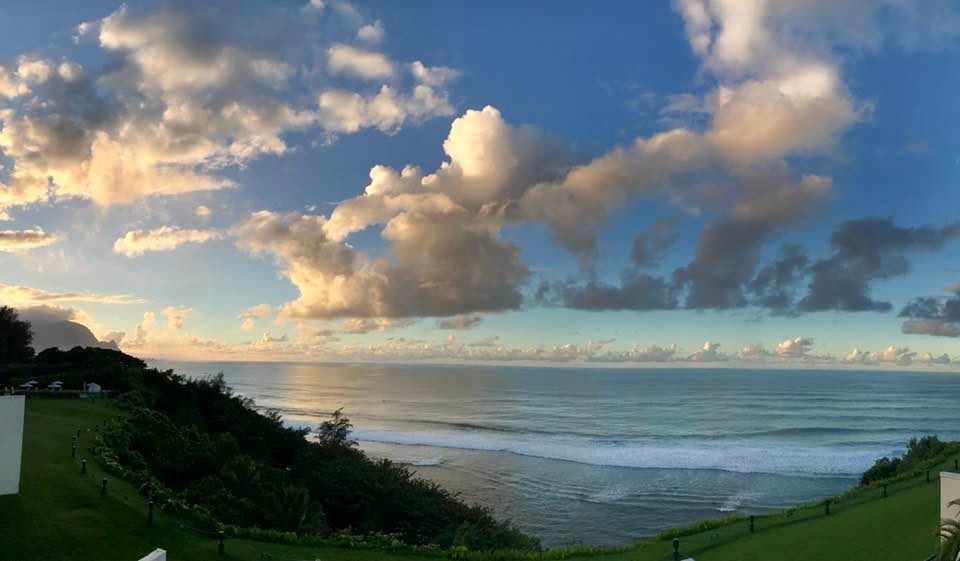
PHOTO PROMPT © Douglas M McIlroy

It took a while to get used to the headset. It bumped the pillow and woke me. But this was worth it to earn without effort. And gradually, I adapted to the equipment—even became comforted by the way it cradled me.

Networked with other sleeping brains, the company mines my dreams to solve problems I couldn’t begin to understand. Collectively, we manage topological transforms and matrix algebra.

And I have all the working day free to walk, and to garden, and to chat. Truly, this is for the best in the best of all possible worlds. Isn’t it?

.

Friday fictioneers is a weekly challenge set by Rochelle Wisoff Fields to write a 100-word story in response to a photo prompt. You can find other stories here
160.       The future isn’t what it used to be

I remember the future I was promised so long ago. There would be flying cars, and Dick Tracey watches that allowed you to communicate by speaking into your wrist. We got the Dick Tracey watches (cellphones), but not the flying cars or personal jet packs. Nor did we get colonies in space or universal plenty. But we got other stuff that nobody predicted.

We got a climate crisis and degradation of the environment: wildfires, floods, and famine. And a pandemic. And, so far from universal plenty, it seems we don’t have enough truck drivers to guarantee food delivery to the shops, or enough carers to look after the frail and elderly.

It would be easy to be scared. Apocalypse novels sell by the thousands. There’s a lot around that’s scarey. But perhaps there always has been. A generation ago, we were terrified by the threat of nuclear annihilation. And we survived. A generation before that, there was the World War to defend civilization. And a generation before that, the War to End All Wars. There was a pandemic in that generation too.

Yet, we survived. To survive now we need to be able to re-imagine a future we want to live in. Because crises don’t just go away by themselves—we have to want a change and work for it. A world without the vested interests of big oil and the snooping of big tech. Clean cheap energy. Food, shelter and a meaningful life for everyone. That seems worth working for, and it’s within our grasp. What would be the path towards that? Perhaps we need story-tellers to help us visualize that future.

Friday Fictioneers – Summer holiday

PHOTO PROMPT © Rochelle Wisoff-Fields

The cry was plaintive and piercing, “There’s no Worcestershire sauce.”

Not this again, please no! “Darling, I explained already. They eat different food.”

The image of the frozen smile on the waiter’s face endured. When Sam had adopted the slow monotone he believed allowed foreigners to understand English and said, “No spaghetti. Fish-and-chips, comprenday?”

“Do it to be annoying, don’t they? Like pretending they don’t speak English. I mean, they have their word for bread, right? But how do they learn it without knowing ‘bread’ first? Eh, tell me that.”

He snapped his fingers. “Garçon!”

I sank into the shadows.

.

Friday fictioneers is a weekly challenge set by Rochelle Wisoff Fields to write a 100-word story in response to a photo prompt. You can find other stories here

Friday Fictioneers – Funfair of youth

PHOTO PROMPT © Brenda Cox

Smoke curls lazy into the sky. It’s beautiful, almost. Burn, baby, burn. That’s a thing they used to say, the wrinklies, when they were young. Oh, they were fierce and zealous then. What happened to them?

A shrill cry. And the sound of something big splintering. We’ll get what’s ours at last. Now is the best time to be young. An old lady flaps her arms as she falls from a fourth floor window, like some crazy bird. No more wrinklies to occupy the best houses, luxuriate in their fat pensions, and scoff up all the vaccines. Enough. Now is our turn. Now is our world.

.

Friday fictioneers is a weekly challenge set by Rochelle Wisoff Fields to write a 100-word story in response to a photo prompt. You can find other stories here

Friday Fictioneers – Take my hand

PHOTO PROMPT © Rochelle Wisoff

She takes my hand and leads me. In my day, it would have been the other way round. It is strange to be guided by your granddaughter, but the world has become strange. All the old certainties are vanishing. Like spring being the return of life, and autumn for the gathering-in. Now these seasons come with flood and fire. Nothing is as it was.

“We will have to show you what to do,” she says. “You should have done it, but you didn’t. Tomorrow is too late.”

.

Friday fictioneers is a weekly challenge set by Rochelle Wisoff Fields to write a 100-word story in response to a photo prompt. You can find other stories here

Friday Fictioneers – Never forgetting

PHOTO PROMPT © Dale Rogerson

I will never forget you, I swore: my first encounter with death. One day she was there, and the next, incomprehensibly absent—a silly fall from a mountain.

A memory of us lying together on the narrow single bed. She was propped on one elbow. “I don’t mind leading you down the garden path,” she said. I didn’t understand what she meant—she was two years older than me, and knew things I didn’t.

Yes, I can remember my adoration. But not the face, the shape, the smell. Those have vanished. Also, her name.

.

Friday fictioneers is a weekly challenge set by Rochelle Wisoff Fields to write a 100-word story in response to a photo prompt. You can find other stories here

Friday Fictioneers – Lights

PHOTO PROMPT © Liz Young

Yes, of course I see them. Lights all around—how could I not notice? But that doesn’t mean gawping rudely like a village idiot. Etiquette dictates one pretends not to witness.

Why? You ask why? Well, the creatures lack a shred of clothing. Suppose it was your wife or mother—would you want folks to ogle?

We’ll take them gently aside, at the right moment, and explain. They tend to resist. But when you point out food and drink pass straight through, they begin to understand. Ghosts are only people who don’t realise they’re dead. With acceptance, they find peace.

.

Friday fictioneers is a weekly challenge set by Rochelle Wisoff Fields to write a 100-word story in response to a photo prompt. You can find other stories here

Friday Fictioneers – The Secret

PHOTO PROMPT © Krista Strutz

There is a part of me that is different. I am not like the rest of you. But you can’t see it—I can pass. The dogs can’t smell me—I smell like you. The men with callipers will find no difference in my skull, or the shape of the nose, or the thickness of the lips. They’ll never make me wear a star. So, I walk among you, and hear how you talk about us. I live twice: once as myself, and again as one of you.

.

Friday fictioneers is a weekly challenge set by Rochelle Wisoff Fields to write a 100-word story in response to a photo prompt. You can find other stories here
159. Ritzkreig

Eighty one years today, on 14 September 1940, the air raid shelter of the swanky Savoy hotel was taken over by working class families from east London.

The workers had a name for the wartime experience of the rich: the  Ritzkreig. During the London Blitz of 1940, the rich crowded into hotels where there was opulence to be enjoyed, and whose deep reinforced basements allowed luxurious shelters from the German bombs.

The east end of London was on fire. For the poor, conditions could not have been more different from those enjoyed by the patrons of the Savoy, the Ritz and other top class hotels. One of the few deep shelters available at Tilbury was built for 1,600 people and was holding 10,000. Stepney people started to line up at midday to get a place. There were an estimated 200,000 safe shelter places available in London, but most were closed at night.

The stations of  London’s underground railway system, the Tube, would have provided sanctuary. But they too were locked at night.

Phil Piratin, one of the organisers of the invasion of the Savoy describes what happened on 14 September.

We gathered some seventy people, among them a large sprinkling of children, and we took them to the Savoy Hotel. We had heard from building workers of the well-constructed and luxurious shelter which had been built for their guests. We decided that what was good enough for the Savoy Hotel parasites was reasonably good enough for Stepney workers and their families. We had an idea the hotel management would not see eye to eye with this proposition, so we organised the ‘invasion’ without their consent.”

I’ve used this event in the novel I’m working on, Boundarising. The protagonist, Sol, and his companion, Greta, arrive at the Savoy hotel in late 1944, just after the D-day landings. The Germans are launching V1 rockets at London, so the pair take to the Savoy’s cellar:

“This is a paradise,” I said. “Not at all what I thought air-raid shelters were like.”

She laughed. “That’s what the good folk of east London thought four years ago, at the height of the Blitz, when they broke in here.”

“Why did they do that?”

She put her finger to her lips and glanced about her in a pantomime of secrecy. “To highlight the lack of shelters for the poor. The Communist Party declared that” and here she quoted “‘what was good enough for the Savoy Hotel parasites was reasonably good enough for the Stepney workers and their families.’”

The way she described it made me feel she was sympathetic to the trespassers.

She laughed, “ The management tried to get them out, but there was an air raid on, and they couldn’t very well turn children out into the streets under the bombs. The waiters were having the time of their lives, and gave them tea and buttered bread. The normal price was two shillings and sixpence. The raiders agreed to pay tuppence.” 

“Are you a Communist, Greta?”

“Heavens, no. But I do like fairness. A few days later, the government agreed to open the Tube stations at night as air raid shelters. So, that was fair.”

Friday Fictioneers – Cycle of Life

PHOTO PROMPT © Sandra Crook

It has always been thus. We sow the land and plant the seed. The sun shines, the rain falls, the crop grows. Nourished by the virtuous soil, our harvest finds a ready market. Bakeries fragrant with yeasty smells form it into bread. The brewer’s alchemy spins flax into gold. Coin changes hands, glasses clink, and the laughter of good neighbours warms and comforts. This is how life was.

Today, scorching sun parches the cracked soil, leached by winter deluges. How can we live now? All we can do is venture north in little boats and hope for refuge.

.

Friday fictioneers is a weekly challenge set by Rochelle Wisoff Fields to write a 100-word story in response to a photo prompt. You can find other stories here