Friday Fictioneers – Through a zinc sheet darkly

after
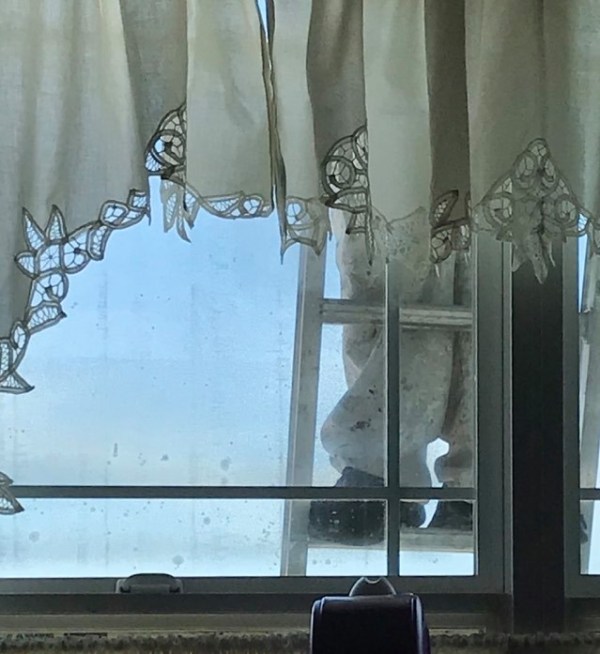
PHOTO PROMPT © C.E. Ayr

When we plugged the dilithium crystals into the manifold, it happened. The dustbin began to shake and, on the old zinc sheet, a ghostly image formed.

“What is that?” Tony asked, cutting to the heart of the matter.

“Damned if I know,” Truth is important to me.

But Peg was our visionary. “It’s another world,” she said. “We’re seeing into a parallel universe. Look, there’s a building and a tree.”

It looked suspiciously like a baked reflection of our building and a telegraph pole connected by a manifold.

“Not as good as television,” Tony decided and went home.


Friday fictioneers is a weekly challenge set by Rochelle Wisoff Fields to write a 100-word story in response to a photo prompt. You can find other stories here

132. Threading the Needle—my journey to publication 1: The basics

The urban dictionary defines threading the needle as “While driving, walking, or running you weave in and out of obstacles (other cars, people, etc.) in your path.”

threading the needle

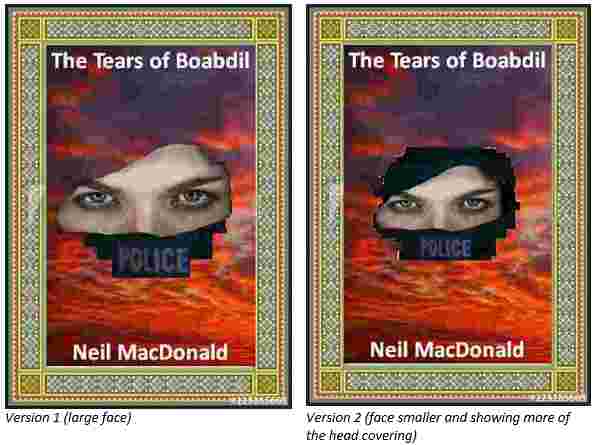
The road to self-publication involves a lot of weaving in and out. In a previous post, I described how I chose my publisher and publicist for my literary thriller, The Tears of Boabdil.

That was only the first of many decisions. Next came:

  • Distribution
  • Pricing
  • Page design and cover design
  • Promotion
    • News coverage
    • Review strategy
    • Advertising

Each of these decisions will have huge influence on the book’s success. There will certainly be a lot more to research, think about, and decide on. The book is now typset in its first proof stage, and so I’ve been proof-reading.

I can’t pretend to be an expert (I’m learning as I go) but, as a writer, I know the importance of doing my research.

Distribution

This one was easy, since part of the reason for choosing Matador for the production of the book was that they also have an effective sales and distribution arm which can get books into major retail outlets.

Blue Bear bookshop
The Blue Bear, my local indie bookshop

Matador’s distribution service produces an Advance Information sheet to publicise the book for booksellers, arranges all bibliographic data management for wholesalers including Nielsen and Gardners, and distributes to retail physical and online bookshops. This service, which costs £300, requires a print run of at least 100. I also contracted their representatives to hand-sell the book into high street retailers. This service costs £250 and requires a print run of at least 300.

Book categories

How you categorise your book affects how easy it is for readers to find.

Bookshelf

The online seller Amazon dominates the market with over 33 million titles, and understanding the way it classifies books is important to success. Amazon Kindle lists only the top 100 books in each category. That means in a highly competitive category like Romance your book may sink without a trace unless your sales figures are really good. But Amazon Kindle has 10,849 bestseller lists. So, if you expect to be getting sales in the hundreds, it pays to pick a less competitive category. If there are no more than 100 books in your category, you’ll automatically make the bestseller list with a single sale.

Here’s a really useful tabulation of how different categories sold on Amazon Kindle in 2019. It shows Amazon’s overall sales ranking for bestsellers in each category.

Amazon book categories

My book is literary with thriller elements. So, if I marketed it as Literary Fiction/Literary, I’d have to be at least number 3,754 on the Kindle rankings to appear on a bestseller list. But if I marketed it as Literature and Fiction/Literary Fiction/Mystery, Thriller and Suspense, I’d only have to reach number 18,717.

To translate these rankings into estimated numbers of books sold, you can use this Kindle Best Seller Calculator or this one.

To achieve a sales rank of 4 (the #1 spot in the most competitive category, Romance/contemporary), the author will be selling around 5,360 e-books a day. To achieve a sales rank of 18,718 (the 100th spot on the bottom row), the author will be selling around 13 e-books a day.

The rankings change over time, so it’s worth checking just before you release your book. In April 2020, the number 100 spot for Literary Fiction/ Mystery Thriller and Suspense had a sales ranking of 4,058.

Most physical booksellers use the more restricted Thema categories. There, my best choices were either Fiction General and Literary, or Modern and Contemporary Fiction, or Thriller/suspense. On my publisher’s advice, I went with Thriller/Suspense, since there was no Literary Thriller category.

So, hopefully, the book will be available through all major retailers. All I need to do is make sure readers know about it and want to buy it.

Friday Fictioneers – Dreaming Spires

img_20200227_120426_hdr-002
PHOTO PROMPT © Roger Bultot

The city dreams, respiring slowly—the outbreath no longer poison, but blossom-perfume. I sniff the reveries, and they’re heady. My head swims, and lips curl in a smile.

From window to window we call and birds swoop from among the towers carrying our cry like pollen. Buds break on spires and pinnacles. Basements put out roots and taste the earth.

Newness is being born.


Friday fictioneers is a weekly challenge set by Rochelle Wisoff Fields to write a 100-word story in response to a photo prompt. You can find other stories here

Friday Fictioneers – Earth Abides

19957032_524908781182595_6318788215889360404_o
PHOTO PROMPT © Jeff Arnold

The air holds a limpid clarity. A goat, nibbling my hedge, looks in the window at me looking out. Birdsong resounds over empty streets. I skype my neighbours, even those I don’t like. In the highway’s asphalt, a crack widens and a seed takes root. There will be no going back to “normal” after this is over.


Friday fictioneers is a weekly challenge set by Rochelle Wisoff Fields to write a 100-word story in response to a photo prompt. You can find other stories here

Friday Fictioneers – Coda

photo
PHOTO PROMPT © Douglas M Macilroy

All that remained were his last photographs. Surely, they held a message? Some final trace of him to quiet my anguish; a response to everything I should have said.

If only I’d…. But, no. It is what it is. He’d have known I hadn’t meant to leave, that I’d be back.

There it was! A sparrow looking-in through the window. A reprimand? Or forgiveness? Was I the bird, or he?


Friday fictioneers is a weekly challenge set by Rochelle Wisoff Fields to write a 100-word story in response to a photo prompt. You can find other stories here

131. Writing through the lockdown

Lockdown isn’t totally unlike normal life for me. I get up, check e-mails, write, keep in touch with friends. Not so different from before.  I think coping with the social distancing depends a lot on a set of factors that writers probably have in spades:

  • Creating structure on your day and your week
  • The ability to enjoy isolation
  • The satisfaction that comes from accomplishing a task

My day, as I said, has structure. Though my writing group has stopped meeting, we continue to circulate drafts to each other as before once a week on Thursdays. Every Wednesday, I write a story for Friday Fictioneers.

Writing, though its product is an intensely social collaboration between author and reader, involves solitary hours communing with the keyboard. So the new isolation is much like the old isolation.

Isolation

The act of writing is immensely satisfying, creating something that never existed before. For me, each story is an act of discovery, of wrestling meaning from an initial vague intuition. I accomplish tasks every day. And, with my novel The Tears of Boadbil going into production, I get to see my work taking physical shape. Last week I returned to style proofs for page layout. I asked for a change in font size, line spacing, and some other details, including drop caps at the beginning of chapters. I love drop caps. Working on my book production, publicity and marketing gives me a way to engage with a future beyond the pandemic.

Boabdil style proofs

I know, of course, that I’m immensely privileged. I can pay my bills, there are no small children to be entertained, and we have a garden to potter around in. For many others, it is much grimmer.

For writers this is a time to be producing. You’d think now is not be the time publishers will want pandemic books. But Penguin says sales of Albert Camus’ The Plague were up 150% in February compared with the previous year and at the end of March, the number two book on Amazon’s charts was The Eyes of Darkness by Dean Koonz, about the fictional epidemic virus Wuhan-400.

couple on seashore

The impact of the virus on our lives and our societies will necessarily provoke thoughts about what matters and how we should live our lives. It’s inconceivable coming out the other side of this emergency that the answers to these questions won’t be changed. And who better to reflect on them than writers?

What’s your self-isolation recipe?

Friday Fictioneers – The Experiment

writers-life
PHOTO PROMPT © Jeff Arnold

I am aghast. “It’s monstrous,” I say.

He seems faintly amused by my outrage and turns from the keyboard with a shake of his silver head. “It’s necessary,” he says. “The way we stop this disease is to isolate the vulnerable and let the healthy catch it. Most will recover and when they do we’ll have a shield of herd immunity.”

“You can’t know that,” I say. “You’re running a terrible experiment with millions of lives.”

His mane tosses like a lion’s. “The peak will be sharp, but it’ll be short.”

Somewhere, faintly, a phone is ringing.


Friday fictioneers is a weekly challenge set by Rochelle Wisoff Fields to write a 100-word story in response to a photo prompt. You can find other stories here

Friday Fictioneers – Dreams

pastedgraphic
PHOTO PROMPT © J Hardy Carroll

They promised me cheap and plentiful power, Dick Tracy watches, moon bases, freedom to make the life I wanted. They promised me flying cars.

I guess I got the watch. The internet was unexpected, and that’s wonderful. The nastiness, less so.

Where’s my flying car?


Friday fictioneers is a weekly challenge set by Rochelle Wisoff Fields to write a 100-word story in response to a photo prompt. You can find other stories here

130. Who do you turn to? Choosing self-publishing help

My first novel, The Tears of Boabdil, will be published in September. Navigating the swamp of vanity publishers, charlatans, hybrid publishing, and cheap-and-cheerful self-publishing isn’t easy. This post shares my experience, which may be helpful to you. Even if you make different choices, the questions I asked may be useful.

I had always said I wouldn’t self-publish. Not because of any snobbery: self-publishing is no longer synonymous with vanity publishing, but is a way for writers to get their foot on the ladder. I knew, though, that while it’s easy to physically produce a book, the average self-published book sells around 250 copies over its lifetime. This compares, according to the Publisher’s Weekly in 2006, with an average of 3,000 lifetime sales for traditionally published books.

lifetime book sales

Of course, a few self-published books break through and sell tens or even hundreds of thousands of copies. But 250 is an average. Some sell less. One self-publishing company achieved an average of 2.3 sales per title over a million books.

Producing a book isn’t the problem—letting people know it’s there and persuading them to buy it is.

It’s all about the marketing

What changed my mind about self-publishing my novel, The Tears of Boabdil, was an upcoming marketing opportunity. The novel deals with an undercover cop having a relationship with a woman who is his target. The delayed Undercover Policing Enquiry, set up in 2015 following revelations about just such a scandal, is due to start hearing evidence in the summer of 2020. Mired in controversy, with victims’ groups having withdrawn their participation when the chairman decided to grant anonymity to the policemen, this event seemed certain to generate news interest.

COPS

The time scale had become too short to conventionally publish.

The starting point is, of course, the manuscript. Unless you have a good book, it’s unlikely to sell. I had a manuscript that had been through extensive critique, editing and revision and had been pored over by beta readers. And I am very proud of it.

But the next step was to consider whether I could sell at least 2,000 copies. By myself, obviously not. I was less interested in the usual publicity route of review copies and blog tours than I was in achieving substantial news and features coverage. Given that some 190,000 books a year are sold in the UK and 173,000 new titles launched traditional PR for an unknown author was going to be wasted effort.

I scrutinised lists of publicists and short-listed three.  I went with Palamedes PR an award winning agency run by ex-journalists who offer money-back guarantees on achieving press coverage.

Palamedes

It took several days of consideration and discussion before they agreed to take me on. They offered opinion leader articles, but I wanted news coverage. Quite reasonably, they wanted to know what the news angle was. I simply hadn’t considered the possibility that the book might not be news in its own right, but it was blindingly obvious when the question was asked.

We settled on the strategy of using my career in the field of human rights and international aid. That would give me the credibility to make statements about intelligence services infiltrating charities and misusing aid as an instrument of counter-insurgency and espionage.

Production quality is paramount

Quality matters in the book trade. Print on demand technology and the rise of self-publishing companies like Lulu and Amazon’s KDP have revolutionised the ease of producing your own book. But nothing will turn readers off more quickly than a book that looks amateurish. A standout cover, professional layout, close proof-reading to spot errors, and quality printing were essential to me. All of this, along with the PR, costs money.

I considered using Lulu, who quoted me the dollar equivalent of around £1,500 to manage the design, proofing and printing of the book. In the end, after comparing prices and listening to the experience of others, I decided to pick a print firm with recommendations by the Alliance of Independent Authors and the Publishing Service Index. That led me to the Index’s top ranked company, Matador. They also have a distribution arms, supplying major bookshops.

Matador

Being clear about objectives

There was never going to be a simple return on investment calculation. My main objective was to achieve creditable sales of a quality product that would advance my writing career. Hence the expenditure on PR. I am prepared to lose money on this in order to improve my chances for the future.

objective

As a very rough rule of thumb, independent authors are likely to be approached by agents and traditional publishers when they achieve sales in excess of 5,000 copies. They are likely to be written off as proven failures if they sell less than 2,000 copies. There are, of course, exceptions to this rule.

Friday Fictioneers – The Knock

img_20200212_122922
PHOTO PROMPT © Ceayr

It cannot be so terrible, so decisive. Look! The sparrows continue their squabbling in the branches. A thin rain is falling, like yesterday, warm and gentle. The sun continues its climb up the wall of the sky as always, and the water plays in the fountain.

Nothing decisive has happened. When the summons comes, I will open the door.


Friday fictioneers is a weekly challenge set by Rochelle Wisoff Fields to write a 100-word story in response to a photo prompt. You can find other stories here