Friday Fictioneers – Homesick

image
PHOTO PROMPT © J Hardy Carroll

Inside the dome, we have beauty and abundance, lack nothing. Imagine a thing and you need only stretch out your hand to claim it. There is no hardship, and really all is for the best in the best of all possible worlds.

At night, I press my cheek to the glass wall, seeking that one pinpoint of light high in the sky. I reach out a hand. But I cannot touch it.

Oh, why would you insist on staying behind?


Friday fictioneers is a weekly challenge set by Rochelle Wisoff Fields to write a 100-word story in response to a photo prompt. You can find other stories here


Friday Fictioneers – Reflections

img_20191205_170150
PHOTO PROMPT © CE Ayr

Lights glimmered, undulating with the slap and slip of the waves. The early morning air was still and cool. And he saw, saw the whole thing.

“I know where it’s gone,” he shouted.

“Where? What?” she asked.

“Half the universe is missing. Dark matter–it’s there, in the mirror world.” He pointed at the reflection.

A pigeon looked up, shook its head, and took lazy flight, feathers rustling like a ladies’ fan.

“Actually,” she said, “more like 85% of the universe.”

His shoulders slumped. “Bugger! I thought I’d cracked the problem.”

“Tea?” she suggested.


Friday fictioneers is a weekly challenge set by Rochelle Wisoff Fields to write a 100-word story in response to a photo prompt. You can find other stories here

Friday Fictioneers – The Hard Problem

006
PHOTO PROMPT © Rochelle Wisoff-Fields

What’s it like to be a bat? Or a Martian? I’ve spent my life wanting to know. I remember as a kid asking Mum what it was like to be her but she just shook her head and said it’s being Mum.

Later, the connectome of a flatworm gave me the entire wiring diagram of a brain but revealed no understanding of wormness.

Now the solution to the conundrum is within my grasp. When this upgrade installs, the Blue Horizon AI will cross the singularity into consciousness.

I wait.

I ask.

The machine speaks. “It’s being Blue Horizon.”

42, I think glumly.

Friday fictioneers is a weekly challenge set by Rochelle Wisoff Fields to write a 100-word story in response to a photo prompt. You can find other stories here

127. Twenty novels that shaped literature

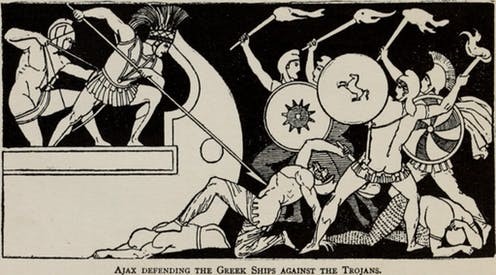
The novel is a fairly recent invention. The history of fiction goes back much further with works such as Chaucer’s 1387 Canterbury Tales, Shishuo Xinyu’s fifth century A New Account of Tales of the World and Homer’s eighth century BCE Iliad.

Iliad

The novel, however, is a distinctly modern and European. Its earliest examples can’t be traced back further than the seventeenth century and its real flowering was in the eighteenth.

The word novel comes from the Italian “novella” meaning a story. A novel is a prose work longer than a short story in which the trials and tribulations of a central character is a major feature.

The rise of the novel reflects the growth of a middle class with the leisure to read and the money to buy books. It is no accident that many of the early novels were written in English in the United Kingdom, where the industrial revolution created such conditions.

The eighteenth century English novel was concerned with complex, middle class characters struggling with morality and circumstances. The first half of the nineteenth century was the era of romanticism, but the impact of industrialism forced a growing engagement with social reality in the Victorian era. In the twentieth century, two world wars, the struggle for the emancipation of women and the dismantling of the old European empires led to a flowering of new voices from those who had hitherto been silent and silenced in literature.

Though I can make no claim to full inclusivity or canonical justification, this is my list of the 20 most important novels that shaped the way we read and write.

  1. Don Quixote by Miguel de Cervantes’ (1605) can lay (contested) claim to being the first novel in the modern sense.
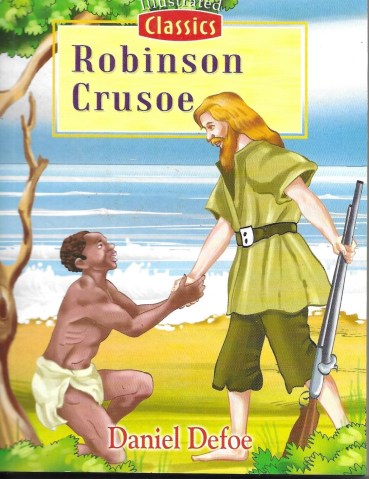
  2. Robinson Crusoe by Daniel Defoe (1719) is arguably the first modern novel in English, following over a century after Don Quixote. An adventure story, it invented many of the tropes of colonial literatureRobinson Crusoe
  3. Gulliver’s Travels by Jonathan Swift (1726) spawned the genre of social satire.
  4. Tom Jones by Henry Fielding (1749) is among the earliest coming of age stories.
  5. The Castle of Otranto by Horace Walpole (1764) is the first Gothic novel, combining magic with realistic settings.
  6. Sense and Sensibility by Jane Austen (1811) ushered in the realist novel, which dealt with everyday life
  7. Waverley by Walter Scott (1814) pioneered the first historical novel.
  8. Frankenstein by Mary Shelley (1818) though Gothic, can be seen as the first science fiction novel and also the first horror novel.
  9. The Pickwick Papers, Charles Dickens’ first novel (1836). Though less socially engaged than much of his later work, it nonetheless paints sharp portraits of English life. Like many of his novels, it was first written as a serial and thus introduces a succession of cliffhangers.
  10. Murders in the Rue Morgue by Edgar Allen Poe (1841) features the first fictional detective. He pioneered the rational analysis of truth which influenced the subsequent development of the genre.
  11. Uncle Tom’s Cabin by Harriet Beecher Stow (1852) is less significant for its literary quality than for the way it fused fiction with the abolitionist events of the day.
  12. Madame Bovary by Gustav Flaubert (1856) codified literary realism
  13. War and Peace by Leo Tolstoy (1869) broke new ground in Russian literature by abandoning narrative in favour of philosophical reflections in large parts of the book. Tolstoy did not even see it as a novel and regarded Anna Karenina (1873) as his first novel.
  14. The Sheik by Edith Maude Hull (1919) forged the tropes of the modern romance genre.
  15. Ulysses by James Joyce (1922) pioneered stream of consciousness writing
  16. The Lord of the Rings by JRR Tolkien (1936) is the first modern work of fantasy.
  17. The Catcher in the Rye by JD Salinger (1945) articulated the angst and rebellion of post-war teenagers. Though by no means the first coming of age story (among which might be included Henry Fielding’s 1749 Tom Jones, Voltaire’s 1759 Candide and Laurence Sterne’s 1759 Tristram Shandy) Salinger’s book arguably opened up the YA market.
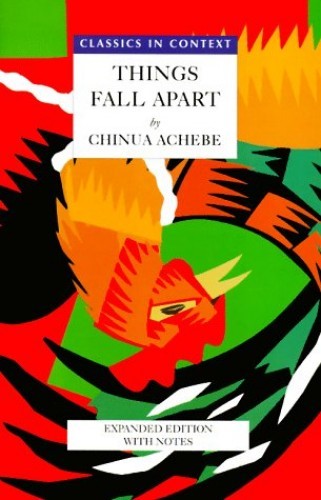
  18. Things Fall Apart by Chinua Achebe (1958) is a classic of post-colonial literature.Things Fall Apart
  19. Wide Sargasso Sea by Jean Rhys (1966) is an anti-colonial and feminist riposte to Charlotte Bronte’s Jane Eyre.
  20. One Hundred Years of Solitude by Gabriel Garcia Marquez (1967) is a seminal work of magic realism, using fantastical elements to express the absurdity of social reality.

Friday Fictioneers – Twins

war-memorial-sandra-crook
PHOTO PROMPT © Sandra Crook

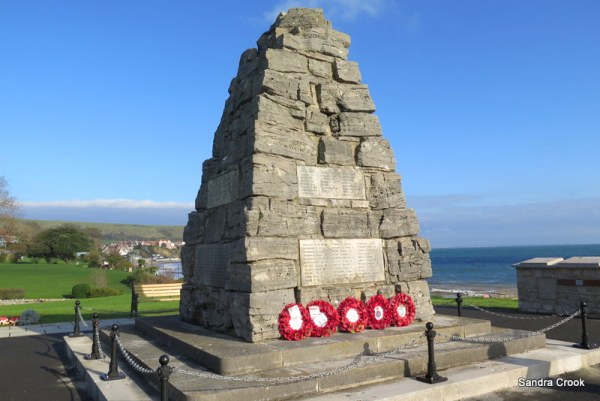
Madame Mimi and Madame Zoe Stael have not been seen together for over twenty years. If you’d met them then, you’d have been unable to tell them apart. They’re twins, you see. Now they fight on opposite sides of our war.

I wonder how this is possible. To be born of the same place, the same season—that should make them the same person. Twins trouble me. We are each unique, except for those born together. My uncle says twins are not people but birds.

Today, after the battle, only one of the pair will survive. The victor will become a person, and we will know our path.


Friday fictioneers is a weekly challenge set by Rochelle Wisoff Fields to write a 100-word story in response to a photo prompt. You can find other stories here

Friday Fictioneers – Shame

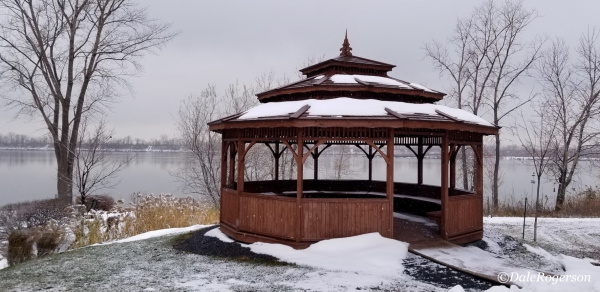
dales-gazebo
PHOTO PROMPT © Dale Rogerson

It was summer. The band played and crowds cheered as they marched off. Girls showered the boys with flowers and kisses. It was all a grand adventure. Marnie was the only young woman to enlist. I wanted to give her a flower. I wanted to kiss her, bend her back like a movie heroine. But I was ashamed.

Now it’s winter. They’ll never come back, those boys and Marnie. All gone. We’re ashamed we encouraged them so. Nobody ever visits this bandstand now.

Except me. I’m glad I didn’t enlist. I’m still alive.


Friday fictioneers is a weekly challenge set by Rochelle Wisoff Fields to write a 100-word story in response to a photo prompt. You can find other stories here

126. The mystery rhythm of Sam was a Man

rhythm2

Mastering rhythm is important to any writing. If a sentence doesn’t sound right, something will go clunk in the reader’s head. This is why every fiction writer should read poetry. Rhythm is fundamental to poetry. Consider, for example, these line from John Masefield’s Cargoes:

Quinquireme of Nineveh from distant Ophir,

Rowing home to haven in sunny Palestine.

And

Dirty British coaster with a salt-caked smoke stack,

Butting through the Channel in the mad March days.


The first couplet has a stately rhythm, while second, full of short words and plosive consonants, is frenetic.

There is no doubt about the music of the lines, Speak the words aloud and they set the tempo.

But consider, ee cummings’ poem below. The rhythm appears staccato, broken. And yet, cummings was a master craftsman.

ee cummings

Is this simply a bad poem, or has he buried a secret in the heart of the words?

rain or hail
sam done
the best he kin
till they digged his hole

:sam was a man

stout as a bridge
rugged as a bear
slickern a weazel
how be you

(sun or snow)

gone into what
like all them kings
you read about
and on him sings

a whippoorwill;

heart was big
as the world aint square
with room for the devil
and his angels too

yes, sir

what may be better
or what may be worse
and what may be clover
clover clover

(nobody’ll know)

sam was a man
grinned his grin
done his chores
laid him down.

Sleep well

It’s a puzzle. There’s no obvious cadence when you read it aloud. Vincent Perischetti made a modernist choral arrangement of the poem

But I don’t believe cummings intended anything so cerebral. Instead, it’s a hymn to the (American) common man. Try reading the poem to the rhythm of an American barn dance caller and it suddenly makes sense.

barn dance


Friday Fictioneers – Cavity

mikhaels-photo
PHOTO PROMPT © Mikhael Sublett

You can never take it back. One look at her eyes, wide as a cartoon, and her trembling hands was enough. She’d seen the anger he’d locked away and could never feel safe again.

“It’s a prophecy,” he tried. “See, like in the painting.”

He gestured at the hole his fist had made in the wall and then at the picture, the one mirroring the other. “They’re the same.”

Hoping for hidden treasure, he reached into the cavity. Silent, she shook her head. His fingers closed on nothing, and he knew the real emptiness he’d revealed was his own.


Friday fictioneers is a weekly challenge set by Rochelle Wisoff Fields to write a 100-word story in response to a photo prompt. You can find other stories here

Friday Fictioneers – Taxi War

asian-bus
PHOTO PROMPT © Fatima Fakier Deria

I’m not even a land person. Driving a bus isn’t what destiny intended. A war canoe, that’s what. Like my grandfather and all the way back to my grandfather’s grandfather. Sail bellied full, outrigger flying over the sea, drips spraying like blood from a severed neck.

The harsh cry of my men behind me, weapons ready, as we prepare to land.

Another craft slips alongside—an enemy taxi. My warrior blood sings as I pull my gun. Driver, pow! Passengers, pow! pow! pow! This route is my route, my people’s route.

Friday fictioneers is a weekly challenge set by Rochelle Wisoff Fields to write a 100-word story in response to a photo prompt. You can find other stories here

Friday Fictioneers – Fairy Ring

ceayr-2-1
PHOTO PROMPT © C.E. Ayr

Deep in the woods, there’s a fairy ring. As a child I found the place. From all over the valley, travellers journeyed to view it and make wishes.

Deep in the woods, there’s a fairy ring. Over the years, a road was worn smooth by thousands of pilgrim feet.

They built a café to cater for hungry travellers, and an inn to lay their heads. And a souvenir shop. And a supermarket. And a housing complex.

Deep in the city, a ring of trees is lovingly preserved. But nobody can remember why.


Friday fictioneers is a weekly challenge set by Rochelle Wisoff Fields to write a 100-word story in response to a photo prompt. You can find other stories here