Yeah, I wasn’t surprised when they came. The truth is out there, you know. No, no. Don’t stand directly underneath – they can beam you up that way.
What do you mean they’re lamps? Don’t you get it? That’s what they want us to think. Well, if you’re so smart tell me what the message means.
The message for crissakes, the one they’re projecting on the window. Look, one bar, then two, then three. Arithmetic, right? But look at the first one. That, my friend, is their encyclopaedia, their gift, if you know how to read it.
Friday fictioneers is a weekly challenge set by Rochelle Wisoff Fields to write a 100-word story in response to a photo prompt. You can find other stories here
The guest post is still scheduled. I can now report on the other two.
Building an e-mail list
I used MailChimp to mail a newsletter to a list of 158 people who follow my blog and/or who have commented regularly and thoughtfully on my writing. The draft newsletter was pilot tested with nine people.
The mailing didn’t go hugely well. Yes, on the one hand the response was well above industry benchmarks. On average, 22% of e-mails in the media and publishing industry are opened. My open-rate was 42.7%. Again, the industry benchmark for “click rate” (clicking on “subscribe”) is 4.66%, while in my case it was 14.6%.
But something went horribly wrong. I should have received 23 subscription notifications. But I only got three. Some people told me independently that they had signed up, bringing my e-mail list to eight. So, I’m missing 15 subscriptions. I guess I made some mistake with MailChimp.
The Scribophile writing community
Scribophile is a large members-only community of writers, and claims 858,776 critiques for 145,608 works, an average of just under six responses per work. Being a closed group, it has the advantage that it shouldn’t prevent you submitting your work elsewhere. I joined it last month, and I’m pretty impressed.
It runs, like any successful community, on the basis of reciprocity. You can’t post your own writing without first contributing, most particularly by critiquing others’ work. There are groups for people with particular interests, bulletin boards, competitions. And, of course, posting your writing for critique. I’ve used it to test out whether readers will tolerate breaking some pretty fundamental rules about first chapters.
I’m a newbie on the site – you start with the rank of “Scribbler” and can rise to “Scribomaster”; I have reached the dizzying heights of Typesetter. Despite that, I can track 16 visits to my blog originating from Scribophile. I also have 13 followers on the site.
The meeting broke up early. You’d think it would take days to reach such a decision, but only fifty-three minutes had passed, I walked with the President in the gardens. On the lawn a peacock called, the sound rasping and full of anguish.
“All of them?” I said. “Must they all die?”
The President brushed hair from her eyes. It was a weary gesture. “You know the answer. If even one survives, this will get out.”
Beyond the walls, I heard the rumble as the tanks moved off.
Friday fictioneers is a weekly challenge set by Rochelle Wisoff Fields to write a 100-word story in response to a photo prompt. You can find other stories here
Do we need to be scared of big data and its claimed spooky ability to know more about us than our partners, to mould our behaviour like puppeteers?
An e-mail dropped into my inbox today from Amazon. I won’t name the book or the author the tech giant’s algorithm was trying to market to me. Usually I delete Amazon’s recommendations unread, but this time I looked at the book. Not because I expected I’d want to read it, but because I wanted to understand the marketing. The book was described as “An emotional psychological thriller with a twist.” That already annoyed me: why both psychological and emotional? And, yeah, of course it has a twist. The only thing it didn’t tell me is what reading level I need in order to follow the prose.
I began to read the taster. It began with an odd question. That was designed to intrigue and to hook my attention. The meaning of the question is explained by the bottom of the first page, in case my patience flags. There’s a hammer-beat of short staccato sentences, designed to lunge for my heart. There’s a bit of backstory. Hmm. Backstory on the first page? That’s a mistake when we’re supposed to be in the relentless attention-grabbing now.
The machine algorithm is marketing something to me I wouldn’t read in a million years. Primarily because it feels like it was assembled by a machine according to a formula. Facebook’s algorithms keep showing me pictures of cute dogs. Actually, it’s my wife who’s keen on cute dogs, not me.
My point is despite all that machine learning and big data, these two tech giants still have little clue who I am and what I like.
So, exactly how afraid should we be of Cambridge Analytica? The data breach that allowed the company to harvest the details of 50 million Facebook users is undoubtedly serious. But did it get Donald Trump elected President of the US? Did similar dirty tricks swing the Brexit referendum in the UK? Let’s examine what they’re able to do with the data.
The core of the data analysis seems to be a personality quiz app, developed by a Cambridge University academic and downloaded by 27,000 people. The quiz broke people down into groups, dominated by traits like agreeableness, openness, neuroticism etc. We’ve all done such tests in magazines. There are 72 different online personality tests available on the website of Cambridge University’s (not to be confused with Cambridge Analytica) Psychometrics Centre. Clearly this is not an exact science.
What was different in this case was the ability to look for correlations between the personality quiz results and Facebook records, such as what people liked. Here it does start to get a bit more sinister. For example,a 2013 research paper by three academics from the Psychometrics Centre showed that it was possible to predict intimate information about a person from their Facebook likes, information such as sexuality and political leanings.
In some cases, the correlations were pretty obvious – liking the “No H8” campaign and being gay. In others they were less clear. For example, users who liked the “Hello Kitty” brand tended to be high on “Openness” and low on “Conscientiousness”, “Agreeableness”, and “Emotional Stability”. They were also more likely to have Democratic political views (75%) and to be of African-American origin (82%), predominantly Christian (69%), and slightly below average age.
While it’s not precise, what this does is allow micro-targeting. Instead of standing at a hustings and bellowing the same message to everyone, a political candidate can whisper different messages to different groups – threat messages to the fearful, for example, and optimistic messages to the bold. The Cambridge Analytica whistle-blower, Christopher Wylie, said this is exactly what the company did.
Was that enough to lose Hilary Clinton the US presidential election? We don’t yet know. A scientific test would require demonstration that micro-targeted ads outperform random ads in changing consumer actions. But my guess is that Cambridge Analytica was better at marketing itself to sleazy clients than it was at targeting and changing voters’ behaviour. Predicting personality attributes is not the same thing as changing behaviour. And, despite the hype, it’s not at all clear that the algorithm is any better at prediction than a human would be. If Amazon can’t even get my reading preferences right, what chance big data can make me vote for someone whose politics I don’t like?
I don’t just write – I write myself at the same time as the stories. Or at least, I explore myself in the act of writing, and discover things I didn’t know.
There are now enough novels under my belt (five) to constitute an oevre (yay). As an avid analyser, I can now explore what this tells me.
Each novel is a in a different genre. The first is an amalgam of detective, sci-fi, and psychological thriller. The second, is literary travel– a journey of the mind coupled with a journey to an exotic location. The third, historical fantasy. The fourth, an amalgam of historical and detective. The fifth is again literary, and a romantic political thriller. So, if I don’t follow a genre (almost certainly a marketing mistake) what do my books have in common that marks them as mine?
The main male character is almost always flawed and, at least in part, hard to like. They are often unreliable narrators. The only exception to this is the historical fantasy novel.
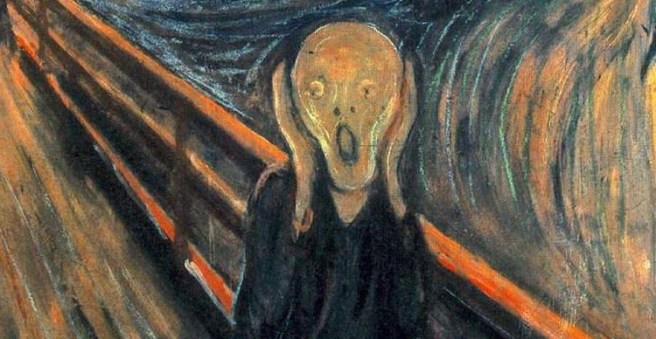
Edvard Munch The Scream
The stories are almost always told in close third or first person by a single narrator. Again, the historical fantasy novel is the exception. In this one I experimented with multiple point-of-view characters.
The stories are multi-threaded. There is usually a surface narrative which conforms roughly to a genre format, and then there are other threads. The fifth book, The Tears of Boabdil, does this is spades. There is a fairly simple story of an undercover policeman attempting to penetrate what he believe is a terrorist cell, and falling for the sister of the cell’s leader. Yet there is little of the tension you would expect from a thriller because the narrator gives away in the first chapter most of what subsequently happens. This follows the advice of Boris Fishman
If your story has a secret reveal it from the top.
The drama of the story is in how the protagonist deals with his secret. But there are also magic realist elements of a parallel story of a wandering minstrel in Moorish Spain. What connects both of these strands, which begin to interweave, is a commentary on truth in which identity becomes the story we tell ourselves and other people.
There is a common human preoccupation behind all of these stories. The main character is usually confused or conflicted about what is really important to him. Though there are antagonists in all but the literary travel story, the real barrier to be overcome is internal. Many of the lead characters are of dubious sanity. There is often a helper character who is female and who is usually strong and whole. In some of the stories, the confusion gets the better of the protagonist. In others, he overcomes his barrier.
There is a political (with a small “p”) preoccupation behind many of these stories. Part of what the protagonist confronts is social injustice, and the way in which different cultures or sub-cultures get labelled as “other”. The politics is most explicit in the historical fantasy novel, which tracks the attempt of two very different Kings to maintain the integrity of their realms and the allegiance of their peoples.
Now that is all pretty interesting to me (though whether it is to you, only you can say). I hadn’t set out with the intention of writing flawed protagonists. Noble heroes are much easier to like (though arguably much less interesting). Readers identify with heroes, but their sympathy is engaged by flaws. So I guess, a first principle of my writing is
Your protagonist doesn’t have to be likeable, but s/he does have to be interesting
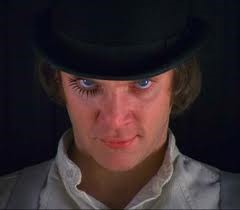
Malcolm McDowell as Alex in A Clockwork Orange
Am I using my characters’ flaws to explore something in myself? Possibly, but if so, I don’t know what it might be. The characters all have different flaws. I don’t think they’re me, though each of them has some aspect of me. I didn’t consciously decide to write conflicted protagonists. It just happened. So, I reassure myself that I just enjoy the depth that a flawed character allows.
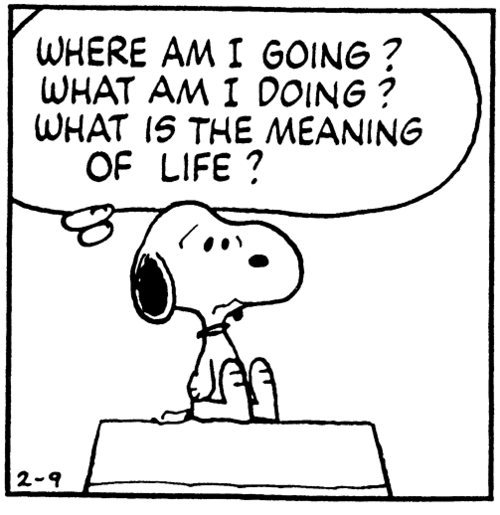
The preoccupation with what things mean is definitely me, and the idea that we are all stories is certainly a recurring theme. The first book is even called Identity.
Facts are everything that exists. Stories are the connections between them. Stories tell us what goes with what, what is important and what is unimportant, who to praise and who to blame.
The multi-threading is also a signature. I like stories with layers, especially where the layers “rhyme”. Just as a piece of music is dull if it only has a simple beat and melody, so with a story.
Complexity rewards the reader’s attention when s/he recognises recurring motifs. Complexity also adds ambiguity, blurring certainty. It makes the reader part of the story’s construction, because there is no single reading, there are as many stories as there are readers. A story only belongs to the author up to the moment of publication. From then on, it belongs to the readers.
Images and metaphors from myth and religion recur frequently in my work, even more so in the short stories. Which is odd really, since I’m not religious. Or maybe I am, and I just don’t know it. I wrote a story, Cara’s Saga, which is a deliberate bricolage (a delicious French world, meaning a construction from a variety of a diverse range of things). And that, of course, is the attraction of bricolage. The story invents a world which is part Inca, part Australian aboriginal, part Canadian northwest seaboard, wrapped up in a homage to Norse sagas. I loved writing it. The Sumerian goddess Ishtar is a character in The Tears of Boabdil.
And there’s a clue there to the pre-occupation underlying it. I’ve been planning to write for most of my working life, but decided not to (at least not write fiction) until I could write whatever I damned well pleased without having to worry about whether it was commercial. I always imagined I’d write science fiction. And yet, I’ve written very little of that genre. I like to explore different worlds, both for the curiosities I encounter there and for the underlying music of the universal human spirit at work. It turns out that the most interesting worlds to me are not those with elves and dragons (I actively dislike elves and dragons), or empires in other galaxies. The most interesting worlds are those inside people’s heads. I’m interested in the ways that people understand things, and how that makes them act.
Stories should take us to places we’ve never been before, and introduce us to characters we’ve never met before. The writer constructs a new world for us. But you don’t have to cross galaxies to do this. Inside every head there is a world which, to the rest of us, is unimaginably different and strange. Since we can never enter these worlds in reality, it’s the job of fiction to take us there and show us our friends, our partners, and our children as they really are.
If we were all aliens beneath the skin, that would be as scary as the pod people in the classic (McCarthy era and anti-communist) sci-fi movie Invasion of the Body Snatchers. So the work of fiction is not to render people as “other” but as (at least in part) delightfully like us. We have to be able to understand and empathise with the alien universes inside their heads.
I think getting a handle on how those mystifying creatures around me think and feel and construct meaning is my main motivation for writing.
And that’s probably why I’m so drawn to religion and myth. I wasn’t even really aware of this until I was doing a reading at a “Lit Live” event in Frensham and the poet, Jo Young asked me why I used so much religious reference. The impulse is literary, not a religious. These are simply great stories, the best our species has created. And why are they so great? Because they have been the glue which binds communities and peoples together. They express universal longings and fears, and explain, in their distinct and unique ways, cultures to themselves.
Religion and myth are a wonderful toolkit of story pieces.
Like an electronic hobbyist, the writer can take characters and themes and events from them, and plug these into the circuit board of a story. And when narrative current is passed through them, they resonate with deep energy that draws in the freight of hundreds or thousands of years of storytelling.
We called them the witch’s tits. On account of their shape, you know – sharp cones. Before we named the peaks, this was just an ordinary mountain track. Afterwards, well you could feel it, the cold I mean, a kind of chill in your heart as you rounded the corner.
I think it was Harry who named the force – Ishtar, an ancient Queen of Heaven, who destroyed her lovers. Anyhow it was Henry She took for her own that day. We heard a wail and he vanished. That’s why we made the warning sign. Nobody takes this road now.
Friday fictioneers is a weekly challenge set by Rochelle Wisoff Fieldsto write a 100-word story in response to a photo prompt. You can find other stories here
When the lights arrived, Michael wasn’t there to see them. The radiance danced, coruscated, the night sky was incandescent. Reflections glimmered on the unblinking eye of Michael’s camera lens. No shutter click caught the secret for posterity.
Under the trees, Michael indulged a secret of his own, more furtive, less cosmic. He closed his eyes and shuddered. “Yes, yes. Don’t stop”
Friday fictioneers is a weekly challenge set by Rochelle Wisoff Fields to write a 100-word story in response to a photo prompt. You can find other stories here
Perhaps it was because his parents called him Darius. Bearing the name of an ancient conqueror carries its own risks. At all events, Darry played a long game only he understood.
“Who does it harm?” he’d say when we questioned his project. For 25 years he quarried and shaped, assembled and carved. In secret, he overwrote the landscape of his extensive estates with temples and amphitheatres, statuary and canals.
“Darry,” I said to him one day, “this is a Disneyworld, a fantasy.”
“Now.” He nodded. “Sure. But in a thousand years, who’ll be certain?”
Darius was inventing a legend.
Friday fictioneers is a weekly challenge set by Rochelle Wisoff Fields to write a 100-word story in response to a photo prompt. You can find other stories here.
Apart from being talented (which, of course, you are) what can you do to produce great content? Great content is, at least in part, stuff that other people want to read. Nathaniel Tower writes a blog which I really like. In January 2018 he published a helpful post on writing what people want to read. In summary, his 5 tips are:
Write about something that answers a commonly-asked question.
He recommends using something like Moz Keyword Explorer to find out what questions people are asking. This will tell you that 11,000-30,000 people a month are asking questions about writing.
You can also use the stats from your own site to identify what search terms drew people to your posts. In my case for example two frequent search terms were variants of “formula for flash fiction” and “scenes, sequels and MRUs”. These drew people to two of my most popular post – Scenes, Sequels and MRUsand My Secret Formula for Flash Fiction. This tells you it’s worth putting some effort into thinking about your titles.
Write about something that will help people.
Like, for example, how to drive more visitors to your site. Last year I tried this in a big way, with an online writing course. It never took off because I’d neglected the third of my three principles – fame. I’m not a famous writer, so why would anyone listen?
Write about something that’s controversial or polarising
Nathaniel gives the example of his post on whether you should write every day. He advises that you cover both sides of the controversy so you engage all the readers rather than turning off half of them.
Write about something you’ve never seen written about before
Write about something that means a lot to you
How do you make sure people know about your site?
If I was writing as an expert, I’d try out all the ideas and then tell you the result. But I’m writing as I learn, so I’m going to share the experiment with you instead. These are some of things I’ve tinkered with and intend to try more systematically over the coming year
Join an online community
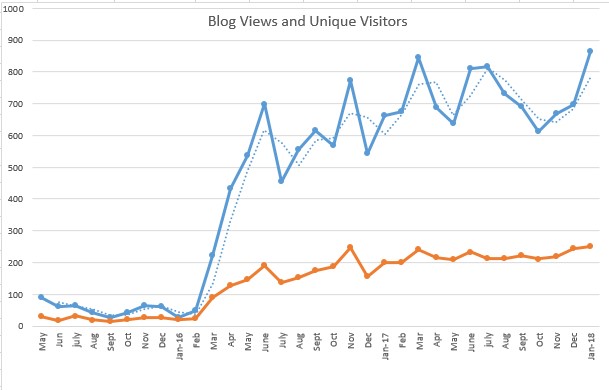
This has been far and away the most successful strategy I’ve used. In the first nine months of this blog, I got an average of 53 views and 23 visitors per month. WordPress has 74.6 million blogs and receives 21 billion page views per month. That’s an average of 281 views per blog per month (if the reads were distributed evenly, which they’re not). So my hits were distinctly below par.
In the next year, views of my site jumped over 10-fold to 592 a month and unique visitors to 174.
This wasn’t because my content was so much better. One simple thing changed in February 2016 – I joined an online community. Friday Fictioneers is a group of writers that varies between 70 and 100 people a month, producing a hundred-word flash fiction each week. Posting these stories exposed me to a bigger audience, not just for the weekly stories but also for my other content. Why not join it too? It’s managed by Rochelle Wisoff.
Since joining the community, my stats have continued to build slowly. In the 10 months to January 2018, views grew a further 22% to an average of 721 a month and individual visitors rose 28% to 222 a month.
The slow growth coming from Friday Fictioneers will take a long time to reach the next level (say 1,000 hits a month). But this strategy worked so well that it may be worth finding other communities. The difference between a community and the other approaches is that it’s not a one-off: you’re engaging permanently – building credibility, trust and relationships.
Strategies I’ve tried
Strategy
Average increase in reads
Permanent change
Online community
540
Yes
Cross post in other communities
15
1 follower
Author interview
20
No
Guest posts
1
No
Mentions by others
40
No
Mention others
9
No
Other writing communities
However. I have tried other communities in the past – Webook, a writers’ community about to go into liquidation, as well as publishing online on Wattpad and on Big World Network. None has been as effective as Friday Fictioneers.
Lit Hive aims to be a community that unites writers with readers. The most widely read book received 19 comments, the most recent over two years ago. The discussion boards seem equally inactive.
Scribophile is a large members-only community of writers and claims 858,776 critiques for 145,608 works, an average of just under six responses per work. Being a closed group, it has the advantage that it shouldn’t prevent you submitting your work elsewhere.
Writers Café is another writing community. Its server was achingly slow when I tested it.
2. Engage more with readers and potential readers
I have probably not been as generous as I should be in reciprocating readers’ interest. I pretty much do respond to all comments, but I don’t necessarily reciprocate follows and likes or build a conversation. Some ideas are:
Follow more people (particularly if they follow me)
Join in the conversation on others’ sites
Build and maintain an e-mail list with unique content for regular followers and attentive commenters. There’s a saying in marketing about the importance of e-mail promotion “the money’s in the list”. This is the strategy I’m currently experimenting with.
The reason I haven’t done these things isn’t aloofness. It’s shyness. I engage with friends and colleagues I know well, but it takes me out of my comfort zone to do that with strangers. In a very British way, it just seems pushy. The whole language of “building your author brand” just makes me a little queasy. But, building trust and relationships I understand. So of course, I have to spend time outside my comfort zone if I want to engage with the community of other writers and readers. The idea of building relationships (rather than selling) is fundamental here.
3. Engage other people’s readers
Engaging other people’s readers might help make the next jump.
Guest posts. Invite other people to do guest posts on my blog and solicit invitations to post on theirs. I tried this a little bit in the past on A Writer’s Path (with over 26,000 followers), which didn’t generate much evident short-term boost to my stats, but then I haven’t explored this systematically. I have a guest post coming up 4 May on Dee Cee Taylor’s blog It’s All About Books as part of a blog tour to promote the Climate Fiction anthology Nothing is as it was (in which I have a story) to be published on Earth Day 22 April by Retreat West Books.
Reblog other people’s posts. Hopefully they’ll reciprocate.
I can track an additional 19 reads this brought to my blog, so this isn’t going to boost my followers into the thousands. However one friend did say “Would love to see you post more such interviews. So helpful to compare another writer’s process with mine, get new ideas for approaching research, see how things evolve.” So it falls into the category of posting what others want to read.
Mention other people in your posts and tell them you’ve done so. For example, I wrote one post thanking some writers for their support. Their friends did read the post.
Write a “top ten” list, any top ten list, it doesn’t really matter. For example, the top ten sites for advice to writers. This is a much more intricate take on the previous idea. The idea is that at least some of them and their followers will read your post and you’ll pick up some as your own readers.
Include reviews of books you’ve liked. Again, I’ve done this sporadically on my blog, but most of my book reviews go on Goodreads, where I don’t have much of a profile.
The basic driver behind all these ideas is good old-fashioned vanity. Everyone likes to see themselves in print. We read our reviews and what others are saying about us. (You obviously have to let the people know you’ve done it, so they’ll go and look and tell their friends about it). And, of course, if you choose people with thousands of followers, you’re more likely to pick up new readers. The challenge, though, is to convert them into regular readers, which goes back to having good content. It should go without saying, but I’ll say it anyway: ruthless self-promotion will only end up looking like what it is; you have to engage with what people want, not with what they can do for you. In other words, be genuine and interested in them and, if you can’t, don’t do it all.
4. The techie stuff – don’t worry about keywords
It used to be the case that spending a lot of time massaging the tags and keywords on your site could make a huge difference to your ranking on search engines. There still are ways in which you can manipulate this, but it’s much less important than it used to be. Google no longer uses keywords to rank its output.
To prove this, I checked out the page rank score for my blog on the Moz site and compared it with two other writers’ sites (which I won’t name). My site has one keyword (my name) and a page rank of 40. The page rank indicates how prominent the page is likely to be on search engines, out of a possible 100. The two writers I compared myself with (both with significant followings) have 80 and 19 keywords respectively and both have page ranks of 41. J.K. Rowling, by comparison, has a page rank of 77.
So, if like me you’re bored with fiddling under the hood of your site, you can pretty much ignore this. The only thing you need to know is that you’ll rank higher if you include useful links in your posts, and particularly if others link to you.
5. More techie stuff – best time and day to publish
Another set of data you might or might not want to ignore is that on the best time and day to publish. There’s a useful summary of several studies by Garret Moon. These suggest that the best day for page views may be Monday morning between 9:00 and 12:00 Eastern Standard Time.
Two of the studies indicate that the best time for comments and shares is at the weekend. This would make sense, since there’s less competition from other posts then, and people have more free time. However, another study indicates that the best time for shares is Thursday at 10:00 a.m. EST.
The reality is probably that you should be guided by your own experience. A lot will depend on who your audience is and where they’re located. Your blog provider will probably give you some analytics and installing Google Analytics will give you more. In my case, around 35% of my readership is from the US, around 27% from the UK, and 17% from India. My highest page views come on Wednesday between 8:00 and 10:00 EST. That is for the simple reason that Friday Fictioneers publishes on a Wednesday.
I’ll let you know which of these strategies I experiment with, and with what results.
What strategies have you tried to increase traffic to your site? How did they work out? I’d love to hear your experience.
It took the rescuers a month to dig their way to the mountain cabins through snowdrifts a metre high. Dagmar’s was the last they reached.
“Don’t reckon it’ll be pretty,” Sergeant Rasmussen warned the volunteers. That morning they’d found Sven and Inga’s frozen bodies wrapped together in a final embrace, each of the children neat and cold in their beds. All the children bar two. The dog had eaten them.
They forced their way into Dagmar’s house, crunching over the litter of small bones. The cleaver caught Rasmussen in the neck.
“Food,” the old lady croaked in relief.
Friday fictioneers is a weekly challenge set by Rochelle Wisoff Fields to write a 100-word story in response to a photo prompt. You can find other stories here









 Neil MacDonald Author