78. The Big Push

It was the summer of the big push. The plan for this year was to get across no-man’s-land and find myself an agent. In June, my writing career was poised on the brink of breakthrough.

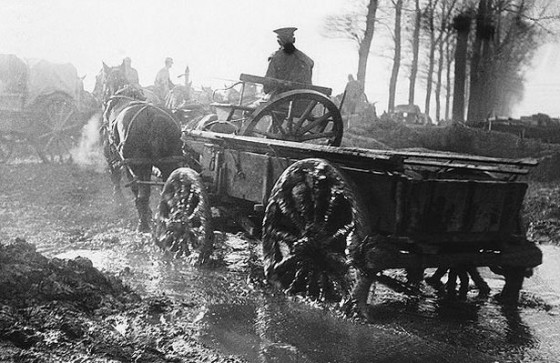
horses-mud-560x363
The Great War Project

As I reported in this blog the literary consultancy, Cornerstones, asked to see as revised version of my novel The Golden Illusion. They act as scouts for agents. I was thrilled!  The book is a mystery story with a twist. The sleuth is a conjurer who believes he hunts an ancient illusion. Instead, he reveals a conspiracy concealing an atrocity that spans the centuries.

Writing is a cruel game though. At the end of August, Cornerstones decided not to represent the book. Though they were very complimentary about it, it was still a rejection. They said:

“The concept is high – a magician as your protagonist is gripping – he’s intriguing and mysterious and powerful. His voice is accessible and engaging and the ancient magic has an allure. In a way, this is submittable right now and you may well get agent interest.”

Despite that, they felt it needed more work – more than they were willing to risk. So here I am, still in no-man’s-land, all barbed wire and mud and shell craters filled with water. Another big push repulsed. I’ve been through this before when a publisher showed interest and then rejected the book, and also with an agent.

All you can do is pick yourself up again.  And again. And keep heading across the field to the far trenches. But I get better at handling defeat. I have flanking manoeuvres now. Though none of my novels has yet survived going over the top into hostile terrain, I know I can get short stories published. I fired off five stories to magazines. I have another two on the launch pad. With that many, there’s a good chance of some being accepted and cheering myself up. In fact, one story, Bomaru’s Quest Part IV, has already been accepted and published today by Literally Stories. You can read it here.


The Machine

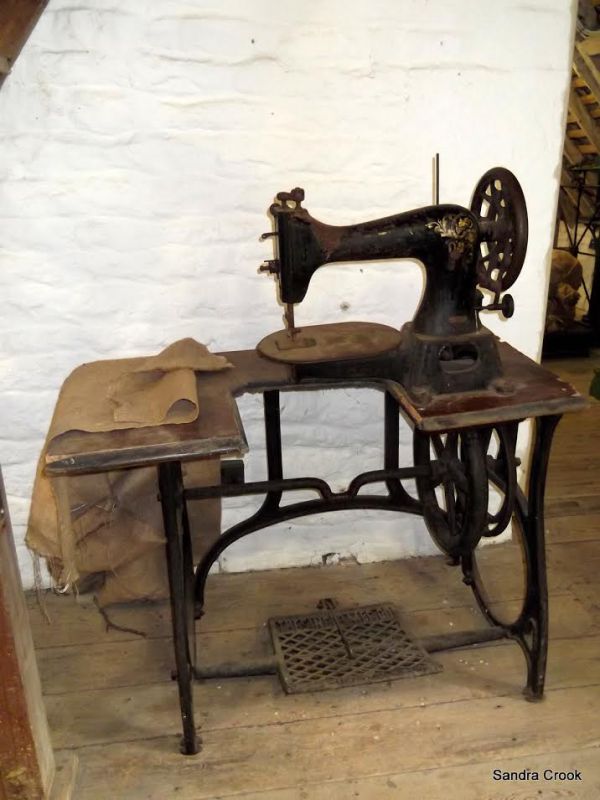
crook2
PHOTO PROMPT © Sandra Crook

The Machine’s skin was hard, harder than any crocodile’s, tougher even than stone. Irgul stared at it. Today, after reaching manhood, he would become one of the four Bearers. After the feasting, they would parade the Machine round the village, like their fathers before them.

Irgul reached out and caressed the Wheel. It turned. An idea glimmered just beyond his grasp.

Sp’andor, the old shaman, watched the boy and smiled, remembering when he also had that seductive idea for transportation. Irgul would discover for himself, he thought indulgently, how easily clay pots smashed when jolted along the forest paths.


Friday fictioneers is a weekly challenge to write a 100-word story in response to a photo prompt. You can find other stories here.

Friday Fictioneers – The Signature, Part 2

I don’t usually do sequels, but so many people asked about what happened next in last week’s story. So here it is. Sorry to those of you who didn’t like the story. I promise not to turn this into a trilogy.

vijaya
PHOTO PROMPT © Vijaya Sundaram

“If this DNA sequence is a signature, whose signature is it?” Joel hated the implications of Emily’s discovery about the Alpha gene, the gene they’d found in everything from humans to amoebae.

Emily ticked off possibilities on her fingers. “One, a Creator.”

“A deity who spoke Greek?” Joel shook his head, but in confusion, rather than with his characteristic sarcasm.

“If you think that’s weird,” Emily continued, “how about number two? We’re running inside a computer simulation.”

She reckoned this wouldn’t be the best time to tell Joel she lacked the Alpha gene.


Friday fictioneers is a weekly challenge to write a 100-word story in response to a photo prompt. You can find other stories here.

77. Angry readers

A writer friend told me about a reader who got angry with a character in her draft novel. This character tried to control the actions of his lady love, and, worse, had not been completely frank. That anger made me think.

Enjoyment, intrigue, excitement – yes those are emotions you want your readers to have. But anger? And was their anger with the character or the author? The situation struck a chord with me because I’ve also encountered anger recently from writing colleagues.

Storm Catcher Felicia Simons
The Storm Catcher © Felicia Simion

Anger is a disturbing and scary reaction to provoke. As a writer, it makes you wonder if you’re doing something wrong. Our instinctive response to anger is usually to conciliate or to strike back. Conciliation can lead to messing up a storyline. To strike back is, of course, human but very stupid. Anger generally tells you the reader is reacting to something in themselves.

My friend had made her character a little more flawed, a little more like a real person. That can only be good.  But of course she worried that she was risking alienating her readers. She compromised her intention and wrote a chapter that didn’t work.

This made me consider my own reactions to readers’ anger and what the lessons might be. I’ve braved some anger in my writers’ group towards my novel The Golden Illusion. And also towards the story that I’m working on for the Sunday Times competition.

What do these stories have in common? Unsympathetic characters is the most obvious thing. Ruairi, the main character in The Golden Illusion, is charming but manipulative. Margaret, protagonist of the Sunday Times story has many traditional working-class values but is also racist. Do your readers have to like your characters? No, not necessarily, but they have to find them interesting. It also helps if the characters go on a journey and end up more sympathetic than at the start. Ruairi and Margaret follow such journeys. I guess the anger shows that neither Margaret nor Ruairi are leaving readers cold. You can’t be angry about something if you don’t care.

One friend apologised later for the ferocity of her reaction to Ruairi. She had said she found Ruairi’s seduction of a woman he meets in a bar unbelievable. She confessed she was, in fact, angry that that the woman succumbs.

In Margaret’s case, there’s an added element. The story is overtly political, a response to the UK’s vote to leave the European Union. The British learn early in life not to talk about politics or religion in polite company. But then, I don’t think the conversation between a writer and a reader has much to do with politeness.

Writing political stories is, of course, risky. It divides your readers and can lead some of them to see you as “preaching”. When that happens, they’re probably angry with you rather than your character. It’s an odd fact that portraying a politics is often seen as “telling me what to think” while depicting any other facet of personality rarely provokes such a reaction. I’ve never had a reader tell me that they felt manipulated by a character’s selfishness or courage. In my defence against the charge of “preachiness”, Margaret’s fear and racism isn’t defeated by her friend’s political arguments, but by music.

The up-side of being political is that it’s topical. So, while it may turn off some readers, it may engage others.

And I guess this is the main lesson – you can’t please all the readers all the time, so cast your reading net wide. A writer has no choice but to walk the tightrope of simultaneously believing in their work and being open to criticism. I got very disheartened by colleagues savaging The Golden Illusion and had decided it was a bad book. That was until another writer read it and loved it. In fact she loves it more than I do and restored my confidence in the novel. So it pays to get lots of opinions.

Friday fictioneers – The Signature

boatpilxr_-antiqued
PHOTO PROMPT © Georgia Koch

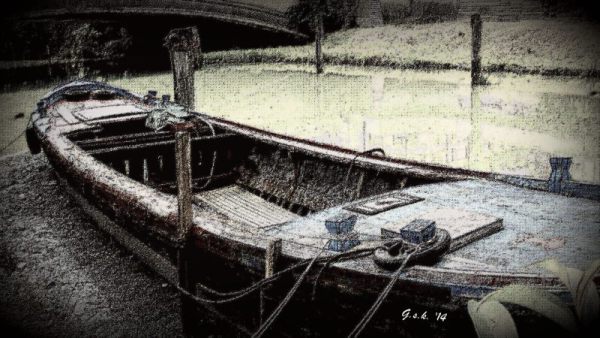
Joel wasn’t a believer. Not in spirits, faeries or deities. But neither did he believe in coincidence. Two samples containing the strange DNA sequence he could dismiss, but not 500.

“It’s crazy,” he told Emily. “the gene’s present in humans, mice, fruit flies, and amoebae. It’s ancient. But does nothing.”

“Oh, it does something,” Emily said digging her hands into the pocket of her lab coat. “But you’re not going to like this.”

She spelled out the amino acids the gene coded for – Alanine, Lysine, Phenylalanine, Histidine, Arginine.

Joel didn’t follow. “So?”

“It spells Alpha. This is a signature.”


Friday fictioneers is a weekly challenge to write a 100-word story in response to a photo prompt. You can find other stories here.


Friday fictioneers – What’s the point of wasps?

wasp-nest
PHOTO PROMPT © Janet Webb

“I mean, what’s their point? What do they do for us?” Calum is emphatic in his opinions. He has similar views of football hooligans and foreigners.

“Pollination” I suggest.

A wisp of smoke curls from the pest gun as he advances on the filo-pastry wasp nest.

Calum shakes his great grizzled head. “The beggars stung me for no reason. Bees don’t do that. Bees are useful.”

“Maybe they don’t need to be useful. Perhaps it’s enough that they exist?”

Like an activist protecting a mangrove swamp from a marina developer, I step forward and seize his wrist.


Friday fictioneers is a weekly challenge to write a 100-word story in response to a photo prompt. You can find other stories here.

Friday Fictioneers – Thebes

adamickes-boardwalk
PHOTO PROMPT © Adam Ickes

The causeway extended across the fen into the mist.

“You can see how Alfred the Great escaped the Romans here,” Jane said.

“Vikings,” I said

“What?”

“Alfred escaped Vikings, not Romans.”

A gust of wind lifted the fog’s cowl. At the exact vanishing point of the causeway, the afternoon sun kindled fire in a pyramid.

“I don’t think we’re in Kansas anymore, Toto,” I said. “We should go back, Jane. Now. Or we’ll miss tea.”

She raised her ray gun. “That’s okay. Phasers on stun.”

Hand in hand, we marched forward into the white pre-world of possibility.


Friday fictioneers is a weekly challenge to write a 100-word story in response to a photo prompt. You can find other stories here

76. Why it’s worth writing short stories

Do you suffer anxiety about whether your writing is any good? If you don’t, you’re probably not doing it right. You get lots of advice and encouragement when you start writing. Most of it is well-meaning. Much of it is wrong – at least for you. There’s one thing I wished I’d known when I started. Of course, like most well-meaning advice, it may not be valid for you. But my advice is write and publish short stories, even if your main interest is novels.

Short story Stephen King

Why? Many reasons, but these were the main ones for me:

  • Polish your craft.
  • Boost your confidence
  • Measure your ability.
  • Build a track record.

Polish your craft

Short stories are short. You can write them faster than a novel and revise them more easily. It’s a simpler apprenticeship to serve.

Boost your confidence

Publishing and selling a novel is hard. It takes lots of work, and lots of luck. Mostly, you get negative feedback from agents and publishers (if you’re going the conventional route) or reviewers and sales (if you’re self-publishing). It can dent even the toughest hide and the most humble spirit. Self-doubt eats away at your confidence. It doesn’t have to be like that. It’s easier to publish short stories than novels – there are many more outlets, both print and on-line magazines. The website Duotrope lists 5,821 markets. There will almost certainly be one that will publish you. Nothing beats the boost of seeing yourself in print. If you’re just starting out, these magazines accept over half of the work submitted to them.

Measure your ability

Pick your market. Different outlets for stories have different acceptance rates.  I didn’t know about acceptance rates when I started out. Until 2015 I was unwittingly submitting stories to prestige magazines that accept less than 1% of everything submitted to them. No wonder I wasn’t getting published. No wonder I was dejected and felt talentless. In 2015 it all began to change when I got hold of data on acceptance rates. Duotrope  publishes these figures. Armed with them, I can target where I sent my stories.

place in market

Last year, I had stories accepted by Alfie Dog and The Opening Line. Not so hard to do since both accepted around half the material sent to them. I got bolder. Gold Dust, with an acceptance rate of 12.5%, accepted a story, Zhuang Zhu’s Dream, about a man who has memories he believes are not his own. Then this year Structo accepted Interstices, a slipstream kind of story, to be published in issue 16. At the time of submission, Structo accepted only 3.85% of the material submitted, and currently the number is (an impossible) 0%. Now I can place myself in the market, so I’m no longer anxious about whether I’m any good as writer.

Build a track record

The publications give me a track record. Now, when I submit book manuscripts to agents and publishers, I can claim some credits attesting to my ability. The outlets with 50% acceptance rates don’t help this, but the two below 20% do.

Disappearance

icon-grill-ted-strutz
PHOTO PROMPT © Ted Strutz

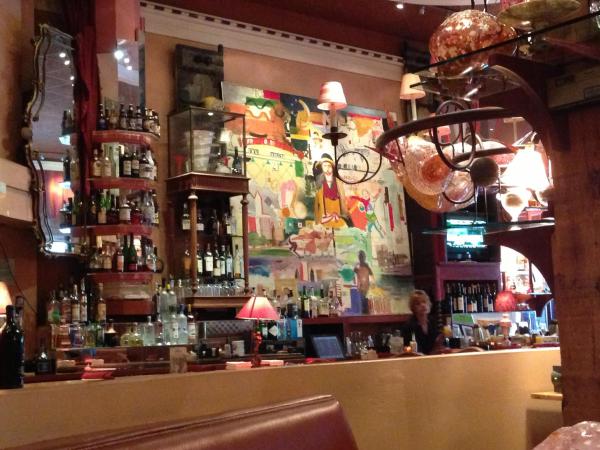
Marnie disappeared slowly. So slowly, I didn’t notice her going. Like any good barkeep, she listened – absorbing tales of sorrow, protestations of innocence, and howls of outrage. Listened and never commented – just faded until she vanished into the mahogany bar top, the racked bottles, and nicotine-yellowed walls.

There was theatre to it. She bent emotion around her until she became invisible. Theatre and magic make us see stuff that’s not there. And not see what is. I miss Marnie.


Friday fictioneers is a weekly challenge to write a 100-word story in response to a photo prompt. You can find other stories here

Friday Fictioneers – Abstract

photo-88
PHOTO PROMPT © Janet Webb

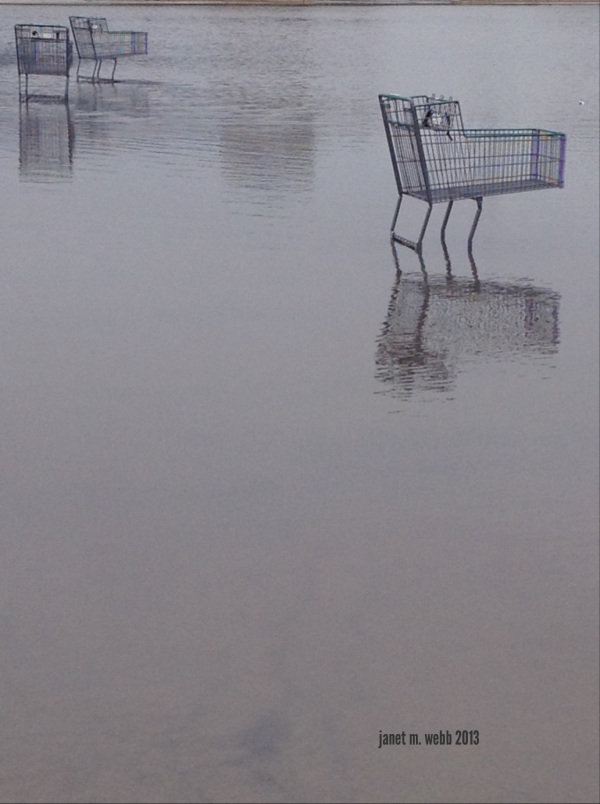
I watch. The brush is poised. And then he moves. From the shoulder, leaving a row of lines on the parchment that summon feeling before my mind understands. I smell the stone ichor of rain, and sense the blunt endurance of a gaunt herd. Beneath his brush, a world begins to breathe.

“Though I saw, I don’t understand. How do you do it, maestro?” I ask.

He smiles that infuriating smile of his. “Rather, ask how you did it. I only made a few squiggles. Your mind made the meaning.”


Friday fictioneers is a weekly challenge to write a 100-word story in response to a photo prompt. You can find other stories here.