25. Frogs – paring down to the core of meaning

I’ve just finished editing a 750 word story down to 250 words for a flash fiction submission. Such editing is a good discipline – it forces every word to earn its keep. And that’s what tight writing is all about. When you have 5,000 words to play with (let alone the 80,000 of a novel) the writer can be profligate – many of those words are just along for the ride. This is how superfluous adverbs slip in, along with any number of lazy elongated clauses.

It occurred to me that at some word length, to be experimentally determined (see below), the number of words, smelted and tempered, must be so small that the piece transitions from prose into poetry. My 250 word story is still prose. But what if I reduced it to 100 words, or 50, or 25? At some point an alchemical transmutation must occur. It must become haiku, the Japanese 17-syllable poetry form.

Take for example the poem that is probably the most famous of all the haiku, Basho’s frog. I don’t speak Japanese, so I have no idea what the original is like. But the translation I first came across as a teenager was Nobuyuki Yuasa’s

Breaking the silence
Of an ancient pond,
A frog jumped into water —
A deep resonance.

On my shelves is also an early Victorian translation where the same poem receives this baroque rendering:

From out the depths
Of some old time pond
Is heard the plash
Where some lithe frog leaps in.

And then there’s James Kirkup’s brutally modernistic

pond

frog

 plop!

frog

You get the idea. It’s twilight, it’s eternal, it’s serene. Everything is ripe for realisation. And every word is doing really heavy lifting.

I looked on the Internet to find examples of very short stories. Fifty word stories were at a point of transition somewhere between prose and poetry. For example, this one by Brighid Ó Dochartaigh (http://scottishbooktrust.com/writing/love-to-write/the-50-word-fiction-competition/previous-winners)

I saw it through the swirling crowd. The red carnation tucked into your black wool jacket, just as you’d promised. Then he reached out and plucked it, lifted it to his lips, and smiled. You laughed and slipped your arm through his. I was only ten minutes late

But when you get down to ten words, the alchemy has occurred. For example, this one by pastelbitchquotes (https://www.tumblr.com/tagged/10-word-story):

I can’t keep kissing strangers and pretending that it’s you.

That’s haiku.

This led me in turn to wonder what the technical difference is between poetry and prose. In poetic writing, the words have to do double duty. Basho’s words are describing a frog jumping into a pond, but they are also evoking a sense of serenity. They carry a heavy charge of meaning. Perhaps that is one difference between prose and poetry – in prose, words mean what the mean, while in poetry words mean more than one thing. If you condense a piece of prose, like pressure on a lump of a coal, at some point the residual words take on a new form, and the coal becomes a diamond.

Metaphor, likening a thing to something else (‘shall I compare thee to a summer’s day’), seems to be central to this process. Metaphor goes to the core of how creativity and invention work.

I’m not just talking about poetry here. The same thing happens in science. One of the great unifying theories in science was James Clerk Maxwell’s electromagnetic theory, which showed that electricity, magnetism and light were all manifestations of the same thing. He demonstrated that electrical and magnetic fields move through space as waves travelling at the speed of light. He borrowed the equations for wave motion from the study of water. It was a metaphor to say light is like a wave. This is how we understand new things, by seeing that they are “like” something we already know. Or take Darwin’s key realisation that the competitive struggle for survival drove evolution. He wrote The Origin of Species at a time when the competitive struggle for survival was all around him in industrial Britain.

Metaphor helps us understand the new thing, but it also transforms our understanding of the thing we already know. It creates a new tension between the things, which is not a relationship of identity but rather of kinship.

This may be how words come to take on a double cargo of meaning in poetry – they reveal a kinship we haven’t seen before. A work needn’t rhyme, or even scan, to be poetry, but it must have that double cargo.

Of course, new metaphors fade back into prose. They become so over-used they lose any revelatory power, and become clichés. ‘Emotional roller coaster’, for example. Eventually we forget they’re metaphors at all, and they become literal labels. We’ve forgotten that the words ‘bonnet’ and ‘boot’ for a car were anthropomorphic metaphors. Sadly, in Japan, Basho’s frog is so well known it has lost its power. We are fortunate that, for the rest of us, it still resonates.
24. Inner Voices – where do stories come from?

I almost didn’t write this particular blog. And that was the clearest signal that it might be important to do so. I felt, and I still feel, there might be something perilous in it.

The topic is simple – where ideas for stories come from. The peril is more complex – the danger of playing the author, that of being thought fey, but perhaps most of all the fear of transgression. But it has interested me this week, and so it might interest you too.

An idea has been coming to me. It has felt powerful, so much so that I’ve roused myself from half-sleep to write notes, which are often incomprehensible the next morning. I think the thing that fascinates me is that I still have no clear sense of what the idea is. There’s a powerful sense of mood, and glimpses of a few scenes. See what I mean about the danger of being thought fey? I’m not a mystic, and I’m not subject to visions. But that’s what it sounds like when I try to describe the process.

The idea is strongly connected with an untrustworthy narrator, something I’ve been intrigued by for some time. The narrator conducts the reader through the story with godlike omniscience. But what if the reader knows the narrator is not to be trusted, because he’s a fool, a liar, or clearly deluded? How do they make sense of the story then? Can they form an independent judgement of the events the narrator is confusing? I don’t yet know who the narrator is, or what the plot is. But I know it has something to do with the way we spin stories to make sense of our world, or to create an impression of ourselves we want others to have. So the theme is something to do with the idea that we are stories we tell to ourselves and to other people. The structure is one of stories within stories, each mirroring the same tale. I know also that it has something to do with time, and with luck. I’ve had glimpses of a winding alley in a souk somewhere, in which sit two vendors, one selling time and the other luck.

Here’s where the danger comes of playing the author. I would like to be able to say “my characters appear to me, and whisper their stories in my ear” – that sounds so authorial. But it’s not quite like that for me. What comes first to me is an idea, a world if you like. The plot and the characters emerge out of the idea, sometimes only after quite intense interrogation of what the idea means. Somehow that seems inferior. It shouldn’t. Indeed, when I read what I’ve written here, it sounds as if should be quite authoritatively masculine. Nonetheless, to me it’s not how I imagine the act of writing. But, it’s the way I create, and there’s nothing I can do about that.

And I’m intellectually fascinated by the way this story is coming to me, in moods, in fragments. As if the story isn’t mine, but is something out there that I’m catching glimpses of. And this is the third danger, that of transgression. If I’m impatient, if I close on my prey too soon, I fear destroying it. I will give it words which are not its own, but mine.

You know that image of the writer who has struggled for ten years with his book? He spends hours at his typewriter (it’s always a typewriter not a computer). He types furiously, then tears the paper from the rollers and crumples it into the bin. He tears his hair. The words are not the right words – he searches for the perfect words. After ten years, his novel is one page long. At the top of the page is written “Chapter 1” and then a carriage return and then one word, “The”. I identify with that story.

That’s not say that I have writers’ block. Quite the reverse, I write quite fluently. I have a compulsion to write. What I identify with in that image of the writer is the concern not to transgress, not to distort the idea with clumsy inelegant words and sentences of grotesque shape and colour. Close your hands too soon, and the real story will vanish between them like fog.

For the moment, I’m able to be patient. I’m letting the idea come to me. I’m transcribing my handwritten night scribbles into computer files, and resisting the temptation to put too much order on them. I allow myself to believe that eventually they’ll form a pattern I can recognize as a plot, and that from the scenes will step the characters who alone could have performed those actions or had those thoughts. But patience is hard. The temptation of transgression is always there.

I’m holding the temptation at bay with the aid of other writers. At the moment, before I sleep, I’m reading a little bit of Songs from the Laughing Tree by A.U. Latif. A style less like mine would be hard to imagine. His imagery and confection of words is rich and more for tasting than reading. The prose doesn’t flow linearly but is wild as an enchanted forest. In other moments, in other moods, this might irritate. I could imagine being wanting to get on with the plot, and casting the book aside. But at the moment, it’s just right. I’m reading it less as a story than as a tool for exploration. Nightly, I slip into his world, and plunder my own subconscious with snares wrought by Latif. Perhaps, he is writing my story too. I know for sure that I’ve already purloined from him the merchant who sells time.

23. The kindness of other writers

I still haven’t resolved the dilemma I mentioned in the last post, about whether to switch to pitching The Golden Illusion. But I’m keeping my options open by working on polishing the existing rough draft. Only four people have read it so far, and it wouldn’t be where it is without them. Showing your work at early stages to others can really help.

When I finished the first draft, I had an uncomfortable feeling that the ending didn’t work. My wife was the first to confirm that. I also tested it out as a short story on Webook, and I got the same response. I can’t tell you what didn’t work about it, or I’d give the mystery away.

Then three other writers had a go at it. I want to acknowledge how important their criticism has been. My friend Toni from my writing group gave me a great edit of the first chapters. I posted the first five chapters on Webook and got some really useful feedback. Two of my Webook community, Trina and Alina, have been real champions of the book, convincing me to carry on with it. Alina even persuaded Webook to promote the project on their Facebook page.

Trina helped me make real improvements to the first chapter. The first draft started rather tamely with the main character, a conjurer, performing a card trick. With Trina’s input, I changed this. It now opens like this:

“The man raised the revolver, pointing it straight at my head. His arm didn’t waver. His finger tightened on the trigger.

I stared at him, unblinking, through the sheet of glass that separated us. There was a moment of utter silence.

As he pulled the trigger, I opened my mouth, and then all was noise. The gunshot cracked, echoing round the auditorium, with the tinkling cascade of breaking glass as the plate smashed.

I staggered, my neck snapping backwards. Then I drew myself upright, my lips curled in a triumphant smile that framed the bullet clamped between my teeth.”

Much punchier.

Alina went above and beyond the call of duty. She helped me identify what was weak about the ending. The antagonist wasn’t villainous enough, the final revelation wasn’t believable, and it lacked a concluding chapter. I’m very prone to the bad habit of failing to write the last chapter, and stopping too abruptly. I rewrote the last two chapters, and added a final chapter. And she not only told me the change worked, but spend two days closely editing them.

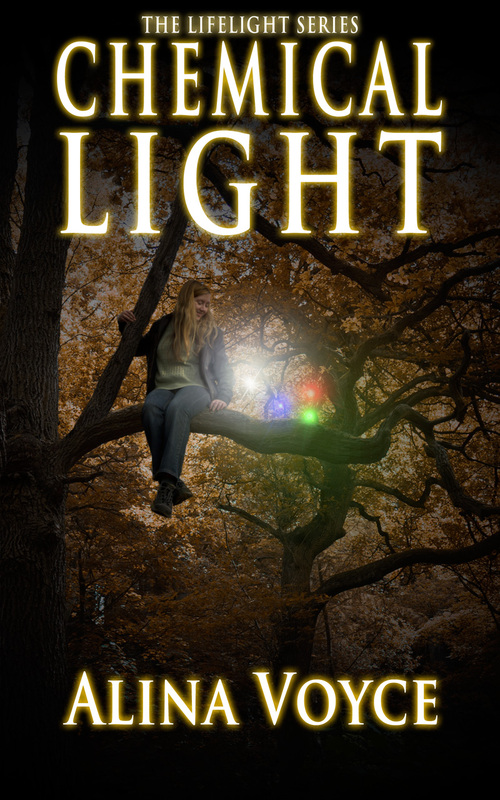
Alina is Alina Voyce, the author of the Lifelights series, beautifully written sci-fi romance. And I say that as someone who doesn’t even like romance. You can find out about Lifelights on her website http://www.alinavoyce.com/the-series.html.

Lifelight

Thanks so much to all four of you.

22. The dilemma of evidence

I’m considering radically changing my approach to getting published. I’m trying to decide whether I should stop pitching my historical novel. A Prize of Sovereigns, and start pitching my mystery novel, The Golden Illusion.

I’m a scientist by training. I like to make decisions based on evidence. Understanding the signals about your work is hard because it’s not clear what’s evidence.

I just got a really interesting response from an agent to whom I had pitched A Prize of Sovereigns. It was unusual, in that it was feedback, not just a template no. This is part of what he said.

You have a lively style, but – you knew there’d be a “but” – the situation you describe, and the language you employ, is in my opinion too familiar to commend your book to editors who are, like agents, even more boringly cautious than usual about new writers in this extraordinarily harsh publishing climate.

[It} needs – in my view, and you will know that all publishing judgements are wholly subjective – a distinctive narrative voice and original twist if it is to commend itself to today’s jaded and impatient readers

As he says, all publishing judgements are subjective. But, this is the twelfth agent who has turned down A Prize of Sovereigns. The problem for an ex-scientist is deciding whether twelve rejections, all subjective, is evidence. It’s not a statistically significant sample. J.K. Rowling had 12 rejections for her Harry Potter series.

Nevertheless, I think there may be a message there. I’m getting clear feedback that I can write. But I may be putting my effort into pitching the wrong book. Don’t get me wrong, I’m very proud of A Prize of Sovereigns. I believe in the book. It’s a story of two realms in peril, of rulers playing for high stakes, of conflict within dysfunctional families, of ordinary folk trying to build their lives amidst war and chaos. But it’s not just an adventure tale of intrigue, war, and revolt. Buried in the story are some chunky issues. Is goodness a function of a person’s character, or the outcome of their actions? Can absolute rulers bend events to their will? Are there prices too great to pay for personal independence? What does war do to people’s humanity? How did propaganda work in medieval Europe? What does a Prince do when confronted by a teenager who claims to have religious visions of her mission to save the country from invasion? How did technology influence conflict and the exercise of power?

The thing is, there’s no simple way of communicating this to an agent or publisher. The elevator pitch is the one sentence description of your book you’d give to a publisher if you shared a ride with them in a lift. Prize of Sovereigns’ elevator pitch is.

‘Two rival medieval princes attempt to bind events to their wills, with unintended consequences.’

It doesn’t exactly convey much more than knights in armour. Compare it with the elevator pitch for The Golden Illusion.

A mystery story with a difference, in which the detective is a hapless conjurer searching for the secret of an ancient illusion, and the crime spans the centuries.

This makes crystal clear the main twist of the story. It may not be such a complex book, but it’s easier to convey what it’s about. My heart is telling me to keep pitching A Prize of Sovereigns, but my head is telling me to switch horses. I still have three pitches out to agents, so I don’t have to decide quite yet.

21. Breaking the rules – in defence of adverbs

People talk about rules of good writing. I’ve used the term myself. But really, there are no rules, just tips. See? I broke a rule there – I started a sentence with a conjunction, ‘but’. Did it bother you? It avoided the comma and the run-on sentence if I’d made it a clause. You can break the rules if it makes sense. Following the rules blindly just leads to weak writing. Follow the tips when they make sense.

The so-called rules are there for a good reason – they distil a lot of experience. The show-don’t-tell rule, for example, is a pretty good tip. Writing is a collaboration between the author and the reader. Constant telling, constant narration, distances the reader. Showing involves the reader in deciding for herself what is going on.

If I write ‘Peter was old and sickly’ I’m telling you how to see Peter.
If I write ‘Peter shuffled towards me, supported by a stick. The effort of every step was etched in pain on his furrowed face’ I’ve invited you to picture Peter and draw your own conclusions.

Does that mean a writer must always show rather than tell? No, of course not. If the detail is unimportant to the story, tell it. If Jane walks down the stairs, it’s much better to say this, rather than tiring the reader with a long description of the stairs and the walking. Use the show-don’t-tell tip when there’s a good reason to do so.

Closely related to show-don’t-tell is the adverb rule. All writing manuals tell you to use adverbs sparingly. Stephen King goes further and would have us eliminate all adverbs. He argues that adverbs make for sloppy writing, signs the author is fearful that she isn’t getting her point across clearly.

I, like many amateurs, am guilty of breaking the adverb rule. Of 1,000 words in the story I described in the last post, 18 were adverbs. After editing, I reduced this to 14, but that’s still 14 that Stephen King would say shouldn’t be there. Maybe he’s right. He’s a successful author and I’m not.

Let’s look at this though. Why this particular hatred for one part of speech? In case you forgot your school grammar lessons, adverbs are words that modify verbs, and usually end in –ly (though not all do – ‘up’, for example is also an adverb). We don’t have the same rules about nouns, or verbs, or adjectives. Is this just textism? What’s the reason?

Reason one. It makes sense to eliminate adverbs when they’re making the writing weaker. Sometimes they just cover up failure to find better words. For example ‘he spoke quietly’ is unnecessary – it would be stronger to say ‘he whispered’ or ‘he murmured’. Many times, we can eliminate adverbs by using a stronger verb. In this sense, adverbs can be good pointers at the editing stage to where we need to polish the writing.

Reason two. When the adverb is doing no work at all, purge it. For example, in the phrase ‘he shouted loudly’ the adverb loudly is doing nothing – a shout is loud. Or, to take another example, ‘he said interestingly’. If what he says is interesting, maybe that he’s discovered the secret of time travel, then the reader doesn’t need the adverb, and if it’s dull, maybe that he’s tired, the adverb doesn’t change the dullness. Though, even there, if the character to whom he’s speaking has good reason to be interested, the adverb may still justify its place.

Reason three. Adverbs may distance the reader by telling, rather than showing. They can narrate details the reader should be filling in for themselves. For example ‘she looked suspiciously at the box’ could be better written ‘she examined the box, checking for booby traps.’

There may be other good reasons for eliminated adverbs. I couldn’t think of them while writing this. The point is that if there’s a reason not to use an adverb, don’t use it. By the same token, if there is a reason to use an adverb, then use it. Adverbs are pretty much like adjectives. Adverbs can add description to verbs, bringing a picture to life, in the same way as adjectives can bring nouns to life.

For example, take this phrase from the story I’ve just edited, ‘trees perched crazily like sure goats on precipitous falls.’ I spent some time considering whether to remove or change the ‘crazily.’ It’s doing some pretty important descriptive work, showing the random arrangement of the vegetation. It can’t be turned into the adjective ‘crazy’ since neither the trees nor the goats are crazy. The only thing that’s crazy is the perching. So, I retained the adverb. I think I had good reason to do so.

Technically, I suppose you could argue that the ‘crazy’ and the ‘sure’ contradict each other and one of them should go. I would disagree – crazy paving isn’t less secure as paving for being crazy. You might also argue that the description is overdone, with two adjectives and one adverb in the phrase. Overusing descriptive words in the belief this makes the writing more literary is a classic error of amateurs. You might be right, but there are some good reasons in the context to be highly descriptive.

So, here’s my conclusion. We give adverbs too hard a time. It’s a good tip to think long and hard about why an adverb is there, and what work it’s doing. But, should we eliminate every adverb? No. As with every other part of our writing, we should make it as crisp and effective as we can. I’m all for better verbs, adjectives, gerunds and nouns, as well as better adverbs. The prejudice against adverbs is simply textism.

There is a big however to the defence of adverbs. Agents, editors and publishers often believe in the ‘no adverbs’ tip as an iron-clad rule. If you submit a work full of adverbs, however well-chosen and hard-working, they may just put a red pencil through it and decide you’re an amateur. You pays your money and you takes your choice.

20. Costa Short Story Award

It’s Costa Short Story Award time. The competition opened at the beginning of July and closes at the beginning of August. First prize is £3,500 and a massive boost to reputation. I’ve been dithering about which story to enter. If you’ve read previous posts you’ll know that my strategy for achieving fame and fortune is to rack up some literary credits, with which to impress agents and publishers. Perhaps the thoughts I’ve had about the Costa will help others whose strategies are similar.

Forget the question, why enter the competition. I can’t tell you. Yes, I know the chances of winning are smaller than those of dying in a meteor smash (which are 1 in 250,000 if you care to know). Call it the triumph of hope over experience.

Deciding to enter was easy. Deciding which story to send, that was a whole other problem. I looked at the shortlisted stories for 2014 and for 2013. I also looked at the profiles of the judges, though that’s less importance, since you have to get through the panel of readers to the shortlist before the judges ever set eyes on the story. For what it’s worth, the judges are three novelists (two of whom write women’s fiction, and one rather more experimental stuff), an academic who specialises in publishing, and a literary agent.

The profile of shortlisted entries wasn’t hugely comforting. Five of the six 2014 shortlist were women, and so were five of the six 2013 and 2012 shortlists. Two of the 2012 shortlist also made it in 2013. The judging is blind, so this has nothing to do with reputation. The stories all had three things in common – they were about the inner life of the main characters, the writing was elaborate and literary, and they dealt with the oddity of everyday life. I’m not a woman, and this really isn’t the way I write.

For about a month, I was sure the story to enter was one about a man who has memories that are not his. This is one of the stories that almost got published, and that I have been invited by the magazine editor to rewrite and resubmit. I read it to my writers’ group this week, and they made helpful suggestions for improvement. But one of the comments stuck in my mind. One group member said ‘Don’t put it into Costa. It’s a proper story. It’s got a beginning, a middle, and an end.’

I went back and looked again at the shortlisted stories, and sure enough they’re more dreamlike, with less identifiable structures. So I added ‘anti-narrative’ to my list of characteristics. Then I assessed what I think are my four best-fit stories against all four criteria. My intended story scored highly on the psychological dimensions but more poorly on others.

So, I’ve changed my mind. According to the competition rules, I had better not say anything about the story in case this reveals the identity of the author during the judging process. But I can say it’s much more anti-narrative, literary in style, and playful. I’m hoping that the playfulness will scrape it through the reading panels by virtue of intrigue, on the same basis that a tutor at University once said of an essay I’d written ‘I can’t tell whether this is very clever or very stupid.’

As I gave the story a final polish, just for fun I ran it and the winning 2014 entry through the copy editing tool I described in the last post, Pro Writing Aid. The comparison didn’t really tell me much, but was amusing. My story scored better for over-used words, for clichés and redundancies, and for ‘sticky sentences’ (sentences with low impact words). The winning entry scored better for avoiding adverbs, passive verbs, and slow-paced sentences. These comparisons say nothing about the quality of the story, but do maybe say something about the writing.

I still haven’t submitted the story, but I’m getting there.

19. Writing and editing tools

There are many tools for writers out there. Goodness! How on earth did Shakespeare and Dickens managed without them?

Plot, structure and character

I’ve already talked about te tools for plot and character that I use for keeping track of the storyline, scenes, and characters. You can buy software that does this, but I make my own in spreadsheets. Obviously, you also need something to write on. Like most people, I use a word processor, but you can also get dedicated author software.

Depending on how you write, such software may help you. I tend to write in a fairly linear way from the beginning to the end. I know that some people write scenes just as they occur to them, starting in the middle of the book. Shuffling and re-ordering scenes can be very frustrating on a word processor. I can’t review any of the dedicated tools that make this easy, because I don’t use them. The most popular, however, seems to be Scrivener, which combines a word processor and a project management tool.

Here, I want to talk about tools that can help with the third essential element – the writing itself. Good writing is about sentences that are easy to read, dialogue that sings, evocative description, and scenes that make the reader want to keep turning the page. The most important thing here is, of course, practice. Write lots, get friends and colleagues to criticize it, and you’ll improve. Reading your work aloud to yourself can also help you spot the bits that don’t work. But there are some tools that can help.

Spelling grammar and words

A good word processor will have inbuilt spell-check and grammar-check, as well as a minimal thesaurus. A thesaurus is invaluable for authors. You read your sentence, like “John stared in fright at the apparition.” You can see the sentence should pack more punch. The problem is “in fright”. The word should be working harder. You consult your Thesaurus and find alternatives – panic, terror, dread, for example. You can buy a Roget’s Thesaurus or use the online version (http://www.thesaurus.com).

If you write, as I do, historical fiction, you have another word problem. There’s nothing worse than a Tudor character saying something like “you’re messing with my mind”. It transports the reader straight back into the twenty-first century and the spell is broken. So how do you check when a particular word first came into use? Enter the Etymological Dictionary (http://www.etymonline.com). I used this a lot in writing A Prize of Sovereigns. The archer, Reuven, for example addresses his comrades in arms as “mate”. But when did this first come into use with this meaning? Is it modern? The dictionary reassured me that it goes back to the mid-fourteenth century.

Stringing the words together

Sounds obvious, but this is where most of the trouble comes in. There are so many mistakes you can inadvertently make. We all have favourite words that we tend to over-use. We can inadvertently repeat the same word too close together. We overuse adverbs. We write sentences that are too long, or that make the reader stumble. We use the passive instead of the active. We allow the pace to drop.

There is editing software that can help you detect and correct these and other problems. There’s quite a neat little fee website at http://www.thedreamside.com/machine.html, which gives you word-counts for frequently used words and which flags up “hot-spots” where the same word is used repeatedly close together. You can find more sophisticated editing help from Pro Writing Aid (https://prowritingaid.com). The free version will give you reports on 17 different aspects of your writing. It will check for things like over-used words and repeated phrases, pacing, clichés, writing style, over-long sentences, and sentences that don’t flow well. The image, for example, shows the check for pacing on two of the chapters from The Wheel Turns, the sequel to Prize of Sovereigns, which I’m working on now.

Pacing

The blue bars show areas of action or dialogue, while the white spaces are areas of background or introspection. Areas of white should be sprinkled through the text, rather than all dumped in one place. I was reasonably happy with the pacing, though there is a warning sign in the first chapter, with a slower area coming very close to the beginning.

I’m fairly impressed with Pro Writing Aid. With 17 reports, the amount of information you get back can seem a little daunting, but, as you work through them, you can decide which suggestions to respond to, and which to ignore. If you’re not employing a real copy editor, software like this can help sharpen up your prose

18. The moral core of your characters

Plot, writing, and character – those for me are the three crucial elements of an author’s craft. In posts 3 I talked a little bit about character and plot, and in post 12 I described some of the tools I’ve used for developing and keeping track of plots. I haven’t said much about tools for developing characters. That’s probably because I haven’t yet encountered many tools I find really useful, beyond the checklist in post 3.

  • Name
  • Age
  • Origins (including family and background)
  • Appearance
  • Characteristics (positive and negative) and flaws
  • Distinctive mannerisms
  • Likes and dislikes
  • Goals
  • Key relationships

As I started work on the sequel to A Prize of Sovereigns, I’ve been wondering whether there aren’t other tools I should think about. There are new characters in this sequel, whose working title is The Wheel Turns, but most of them have already appeared in the first book. I know these characters well. They’ve lived with me for the last two years. So why the anxiety about them?

I guess it’s because some of them are going to change in ways they were never challenged to in the first book, most particularly morally. There is morality in A Prize of Sovereigns. It is, among other things, about goodness. I was interested in looking at goodness not so much as measured by individuals’ characters but rather by the consequences for others of their actions. But this is a fairly easy moral universe. Characters either succeed or fail in their stratagems. In The Wheel Turns, different characters’ senses of what is right will come into play, and will be changed. I realised that I didn’t actually know enough about each of them constructed their moral universes, so I began to think and to do read around how other writers had approached this. I tried a couple of the approaches out for my characters.

You can, for example, build your characters by understanding their attributes or traits. There’s quite a lot of this in the Writers Helping Writers website (http://writershelpingwriters.net/). One approach is used by Angela Ackerman, who writes:

‘What really resonates with readers is when a character shows deep convictions–a passion for something meaningful. Why is this? Because buried deep within each of us is our moral center, a belief system that influences our every thought, action and choice. And, for characters to be authentic, they too must display a highly tuned set of beliefs that guide their motivations.’

She advocates building your characters in four onion layers, starting from the moral centre. You work out what particular moral attributes they have, such as kindness, loyalty or responsibility. You then work to the second layer of achievement attributes, aligned with the moral centre and which help the character succeed. Examples of achievement attributes might be resourcefulness or perceptiveness. The third layer, interactive attributes, defines the way your character relates to others, through traits such as honesty or courtesy. The final layer is the identity attributes, which help your character express who she or he is, such as introversion or idealism.

I tried this with my characters. It didn’t really tell me anything about them that I didn’t already know. More importantly, it also didn’t make intuitive sense to me. It’s not how I understand people. It seemed like a sort of character “kit” in which you collect attributes and glue them together to make a person.

Another approach was more intuitive for me. I had quite a lot of fun with this one. It begins with the pyramid of needs, an idea developed by psychologist Abraham Maslow. He argues that people’s behaviour is driven by a set of five needs. At the bottom of the pyramid are basic needs, such as food, clothing, and shelter. Without these, an individual can’t go on to express and try to realise other needs. With basic needs satisfied, people are driven to achieve safety and security. After safety and security come the needs for love and belonging. The fourth level of needs are those esteem and recognition. And finally, at the top of the pyramid, once all the other needs are satisfied, comes the need for self-actualisation – realising one’s potential and achieving personal fulfilment. I mapped some of my characters onto this pyramid.

What was intriguing about this was that I could map my characters’ personal journeys onto this. So Jyoti for example starts with the need to protect her family, somewhere around the border between safety and love/belonging. Her evolution will move her to becoming a fighter for the rights of women, in the self-actualisation tip of the pyramid. In A Prize of Sovereigns she was the only character who underwent no change. She remained strong and cheerful, a helpmeet to her husband Reuven. He is not especially smart or especially brave. He’s a foot-soldier in the King’s war, who returns broken, and suffering post-traumatic stress. In The Wheel Turns, both of them will ascend the pyramid, though Reuven starts from a different place, grappling with esteem issues. Other characters, however, descend the pyramid, most dramatically the King, Byrom, who plummets from the self-actualising tip, to struggling at the bottom of the pyramid to save his life. I’m still not sure I learned anything new about my characters, but I was intrigued by this way of graphically showing the dynamic of their story arcs.

Maslow

The only concrete upshot of all this fun, however, has been that I added one more element to my basic character sheet checklist – moral dilemma. In real life, few of us have a moral code as unshakeable as we like to believe, and in extreme circumstances we may do things that conflict with our codes. Most moral choices aren’t between the good and the bad, but between conflicting goods. So, for example, Jyoti’s character sheet now includes this dilemma:

As she becomes a stronger advocate of women’s rights, is forced to confront her ideals of duty to her husband and family. She becomes ruthless in her pursuit of this goal

The other thing that tickled my fancy was a couple of posts on M Talmage Moorehead’s blog (http://storiform.com) who says, writing about the idea of voice, ‘I think the term ‘voice” applies more to the viewpoint character than to the writer … because it keeps the reader feeling as if all the plot twists are happening to a real person..’ He describes an interesting experiment where he has a secret blog, ostensibly written by his viewpoint character. He uses this to detect where her voice disappears and his own intrudes. I thought that was a really fun idea, if a lot of work. I think he probably lavishes more attention on his characters than I do on mine. One clue to this is another post, in which he says that to make a character’s beliefs credible, you have to know the information on which those beliefs rest. So if your character is a conspiracy theorist, he says, you have to go and read all those conspiracy theories, with attendant dangers to your grip on reality.

Now there he has a really interesting point, which I’m still working through. The main knowledge base for the characters in The Wheel Turns is their religion. So I’ve had to build their religion. There’s a bit of religion in A Prize of Sovereigns, most obviously in the religious girl Marta who hears voices commanding her to lead her country’s fight-back in the war. But all of that was easy compared with the new book which is going to be full of religious schisms and revolutionary ferment. I’ve had to add four new Gods to their pantheon and work out in some detail, what the attributes are of each God, which social group they appeal to and why, and the associated theological and ritual elements of their worship. As social ferment accelerates, Jyoti and Reuven are going to transfer their allegiance from the traditional peasants’ God, Kaldin, to Hekla, Goddess of music, love and magic in Jyoti’s case, and to Gobannos, the artisan God in Reuven’s case. Jyoti is drawn to Hekla because her adherents champion the idea of the equality of women and men. Reuven is drawn to Gobannos because his adherents champion fairness. I’m sure the theological and political disputes this couple are going to have are going to challenge my world-building skills.

I shouldn’t complain though. How many people are privileged to build their own worlds? This is the joy of writing.

17. For whom the bell curve tolls

I was leafing through the summer issue of The Author, the journal of the Society of Authors. It has some interesting statistics in it.

The UK book market is the fourth largest in the world by turnover. But researchers at Queen Mary, University of London, found that the median annual income among writers in 2013 was £4,000. The bottom half the 2,500 writers they surveyed earned less than £10,500 a year, and took home only 7% of all authors’ earnings. The top 1% of writers made more than £450,000 a year, and took home 22.7% of the pot.

Statistical analysis is based on the idea that a variable (like height for example) is arranged uniformly in what’s called a “normal distribution” – a bell-shaped curve with most people in the middle and small tails at each extreme. Success, however, doesn’t follow a bell-curve. The odds are stacked in favour of a lucky few. Ask any actor, or musician, or any author.

wealth

This graph shows the distribution of wealth in the United States in 2013 – a classic non-normal distribution.

The same issue of The Author also has this instructive statistic from a publisher: Of every 10 books sold in bookshops, five fail, three break even, and two make profit. Little wonder then that publishers like to reduce their risk by publishing works by people who’re already famous. However, the statistic does also mean that publishers are dependent on continually finding new authors in the search for that elusive two. And of course, two out of every three books sold in the UK now, are not bought at the till of a bookshop. The online market coalesces even more around winners than does the bookshop market.

So what can an aspiring author do about these grim facts? Above and beyond being talented, writing the best work you possibly can, and editing it diligently.

1. Be independently wealthy
If you’re not already rich, go to step 2.

2. Don’t give up the day job.
It goes without saying that if you’re unlikely to make a living out of writing, you should have another source of income.

3. Make yourself luckier.
If you know some leprechauns or genies, now is a good time to ask their help. If you’re an ordinary mortal like me, there are still some things you can do.

  • They say, it’s not what you know, it’s who you know. If you have a large and loyal fan base, publishers and readers are more likely to pay attention to you. The classic example of this is E L James’ Fifty Shades of Grey. She started off writing fan fiction, which got her the base from which she became an international publishing sensation. You can publish work on story-sharing sites like Wattpad and Smashwords, and wait for the adulation to roll in. Goodreads is another important site where you can connect with your readers. I talked about these sites in post 10.
  • E L James is also a good example of another way you can boost your luck. She tapped into a trend, particularly among women, for raunchier women’s fiction. If you catch a trend at its peak like she did, you may coast to literary stardom. Keeping your eye on new releases in your bookshop and reading trade magazines like The Bookseller can help you keep your finger on the pulse. Dark thrillers are pretty hot right now, for example. As one of the speakers at the Winchester Writers’ Conference said, a fortnight ago, readers want to be traumatised by their books. The other big trend at the moment, believe it or not, is colouring books for adults.
  • I’m not suggesting that you should write the book the market wants. Of course not. We should all write the books we want to write. But, if it makes sense to give your work a tweak towards what’s trending, it may help.
  • Work hard at getting your friends and readers to review and promote your book (assuming you already have a published book). Most of the 184,000 books published in the UK each year appear without any promotion and vanish without trace. Don’t let yours be one of them.

A word of caution. I’m just passing on advice I’ve received and that I’m following. In post 10, I told you how slowly this is going for me. Since that post, my number of Goodreads friends has increased to 7, and on Wattpad, I’ve had 76 reads and have attracted one new follower to add to the four I already had. To be fair, I haven’t posted anything new on Wattpad for months, so this isn’t too surprising. I just posted a new story there, so I’ll let you know how that works out.

The moral is, remember the odds are stacked against you, work at it, and don’t expect instant miracles.
actor, or musician, or any author.

16. Playing fast and loose with the facts – more on historical “mash-up”

Since the feedback I got at Winchester last week, I’ve been thinking about the historical fantasy genre. It’s prompted me to consider what you can and can’t do with historical facts. I contributed to a discussion thread on Goodreads about this. Does a writer of historical fiction have artistic licence to change the facts? The writer’s answer is, yes, of course. Historical fiction is fiction, not academic research. The writer can do anything that he or she wishes. But, the reader’s answer is different. Readers have conventions, just as writers do. The reader of historical fiction expects that the story should stick closely to the known facts, just as in science fiction the expectation is that the story should be consistent with known science.

The reader also has a right to expect something else – namely that the story will be a cracking good tale, observing the rules of story-writing, which lead the main characters in an arc, through jeopardy, to a resolution. That poses a dilemma in, at the same time, being faithful to the truth. The question is, what does truth mean?

Stories have a lot to tell us about what we really mean by truth. They are probably the oldest form in which humans have preserved and transmitted wisdom. Stories are devices that tell us what facts go with each other, what is important and what is less relevant, who deserves praise and who blame. It is quite possible to connect the same facts in different ways, by means of different stories. In this anniversary of the battle of Waterloo, different stories are emerging. Was Napoleon a megalomaniac dictator and warmonger? Or was he, instead, the saviour of France against aggression from the old monarchies of Europe? This debate is both about professional history, and also about stories.

Napoleon

Truth and facts are not necessarily the same thing. That argument would, of course, allow a writer of historical fiction to argue that, by manipulating the facts, they were uncovering a deeper truth, an artistic truth. I feel a little uncomfortable with that argument. I suppose that’s why I’ve opted for an approach in which the readers are left in no doubt that they are reading fiction. Indeed, they never need to know that a lot of research went into the writing of the book, and simply enjoy it (I hope) as a story. Though by the time they get to my Joan of Arc character, Marta, most will probably think “hmmm, I know this story”. They may then wonder whether there is any “truth” in the way in which the Dauphin character, Aurthur, decides to manipulate and then betray her. Some readers may also recognize the strong parallels between the fictional battle of Aldkhor and the real battle of Agincourt, but it doesn’t matter to me if they don’t.

I have now started work on the sequel to A Prize of Sovereigns. It starts about a year in fictional time after the end of the first book. In historical time, it has jumped around 100 years. Clearly, I couldn’t do that, and maintain the same cast of characters, if I was writing historical fiction according to the canons of the genre. But the forces that drive both books responds to a view of history that wouldn’t be necessary if I was writing fantasy. In fantasy you can do anything you like, and of course dragons and enchanted blades are de rigueur. There are no dragons, or elves, or enchanted blades in my books. So, I don’t really believe I’m writing fantasy. Historical fantasy is a convenient genre label. But perhaps, one day, there will be a recognized genre called “historical mash-up”, and then I will with, a sigh of relief, re-shelve my work there.

I guess what, in my own mind, distinguishes what I’m trying to do from fantasy is that I’m interested in exploring the question about history “why did that happen?” and that is the unbending logic that my story has to be true to. I do think that there are forces which drive history, but they’re often hard to see through the accidents of who happened to gain power at a particular time, and the vagaries of their personalities. By creating my own little world, I can strip away those accidents and vagaries, and pursue the underlying story. It’s my own little model historical system in a narrative Petri dish. Are the “facts” correct? Many are, though they may be out of sequence and attached to different characters than those of real history. So, it isn’t a factually correct history. But is it “true”? I’d like to think it has a kind of truth.