I blame Mum. Mum was glum (see what I did there?). So, when Hettie rebelled, as all kids do, she became an irrepressible optimist. “Thank you, God, for breaking my leg, so I’d have the time to stay home and finish these books.” That kind of Pollyanna thing.
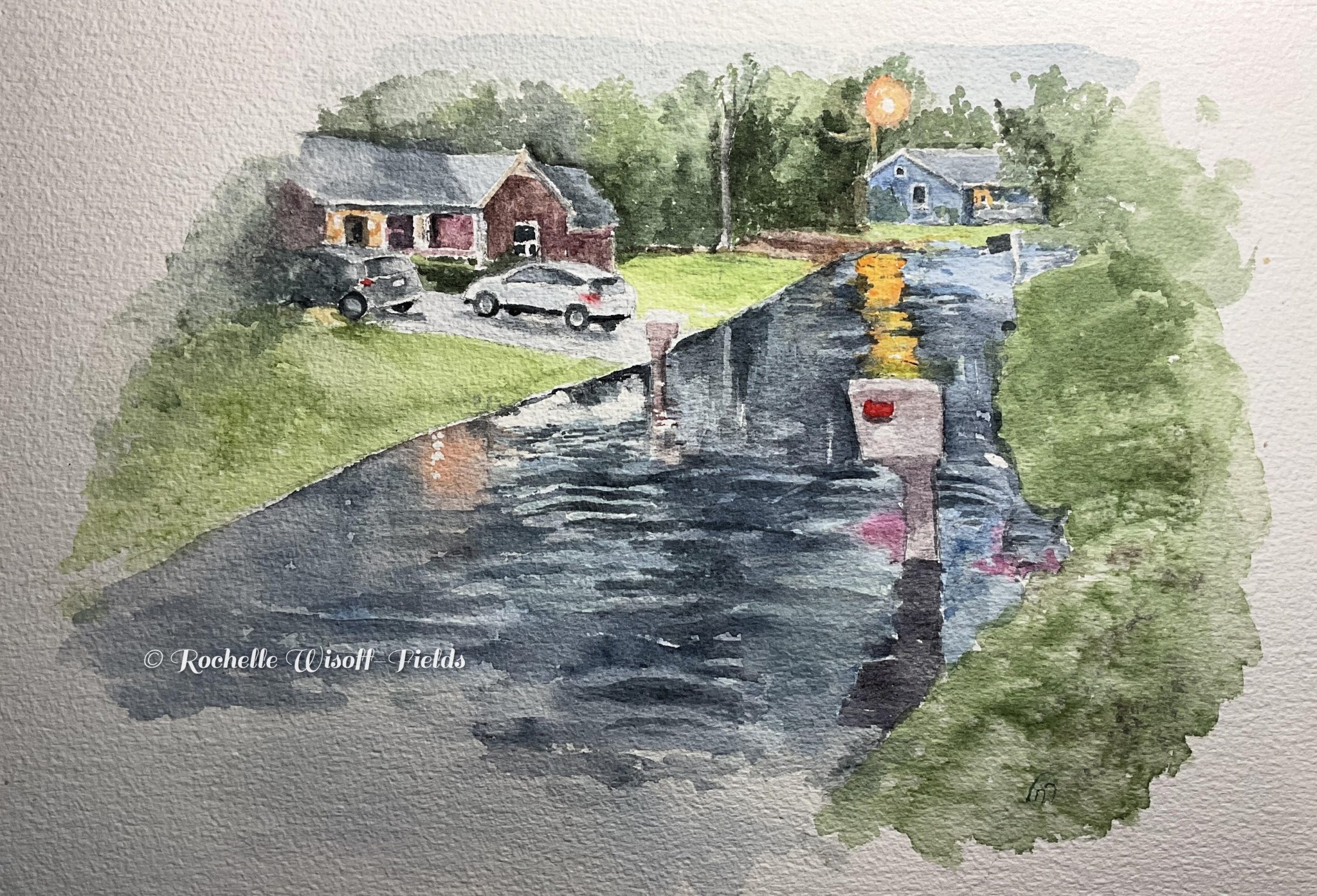
So, when the sea wall broke, and the town flooded, Hettie exclaimed, “It’s just like Venice” and bought a gondola.
Under those circumstances, nobody can blame me for strangling my sister, right?
.
Friday fictioneers is a weekly challenge set by Rochelle Wisoff Fields to write a 100-word story in response to a photo prompt. You can find other stories here
The snows came early that terrible winter, blanketing the moors in formlessness. On the high crags, the Seat of the Kings disappeared under a great drift. And so the land passed into a deep sleep that lasted a thousand years.
I tell you, my boy, it’s said the old kings will come again, when our peril is greatest. Somerled, Angus Og, and Malcolm. They will wake, shake their shaggy heads and stride forth with swords of fire to cleanse the world.
But, consider this—maybe we longer have need of kings.
.
Friday fictioneers is a weekly challenge set by Rochelle Wisoff Fields to write a 100-word story in response to a photo prompt. You can find other stories here
Cook favoured me with a look of withering contempt. “Have you ever known me to be unsure of anything, Steward?”
“But, so many?” And then the killer argument occurred to me. “What if they crap on everything?”
Cook kissed her fingers. “Stop fretting, man. It will be a triumph—a dainty dish to set before a king.”
Certainly, I could imagine the dramatic effect of four and twenty blackbirds revealed in the pie, but doubted the guests would be swift enough to catch, kill, and eat them.
.
Friday fictioneers is a weekly challenge set by Rochelle Wisoff Fields to write a 100-word story in response to a photo prompt. You can find other stories here
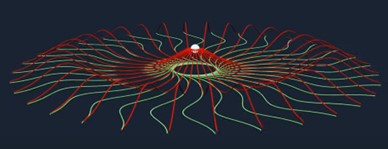
The wall directs you straight on into the blue abyss. But the carpet invites proceeding at an angle towards a deeply shadowed arch. Make a sharp turn, and a steep and rickety ladder beckons upwards.
To be honest, I’d expected the sounding of trumps, archangels with fiery swords, at least an old man with jangling keys. The exquisite torment of choice was the last thing I’d anticipated.
Walk the red carpet one last time, Harve. Was that the voice of a serpent, or a phantom in my head?
Perhaps I’ll just sit a spell and consider my options.
.
Friday fictioneers is a weekly challenge set by Rochelle Wisoff Fields to write a 100-word story in response to a photo prompt. You can find other stories here
Do all stories (let alone all scenes) need surprise? No. But it is essential to some genres. There is no joke without a punchline, and no punchline without surprise. Or consider the classic mystery tale—we should be surprised by the unveiling of the murderer’s identity in the denouement.
Let’s consider what surprise is. Our brains are (among other things) pattern recognition machines. The story sets up a pattern of expectations, and then a twist violates those expectations and reveals a different pattern of meaning lurking beneath. We see the world in a different light. The brain judders as it shifts frame. Our experience of this is surprise.
Take the example of the joke. Two elderly gay men are sitting at a booth in a bar. A beautiful woman walks past, with all the attributes heterosexual men find attractive (you can spin out this description at some length to reinforce the pattern of expectation). One man turns to the other with a sigh, saying “You know, it’s a times like this, I wish I’d been born (add a dramatic pause here) lesbian.” You see? The heteronormative pattern is subverted. Our laughter is the physiological expression of the surprise.
But this is not the only way in which pattern shifts work. If the surprise comes at the beginning rather than the end, our response is different. World-building in fantasy or sci-fi might be an example here. We are told from the start that the rules here are different from those in our world. Consider, for example, The Other Valley by Scott Alexander Howard (simply because I happen to be reading it at the moment). In this world, time is literally a dimension like space. There are a series of valleys, each with a similar settlement. As you go west, each valley is ten years into the future. As you go east, each is ten years in the past. The gendarmerie patrol the borders between the settlements to prevent temporal meddling. Our attention here is not captured by the headlong rush to the denouement, but by curiosity about how the consequences of the set-up will unravel. I would describe my emotional response to this as delight, not surprise.
Several years ago, I was given a pattern-changing piece of writing advice—“If you’ve got a surprise, give it away right from the top.” It’s worth noting that this is exactly what Dostoevsky does in Crime and Punishment. We know that Raskolnikov has murdered the pawnbroker. What makes the story gripping is his subsequent reactions.
The idea of delight is, I think, an interesting way of framing the question of whether you should build a story out of a chain of surprises. If every chapter, scene, paragraph and sentence contained a surprise, it would rapidly become exhausting to read. But what if they all contained a delight, a slight shifting in our sense of the world? Howard offers such delight in The Other Valley through the wordcraft. To take an example from the point in the book I happen to have reached, “My bedside lamp illuminated raveled nests of hair and grit on the floor.” Not perhaps the best example, but it shows the poet’s eye in the image of the “raveled nests”. The metaphoric assimilation of detritus to bird nests is a small moment of delight, an amuse bouche between courses.
Metaphor can, I suppose, be considered a form of surprise, shifting our patterned expectations. When we say “My love is like a red, red rose,” our understanding of both the love and the rose change. Sometimes, this poetic play of perception can have world-changing consequences. When James Clerk Maxwell perceived light, electricity, and magnetism as being waves in an underlying medium, he achieved the second great unification in physics.
Metaphor is at the heart of creative reperceiving of the world, both in the arts and the sciences. Oftentimes, it is the small delights of metaphor rather than the headlong dash to the denouement which keep me gripped.
The antique shop bell tinkled as I entered. The shadows seemed to dance forever into the endless distance. Most objects were too dim to see, but I discerned the stuffed mermaid and the Gorgon’s head.
The wizened man in the frock coat seemed made entirely of sharp angles. “Good morning, young sir. Something in my cabinet of curiosities that might interest you?”
“Thoth sent me. You have something for him.”
“Ah yes, indeed.” He pressed a heavy leather-bound volume into my hands. “I advise you do not open the lock.”
If only I had listened to him.
.
Friday fictioneers is a weekly challenge set by Rochelle Wisoff Fields to write a 100-word story in response to a photo prompt. You can find other stories here
Time stopped. I mean, not everywhere. Obviously. Time stopped for me, while, for the rest of the world, the present continues to rush madly into the past, everyone chasing a future that’s always an instant away. I’m not even sure what tense to recount this in. Grammar’s not set up for narrators who step out of the flow.
Narrator? That’s it! I can see the start and finish together, trace beginnings in the light of their ends. For me, the world’s a story. If I could, I’d tell you how it turns out. But I can’t.
There’s no way back to you.
.
Friday fictioneers is a weekly challenge set by Rochelle Wisoff Fields to write a 100-word story in response to a photo prompt. You can find other stories here
Unease flickered in my belly, like … I attempted the metaphor, but couldn’t summon the proper noun. Like those ornamental fish at the bottom of a murky pond. Why did I recognize no product in my kitchen cupboard? Was this DIY thing even mine?
A more terrifying question lurked like … a striped carnivore … at fronded border of reality. I refused to utter it. Somewhere, I knew, they were watching, making notes, graphing responses.
A cup of tea. Make a nice cup of tea and all would be right. There were no tea bags.
“Let me out,” I pleaded.
.
Friday fictioneers is a weekly challenge set by Rochelle Wisoff Fields to write a 100-word story in response to a photo prompt. You can find other stories here
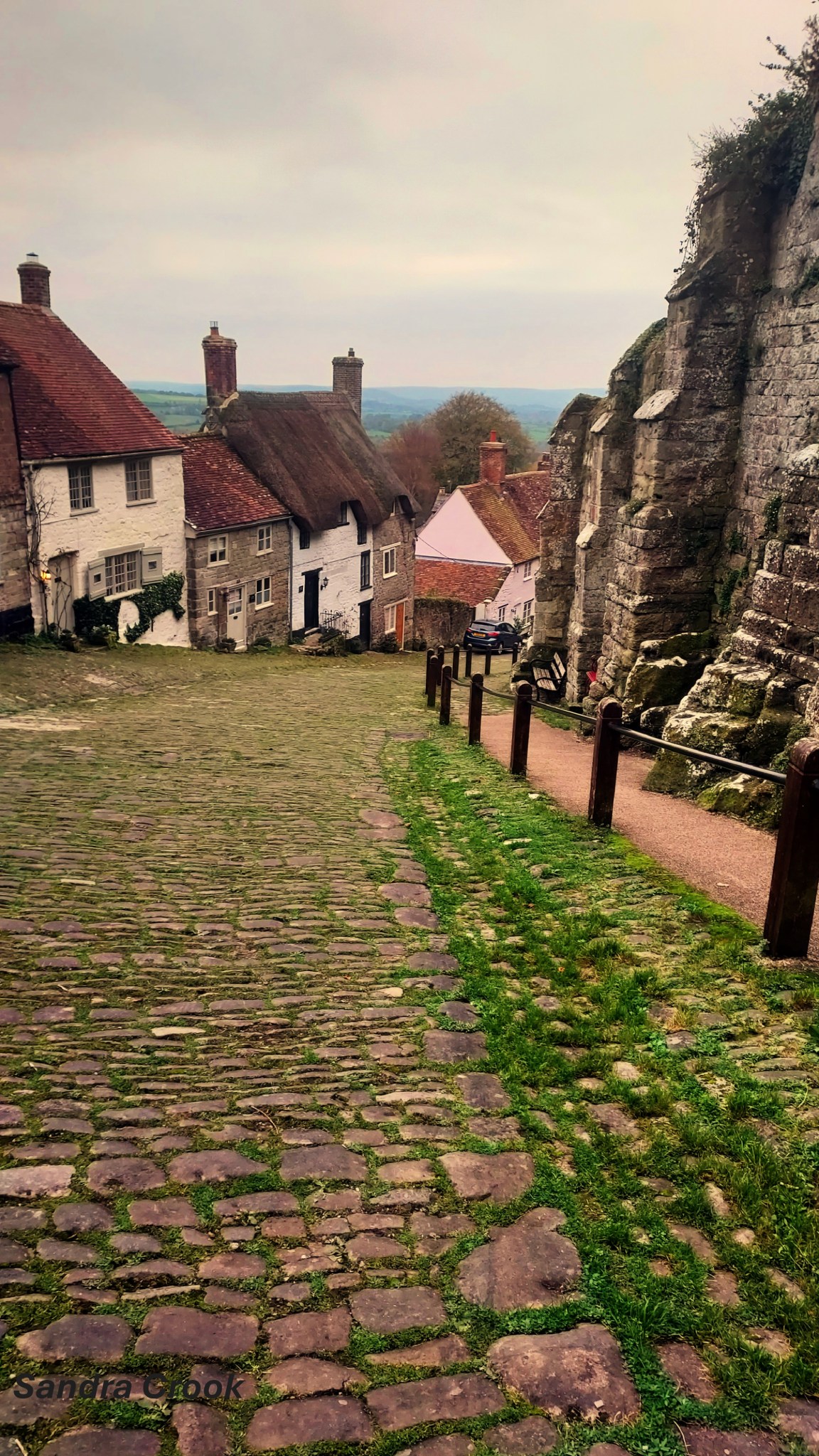
There’s a baker’s boy. Alfred. He’s pushing his bicycle up the steep cobbled lane. Dvorak’s New World Symphony swells. And I am transported back to a simple untroubled age of honest labourers and glittering toffs.
As the boy reaches the top of the hill, one of his loaves falls from the basket and tumbles down the lane. With a sigh, he retraces his steps. The conductor mops his brow and taps his baton as the lad collects the loaf and begins his trudge back up again.
Alfred made this Abbey wall. He burned the cakes. The Danes are coming.
.
As a note of explanation to non-Brits, this lane featured in a bread advert and Alfred was King of the Anglo Saxons in the late 9th Century. The story is a reflection on the way we create and recreate historical myths. Friday fictioneers is a weekly challenge set by Rochelle Wisoff Fields to write a 100-word story in response to a photo prompt. You can find other stories here
‘Don’t tell me the moon is shining. Show me the glint of light on broken glass,’ Anton Chekhov is said to have advised.
The rise of the “show, don’t tell” advice coincides, or maybe not entirely coincidentally, with the rise of the movies. It can be dated to the 1920s and Percy Lubock’s book, The Craft of Fiction. Perhaps readers, glutted on the new moving pictures, demanded to see the story rather than hear it.
You can, of course, find examples of “showing” before this time. But, in general, stories were told rather than shown. Narration tended to be in the “omniscient” mode, as if by a god who saw all and who could peer into character’s souls. Take a look at some of the classics. The legend of Gilgamesh: telling. Beowulf: telling. The Icelandic sagas: telling. The Iliad and the Odyssey: telling. Characters had no interiority because what they felt was of no importance. It was what they did that mattered. This only began slowly to change in the 12th century.
Two things flow from this. Firstly, telling has a venerable history and is NOT wrong. Secondly, audiences today want immersion in the lives of their protagonists, and, therefore, some showing is now normal. If there is a rule, it is not “show, don’t tell” it is “show, when appropriate, and tell, when appropriate.”
Knowing when to use the one and when to use the other is a matter of practice and experience. There are no simple algorithms to determine this, but here are some likely instances (though there will be counter-examples for all of them) where you’d want to tell, not show:
Dialogue (because most dialogue is unembellished reportage)
Backstory
Where you want to convey necessary information without making it slow the flow
In the transition between settings
When you want to highlight something significant
When you want to balance other passages of showing
Narrative distance
The idea of narrative distance provides a more fine-grained distinction than the all-or-nothing “show, don’t tell.” Narrative distance refers to what it sounds like: how close we are to the character’s thoughts and feelings. In first person, we are almost always right inside the character’s head. But in third person, the distance can be subtly varied by word choice and by what is focused on and what is omitted.
Consider these examples:
A tall man stepped out from the shadows. (Straight telling).
The rain lashed down on the tall man as he stepped from the shadows. (Telling but with a bit of atmospheric detail).
Henry pulled his collar up against the rain as he stepped from the shadows. (We know his name and we’re much closer to the character now, getting a sense of his discomfort).
Bloody hell, would this weather never stop? Drenched to the skin, Henry stepped from the shadows, morosely pulling up his collar against the lashing rain. (Lots of showing, We’re right in the character’s sensations and mood now, though still imbedded in third person narration. This is known as “free indirect discourse”, where the character’s mentality appears within the narration without the use of speech or thought tags—there is no “he thought” or “he said”).
Note that moving down the scale from telling to showing, decreasing the “narrative distance”, tends to elongate things. This is obvious, because we’re adding more detail and emotion.





 Neil MacDonald Author