
191. How are stories built?

Stories are among our oldest cultural creations. They tell us what’s important and what’s unimportant; what goes with what; who to praise and who to blame.

Stories are different from real-life events. Real life is lived forwards with unknowable endings, whereas the meaning of stories is inferred backwards: stories are about events in the light of their endings. A good ending, it is said, should have the effect of being inevitable and yet surprising.

Character

We may be intrigued by plot, but it is characters we fall in love with. In many ways, character is at the heart of storytelling. When you have a character with a want, you already have the beginnings of a plot. When you have another character with an opposing want, you have drama.

Authors create characters in many ways. By far the most common, and the least interesting is to resort to archetypes.  There are many different notions of who the archetypal characters are, but what they all have in common is the reassurance that we already know everything about them. They will not surprise us.

Better, much better, is a full, rich, complex, and contradictory character. Such characters create the illusion of being real people. Though, as Nobel Prize winning author Orhan Pamuk argues, real people do not have as much character as is found in novels.

Plot and story

Some definitions are advisable here. A story and a plot are different things. Plot is the time sequence of events, their causes and effects. But the plot may be told in different ways. If the events of a plot are A, B, C and D, they may be told in this order.

But they may also  be told out of time sequence. For example, the telling may begin with C and then flash back to A and B before revealing the dénouement at D.

Plot is the time sequence of events. Story is the way those events are recounted. A poor plot can be saved by clever storytelling.

Of course, the telling of a story is much more than this. Vocabulary, sentence structure, pacing, voice, and many other things go into the making of a story.

Narrative

A third definition, in addition to plot and story, may be important. I will call this narrative, to distinguish it from the first two. A narrative exists when it leaves the author’s head and enters the heads of readers or listeners. The reception of the tale is simple  passive process. The listener or reader actively collaborates in imagining the setting, the characters, their actions and what these all mean. There are as many narrative variants of a single story as there are listeners. Some of these variants may be significantly different from the author’s intention.

An author may say that they can’t control how an audience responds to their work. And that is true. But an author can anticipate some likely responses and misunderstandings.

Layers, Symbols and Meaning

Layering refers to the hidden depths of a story. This depth can make all the difference between a work that chugs along satisfactorily and one that stays in the reader’s memory for long after the last page is turned. There are different kinds of layers. For simplicity, I’ll categorise them into three types:

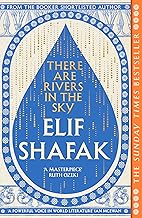
  • Story layers. A layered story has more than one plotline. For example, Elif Shafak’s ambitious novel There are Rivers in the Sky attempts to braid three timelines: ancient Mesopotamia, Victorian London, and the present day. She does this by alternating chapters. Of course, in the end, a story of this type must bring all the subplots together at the end. To repeat, stories are events in the light of their endings.
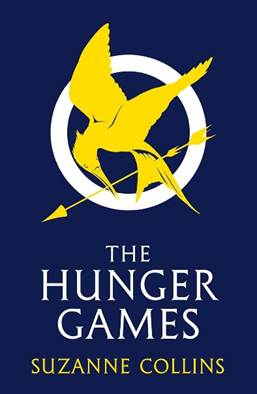
  • Character layers. In modern Western writing, the plot is generally driven by the protagonist’s desire for something (their want). More interesting and deeply-crafted characters have layered depths though. Often, the protagonist’s want may be in conflict with their true need. Katiniss in Suzanne Collins’ The Hunger Games, for example, wants to win the Games at any cost, but what she truly needs is to learn to sacrifice herself to preserve her own autonomy. The reader’s experience of redemption comes from the protagonist recognising what their true need is and finding completion.
  • Symbolic layers. This is perhaps the most literary of the layering types. The things that happen on the surface have an additional symbolic meaning. The trick of authors who do this well is not to hit the reader over the head with the meaning, but rather to allow them to find the meaning themselves. Once found, this meaning illuminates the whole story. A classic example here is the theme of unachievability in F Scott Fitzgerald’s The Great Gatsby. Many elements are knitted together to underscore this theme. There is, of course, Gatsby’s unrequited love for Daisy, the endless parade of motor cars, and the recurring symbol of the green light across the bay. Fitzgerald intends this symbolic layer to capture the destruction of the American Dream.

Putting together a story

Characters with multiple dimensions. Stories that achieve the most intriguing telling of their plot. Tales that carry layers of meaning, making the story resonate with deeper issues. These are the elements of good story-telling, stories that can make their way into the world as narratives which reverberate with the sympathy and questioning for readers.

188. App on review: How good is ProWritingAid’s Manuscript Analyser?

Regular readers of this blog will know I’m a big fan of ProWritingAid for spelling and grammar checking. Now it has branched out with a whole AI-powered manuscript critique service, and they offered me a free trial (normal charge £50 or $50).

Manuscript Analysis is broken down into five sections:

  • About My Story: Gives you key information about your story’s genre, narrative elements, and competitive landscape.
  • Narrative Themes: Highlights the key narrative threads throughout your story, and flags themes that are working well along with themes that could use some adjustments.
  • Plot & Structure: Highlights plot points that are working well, as well as those that might need improvement.
  • Characters: Examines important characterization moments and highlights areas where a particular character is working well or could use some closer examination.
  • Setting: Analyzes how your use of setting contributes to the overall narrative structure of your manuscript. This section flags if you need to improve any aspect of your setting, and what you might do to make it stronger.

So, how good is it? The short answer is “not great.” On the plus side, it showed a reasonable grasp of the story and quite accurately identified three comparable titles (two of which were among those I’d already chosen). The “unique narrative structure” was commended, though I’m hard put to it to understand how an alternation between two narrators might be a unique narrative structure,

Less impressive was the actionable feedback. There were 20 suggestions on plot and structure. Of these, only two were moderately helpful, and some were plain wrong.

Lest this seem to be a fit of pique on my part, I’ll give a couple of examples. The AI was troubled by:

“The timing of Ansna’s second pregnancy and miscarriage is unclear. It seems to occur shortly after the previous miscarriage, which feels rushed and lacks emotional weight.”

There is, in fact, only one miscarriage, something a human reader would have understood. Another chapter is said to have little consequence or outcome:

“The initiation ritual, while descriptive, lacks a clear impact on Ansna’s character development or the broader narrative. The lessons learned seem to have little consequence. Show how the ritual’s lessons influence Ansna’s later decisions or interactions.”

In fact, the character recalls such lessons in five subsequent chapters.

On Character, the AI notes three areas of concern, none of which I accepted. For example, a conflict between two characters is said to be “undeveloped”. This is because it’s a conversation, not a conflict. One of the three is illuminating:

“Ansna and Kautia’s relationship is inconsistently portrayed. Ansna expresses deep love for Kautia, but their interactions often lack warmth or genuine connection, and Kautia’s feelings remain ambiguous.”

I spent some time considering this comment before rejecting it. Ansna is conflicted in her feelings for Kautia. Again, I decided a human reader would not have read this as an inconsistent portrayal. Indeed, no human reader has made such a comment.

It’s worth noting that Kindlepreneur ran Alice in Wonderland through the Manuscript Analysis tool. Some of the issues were similar. Alice is said to lack emotional depth:

“Despite the bizarre events, Alice rarely expresses strong emotions. Her reactions are often muted, which makes it hard for the reader to engage with her experience.”

The driving force behind this criticism is, perhaps, the emphasis in modern Western novels on emotional exploration. But Alice is a Victorian upper-class girl, stiff-upper-lipped and confident of the social rules, even as they are buffeted by the absurdity of the Wonderland creatures. She behaves entirely consistently with her background and class. Emoting would be entirely wrong. This failure to grasp the nuances of the setting underlies another critical comment:

“The symbolic meaning of Alice’s experiences is not fully developed. The lack of thematic depth makes the story feel somewhat superficial.”

I would beg to differ. First, this is a book for children, so too much symbolic depth would be inappropriate. Second, and more important, the fundamental symbolism is abundantly clear in the repeated challenges to Alice’s sense of order by the other characters.

This leads me to my conclusion about the app. If the tool makes interpretations that no human would, this is no surprise. The AI does not “understand” a story. It merely follows algorithms that look for patterns of word associations its database says are probable. The net result, in the present stage of development of the technology, is to default to tropes. Though it is an impressive leap to be able to (more or less) follow a narrative arc over tens of thousands of words, my judgement is that the release of this tool is premature.  More work will be needed to give the tool a better grasp of context and psychology.

183. Show, don’t tell is flawed advice

‘Don’t tell me the moon is shining. Show me the glint of light on broken glass,’ Anton Chekhov is said to have advised.

Don’t Show, Don’t Tell

The rise of the “show, don’t tell” advice coincides, or maybe not entirely coincidentally, with the rise of the movies. It can be dated to the 1920s and Percy Lubock’s book, The Craft of Fiction. Perhaps readers, glutted on the new moving pictures, demanded to see the story rather than hear it.

You can, of course, find examples of “showing” before this time. But, in general, stories were told rather than shown. Narration tended to be in the “omniscient” mode, as if by a god who saw all and who could peer into character’s souls. Take a look at some of the classics. The legend of Gilgamesh: telling. Beowulf: telling. The Icelandic sagas: telling. The Iliad and the Odyssey: telling. Characters had no interiority because what they felt was of no importance. It was what they did that mattered. This only began slowly to change in the 12th century.

Two things flow from this. Firstly, telling has a venerable history and is NOT wrong. Secondly, audiences today want immersion in the lives of their protagonists, and, therefore, some showing is now normal. If there is a rule, it is not “show, don’t tell” it is “show, when appropriate, and tell, when appropriate.”

Knowing when to use the one and when to use the other is a matter of practice and experience. There are no simple algorithms to determine this, but here are some likely instances (though there will be counter-examples for all of them) where you’d want to tell, not show:

  • Dialogue (because most dialogue is unembellished reportage)
  • Backstory
  • Where you want to convey necessary information without making it slow the flow
  • In the transition between settings
  • When you want to highlight something significant
  • When you want to balance other passages of showing

Narrative distance

The idea of narrative distance provides a more fine-grained distinction than the all-or-nothing “show, don’t tell.” Narrative distance refers to what  it sounds like: how close we are to the character’s thoughts and feelings. In first person, we are almost always right inside the character’s head. But in third person, the distance can be subtly varied by word choice and by what is focused on and what is omitted.

Consider these examples:

  • A tall man stepped out from the shadows. (Straight telling).
  • The rain lashed down on the tall man as he stepped from the shadows. (Telling but with a bit of atmospheric detail).
  • Henry pulled his collar up against the rain as he stepped from the shadows. (We know his name and we’re much closer to the character now, getting  a sense of his discomfort).
  • Bloody hell, would this weather never stop? Drenched to the skin, Henry stepped from the shadows, morosely pulling up his collar against the lashing rain. (Lots of showing, We’re right in the character’s sensations and mood now, though still imbedded in third person narration. This is known as “free indirect discourse”, where the character’s mentality appears within the narration without the use of speech or thought tags—there is no “he thought” or “he said”).

Note that moving down the scale from telling to showing, decreasing the “narrative distance”, tends to elongate things. This is obvious, because we’re adding more detail and emotion.