We are so very tired. Half a world we’ve walked, through snow, rain, and baking sun. And everywhere they say, go back. The unwanted—that’s what we are.
The border post looms ahead. There are men there with dogs—hard men with grim faces. Even at this time of year, when they’re celebrating the birth of a baby to a refugee couple. Bells toll and sirens blare.
Am I not a person too? But of course I am not. I am just a problem, without face or history. And there is nobody to part the Red Sea for us.
.
Friday fictioneers is a weekly challenge set by Rochelle Wisoff Fieldsto write a 100-word story in response to a photo prompt. You can find other stories here
There are mirrors bouncing light back and forth. Some reflect doors, or what seem to be doors, though they may just be other mirrors.
Space expands explosive to infinity. Time slows to treacle as I turn and turn. A chorus of selves, perfectly synchronised, pirouette with me.
After a time that may have been aeons, I make to leave. Approaching the door, another me steps up to bar my way. Trapped! But I know how to get round myself.
“Would you be so kind as to step aside?” I ask meekly.
“Sorry, not a chance,” replies the mirror self.
.
Friday fictioneers is a weekly challenge set by Rochelle Wisoff Fields to write a 100-word story in response to a photo prompt. You can find other stories here
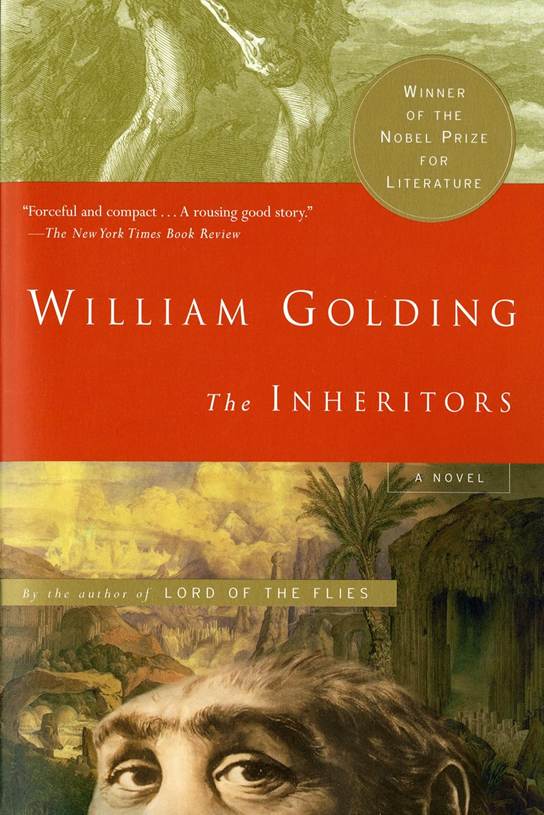
Golding thought The Inheritors was his finest novel. It tells the story of a band of people about to be displaced by stronger incomers. The twist is the people are Neanderthals, and the incomers are modern humans,
Like all of Golding’s work, there is a moral subtext. Lok, Fa and the other Neanderthals in this tale of The Fall are innocent and without sin, while the Homo Sapiens are licentious, drunk, and violent.
What makes this book extraordinary is the language Golding uses to craft Lok’s inner world. His Neanderthals inhabit a rich sensory world heavily imbued with life force, capable of almost telepathically sharing images, and without much in the way of concepts. We are immersed in a strange and charmed world.
How does Golding achieve this effect?
The grammar of an alien mind
When we are in Lok’s head, sentences are short and staccato. The book opens “Lok was running as fast as he could.” The Neanderthals’ speech is simple and declarative, dealing with the immediate and the concrete.
Of course, a novel composed entirely of such clipped sentences would be like a child’s reading primer. So Golding complements this with highly sensory and lyrical description, especially of colour.
By contrast, the Homo sapiens use longer sentences with subordinate clauses. This is a speech capable of conveying abstract thought, of understanding the relations between things. Consider the metaphoric quality of :
“His teeth were wolf’s teeth and his eyes like blind stones.”
Transitive and intransitive verbs
The passages dealing with Lok and the Neanderthals rarely (18.47%) uses transitive verbs, while in the passages from the perspective of modern humans such verbs are more common (40%)[1] Transitive verbs are those which require an object to complete them (for example, “Vivani was doing her hair”) whereas intransitive verbs are complete actions in themselves (for example, “Lok ran”). Clearly, we use transitive verbs to express more complex ideas and understand our being in the world.
Fa, the cleverest of the Neanderthals, almost imagines the idea of container for carrying water from the river. But the mental effort proves too much for her and the picture vanishes. Lok is often unable to piece together complex cause and effect. This is clearest in the passage where Lok first encounters a man from the new species:
The man turned sideways in the bushes and looked at Lok along his shoulder. A stick rose upright and there was a lump of bone in the middle. Lok peered at the stick and the lump of bone and the small eyes in the bone things over the face. Suddenly Lok understood that the man was holding the stick out to him but neither he nor Lok could reach across the river. He would have laughed if it were not for the echo of the screaming in his head. The stick began to grow shorter at both ends. Then it shot out to full length again. The dead tree by Lok’s ear acquired a voice.
Clop!
His ears twitched and he turned to the tree. By his face there had grown a twig: a twig that smelt of other, and of goose, and of the bitter berries that Lok’s stomach told him he must not eat. This twig had a white bone at the end. There were hooks in the bone and sticky brown stuff hung in the crooks. His nose now examined this stuff and did not like it. He smelled along the shaft of the twig. The leaves on the twig were red feathers and reminded him of goose. He was lost in a generalised astonishment and excitement.
Lok is unable to work out that the man has shot an arrow at him.[2]
Identity
The uncanny sense of being in an alien mind isn’t just about sentence structure. Lok’s sense of identity is also different from ours. Parts of his body lead an autonomous life:
Lok’s ear spoke to Lok.
“?”
But Lok was asleep.
Or:
Lok’s feet were clever.
Everything has a life
Everything in their world is alive and participates in a common animation. The log, for example, has agency and has “gone away”, as if of its own volition, and the sun “hid again”.
Lok finds it difficult to stay focused on a task for long, being easily distracted by needs for food and sex. The others say “Lok has many words but few pictures.”
When the group discuss something they share mental images. If they don’t get it, they say “I do not see this picture.” They can even merge their consciousnesses to a shared picture in a kind of hive mind.
When things become confusing for Lok, particularly when the new people attack, he defaults to a genial optimism. He is unable to conceive that they have killed his comrades and abducted the two young ones. He looks forward to the girl, Liku, coming back when the new ones return her. It is Fa who works out that they are under mortal threat.
Homo neanderthalis and Homo sapiens
Unlike the modern humans, these people live gently on the earth, never killing to eat, subsisting on a diet of plants and roots, and meat only when they can scavenge from a predator’s kill.
By contrast, we see the Homo sapiens through Lok’s eyes as incomprehensible creatures who inspire wonder and fear. Their actions are rapacious and chaotic, while their bird-chirp language seems full of admonishment, sly manipulation, and domination.
The outcome
We already know that Lok and his friends will not survive this encounter, because they are gone, and only we are left. Golding is questioning whether that has been a good thing, whether we are a good thing, though he does not suggest we had a choice. For him, we belong on the upsweep of the evolutionary trajectory, represented by the river that runs like time through the novel’s landscape. But perhaps he mourns the fall of that innocence.
[2] See Sam Browse (2018) From functional to cognitive grammar in stylistic analysis of Golding’s The Inheritors,Journal of Literary Semantics, 47 (2), 121-146 https://shura.shu.ac.uk/23149/
The waves rushed in as the Thames Barrier was breached. Water laps around Buckingham Palace, and Greenwich Hill has become an island. The King has moved to Scotland, and rowing boats ply the Chelsea road.
It’s not like we weren’t warned. But there was always something more important. And the hotter things got, the less we listened. When throngs of desperate people began to bang on our door, we turned them away. Full up, we said.
Is it too late now? For London, yes. But not for you. Yet.
Can we come to yours?
.
Friday fictioneers is a weekly challenge set by Rochelle Wisoff Fields to write a 100-word story in response to a photo prompt. You can find other stories here
The walls are closing in, and there is hardly enough space now for me to transit the room. The table and chairs have become strangely elongated, affording me length and height but a shrinking breadth. All around me, hordes are panicking, wailing and rushing hither and thither as the world becomes two-dimensional.
I am calm. This just cannot be happening—therefore, it’s an illusion, something I ate, no doubt, and I can quell it by my will.
Odd. Now the ceiling is coming in. I wonder how I will fare in lineworld.
.
Friday fictioneers is a weekly challenge set by Rochelle Wisoff Fieldsto write a 100-word story in response to a photo prompt. You can find other stories here
What do you mean, ambience? Do I not make a perfect Imam Bayildi? Do you even know what that means? The Holy Man Fainted: that’s the English translation. A dish so delicious the imam fainted when he sampled it. Aubergine stuffed with tomato and onion, slow-braised in olive oil. Delicate and beautiful—a taste of home. One mouthful and you are back among the olive groves on a cedar-scented evening, bright stars pricking the cloth of night. Now this, my love, is ambience you can’t buy. I tell you, the guests will come without any fancy decor.
.
Friday fictioneers is a weekly challenge set by Rochelle Wisoff Fields to write a 100-word story in response to a photo prompt. You can find other stories here
The face she wears is not her only face. Though she performs the role well, smiling and agreeable, every now and again the skin coruscates for a moment and I glimpse an altogether different creature beneath. This thing has teeth.
She will come for me one day—I know it.
.
Friday fictioneers is a weekly challenge set by Rochelle Wisoff Fields to write a 100-word story in response to a photo prompt. You can find other stories here
Look, mate, I’m not runes—I’m Cadoc. What the bloody hell do you think you’re doing, grubbing around in the dirt beside me? I’ve had a nice kip these last three thousand years, and then you come along. Some eternal rest! I would’ve preferred eternal feasting, but we can’t have everything, can we? Anyway, bugger off and leave me in peace. Oi! You can’t be lifting my skull. Put me back right now or I’ll curse you unto the tenth generation with the magical lore of the Celts. Oh, all right, I don’t know a curse from a warding spell. But show some sodding respect, mate.
Oi!
.
Friday fictioneers is a weekly challenge set by Rochelle Wisoff Fields to write a 100-word story in response to a photo prompt. You can find other stories here
I recently noted that at least one main novel competition was looking for stories driven by an inciting incident. An inciting incident is the event or thing that forces the protagonist to leave the status quo and which drives the rest of the story forward.
Many stories are impelled by inciting incidents. But not all. The following books have no inciting incident.
Virginia Woolf’s To the Lighthouse
Harper Lee’s To Kill a Mockingbird
Dostoeveksy’s Notes from the Underground
Gordon Lish’s Peru
Proust’s A La Recherche du Temps Perdu
The question now is what sets a story in motion if it lacks an inciting incident? Does it also lack change and momentum?
Let’s consider the most widely loved of the example stories, To Kill a Mockingbird. There’s certainly change and momentum as Scout grows up and learns the truth behind her father’s advice to understand other people. Particularly so as the dreadful events of the rape accusation and the trial unfold. But what drives the story is no “call to action” setting in motion a “quest”, or any other variant of the inciting incident. Rather, the driver Lee uses is repeating cycles of rejection and acceptance (or defeat and recovery) at the levels both of personal behaviour and of social structures.
Part 1: Boo. Scout her brother and her friend mock the reclusive Boo Radley. He returns only kindness. Scout’s father, Atticus, tells her that she should learn to see the world through others’ eyes. When the children sneak into the Radley house, Boo’s brother shoots at them. In their flight, Scout’s brother tears his trousers and loses them. They later find the trousers repaired and hanging on the fence.
Part 2: The Trial. When a black man is accused of raping a white woman, Atticus agrees to defend him, causing the community to shun him. The family’s black maid takes the children to her church where they are welcomed. They watch the trial from the “coloured” balcony. Though Atticus marshals evidence to disprove the charge, the all-white jury finds the accused guilty.
The aftermath: Boo again. The accused man runs and is lynched. The accuser’s father holds a grudge against Atticus and sets out for revenge. He attacks the children. Boo fights in their defence and kills the attacker. The sheriff agrees to pretend it was an accident. Scout understands her father’s advice.
Though the rape accusation is perhaps the most dramatic part of the story, raising the issue of racism. the real motif is the reclusive Boo Radley. He is mocked by Scout, her brother, and their friend at the beginning yet returns only kindness to them. By the end, when Boo saves the children, Scout learns to truly understand and respect him.
This does not make the children’s contact with Boo an inciting incident. It does not light the touchpaper to the chain of events that follow.
All the works in the list could be described as literary. So perhaps the conclusion is that genre stories will usually (perhaps always) have an inciting incident while literary stories do not necessarily need one. I might argue that among the inciting incident’s functions is telling the reader what kind of story to expect. If there’s a body in the library, you can be sure this is a mystery. If the protagonist feels a palpitation in her bosom when a brooding stranger appears, you can be sure this is romance. In other words, inciting incidents are reassuring genre signals. But they are not necessary for a story full of change, conflict, and momentum.
When the world went dark, I was frying bacon and eggs. I didn’t even notice for an hour. The breeze continued to stir the sycamore leaves, and the dog next door barked insouciantly. Only when I needed to make a phone call did I discover the internet and power were down. Annoying, but not terrifying. It would be back up soon. Wouldn’t it?
When the taps ran dry, I began to panic, to the rising clamour of gridlocked motorists leaning on their horns.
My neighbour is a prepper. Pulling out his radio, he called, “Can you hear me?”
.
Friday fictioneers is a weekly challenge set by Rochelle Wisoff Fields to write a 100-word story in response to a photo prompt. You can find other stories here







 Neil MacDonald Author