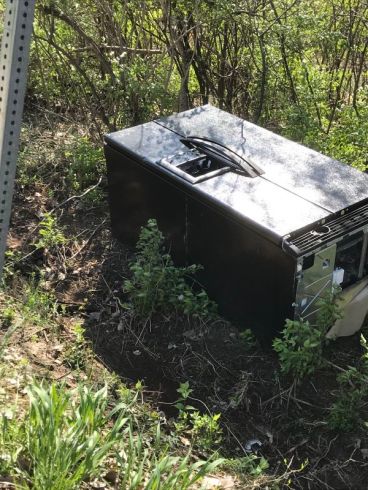
They probably think I’m a bit strange. But then they probably see only a messy picnic blanket here. That would explain why they’re trying to pull me away. If the picnic’s over, it’s time to go. But I wasn’t here to eat the chicken drumsticks and the potato salad. This mess is exactly what I’ve been waiting for.
The geometry of crumbs on the checkerboard pattern describes one particular folding of space-time. Perhaps today, this will be the universe that contains you, and I can dive in and find you again.
Friday fictioneers is a weekly challenge set by Rochelle Wisoff Fields to write a 100-word story in response to a photo prompt. You can find other stories here
Like many other events this year, the Farnham Flash Fiction Competition is going online. The awards ceremony will take place on Zoom on 23 July with a panel of local authors:
Here are six cover concepts for my novel, The Tears of Boabdil, published this September. Can you help me choose which concept to go with? The execution is far from perfect (I’m a writer, not a graphic designer), so please comment on the concept. A real designer will execute it.
The dirt track became a cobbled street, twisting between high buildings that leant together, nodding their heads and clicking their tongues at us.
Marta began to tire, feet dragging and hand pulling in mine. “Let’s go home,” she said. “I don’t like it here.”
The street opened on an avenue, straight as marching soldiers.
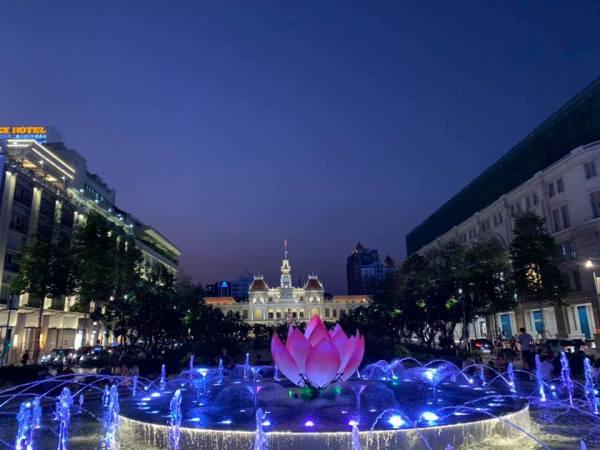
At the end—a great plaza. Waters danced in fountains, and flocks of starlings hid the distant palace behind a curtain of coruscating wings.
Marta turned and turned. “Daddy, I didn’t know there was so much space in the whole world.”
I determined things must be different.
Friday fictioneers is a weekly challenge set by Rochelle Wisoff Fields to write a 100-word story in response to a photo prompt. You can find other stories here
They came in great flying ships that blotted out the sky. Like inverted pyramids with radio masts. The ships I mean, not the Overlords. We knew them as Overlords, because it was so written on the sides of the vessels.
With lutes and bagpipes we met them, hoping music might communicate. And they spared us.
But they erected a scaffold on the summer meadow, and we were afraid. They capered there with stringed devices that blasted sound.
The next day, they were gone. The meadow is covered in strange litter. Perhaps some of it has power.
Friday fictioneers is a weekly challenge set by Rochelle Wisoff Fields to write a 100-word story in response to a photo prompt. You can find other stories here
I look out to sea. Gentle waves stay all the way out to an empty horizon. No cruise boats.
Nobody come.
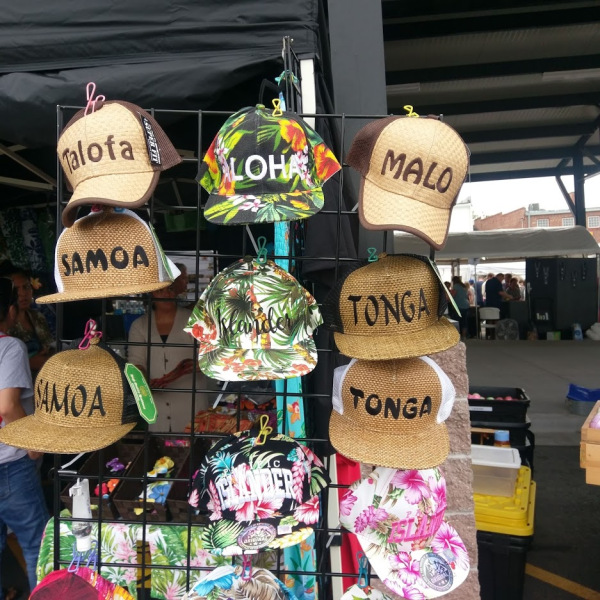
For the fourth time, I rearrange the wire bush of tourist hats, bobbing in the breeze like shrunken heads. Gaudy shirts billow and cowrie shell necklaces clack.
My feet do an anxious little dance. Maybe I’ll go tend my taro patch instead.
Jesus wen cry.
Friday fictioneers is a weekly challenge set by Rochelle Wisoff Fields to write a 100-word story in response to a photo prompt. You can find other stories here
Friday fictioneers is a weekly challenge set by Rochelle Wisoff Fields to write a 100-word story in response to a photo prompt. You can find other stories here
It was a grand idea. One that would tie all the threads together and lead to an unexpected place. I thought, “I must remember this solution when I wake.”
In the morning, it had scuttled away into the wainscoting, and all I was left was a sense of the colour red and a cross-hatched pattern.
Friday fictioneers is a weekly challenge set by Rochelle Wisoff Fields to write a 100-word story in response to a photo prompt. You can find other stories here
When we plugged the dilithium crystals into the manifold, it happened. The dustbin began to shake and, on the old zinc sheet, a ghostly image formed.
“What is that?” Tony asked, cutting to the heart of the matter.
“Damned if I know,” Truth is important to me.
But Peg was our visionary. “It’s another world,” she said. “We’re seeing into a parallel universe. Look, there’s a building and a tree.”
It looked suspiciously like a baked reflection of our building and a telegraph pole connected by a manifold.
“Not as good as television,” Tony decided and went home.
Friday fictioneers is a weekly challenge set by Rochelle Wisoff Fields to write a 100-word story in response to a photo prompt. You can find other stories here
The urban dictionary defines threading the needle as “While driving, walking, or running you weave in and out of obstacles (other cars, people, etc.) in your path.”
The road to self-publication involves a lot of weaving in and out. In a previous post, I described how I chose my publisher and publicist for my literary thriller, The Tears of Boabdil.
That was only the first of many decisions. Next came:
Distribution
Pricing
Page design and cover design
Promotion
News coverage
Review strategy
Advertising
Each of these decisions will have huge influence on the book’s success. There will certainly be a lot more to research, think about, and decide on. The book is now typset in its first proof stage, and so I’ve been proof-reading.
I can’t pretend to be an expert (I’m learning as I go) but, as a writer, I know the importance of doing my research.
Distribution
This one was easy, since part of the reason for choosing Matador for the production of the book was that they also have an effective sales and distribution arm which can get books into major retail outlets.
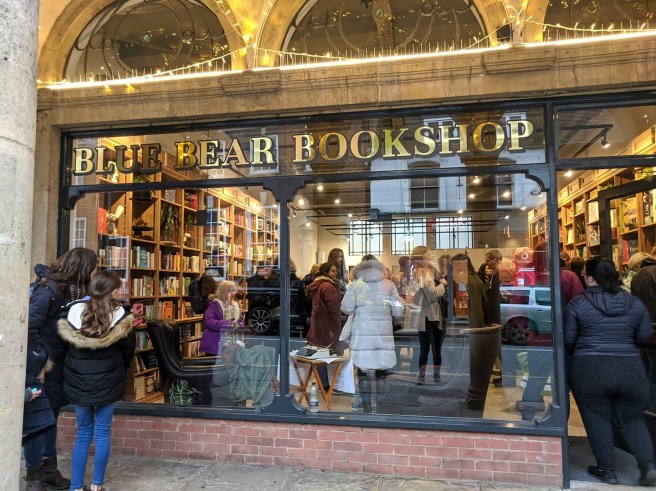
The Blue Bear, my local indie bookshop
Matador’s distribution service produces an Advance Information sheet to publicise the book for booksellers, arranges all bibliographic data management for wholesalers including Nielsen and Gardners, and distributes to retail physical and online bookshops. This service, which costs £300, requires a print run of at least 100. I also contracted their representatives to hand-sell the book into high street retailers. This service costs £250 and requires a print run of at least 300.
Book categories
How you categorise your book affects how easy it is for readers to find.
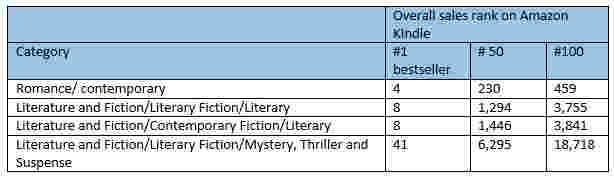
The online seller Amazon dominates the market with over 33 million titles, and understanding the way it classifies books is important to success. Amazon Kindle lists only the top 100 books in each category. That means in a highly competitive category like Romance your book may sink without a trace unless your sales figures are really good. But Amazon Kindle has 10,849 bestseller lists. So, if you expect to be getting sales in the hundreds, it pays to pick a less competitive category. If there are no more than 100 books in your category, you’ll automatically make the bestseller list with a single sale.
My book is literary with thriller elements. So, if I marketed it as Literary Fiction/Literary, I’d have to be at least number 3,754 on the Kindle rankings to appear on a bestseller list. But if I marketed it as Literature and Fiction/Literary Fiction/Mystery, Thriller and Suspense, I’d only have to reach number 18,717.
To achieve a sales rank of 4 (the #1 spot in the most competitive category, Romance/contemporary), the author will be selling around 5,360 e-books a day. To achieve a sales rank of 18,718 (the 100th spot on the bottom row), the author will be selling around 13 e-books a day.
The rankings change over time, so it’s worth checking just before you release your book. In April 2020, the number 100 spot for Literary Fiction/ Mystery Thriller and Suspense had a sales ranking of 4,058.
Most physical booksellers use the more restricted Thema categories. There, my best choices were either Fiction General and Literary, or Modern and Contemporary Fiction, or Thriller/suspense. On my publisher’s advice, I went with Thriller/Suspense, since there was no Literary Thriller category.
So, hopefully, the book will be available through all major retailers. All I need to do is make sure readers know about it and want to buy it.



 Like many other events this year, the Farnham Flash Fiction Competition is going online. The awards ceremony will take place on Zoom on 23 July with a panel of local authors: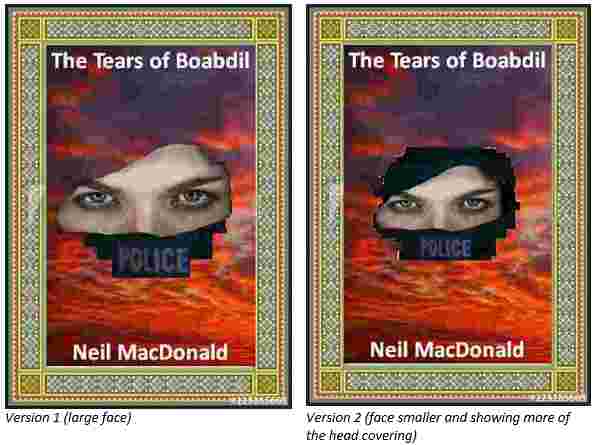





 Neil MacDonald Author