The kiss was overpowering in its intensity, its delicious wrongness. That much she remembers. She lifts her fingers to swollen lips, feeling the bruise left by the urgency.
Her husband continues to read his newspaper. Will he notice the wound? Does he at already know?
What happened after the kiss, she’s not sure. There were drinks, many drinks. Perhaps the story playing in her head is only something she’d read.
.
Friday fictioneers is a weekly challenge set by Rochelle Wisoff Fields to write a 100-word story in response to a photo prompt. You can find other stories here
When you have caught your bear, let her be sequestered in a cave. It is important she see no sunlight. Also, that she eat only garlic and mugwort. After twenty one days and nights, the bear will transform into a woman.
Take heed—she will be sad and lonely as the sole human. You will likely have to take her to wife, and, in this way, you will father a people. The tending of nations is a topic beyond the scope of this spell.
This story is based on a Korean creation myth. Friday fictioneers is a weekly challenge set by Rochelle Wisoff Fields to write a 100-word story in response to a photo prompt. You can find other stories here
My literary thriller, The Tears of Boabdil, is in the final weeks before publication, and my focus now is on publicity. With bookshop distribution successfully underway, thanks to my publisher, I’m concentrating on reviews, as described in a previous post.
Here’s a flavour of the reviews so far, by which I’m delighted.
“Neil MacDonald has skilfully fitted a complex plot and a diverse ensemble of characters, likeable and otherwise, into a space from which they almost, but don’t quite, burst out. The Tears of Boabdil is an ambitious, assured, and gripping debut novel.”
Mandy Macdonald (no relation)
“Having been given its time to breathe as recommended in the book, a story needs a satisfying and convincing conclusion. Neil MacDonald has achieved this, not by magic, but by enviably able writing.”
Jilly Funnell
In other wonderful news, one of my stories was longlisted for the BBC Short Story Award.
The book is out on 28 September and has its press launch on 2 November. You can get it here
As you can imagine, I was outraged. Finger pointing at the pile of trash dumped on the sidewalk, I tried to summon words: “Who? Who? Who?”
Henry, who liked to think of himself as something of a wit, jibed “What are you? An owl?”
I tried again. “What? What kind,” my lip curled, “… of person … does this?”
“Pretty ugly,” he agreed. “A real eyesore.”
And then it came to me, a chance to out-Henry Henry. “Help keep America beautiful. Throw away something lovely today.”
We strolled on, laughing.
Friday fictioneers is a weekly challenge set by Rochelle Wisoff Fields to write a 100-word story in response to a photo prompt. You can find other stories here
Everything about the place was just slightly wrong. It strove for gentility and a sense of timelessness—etched glass and dark wood, old casks and dim lighting. But the scent of madeira and cigar smoke had been sprayed from a bottle or applied with a cloth. The waiters’ cravats weren’t tied quite right, and the mournful music was recorded. You can’t really have a fado salon anywhere but Portugal. And, behind the bar, a sign that read “Please do not ask for credit as a punch in the mouth often offends.”
Friday fictioneers is a weekly challenge set by Rochelle Wisoff Fields to write a 100-word story in response to a photo prompt. You can find other stories here
Beyond the edge of the world, did you create anything? Here, the illusion is perfect, even hyperreal. The colour is unusually sharp, the light pellucid as the laughter that gurgles from happy children and thronging crowds. And your gifts keep coming. Here, nothing could make me want to ever leave.
But, if I dash round the corner fast enough, will I find the street ends on a yawning chasm? Or will you fill-in detail faster than my eye can catch your making?
Once, I thought I spotted empty grid lines before the flats zoomed skywards. And I was terrified.
Friday fictioneers is a weekly challenge set by Rochelle Wisoff Fields to write a 100-word story in response to a photo prompt. You can find other stories here
Sparks arc, zigzagging up between the conductors. Mr. Henderson thinks he’s demonstrating properties of electricity. In fact, he has opened a door.
I peer closer. But I’m not learning about short circuits. The air crackles with brimstone and I see tiny angels ascending the ladder to heaven. For a moment, the heavenly kingdom becomes visible.
The seraphim, in high voices that only I and dogs can hear, chant “holy, holy, holy.”
Their Lord is angry. They issue my instructions and, with grim determination, I steel myself for the task.
Friday fictioneers is a weekly challenge set by Rochelle Wisoff Fields to write a 100-word story in response to a photo prompt. You can find other stories here
You’ve written, printed, and published your book. Then what? If nobody knows it’s there, you’ll get zero sales. This is where publicity comes in. In this post, I’ll talk about getting your book reviewed. The good news is you can ignore most of the options out there.
Book sales come from advertising, word of mouth, searches, and reviews. I began to think about getting my novel reviewed about six months before the release date
In the old days, you’d send your book out to the reviews editor of newspapers and magazines. My publicity company will try to place such reviews. While these are important, getting your book accepted is very hard. But the internet has transformed book reviews. Readers can leave reviews on the internet, And now there are BOOK BLOGGERS. Many of them have huge followings and can be very influential in driving sales.
This is how I created a list of almost 800 potential reviewers.
If you start searching online for how and where to secure reviews, you get inundated by information, much of it bad. And if you join discussion groups on the subject, as I did on Goodreads, you’ll find your in-box filling up with offers to give you reviews in return for money.
Never pay for a review
Reviews have two different purposes
You want your reviews to do two different things:
Spread the word to lots of potential readers. For this, you want to target reviewers with a big following
Increase the ranking of your book on sites like Amazon and BookBub (I’ll cover BookBub in a later post on advertising). For this, the readers only need to review and like your book.
Start early
I started six months before publication. Here’s what I did. My navigation through the blooming buzzing confusion may help you. These are the key principles of my approach:
Identify the key sites
Locate bloggers who’re likely to be influential and sympathetic to your book
Create lists of reviewers to contact
Three key sites
There are a host of sites, blogs and apps. To make it manageable, I developed focus. The key general sites I aimed to understand are Netgalley, Goodreads, and Amazon.
Netgalley One respected and key source of book bloggers is Netgalley. It acts as a portal for putting your advance review copy before reviewers. This site hosts over 380,000 reviewers, librarians and booksellers, 45,000 of them in the UK. Members produce 60,000 reviews a month. It describes itself as helping “readers of influence discover and recommend new books to their audiences.” One top reviewer I checked had just under 4,000 followers. The majority of NetGalley readers are interested in Teens and YA, General Fiction, Mystery and Thrillers, and Sci-Fi and Fantasy, and there is least interest in Middle Grade, Humour, Horror, Sports, and Literary Fiction The site is free for reviewers, but they charge authors and publishers to list there (around $399-599). But, luckily, I already had access through my publisher’s promotion program.
The key sites on which you really want reviews to appear are Goodreads and Amazon. Most of the influential bloggers post reviews on those sites.
Goodreads This is a book listing and review site, perhaps the most important on which to secure reviews. Is now owned by Amazon, but operates independently of the parent company. It is the largest and best-known book review site. In 2018 it had 80 million users and listed 2.3 billion books and boasted 80 million reviews.
Amazon In the US in 2018, the internet giant controlled almost 50% of physical book sales and 83% of e-book sales. Reviews, as well as adverts, on Amazon are therefore supremely important to boost these sales. Think of it not just as a sales platform, but as a search engine for books.
Apart from the reviewers on NetGalley, I needed to find some key bloggers and reviewers, particularly those who post on Goodreads and Amazon. There are millions, as any internet search will prove. But they don’t all read in my genre, and they’re not all in my country (where I would expect the majority of my sales to be concentrated). Some bloggers will only accept traditionally published books.
So, I began to narrow down my search. On Goodreads and Amazon, I identified the relevant top reviewers in the UK. You can do this by looking at the number of reviews and what they review. There is no direct way of putting your book in front of these people. But, on Goodreads, there are forums so you can hang out where they do, and follow and friend them. The list of relevant Amazon top reviewers turned out to be surprisingly small—only three of the top 100 matched my criteria and one of these was also on Goodreads.
Beyond the key sites, there are many book bloggers out there. You may already know some of them. If you don’t, or to add to your contacts here are a couple of useful listings of book bloggers that I used.
Many bloggers will be completely uninterested in your genre and style. So expect to pass over most of them. I noted down perhaps 6% of entries, even though I’d searched by my genre.
Every now and again, one of the bloggers will also list other book bloggers they follow. If you like their approach, you’ll probably like a fair number of those they follow. I found one such blogger who listed 13 others. Of these, almost a quarter were suitable for me.
You can get a useful sense of how influential a blogger is by looking at the number of their followers. Where they don’t publish this number, you can still get a sense of traffic on their site by looking at their Alexa rank. You just type the site’s URL into the box and click.
Build lists
My initial list comprised almost 800 potential reviewers
It included the obvious people:
Suitable friends and friends of friends (12)
Authors I know (including members of my physical and online writing groups) (70)
Followers of my blog (665). Of course, not all of these are potential reviewers.
Then I began to create lists of the less obvious ones
Book bloggers I’d had contact with before, particularly for the blog tour for a collection of stories in which I’d appeared. (9)
Appropriate book bloggers I didn’t know (24)
Goodreads top reviewers (13)
Amazon top reviewers (3)
Timing
Choosing the right time is crucial. I wanted as many reviews as possible to coincide with the launch of my book in November. So the right time to approach potential reviewers was around six weeks before, in September.
Activating the lists
Any marketer will tell you, the key thing is relationship. Those people I already had a relationship with were simple—I just asked them for a favour. The unknown people needed some more thought. With some, I tried to build a relationship beforehand by commenting on their reviews. With others I researched in detail the genres they preferred, looking in particular for books they’d enjoyed that I had too.
The principles of contacting a reviewer are really common sense but I’ll reiterate them here:
Research. Make sure you understand the kind of books they’re interested in, and that yours fits. Check that they are open to receiving review copies (many close periodically with long backlogs). Read their review policy and you follow it.
Personalise. Never do a mass mailing. Tailor each contact to the particular reviewer. Address them by their real name, not the name of their site. Identify something you have in common, particularly something in their blog you can comment favourably on.
Be polite. They don’t have to read your book. You’re asking them for a favour.
Proof read. Check your e-mail carefully for spelling or grammar mistakes. An illiterate message does little to sell an author’s competence.
The final list
Not all of the potential reviewers are equally suitable. I pared my list down to the top 50. In a couple of weeks, I’ll press “go”.
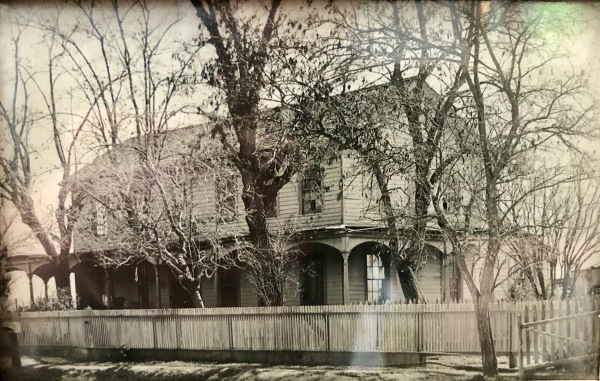
The old house was leaking light. We tried to staunch the flow, bandaging our home with drapes and then with shutters. But that prevented us keeping watch.
Ma pulled her shawl tight and said every family was allotted a ration of brightness—when it ran out, it was gone. Dad would grunt and carry on whittling.
We never found out what he was carving, maybe a house-deity to protect us.
Neighbourhood children danced and played in the dwindling fountain. Other shapes too moved faintly among them. Inside, we dwelt finally in eternal darkness.
Friday fictioneers is a weekly challenge set by Rochelle Wisoff Fields to write a 100-word story in response to a photo prompt. You can find other stories here
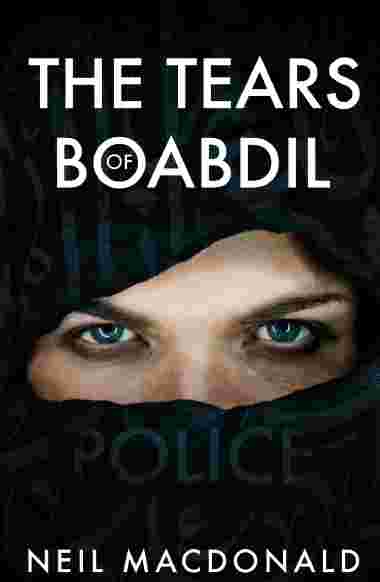
My final cover for The Tears of Boabdil is back from the designer. I love the directness and mystery of the eyes and the subtlety of the blue Islamic lettering against the black background.
My brief to the designer was that it had to say “police”, “deception” and “Muslim”.
This was my first mock-up and the designer’s execution.
I didn’t feel this fitted the brief, and combining two faces proved to be technically complex. So, we went through another round of design with a different concept to produce the final cover. You can see my thinking on the intermediate steps in this post.