129. How does a story mean?

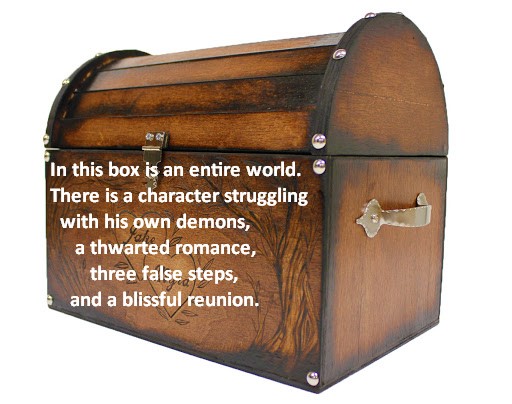
The meaning of a story exists outside the text. I was struck recently by the way a story can be simple but its meaning can be perplexing.

sparkler

A story is a set of events linked by causality—the kingdom withered because the king died of grief. The king was sad because the queen had died.

Meaning depends on understanding how things fit together. The meaning of an event in the story (the queen died) lies in the part it plays in the whole, what it causes (the king died).

Stories tell us what goes with what, what is important and what is unimportant, who to praise and who to blame.

But the chain of meaning also extends beyond the story. To follow it, we need to know what a king is, what marriage is, what love is. This knowledge pre-exists and lies outside the tale. Meanings are social—they depend on how a particular community understands the world. These shared references and a stock of agreed narratives allow an audience to decode the story and clad it in meaning.

So, it is possible to create a story in which the chain of linked events is clear, but the meaning is opaque because it depends on assumptions that subvert social understanding of how to code events.

An example

This is what happened with a story I wrote. It imagines a world being destroyed by a race of giants. The giants are the offspring of people and angels. A man and his grandson are chased by a giant. The grandson says the angels have warned him a great flood is coming and that he should build a boat. The old man argues the important thing is not to survive the flood but to stop it by preventing the destruction of the world.  He believes the angels’ mischief is the root cause of the problem and decides the solution lies in taming the giants and putting their great strength to work in repairing the world.

giant

Simple, right?

Yet many readers were perplexed. I wondered why. One told me he didn’t understand bad angels—angels, he felt, were good. The Noah figure, with his Old Testament resonances, who wants to build the boat is young and credulous rather than old, wise, and virtuous. This too creates what psychologists call cognitive dissonance—the discomfort caused by trying to hold two contradictory beliefs.

If we lack the key to decode the story’s meaning, the story doesn’t work for us, even if all the events and the connections between them are clear. This, I believe, is what happened with my tale.

Allegory, unreliable narrators, and allusion

The allegorical implications also perplexed readers. Did the giants represent machines, they wondered? Were the angels fallen angels? In allegory, the meanings necessarily exist outside the story itself since everything in the story is doubled by a set of mappings onto another space.

But there are other circumstances than allegory where a simple story may have an opaque meaning. An obvious example is the unreliable narrator, where not only the credibility of the narrator but also of the events is brought into question. Another is stories that make extensive reference to other stories, which may not be familiar to the audience. The use of classical allusion, once readily understandable among educated people, may be an example here.

Plot, Story, and Narrative

Here’s a simple way of thinking about this.

  • Plot is the causal sequence of a tale (the WHAT of a tale).
  • Story is the way this sequence is told (the HOW of a tale),
  • Narrative is what it means (the WHY of a tale), the interpretation of events and characters within the tale.

Note that narrative can only come into existence when a work is read or heard. The writer may have intended something, but the reader may pick up quite a different interpretation. Meaning comes in existence through an interaction between the writer and from the reader, not from the text. Both writer and reader participate in the creation of meaning.  In an important sense then, meaning must always lie outside the story itself.

Friday Fictioneers – Meal by Cloud

82398379_318765765685031_5971849637915525120_n
PHOTO PROMPT © Rochelle Wisoff-Fields

That’s what we’ve come to name it—meal by cloud. Quarantined in our own homes, we take to inviting virtual guests for dinner over Skype. We call from window to window across the city “stay strong”.

Only ambulance sirens and the rumble of military vehicles echo between buildings in the empty boulevards.

It must end soon. This cannot be forever.


Friday fictioneers is a weekly challenge set by Rochelle Wisoff Fields to write a 100-word story in response to a photo prompt. You can find other stories here

Friday Fictioneers – Duty


unamed-from-ted-strutz
PHOTO PROMPT © Ted Strutz

She’s a good girl. She’ll carry me up the mountain. She prepares my meals and launders my clothes and bathes me. She mends and sews and brings me healing herbs.

This is how it is. I carried her in her youth and now she carries me in my old age. It’s the circle of life. At the end, she will carry me all the way up the mountain to the stars.

But who will carry her when her time comes?


Friday fictioneers is a weekly challenge set by Rochelle Wisoff Fields to write a 100-word story in response to a photo prompt. You can find other stories here

Friday Fictioneers – Tupilakosaurus

dales-ice-rink-1
PHOTO PROMPT © Dale Rogerson

No maps lead to this trackless place. A white landscape, a white sky, and a desolate biting wind. Yet here, half glimpsed in the ice, a dark and massive shape.

Snow rimes my eyelashes. This land is so terribly silent. Once though it was lush and tropical, and this beast undulated in the warm Tethys Sea.

That sea has long vanished. Once there were maps, but they led to a different place.


Friday fictioneers is a weekly challenge set by Rochelle Wisoff Fields to write a 100-word story in response to a photo prompt. You can find other stories here

Friday Fictioneers – Daddy

ice-cream-naama-yehuda
PHOTO PROMPT © Na’ama Yehuda

That was my father to a tee–“Keep Out of Reach of Children”. He wasn’t stern, never beat us, but he could wither your soul with a sneer. Pretty, sweet and icy to the core like this sorbet.

Every time I see that warning on tins of powdered milk, “Not to be Used for Babies”, I think of him.

His eyes are wide, as if in surprise. Yes, you weren’t expecting that in your choc-chip, were you? But the corners of his mouth are turned up. How I loved it when you smiled at me. The whole world became honey.


Friday fictioneers is a weekly challenge set by Rochelle Wisoff Fields to write a 100-word story in response to a photo prompt. You can find other stories here

128. Crafting powerful scenes

Clint Eastwood

How do you know when a scene begins and ends, how many scenes make a book, and what the difference is between a scene, a beat, and a chapter? Never fear, all the answers are here.

What is a scene?

A scene is the basic unit of a story. It’s not just stuff happening—in a scene, something has to change. This may be a conflict, a discovery, a realisation. It’s like a mini-story with a beginning, middle, and end. Tension rises, reaches a climax and then falls again.

These are the elements of a scene. Much of this comes from Ali Luke.

  • A change
  • Involves at least one character wanting something and taking action to achieve this (even if that action is largely internal such as thinking).
  • If you have more than one character, there should be interaction and/or dialogue between them. The dialogue should advance the action, reveal character, or ideally both.
  • An unbroken flow of action from incident to incident
  • A description of surroundings. Almost always, a scene will have a single location or small set of connected locations. If you switch location, you’re generally switching scenes
  • A definable duration, usually short. If you switch time, you’re generally switching scenes
  • A single point of view. If you switch point of view, you’re generally switching scenes.
  • Conflict or complications (even if the conflict is with something inanimate, like struggling through a rainstorm)
  • Rising emotion or tension.
  • A strong ending
  • A link to the next scene

Relationship with other story units

Other terms you’ll come across are beat, scene-sequence, chapter, act, and arc. The language here is not very precise and different people use the words differently and sometimes interchangeably. You may not find it useful to use any other concepts than scene and story.

change

The fundamental idea is to understand a story as a series of changes.

Beat Something that happens. For example, “John walked into the room”
Scene A unit of story in which a significant change occurs
Scene-sequence A  chain of scenes
Act A larger unit of story structure. For example, in a Three Act work, the Beginning, Middle, and End
Arc The overall “shape” of the ups and downs of the story or of a character’s change

Chapter is not quite like these units. All the rest are elements of the story structure, but a chapter is essentially a navigational device to break the words up into chunks for the reader’s convenience. It is, of course, possible for chapters to coincide with one of the other units. Some writers arrange each scene as a chapter. Others may end the chapter mid-scene to create a cliff-hanger.  Think about starting a new chapter when the character’s goal or direction of the story changes.

Beginning and ending scenes

How do you know when a scene begins and ends?

  • A scene begins with establishing what the character wants
  • Progresses through the attempt to achieve that goal
  • Ends with a critical point, usually a set-back but sometimes a triumph

Since a scene has the same characteristics (beginning, middle, and end) as a story, it has many similarities in the way you begin and end it. Much of this comes from the Now Novel blog.

  • “Hook” the reader’s interest at the beginning. You might do this with an explosive entry into action, or vivid description of the setting, or the posing of an intriguing question. The main characters should clearly want something.
  • End a scene
    • With a cliff-hanger, mid-action
    • With a character epiphany
    • With the discovery of a major obstacle
    • With the promise of more to come (turmoil, future revelations)

Scenes and sequels

One particular writing tradition is based on a distinction between scenes and sequels, which means essentially action followed by reaction. The originator of the tradition is Dwight Swain. Many writers would consider both action and reaction to be distinct scenes and many others consider them to be halves of a single scene.

A guide to editing scenes

When you edit, you’ll find that some of your scenes don’t work. In which case, they need to be either fixed or deleted. Here’s a 12-point checklist of questions you can ask about a scene, largely borrowed from Ali Luke.

Question Action
1.       What changes? If nothing changes, amend or cut it
2.       Does it advance the plot and/or reveal character? If you cut the scene, would the story still work? If the story would still work without it, you should probably cut the scene
3.       Is it clear? If not, clarify
4.       Does it start well but tail off? Prune the ending
5.       Does it take a long time to get started? Prune the beginning so you start in the middle of things
6.       Is the action over too quickly? Expand it so the reader isn’t rushed
7.       Does the action drag on too long? Condense it
8.       Is it a close repeat of a scene you’ve already written Amend or cut it
9.       Does the scene link to one before it and the one following? If not, introduce the links so you get a build-up of action towards the climax, or you make the most of the contrasts between characters and situations
10.   Is this scene in the right place in the story? Should it be earlier or later? Consider moving the scene if it’s in the wrong place
11.   Does the scene take place in the right location? Consider whether it might be more dramatic if you set It somewhere else
12.   Does it carry resonances to other themes and subplots? It needn’t, but a story may be more satisfying if you build-in these layers


Friday Fictioneers – Homesick

image
PHOTO PROMPT © J Hardy Carroll

Inside the dome, we have beauty and abundance, lack nothing. Imagine a thing and you need only stretch out your hand to claim it. There is no hardship, and really all is for the best in the best of all possible worlds.

At night, I press my cheek to the glass wall, seeking that one pinpoint of light high in the sky. I reach out a hand. But I cannot touch it.

Oh, why would you insist on staying behind?


Friday fictioneers is a weekly challenge set by Rochelle Wisoff Fields to write a 100-word story in response to a photo prompt. You can find other stories here


Friday Fictioneers – Reflections

img_20191205_170150
PHOTO PROMPT © CE Ayr

Lights glimmered, undulating with the slap and slip of the waves. The early morning air was still and cool. And he saw, saw the whole thing.

“I know where it’s gone,” he shouted.

“Where? What?” she asked.

“Half the universe is missing. Dark matter–it’s there, in the mirror world.” He pointed at the reflection.

A pigeon looked up, shook its head, and took lazy flight, feathers rustling like a ladies’ fan.

“Actually,” she said, “more like 85% of the universe.”

His shoulders slumped. “Bugger! I thought I’d cracked the problem.”

“Tea?” she suggested.


Friday fictioneers is a weekly challenge set by Rochelle Wisoff Fields to write a 100-word story in response to a photo prompt. You can find other stories here

Friday Fictioneers – The Hard Problem

006
PHOTO PROMPT © Rochelle Wisoff-Fields

What’s it like to be a bat? Or a Martian? I’ve spent my life wanting to know. I remember as a kid asking Mum what it was like to be her but she just shook her head and said it’s being Mum.

Later, the connectome of a flatworm gave me the entire wiring diagram of a brain but revealed no understanding of wormness.

Now the solution to the conundrum is within my grasp. When this upgrade installs, the Blue Horizon AI will cross the singularity into consciousness.

I wait.

I ask.

The machine speaks. “It’s being Blue Horizon.”

42, I think glumly.

Friday fictioneers is a weekly challenge set by Rochelle Wisoff Fields to write a 100-word story in response to a photo prompt. You can find other stories here

127. Twenty novels that shaped literature

The novel is a fairly recent invention. The history of fiction goes back much further with works such as Chaucer’s 1387 Canterbury Tales, Shishuo Xinyu’s fifth century A New Account of Tales of the World and Homer’s eighth century BCE Iliad.

Iliad

The novel, however, is a distinctly modern and European. Its earliest examples can’t be traced back further than the seventeenth century and its real flowering was in the eighteenth.

The word novel comes from the Italian “novella” meaning a story. A novel is a prose work longer than a short story in which the trials and tribulations of a central character is a major feature.

The rise of the novel reflects the growth of a middle class with the leisure to read and the money to buy books. It is no accident that many of the early novels were written in English in the United Kingdom, where the industrial revolution created such conditions.

The eighteenth century English novel was concerned with complex, middle class characters struggling with morality and circumstances. The first half of the nineteenth century was the era of romanticism, but the impact of industrialism forced a growing engagement with social reality in the Victorian era. In the twentieth century, two world wars, the struggle for the emancipation of women and the dismantling of the old European empires led to a flowering of new voices from those who had hitherto been silent and silenced in literature.

Though I can make no claim to full inclusivity or canonical justification, this is my list of the 20 most important novels that shaped the way we read and write.

  1. Don Quixote by Miguel de Cervantes’ (1605) can lay (contested) claim to being the first novel in the modern sense.
  2. Robinson Crusoe by Daniel Defoe (1719) is arguably the first modern novel in English, following over a century after Don Quixote. An adventure story, it invented many of the tropes of colonial literatureRobinson Crusoe
  3. Gulliver’s Travels by Jonathan Swift (1726) spawned the genre of social satire.
  4. Tom Jones by Henry Fielding (1749) is among the earliest coming of age stories.
  5. The Castle of Otranto by Horace Walpole (1764) is the first Gothic novel, combining magic with realistic settings.
  6. Sense and Sensibility by Jane Austen (1811) ushered in the realist novel, which dealt with everyday life
  7. Waverley by Walter Scott (1814) pioneered the first historical novel.
  8. Frankenstein by Mary Shelley (1818) though Gothic, can be seen as the first science fiction novel and also the first horror novel.
  9. The Pickwick Papers, Charles Dickens’ first novel (1836). Though less socially engaged than much of his later work, it nonetheless paints sharp portraits of English life. Like many of his novels, it was first written as a serial and thus introduces a succession of cliffhangers.
  10. Murders in the Rue Morgue by Edgar Allen Poe (1841) features the first fictional detective. He pioneered the rational analysis of truth which influenced the subsequent development of the genre.
  11. Uncle Tom’s Cabin by Harriet Beecher Stow (1852) is less significant for its literary quality than for the way it fused fiction with the abolitionist events of the day.
  12. Madame Bovary by Gustav Flaubert (1856) codified literary realism
  13. War and Peace by Leo Tolstoy (1869) broke new ground in Russian literature by abandoning narrative in favour of philosophical reflections in large parts of the book. Tolstoy did not even see it as a novel and regarded Anna Karenina (1873) as his first novel.
  14. The Sheik by Edith Maude Hull (1919) forged the tropes of the modern romance genre.
  15. Ulysses by James Joyce (1922) pioneered stream of consciousness writing
  16. The Lord of the Rings by JRR Tolkien (1936) is the first modern work of fantasy.
  17. The Catcher in the Rye by JD Salinger (1945) articulated the angst and rebellion of post-war teenagers. Though by no means the first coming of age story (among which might be included Henry Fielding’s 1749 Tom Jones, Voltaire’s 1759 Candide and Laurence Sterne’s 1759 Tristram Shandy) Salinger’s book arguably opened up the YA market.
  18. Things Fall Apart by Chinua Achebe (1958) is a classic of post-colonial literature.Things Fall Apart
  19. Wide Sargasso Sea by Jean Rhys (1966) is an anti-colonial and feminist riposte to Charlotte Bronte’s Jane Eyre.
  20. One Hundred Years of Solitude by Gabriel Garcia Marquez (1967) is a seminal work of magic realism, using fantastical elements to express the absurdity of social reality.