That really shouldn’t be there, you know. A place for everything and everything in its place—that’s what my mother used to say, and that’s how it is in our house. I mean, what were you thinking? Foot slipped? I’ll give you foot slipped, laddie. Look at the thing. It’s just wrong. Against natural order, against God’s Law. Gives me the heeby-jeebies. Sort it, before you get the back of my hand.
The anthropologist, Mary Douglas, defined pollution as matter out of place. Friday fictioneers is a weekly challenge set by Rochelle Wisoff Fields to write a 100-word story in response to a photo prompt. You can find other stories here
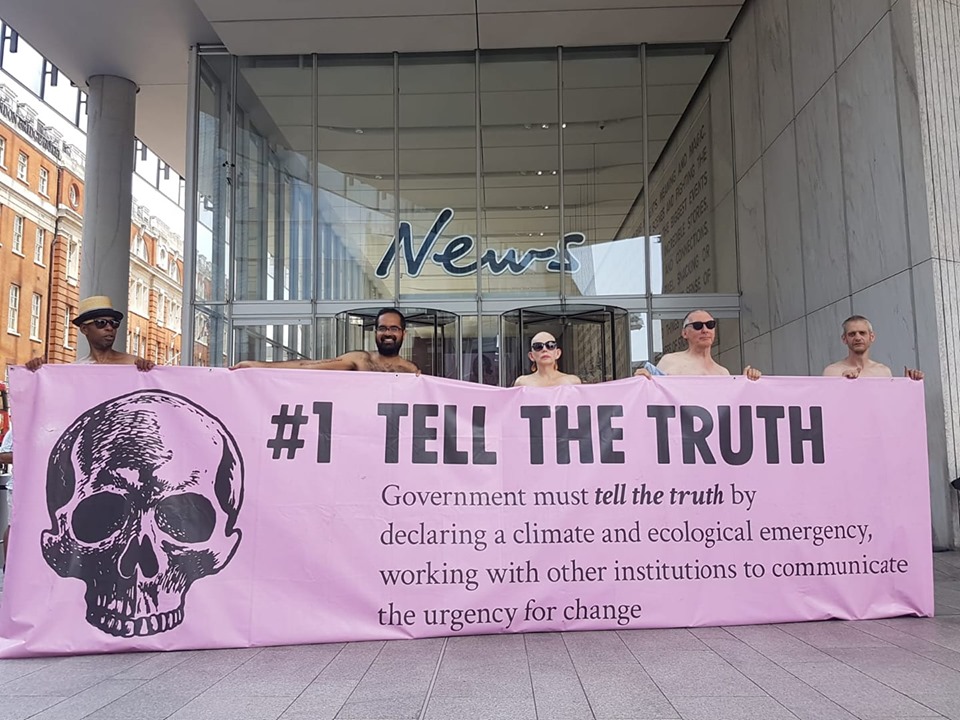
She said “We are the stewards of the very last traces of humanity’s carbon budget. We’re making the sky that we live under, and that our descendants will live under for many generations.”
And I felt a lump in my throat. More than the wildfires in Australia, more than the disappearance of the turtle doves, and more than the rain that falls and falls; this scared me. I’ve found the fear. Now we need to forge the hope. What we do next matters.
Friday fictioneers is a weekly challenge set by Rochelle Wisoff Fields to write a 100-word story in response to a photo prompt. You can find other stories here
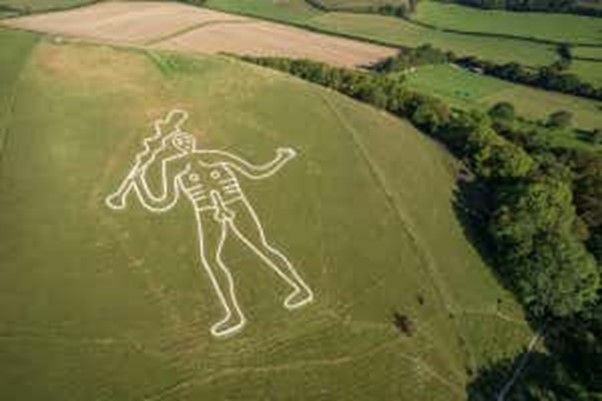
Build a house for god-botherers, would ye? Next to my sheep? I don’t think so. We keep to the old gods here, not yer man on a tree. Aye, I wiss that the King, gods rot him, protects ye. But we’ll show ye.
We dug for three months on the hill above yer kirk. Filled-in the pits with chalk. And tonight we took the grass covers off. When ye awake from yer monkish cells on the morrow, ye’ll see it right enough. A giant man, with a giant cock, waving down at you, all day, every day. Be gone.
The Cerne Abbas giant in Dorset, England, has been dated to around 1000 years old, carved into the hill above an old monastery.
Friday fictioneers is a weekly challenge set by Rochelle Wisoff Fields to write a 100-word story in response to a photo prompt. You can find other stories here
We’ve all heard about stories within stories. But how about stories without (in the sense of outside) stories? I was prompted to consider this when I looked through the reviews of my novel, The Tears of Boabdil. On the surface, this is a story of an undercover cop, Vince, attempting to penetrate a suspected jihadi cell, and manipulating a target into a sexual relationship. It works as a thriller and as an (abusive) romance. And I wrote it so that it could be read that way. What struck me was that the majority of my reviewers gave it this reading.
There is also another possible reading: namely, that the thriller is simply a container for an exploration of what we mean by truth and lies.
The novel suggests that everything Vince believes he knows, including himself, is a story. The cop lives-out a cover-story. As his sanity fractures, the rules of his story world begin to permeate his real world. And that was what I was what really interested me in writing it. There are many clues and motifs that lead the reader to this question. But the narrative about truth, lies and stories isn’t told directly—it’s a conclusion the reader has to assemble in their own minds. I believe that reading is an active process involving both the reader and the writer, rather than the passive consumption of a story.
Beyond these two layers of the narrative, there are probably others, partially hidden to me, at least when I was writing it.
There’s a moral conclusion. Vince pays a price, a terrible price, for his deception. And his lover’s/victim’s life is devastated. No work of fiction can escape this moral (or ideological, if you will) dimension. Every story is built on a framework of beliefs about right and wrong. In comedy, the story is driven by characters mistaking each other’s intentions. In tragedy, characters struggle unsuccessfully against wickedness or with flaws in their own nature.
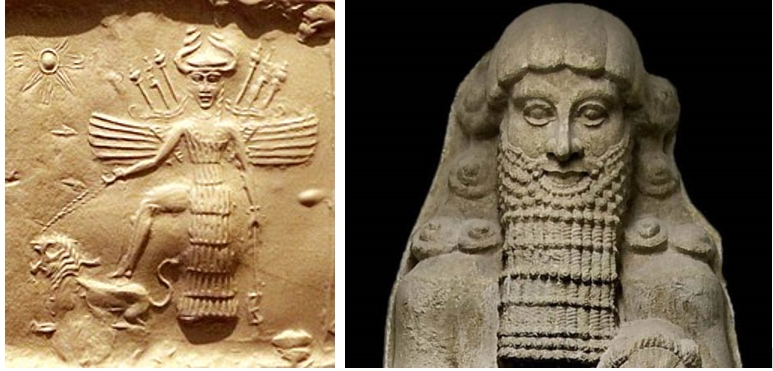
Perhaps there’s another layer, too. In rendering Vince’s mental collapse, I drew on mythology. He is increasingly beset by figures who represent his mother and his father.
The mother manifests as Ishtar, a Mesopotamian goddess, and the father as Malachi, who shares much in common with the ancient hero, Gilgamesh. These may not be simply decorative flourishes added by the author. I may be telling myself something about myself. I say this because I have again turned to mythology to render a major character in the novel I’m working on now. Mythological reference is powerful, not least because it imports through recognizable characters a cargo of other narratives. Perhaps I am drawn to the liminal deities of mythology because they allow me to say something about transgression across the borders between good and evil. Perhaps, I am exploring the idea that goodness is not quite as good as we like to believe, and evil not quite as evil. It is probably no accident that the other mythological character in The Tears of Boabdil is a trickster figure that often manifests as a crow. The lover/victim at one point says “Goodness is a solid whereas evil is a liquid. You need a little evil in you to weather the edges off the goodness, otherwise it cuts the heart.”
So, yes, stories carry fragments of other stories, other meanings, that invite the reader to put the pieces together in new patterns.
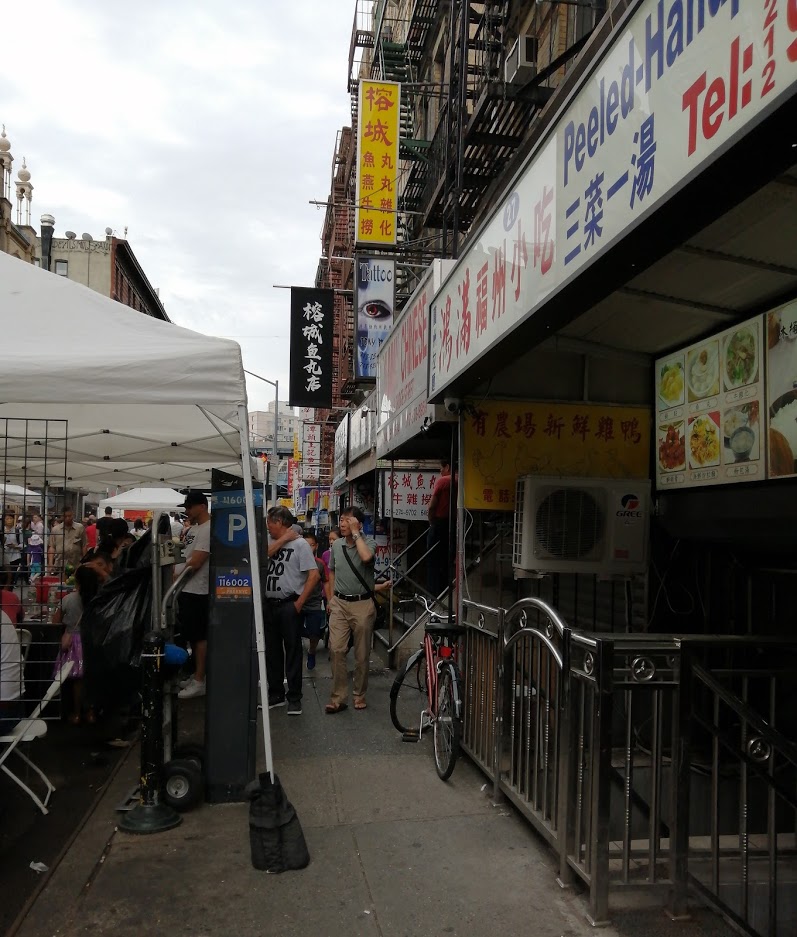
Listen, I want my money back. Yeah, I understand. Sure, the flight was fine. And, yes, the hotel is great, just like the Best Western at home. Just like it. See, that’s the problem. I wanted mystery. You know, exotic. Dragons, maybe. Guys in robes with long beards, and warriors fighting in the sky. But instead, we get to shop. Shop for chrissakes? These people are supposed to be raving commies. Tomorrow we’re going to the Great Wall. I’m betting it’s a mall. This isn’t the adventure I bought.
Friday fictioneers is a weekly challenge set by Rochelle Wisoff Fields to write a 100-word story in response to a photo prompt. You can find other stories here
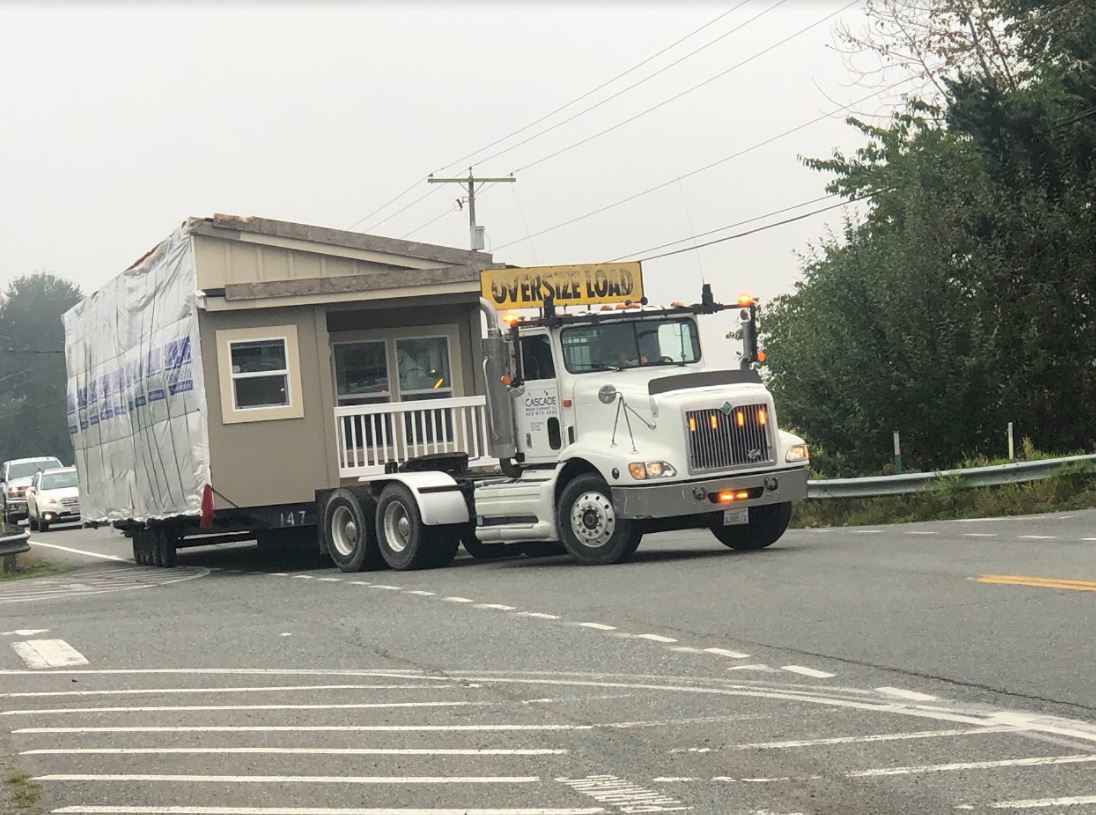
They cut my damn house in half. Sure, I tried to stop them. But you don’t argue with a buzz-saw big as a … well, big as a house. Surprised? You bet. When she said we should split everything down the middle, I hadn’t realised she meant it literally. The dog made a hell of a mess. Divorce is always untidy. I phoned the kids and told them to run, quick.
Friday fictioneers is a weekly challenge set by Rochelle Wisoff Fields to write a 100-word story in response to a photo prompt. This one’s in memoriam for the departed Ceayr. You can find other stories here
Oh, wow! This is so great. It’s just like a disaster movie. Please stop crying. Everything’s okay. I’ve seen this one and I know what’s going to happen. Listen! Listen to me, will you? We have to hike out of here. Giant ‘gators are going to attack us, or maybe pterodactyls’ll swoop out of the sky, it’s hard to be sure so early in. You’ll get buried in a snowdrift or fall down a chasm, but that’s not a problem because I’ll rescue you. And so, you’ll fall in love with me and we will prevail. How cool is that?
Friday fictioneers is a weekly challenge set by Rochelle Wisoff Fields to write a 100-word story in response to a photo prompt. You can find other stories here
Sue, your blog post moved me profoundly. That made me think, and think about my own writing. I would have posted this reply on your blog, but I couldn’t find a comment function.
Your analysis was fearless. I think you share your dilemma with Mao Tse Tung. He wrote poetry, as well as being the father of modern communist China. To his chagrin, he wrote what he considered bourgeois poetry. Like you, he wanted his writing to serve his cause. You write “This is a context so overwhelming that to write as if the crisis isn’t happening, like the billionaire press, seems to me immoral.” Mao finally decided that he was a man formed in the old China and that he could write in no other way. The next generation, he thought, would write the poetry of the new China.
Great moments of history don’t necessarily lead to great works of literature because we are in the middle of them. A considered understanding of what they mean may have to belong to the next generation. If you’re in the middle of a great war, all you can see is the “Naming of the Parts”.
As our ancestors emerged from the First World War, the so-called “Spanish Flu” killed millions more than the guns and the mud of the trenches. And yet, we had forgotten all about that last global pandemic until we faced our own, a hundred years later. My grandparents who had been through those times never once mentioned the Great Flu, though they talked a lot about the Great War.
Perhaps the lesson is we are always passing through great moments of history, though we don’t necessarily see this. The nineteenth century, for example, was extraordinarily turbulent with the social devastation of the industrial revolution, the struggles for the abolition of slavery, for labour rights, for women’s enfranchisement. Some, but not all, of that colours the work of writers like Dickens. And before that, upheaval stretches back through wars, revolutions, pandemics. Shakespeare, for example, wrote merrily through the Black Death.
If we look through that lens, Shakespeare’s pandemic is present throughout his writing (“a plague on both your houses”) though none of it is explicitly about the plague.
Coming back to our times, we can’t help being rooted in the past that formed us, like Mao, even as our feet us march forward into the future. But we can never be the children of that future. We can’t write about that future, because we haven’t seen it. Of course, writers do imagine the future. But the future each age imagines always looks remarkably like its present. The future imagined in the science fiction I grew up was really the Cold War of a present dominated by the threat of nuclear annihilation and the ideological contention of two great blocs.
We can’t even write fully about the present, because we don’t fully understand it. Only when it becomes the past, and historians have picked over its bones, will writers have the tools and the distance to grapple with it.
But everything we write is suffused by the liquor of the present and the future it threatens or promises. Whatever we write about, even pulp romance, will steam with what is cooking underneath. I think of it a bit like Leibnitz’s monads, or like a hologram, in which the shadow of the whole is present in every part of a thing.
I fear writing activist literature. This is not because I think “art” is a higher truth. I believe every work of fiction is inescapably political, each with its unstated and unacknowledged moral calculus about who should be praised and who should be blamed. I fear writing activist literature because of the likelihood that it will be bad literature and, also therefore, bad activism.
But I do recognize that everything I write is suffused with the ideas of right and wrong, relevance and irrelevance, that have been shaped by my society, my upbringing and my activism. In writing my novel, The Tears of Boabdil, I grappled with some of the issues you mention in your post.
All the characters, bar two, are of British Asian Muslim heritage. This is not my heritage, and so writing these characters caused me some effort and considerable research. The novel deals with issues of truth and lies, of necessity and abuse, of goodness and wickedness. It’s not intended to be a comfortable or comforting read, but to raise questions about freedom and security. I’m sure it’s shaped by being a man, being white, being non-Muslim, and by being born into an era whose fears and hopes were rather different from today. But it is nonetheless, I think, a book suffused with today’s issues without necessarily being about them.
The novel I’m working on is, in some ways, informed by the ecological crisis without (probably) ever being about it. It’s about boundaries and about our illusion that we can create zones within which we’re “safe”. Perhaps, I hope, the readers will come away with a changed understanding of today’s lexicon of “safety” and “tipping points”.
I’m so glad you’ve found a route through your maze, though of course the bull always lurks at the centre. My message, and perhaps yours, is that it’s possible to write in the midst of great events because we are probably always in the midst of great event. Whether we write about them explicitly or not, they will poke their heads up, distorting the net of our words into recognisable shapes.
In all the vastness of the universe, we are alone. Three millennia of searching and not a sausage, not even microbes. Theory says life should be common. So, why? Why does no-one answer us?
The solution, I think, lies in dark matter. This, too, we sought for thousands of years without explanation. Two mysteries? Or, maybe, one?
The only remaining possibility is that dark matter is the gravitational effect of adjacent universes.
Yesterday, we finished the test—collided two galaxies together, then four, then eight. If there’s anyone in the universe next door, maybe they’ll hear our message and tap back on the wall. The reply should be “sixteen”.
Friday fictioneers is a weekly challenge set by Rochelle Wisoff Fields to write a 100-word story in response to a photo prompt. You can find other stories here
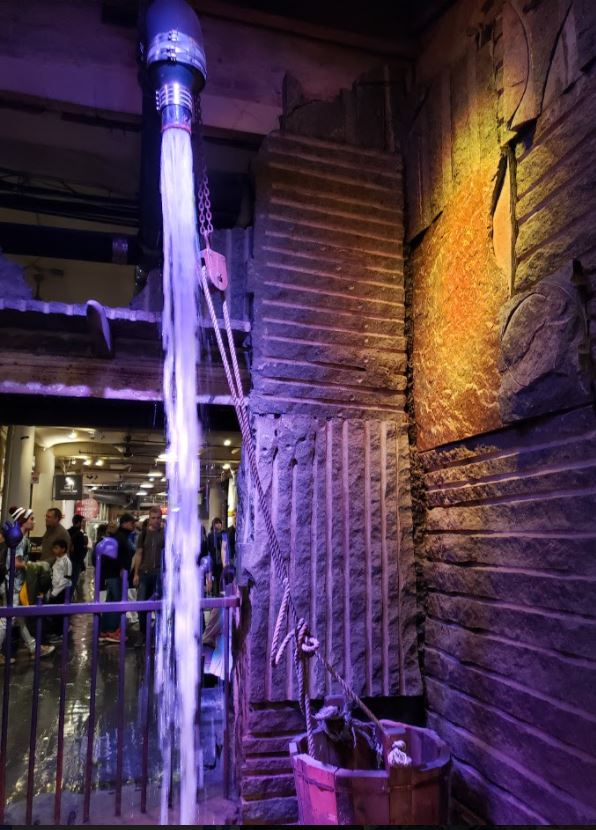
M’lud, it went like this. The cascading water turned the wheel. The wheel cranked the rope. I steadied the rope, which raised the barrel of bricks.
Unfortunately, the water ran out. The barrel was now heavier than I. It started down, jerking me off my feet.
Halfway up, I met the falling barrel, receiving a severe blow on the shoulder. When it hit the ground, the bottom burst, releasing the bricks.
I was now heavier than the barrel. I started downwards. The barrel was coming up, so I swung through the window like an action hero. Mrs Cuthbertson was very surprised. So too the man who wasn’t Mr Cuthbertson.
.
With admiration for Gerard Hoffnung. Friday fictioneers is a weekly challenge set by Rochelle Wisoff Fields to write a 100-word story in response to a photo prompt. You can find other stories here.






 Neil MacDonald Author