75. The Sunday Times Prize – tempting the muse with breadcrumbs

It’s worth £30,000 to the winner. At £5 a word for a 6,000 word story, the Sunday Times EFG Award is the richest prize in short story writing. Hilary Mantel was only a runner-up in a previous year’s competition. So you might say it’s hubris for a tyro writer to enter such a competition. And you might be right. But I’m doing it anyhow.

Partly, I’m doing it because I can. Last year, I would not have been eligible. Entrants must already have been published by an established house or magazine. This time last year I hadn’t reached that mark.

Partly, I’m doing it because there’s a story I’m struggling to tell, and the competition gives me a spur to doing it. Assuming (reasonably) that I don’t win, at least I will have written the story.

The idea responds to my plea for new stories about post-Brexit Britain. My first attempt at writing read so much like a rant that one of my writing friends didn’t even realise it was supposed to be a story.   So I tore the thing apart and started again. This time, I created a version with which I’m happier.

Land Girl is a tale of Margaret and Malina. Margaret is a British pensioner with traditional working class values, but also a strong streak of prejudice against the immigrants who she feels threaten her way of life. Malina is a Roma immigrant and Margaret’s carer, threatened by racist abuse. Margaret loves music and dance. Malina’s singing is beautiful. Finally, this brings them together. Allie, a community activist, is the catalyst for challenging Margaret’s attitude to immigration. The political rant is now buried in one small section and narrative is now foregrounded.

Alright as far as it goes – a tale of a decent person overcoming prejudice and recognising the humanity of a foreigner. But it’s not a winner. Friends’ comments have helped to improved and polished it (thanks Derek and Paula).  I’ve checked that there is a narrative spine that drives the story forward, and short ribs of added tension that add depth – a technique I described in an earlier post. I’ve looked for opportunities to create repeating motifs that reflect each other in the hall of mirrors. None of this is enough.

Cordoba

What else can I add?  I wonder.  I know I need another narrative axis at right angles to the first. A hall of mirrors may not only reflect, but also distort and change perspectives. I’m still searching for what that right angled theme may be.  My intuition is that it may be to do with music.  Or with land and maps. Nothing is gelling yet. You can’t always tempt the muse down with breadcrumbs.

Friday Fictioneers – Leaving

the-boat-and-miss-liberty
PHOTO PROMPT © Jan Wayne Fields

Cranes march across the horizon like a slur of notes, ending in a deformed quaver. The last note might be somehow iconic, but the sun-dancing waves create a mask of light and Pascal is unable to recognise the piece. He clutches the scuffed violin case to him, lest it and his fortunes tumble into the pitching water. The ocean is very big. Yet he is also very big.

Chattering passengers crowd the rails, counting down their time to arrival. Pascal’s clock continues forward, the days elongating since leaving Elise.

His heart breaking, he shuffles forward to be processed.


Friday fictioneers is a weekly challenge to write a 100-word story in response to a photo prompt. You can find other stories here.

Friday Fictioneers -The Ambassador

sheep-and-car
PHOTO PROMPT © Sandra Crook

The car jolted on a pothole, and the Ambassador feared he might lose his excellent lunch. The trouble with the poor, he thought, is they have such bad roads.  He made a note to work the conversation over dinner.

Hernan, riding shotgun in the front, fretted. “Why aren’t you taking the expressway?”

“Calm yourself,” said Simon. “We’ll return that way, so the Ambassador gets to his cocktail party. The route out offers sensuous contact with poverty. If he doesn’t get shit on his shoe, he won’t feel the adventure. And without that, he won’t fund the project.”


Friday fictioneers is a weekly challenge to write a 100-word story in response to a photo prompt. You can find other stories here

Friday fictioneers – Parting

back-ally1
PHOTO PROMPT © Jan Marler Morrill

The afternoon sprawled like a lazy dog in the little town. Sweat trickled down my back as I raced from the sun-scoured piazzas to the shade of the whitewashed alleys. She was not there. Had I imagined her, loping tall and bronzed into the taverna, swinging a leg over the chair beside me? Was our perfect closeness a dream?

At the harbourside, the taverna keeper passed me a message scrawled on a scrap of paper.

Some moments are so perfect they deserve to be protected from life’s corrosion.

Love

Philippa.

The ferry hooted as the mooring ropes fell away.


Friday fictioneers is a weekly challenge to write a 100-word story in response to a photo prompt. You can find other stories here


Friday fictioneers – The Fury


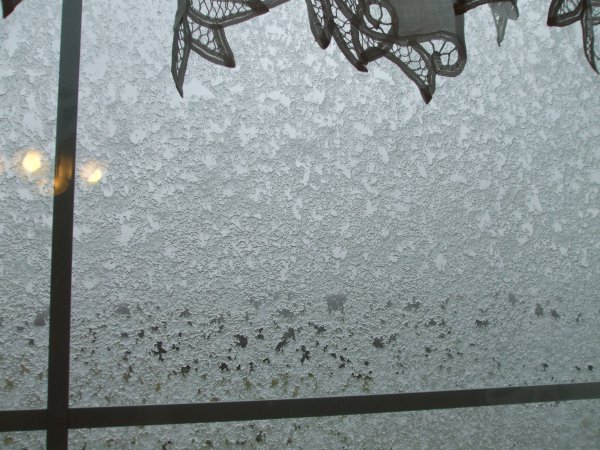
ice-on-the-window
PHOTO PROMPT © Rochelle Wisoff-Fields

The heavy door blew-in. A fury of snow roiled with Olafur inside. He forced shut the door, and the wind howled its frustration.

“Come in neighbour,” said Jon, pouring a steaming cup of coffee. He waited while Olafur shucked off his greatcoat and cut the rime from his beard with a knife. Then he asked. “What in Odin’s name possessed you to cross the glacier in such a storm?”

Olafur warmed his hands around the cup, eyes rolling. “She’s back. She’s behind me.”

Jon turned to the opaqued window, where Olafur’s stare rested. Against the whiteness, a diffuse light mounted.


Friday fictioneers is a weekly challenge to write a 100-word story in response to a photo prompt. You can find other stories here

74. Granddad! What have you done?

We have never needed cultural workers more in Britain. We no longer know who we are. Three days ago, the UK voted in a referendum to leave the European Union. It was not the outcome I had voted for. But now we must get on with what comes next.

The result was many things, and all of them challenge the political order that has characterised the country since the Second World War. The young voted conservatively for the status quo, while the old voted radically to leave the EU. The rich voted for Europe, the poor voted Out. Scotland and Northern Ireland voted Remain, and England and Wales voted Out. The political class got a thorough kicking in England and Wales. Most of the political class had trusted that dire warnings of economic catastrophe would frighten people away from going it alone and leaving. After all, the tactic had worked in the Scottish independence referendum two years earlier.

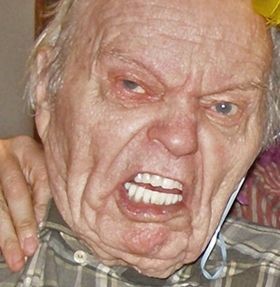
angry granddad

But voters, particularly those over 45, delivered a rebuke. It’s not economy, stupid, they said. It’s immigration. For many, the referendum wasn’t even really about the EU. It was a cry of anger and outrage against the politicians who weren’t listening to them. The Prime Minister has already been toppled, and the position of the Leader of the Opposition is under threat. It’s not clear today who’s running the country.

The young, on the other hand, voted overwhelmingly to remain in the EU. And they’re mightily pissed off that the generation who benefitted from post-war prosperity, free health care, free university education and good pensions was now denying them the same opportunities. The country is fragmented, almost down the middle. The Britain that woke up to the result on the morning of 24th of June is a country profoundly uneasy with itself.

These facts are enough to make it clear that culture is at the heart of what happened. And, equally, culture is at the heart of what must come next. Because the result poses the immediate question of what it now means to be British – what kind of country do we want to become?  And here is the problem. Nobody on either side of the referendum campaigns had bothered to articulate an answer to this question. They didn’t even try to explore it.

I’m struck by how different this is to the Scottish referendum on independence two years earlier. Though politicians kicked off the debate in Scotland, the people took it out of their hands. Writers and artists, thinkers and musicians debated what it meant to be Scottish and what it meant to be British. Scotland began that campaign as a tartan-wearing, bagpipe-playing, ship-building Ruritania, descended variously from Walter Scott and the early twentieth century labour movement. It ended the campaign with a new and confident sense of itself as a modern, outward-looking socially progressive European nation.

England experienced no such political education or cultural ferment in the course of this referendum. The rappers and playwrights, poets and thinkers whose job it is to listen to the rhythms of the street never got heard. Politicians’ rhetoric and dodgy statistics drowned out any Scottish-style self-examination. The culture workers never got into harness.

And the hopes of the people who voted for Britain to leave the EU seem destined to be dashed. “Now we’ll get a better life and good working conditions,” I heard one man say. “A better health service without foreigners who haven’t paid-in,” said another. “Now we can stop the Muslims coming here,” was heard too.

Of course, this anguish has nothing much to do with the EU. The democratic deficit these voices are pointing to is in Westminster, not Brussels. They can’t get a well-paid job or a decent place to live or a speedy hip operation in hospital because successive British governments haven’t invested enough in these things. But the politicians aren’t listening because it’s always easier for them to scapegoat the foreigner. When a people are searching for identity, hatred and fear are always dangers.

The hopes of those who voted Leave are not, in the main, expressions of visceral racism. They have more to do with an ageing generation who don’t recognise the world in which they now live. What they express is anxiety about their status. This explains the seeming paradox of the old being radicals and the young being conservatives.

We have to put in some serious cultural work, and debate who we are and who we want to be. It isn’t impossible to make the referendum result the beginning of a real and progressive change. But only if we write ourselves a new story. If the politicians aren’t listening, it lies in our hands to make new politicians. If we don’t do these things, Britain risks becoming a very nasty, unequal, small-minded place. This is a trend with echoes in many other parts of the world.

And, when I say Britain, it isn’t even clear there’s going to be a Britain to answer these questions. Scotland and Northern Ireland both voted Remain. The Scottish government has warned that Scotland was being taken out of the EU against its will by the English.  In Northern Ireland, the nationalist community is arguing for reunification with the Republic of Ireland.

The need for a new story has never been greater. Oh, Grandad! What have you done?

Friday Fictioneers – Journeying

100_7227-1
PHOTO PROMPT © Rich Voza

I’m going to my death. What am I doing?  Patricia wondered. I’m only an ordinary doctor. What do I know about treating refugees?

The passenger in front abruptly lowered his backrest, compressing Patricia’s knees.

My legs are too long to be doing this, she thought. Numb. Her legs were numb.

Numbness washed her mind.

“Beef or chicken?” The attendant’s banal question and the squeak of his trolley was numbing. On the move, cares melt away. There is neither past, nor future, just the speeding instant of the present.

Patricia relaxed, as Syria sped towards her at 800 kilometres per hour.


Friday fictioneers is a weekly challenge to write a 100-word story in response to a photo prompt. You can find other stories here.


73. Progress

I’ve been lax in reporting on where my winding path as an author has led. So here’s a brief update on my story … whatever its ending turns out to be.

snakes and ladders.jpg

Apart from writing, of course (how easy it is to forget that central focus!) my preoccupation has been deciding which of my existing novels to pitch.  I covered this in a previous post, describing how I’d outsourced the problem by sending both books to a literary consultancy for critical reports. The reports are back.

The consultant made some detailed comments, not least about my tendency to over-punctuate and slips in point of view. But the main conclusion is:

“The first thing that is clear to me, from this MS and also your potential submission chapters of The Golden Illusion, is that you are well capable of writing a commercially successful novel. That said, I am not entirely sure that A Prize of Sovereigns is that novel … Of your two manuscripts, and with the caveat that I have only seen a few short chapters and a synopsis, The Golden Illusion is your more intriguing and original story.”

A disappointment, because I still believe A Prize of Sovereigns to be the better book. But I was thrilled that he liked The Golden Illusion. Even better, the Director of the literary consultancy, Cornerstones, has asked the see the revised chapters of Illusion. Cornerstones, a leading consultancy, act as scouts for agents. I sent it off to her today.

The decision to spend my money on the reports, rather than on attending the Winchester Writers’ Festival this year, may have paid off.

Updating other stories – I was not short-listed for the Costa Short Story Award. But the story I submitted has been accepted for the forthcoming issue of Structo. This literary magazine is one I’ve been trying to get into for about a year. Since they have an acceptance rate of only around 3%, this is an achievement of which I’m proud.  I did not win the crime writing competition I entered.

Onwards!

Friday Fictioneers – Curiosity

OLYMPUS DIGITAL CAMERA
PHOTO PROMPT © John Nixon

Young Jonathan loved his collection of bird eggs protected by the nest of cotton wool. Later he was allowed a scalpel, and laid bare the tracery of blood vessels, the continents of organs.

“He loves to explore how things work,” his Dad said,

As an adult, Jonathan won a research grant.

The breakthrough was accidental – the project intended to combat mice infestations. The introduced sterility gene revived the inert mouse-pox virus vector. Seventy per cent of the experimental mice died.

“If we tweak these base pairs,” Jonathan said, “we could create 100% lethality.”

The men from Defence were most interested.


Friday fictioneers is a weekly challenge to write a 100-word story in response to a photo prompt. You can find other stories here.

72. How many stories are there?

It’s an old question. The basic idea is there are only a certain number of stories we can tell and everything is a retelling. The most common answer to the question, deriving from Arthur Quiller Couch and Christopher Booker, is seven basic stories. Aristotle argued there were only two  – comedy and tragedy.  George Polti found thirty-six. Joseph Campbell, with his idea of the Monomyth, famously plumped for one – the “Hero’s Quest” so beloved of Hollywood. Research I did into the narrower theme of stories about the future, suggested there were eight.

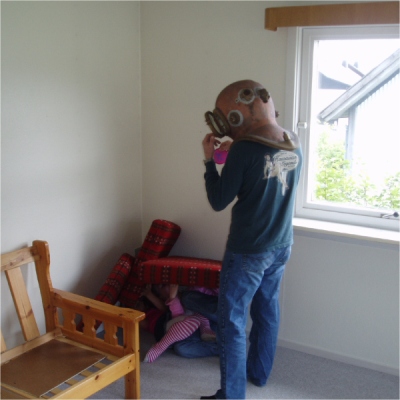
I was struck again by this question this week doing Friday Fictioneers. This is a community of over 100 writers who every week write a 100-word story in response to a photo prompt. The curious thing, reading the entries by other writers, was how many of them had written variations of the same story. Before I tell you what that the Ur-Tale is, here’s the photo prompt.

monsters-dmm

More than a quarter of all the 75 writers (at the time of writing this post) interpreted the prompt to create stories around a theme I call Scary Daddy. Basically, Daddy (or some other adult) puts on a diving helmet and mock-scares the kids. About a quarter of the tales have variants and twists. This one, by The Reclining Gentleman, is one of the more subtle, where the Scary Daddy motif is used as a device to explore loss.

Monster by The Reclining Gentleman

It’s always the same dream.

I am hiding behind the cushion sanctuary I have built in the conservatory; curled into a squealing nine-year-old ball, legs coiled inside my skirt. Dad, on leave from the sub, is searching for me, chasing me. He’s wearing that old diving helmet, the one that terrified me, and he’s a roaring sea monster. He finds me and as he lifts the helmet, I wake. Relief engulfs me.

For a moment.

Then I recall the day the commander came to the door. Mum, her voice strained and shaking, sending me upstairs.

And then, always, I remember.

Two explored the theme of abuse.

What could explain the recurrence of the Scary Daddy story? Perhaps a clue is in the fact that four of the nineteen stories on this theme have the word “monster” in the title. The image obviously suggested play and, of course, a frisson of fear is a good way to add edge to a story. Eight (non-Scary Daddy) writers also adopted monster-related horror and sci-fi themes. A creature without a face is always scary, even when the fear is playful and reassuring. One of the stories is titled “Mask”. Helmets and masks strip us of our individuality, though masks may also unite us through rituals with a world of spirits and imagination. Perhaps that’s where the archetype lies, drawn on by so many of this week’s Friday Fictioneers. One of the Scary Daddy writers commented that this is what fathers do.

There were, of course, other recurrent themes. Eight, including me, saw the prompt as an invitation to enter the world of children’s play and imagination.  (A ninth used it to explore adult fantasy play, but that’s another thing entirely). Eight, as I already mentioned, wrote sci-fi or horror stories. Nine used the diving helmet in thrillers, some quite grizzly. Seven wrote family tales. Five used the helmet as a device for character studies. This one by JWD is a great example.

The Voices by jwdwrites

It was after the fall the voices began. Not just English, so many languages it was hard to understand anything.  “It’s like this plate in my head is a damned antenna and I’m picking up long-wave!” Ray joked.

Before long, Ray had stopped joking, stopped playing with his kids and stopped talking to his wife. There was just so much damned noise!

Then he found the diving helmet. When he wore it, there was silence in his head.

He wore it everywhere.

Then they came for him.

They took the away the helmet, and locked him up…

…with the voices

Of the remaining stories, three were humour, three dealt with death (also a recurring theme in Friday Fictioneers over the weeks), two dealt with hiding, and the remaining five were unique in their themes.

So, I don’t know how many stories there are. But probably fewer than we think. Whether this is really because we can’t tell other stories, or whether it’s an effect of our culture only presenting certain themes, I leave you to judge.