Friday Fictioneers – Inside

monsters-dmm
PHOTO PROMPT © Douglas M. MacIlroy

Inside, the diver’s helmet is a head. Inside that, a dragon and a plan of a spaceship, and a shipwreck. Fronded seaweed curls lazy in the current, merfolk tumble and dance. A sunken treasure chest with bands of iron lies beside a starfish.  He reaches. From deep in the rocks an octopus tentacle, pink and sinuous, lashes out.

Outside, a hand lashes out, grabbing the slinky tentacle.

“How many times have I told you to leave my stuff alone,” a shrill voice cries. “For God’s sake, that’s my dil ….. igence.”


Friday fictioneers is a weekly challenge to write a 100-word story in response to a photo prompt. You can find other stories here.

71. World-building

worldbuilding

Sure you can have elves and dragons, time travel and aliens. Myth and alternative technology are part of world-building in fantasy and sci-fi. But the real alternative worlds are inside people’s heads. To take the reader emotionally into a fictional world, the writer must show us how the main characters understand this world. Every world in fiction is a mentality – a way of understanding, a means of making judgements, a catalogue of right and wrong. To build a world, we must build our characters.

Consider, for example, an old jalopy. To one character this might just be a heap of rust, a shameful sign of poverty. To another character, the same car might be a challenge, a promise of something to be restored, a long summer full of happy activity. Different characters invest the same landscape and the same object with a multiplicity of significances.

I’m interested in how people create meaning in their world and negotiate shared meanings with others. And I was stuck at a fulcrum chapter in the book I’m writing, The Tears of Boabdil in how I was to achieve that with my main character. The novel is a braided narrative (thanks, Paula, for reminding me of that term). It combines a gritty police tale of an agent infiltrating a jihadist group, a forbidden love, and the magical power of narrative. In this chapter, the undercover police agent meets his handler. I needed to find a way of showing that the character inhabits a world not quite like our own, and I was struggling to express his rules.

The answer came from an unexpected source – a book I’ve been reading on the meaning of Palaeolithic art by Jean Clottes (What is Palaeolithic Art). Whether Clottes, a world expert on the cave paintings of southwest France, is right or wrong in his interpretation I don’t know, and I don’t really care. His schema was captivating, and perfect for my character.

  • Connectedness and fluidity. Everywhere and everywhen are one. Things and events can metamorphose into each other. Signs are important.
  • We tend to see individuals as members of general categories (cats, women, vehicles). But my main character responds to the particularity of things, so that a sleeping cat is a different thing from a stalking cat. He will later on experience the multiple aspects of his quarry – jihadi, respected teacher, doting father – as different entities
  • The world is permeable to the effects of supernatural forces and these forces can be appealed to for their blessing
  • The identity of a person or thing is the story we tell about it. Images have an affinity with the thing they portray and can change reality.

And there, I had the framework of my world. If we allow ourselves to be open to the permeability of things, the answer is out there. Now it’s a somewhat scary craft challenge to see if I can match up to Tolkien’s description of the goal of world-building as creating immersion or enchantment.

Friday Fictioneers – War

photo-by-piya-singh-bittercharm-6
Photo prompt. Piya Singh

Reuven watched in horrified fascination as Tolbert’s white buttocks heaved between the girl’s legs. She struggled, and Tolbert slapped her face, then pinned her arms to the table. In moments it was over.

“Your turn, mate,” he said cheerfully, pulling up his breeches.

In an agony of shame, Reuven fumbled with his laces. He didn’t want the girl. And yet in war you could do anything, take anything. He wasn’t hard. But he didn’t want his friend to make fun of him.

“Come on, lads, gotta get this grub back to camp,” Carnvel called from the door.


Friday fictioneers is a weekly challenge to write a 100-word story in response to a photo prompt. You can find other stories here.

70. Developing an author platform

We aspiring authors are constantly advised to develop an author platform. In fact some publishers make it a requirement. So what is an author platform, and how do you make one?

A platform is a means for you to reach out to a target audience. In part, it’s the main thing about you as a writer – your published work. In part, it’s your profile on social media – whatever form of it appeals to you, blogging, tweeting, Facebook. Goodreads. I blogged about this in my tenth post, and I decided to take a re-look at what had worked for me on this blog.

author platform.png

When I wrote that first post, the blog had been going a month. It had received 90 views from 30 visitors, and had garnered three followers. Now, a year later, I’ve just passed 1,600 reads, with 588 unique visitors. As you can see, it’s a slow process, and, though slow and steady, the progress is not stratospheric. So it’s a good idea to get started and have your platform in place and growing before you’ve published your first book.

From May 2105 to February 2016, the blog chugged on, bumping along the bottom. On average, every month it attracted around 53 views from 23 visitors. Around three new people followed me every month. Then it all changed in March 2016. Average monthly views went up around seven-fold to 383. Each post is now read by 58 people, instead of the previous nine. Visitor numbers rose over four-fold to 119 a month. And follows more than doubled to eight a month. What was the secret? I joined a network, Friday Fictioneers, built around a challenge to write a 100-word story in response to a photo prompt every week.

blogstats

The boost came from two elements: firstly, I was posting stories; and secondly I was connected to a network of around 150 people who write for the challenge every week. So I was buying into an established readership. It’s not magic. Some of the new visitors are reading other blog posts as well as the stories. Views of non-story posts almost doubled from an average of 53 a month to 98. While it does promote my visibility, it certainly doesn’t allow me to post stupid messages like “follow me” or “read my book”.  Though the links are there on my site, only nine new people have clicked through to my publications.

I can’t suggest what will work for you. It will be different for every writer. But the general message is probably

  • However you start your platform, take it slow and give it time
  • Link up with existing networks

Friday Fictioneers – Beside the seaside

waves
PHOTO PROMPT © Rochelle Wisoff-Fields


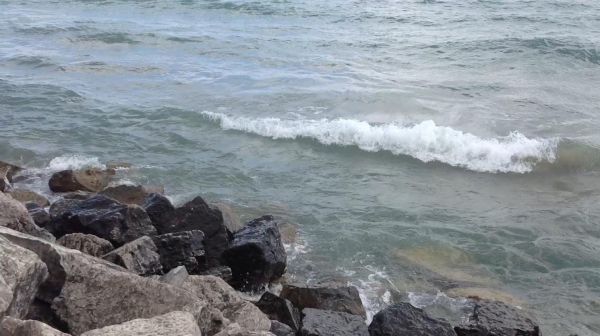
Brighton shingle crunching beneath toes, ice cream melting, deckchairs flapping in a sudden wind. Seaside holidays populated Vince’s memory of childhood.

This holiday was different, illicit, thrilling. Away from her family, he would finally lie with Ayesha. The one bed in their apartment offered a shocking promise.

Her transformation created the real shock. She entered the bathroom wearing hijab and enveloping abaya, and emerged in a wraparound floral skirt, her nipples visible against the T-shirt. She was beautiful.

“Don’t you feel undressed, without your normal clothes?” he asked.

“Those aren’t my clothes,” she laughed. “That’s my sexual Chemical-Biological Warfare suit.”


Friday fictioneers is a weekly challenge to write a 100-word story in response to a photo prompt. You can find other stories here

Friday fictioneers – Waiting

jhc7
PHOTO PROMPT © J Hardy Carrol

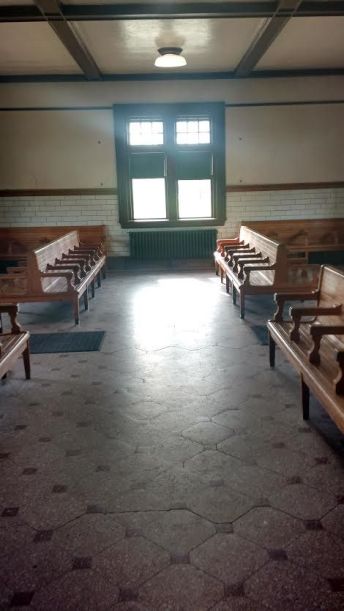
Waiting is the mother of change.  Zami reached to scratch his beard but touched new-shaven flesh. Change, he nodded. No longer bearded – no longer Zami, in fact. After testifying against Rashid, he could return to being Vince. At least until he was re-assigned. He shifted in the seat, the wood aching his buttocks. These benches asserted the court’s grandeur, offering little comfort.

The swing doors opened and Zami’s heart lurched. Ayesha was here to support her brother. Darling Ayesha. Her glare poisonous, she pointedly sat on the other end of the room. Never again!  Zami slumped and resumed waiting.


Friday fictioneers is a weekly challenge to write a 100-word story in response to a photo prompt. You can find it here.

69. The art of descriptive writing

Some simple tips can make your prose more vivid. This week it was my turn to lead an exercise in my writing group on the elements of description.  This what I said:

We use descriptive writing to describe a person, place or thing so that a picture is formed in the reader’s mind. This connects to the difference between showing and telling. When a writer tells something s/he merely communicates what happens. When s/he shows, the reader is drawn into the scene.

There are four main things to remember for good descriptive writing.

Use vivid sensory details

sensory

  • Use precise language. Avoid general nouns, adjectives and verbs. Use specific words and strong verbs to build the picture. For example, “he scrambled up the scree” is more powerful than “he ran up the hill”.
  • Make use of images, similes and metaphors.
  • Use all the five senses – sight, touch, smell, hearing, taste. Practice just observing quietly.


Less may be more. When describing a landscape, you’re trying to portray it comprehensively and precisely but not necessarily exhaustively.

less_is_more

  • Think about what’s important. A telling phrase to encapsulate a scene or a character can be better than a paragraph. For example. For example, this description of a distressed soldier in a story I wrote: “As he spoke, he drank, like he was firing and reloading a rifle, technically, methodically.”
  • Hemingway, famous for sparse descriptions of his characters, held that “action is character” and that “dialogue is also action and a projection of character”.


 It’s not just exteriors. Link to feelings too.

chair

  • You’re not simply describing a landscape within which your characters move. Allow the physical and emotional worlds interact. Description is more powerful when you show the gears turning inside those psyches.
  • Leslie Jamison advises “If you’re describing a chair, let your mind play with all the different things that chair could mean to various characters. Whose feelings were hurt in that chair? Who was betrayed in that chair? Who broke into his estranged father’s property to chop down the tree whose wood was used to build that chair?”


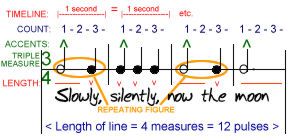
It’s not only about the words. Think, like a poet, about rhythm. The sound and rhythm of the words can capture a description.

rhythm

  • For example, look at how the rhythm captures the soul of these two ships in John Masefield’s poem, Cargoes:

Quinquireme of Nineveh from distant Ophir,

Rowing home to haven in sunny Palestine.”

And

Dirty British coaster with a salt-caked smoke stack,

Butting through the Channel in the mad March days.”


Exercise

This exercise is a technique for observing quietly.

Sit quietly for 5 minutes. Try to clear your mind. Don’t judge, just observe. DON’T WRITE DURING THE OBSERVATION PERIOD. Then write down, for each of the senses, the things you saw, heard, felt, smelled and tasted.

When you’ve done that, take another five minutes and try to come up with some great words or short phrases than would summon up a few of those things.

Friday Fictioneers – Blue is the colour

arena
Photo Prompt CEAYR

Blue is the colour of fear. That’s how it’s been ever since I saw the turquoise mother ship hovering over the city. I hid my face against Mum’s breast, not comforted by reassurance it was a concert hall. I’d seen the dark blue anti-grav beams, and I knew not to look into the light.

Red is the colour of greed. Well, of greed and anger. But the two go together, don’t they?

At twenty-seven I met you, haloed in forest glow. Green is the colour of safety. We lived green and happy until our son’s birth.  He was ultramarine.

Friday fictioneers is a weekly challenge to write a 100-word story in response to a photo prompt. You can find it here


68. Anti-semitism and anti-sense

I don’t usually blog about political events – I have other outlets for my rants.  But as a paid-up member of the wordcraft folk, I’m going to break the tradition to comment on a storm in teacup over words. Words and their precise use are my business.

words

Readers outside the UK may not be aware that over the past couple of weeks there has been a flurry of accusations of anti-semitism in the opposition Labour Party. A Labour Member of Parliament, Naz Shah, and a prominent member of their National Executive, Ken Livingstone, have been suspended by the Party. The leader, Jeremy Corbyn, has been accused of foot dragging.

Let’s be clear first, what anti-semitism is and is not. There is no agreed definition. But the US State Department in 2005 identified it as “hatred toward Jews—individually and as a group—that can be attributed to the Jewish religion and/or ethnicity.”  There are some for whom it is convenient to label criticism of Israel as anti-semitic (not least, the Israeli government). But the European Monitoring Centre on Racism and Xenophobia said clearly in 2005 “criticism of Israel similar to that leveled against any other country cannot be regarded as antisemitic.”

Nothing that either Ms. Shah or Mr. Livingstone said fitted the definition of anti-semitism. Ms. Shah did criticise Israel. She published a map, superimposing Israel on the outline of the US, jokingly proposing the Israel/Palestine conflict could be resolved by relocating Israel to the US. If you want to see the joke, you can find it here . The website belongs to Norman Finkelstein, a Jewish American political scientist. He published the map, later shared by Ms. Shah, because he found it funny. Finkelstein, the son of parents who survived the Nazi concentration camps, has said he finds the Labour Party row “obscene”

Mr. Livingstone made a bizarre and ill-judged attempt to defend Naz Shah. He claimed (correctly) the Nazis soon after coming to power collaborated with Jewish organisations to relocate German Jews to Israel.

It’s clear that the statements of both politicians have offended many Jews. But that’s not really the point. Being offensive doesn’t make them anti-semites. There is, within limits, a democratic right to cause offense. The furore has been manufactured. Some suggest that it is an attempted coup against Corbyn’s leadership of the Labour Party. Certainly it is odd. And even odder that the Labour leadership has not dismissed the claims of anti-semitism with the derision they deserve. Someone has put the frighteners on.

Israel is a state, and like all states, is open to legitimate criticisism. Criticism of the Kremlin doesn’t make anyone an anti-Russian racist. It may be offensive to some Israelis to say Israel is a racist state, but Israelis are not entitled to throw the label of racism back at the critic. Criticism of Israel could only be meaningfully described as anti-semitism in two special cases. Either, a denial of the right of the Jewish people to self-determination with their own state. Or holding the Israeli government to standards that apply to no other country.

Neither of these tests is met. Please, let’s use words appropriately. The ellipsis that equates anti-Zionism with anti-semitism is a perversion of language, sense, and democracy.  It is also politically dangerous in hiding the real problem of racism. In 2005 the Chief Rabbi told a Parliamentary committee “If you were to ask me is Britain an antisemitic society, the answer is manifestly and obviously no. It is one of the least antisemitic societies in the world”. There is clear evidence that anti-semitism has been on the rise in the UK since then. However, most such attacks and incidents are associated with the far right, not the left. At the same time, there has been a rise in attacks and hate speech directed at Muslims. The Muslim community has not succeeded in holding British society to the same standards of concern as has the Jewish community.

We need to concentrate on the real challenge of rooting out racism and xenophobia from our societies, and prevent squabbles between rival political party factions cloud the issue.
Friday Fictioneers – Missing

grey-day-with-pigeons-roger-bultot
PHOTO PROMPT © Roger Bultot

A grey day, cloud lowering, lines of pigeons brooding on the wires above the blank eyes of empty windows. A glum prospect Harve had viewed a thousand times as a child. Yet something was missing, something not right about the photo.

“What is it? What’s different?” he asked Peter, but Peter couldn’t answer, He had never visited Harve’s home town.

Perhaps it was simply that the picture didn’t capture the bicycles, the laughter, the hopscotch, and Mrs. Brown’s washing hanging from her window. Images and memories are different.

But you know what’s missing, don’t you? Will you ever tell Harve?


Friday fictioneers is a weekly challenge to write a 100-word story in response to a photo prompt. You can find It here