73. Progress

I’ve been lax in reporting on where my winding path as an author has led. So here’s a brief update on my story … whatever its ending turns out to be.

snakes and ladders.jpg

Apart from writing, of course (how easy it is to forget that central focus!) my preoccupation has been deciding which of my existing novels to pitch.  I covered this in a previous post, describing how I’d outsourced the problem by sending both books to a literary consultancy for critical reports. The reports are back.

The consultant made some detailed comments, not least about my tendency to over-punctuate and slips in point of view. But the main conclusion is:

“The first thing that is clear to me, from this MS and also your potential submission chapters of The Golden Illusion, is that you are well capable of writing a commercially successful novel. That said, I am not entirely sure that A Prize of Sovereigns is that novel … Of your two manuscripts, and with the caveat that I have only seen a few short chapters and a synopsis, The Golden Illusion is your more intriguing and original story.”

A disappointment, because I still believe A Prize of Sovereigns to be the better book. But I was thrilled that he liked The Golden Illusion. Even better, the Director of the literary consultancy, Cornerstones, has asked the see the revised chapters of Illusion. Cornerstones, a leading consultancy, act as scouts for agents. I sent it off to her today.

The decision to spend my money on the reports, rather than on attending the Winchester Writers’ Festival this year, may have paid off.

Updating other stories – I was not short-listed for the Costa Short Story Award. But the story I submitted has been accepted for the forthcoming issue of Structo. This literary magazine is one I’ve been trying to get into for about a year. Since they have an acceptance rate of only around 3%, this is an achievement of which I’m proud.  I did not win the crime writing competition I entered.

Onwards!

Friday Fictioneers – Curiosity

OLYMPUS DIGITAL CAMERA
PHOTO PROMPT © John Nixon

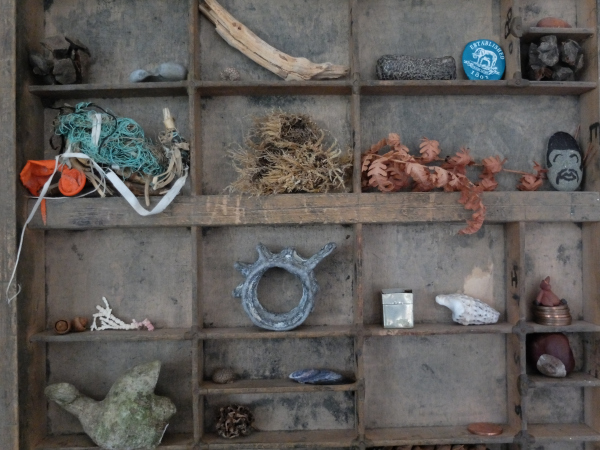
Young Jonathan loved his collection of bird eggs protected by the nest of cotton wool. Later he was allowed a scalpel, and laid bare the tracery of blood vessels, the continents of organs.

“He loves to explore how things work,” his Dad said,

As an adult, Jonathan won a research grant.

The breakthrough was accidental – the project intended to combat mice infestations. The introduced sterility gene revived the inert mouse-pox virus vector. Seventy per cent of the experimental mice died.

“If we tweak these base pairs,” Jonathan said, “we could create 100% lethality.”

The men from Defence were most interested.


Friday fictioneers is a weekly challenge to write a 100-word story in response to a photo prompt. You can find other stories here.

72. How many stories are there?

It’s an old question. The basic idea is there are only a certain number of stories we can tell and everything is a retelling. The most common answer to the question, deriving from Arthur Quiller Couch and Christopher Booker, is seven basic stories. Aristotle argued there were only two  – comedy and tragedy.  George Polti found thirty-six. Joseph Campbell, with his idea of the Monomyth, famously plumped for one – the “Hero’s Quest” so beloved of Hollywood. Research I did into the narrower theme of stories about the future, suggested there were eight.

I was struck again by this question this week doing Friday Fictioneers. This is a community of over 100 writers who every week write a 100-word story in response to a photo prompt. The curious thing, reading the entries by other writers, was how many of them had written variations of the same story. Before I tell you what that the Ur-Tale is, here’s the photo prompt.

monsters-dmm

More than a quarter of all the 75 writers (at the time of writing this post) interpreted the prompt to create stories around a theme I call Scary Daddy. Basically, Daddy (or some other adult) puts on a diving helmet and mock-scares the kids. About a quarter of the tales have variants and twists. This one, by The Reclining Gentleman, is one of the more subtle, where the Scary Daddy motif is used as a device to explore loss.

Monster by The Reclining Gentleman

It’s always the same dream.

I am hiding behind the cushion sanctuary I have built in the conservatory; curled into a squealing nine-year-old ball, legs coiled inside my skirt. Dad, on leave from the sub, is searching for me, chasing me. He’s wearing that old diving helmet, the one that terrified me, and he’s a roaring sea monster. He finds me and as he lifts the helmet, I wake. Relief engulfs me.

For a moment.

Then I recall the day the commander came to the door. Mum, her voice strained and shaking, sending me upstairs.

And then, always, I remember.

Two explored the theme of abuse.

What could explain the recurrence of the Scary Daddy story? Perhaps a clue is in the fact that four of the nineteen stories on this theme have the word “monster” in the title. The image obviously suggested play and, of course, a frisson of fear is a good way to add edge to a story. Eight (non-Scary Daddy) writers also adopted monster-related horror and sci-fi themes. A creature without a face is always scary, even when the fear is playful and reassuring. One of the stories is titled “Mask”. Helmets and masks strip us of our individuality, though masks may also unite us through rituals with a world of spirits and imagination. Perhaps that’s where the archetype lies, drawn on by so many of this week’s Friday Fictioneers. One of the Scary Daddy writers commented that this is what fathers do.

There were, of course, other recurrent themes. Eight, including me, saw the prompt as an invitation to enter the world of children’s play and imagination.  (A ninth used it to explore adult fantasy play, but that’s another thing entirely). Eight, as I already mentioned, wrote sci-fi or horror stories. Nine used the diving helmet in thrillers, some quite grizzly. Seven wrote family tales. Five used the helmet as a device for character studies. This one by JWD is a great example.

The Voices by jwdwrites

It was after the fall the voices began. Not just English, so many languages it was hard to understand anything.  “It’s like this plate in my head is a damned antenna and I’m picking up long-wave!” Ray joked.

Before long, Ray had stopped joking, stopped playing with his kids and stopped talking to his wife. There was just so much damned noise!

Then he found the diving helmet. When he wore it, there was silence in his head.

He wore it everywhere.

Then they came for him.

They took the away the helmet, and locked him up…

…with the voices

Of the remaining stories, three were humour, three dealt with death (also a recurring theme in Friday Fictioneers over the weeks), two dealt with hiding, and the remaining five were unique in their themes.

So, I don’t know how many stories there are. But probably fewer than we think. Whether this is really because we can’t tell other stories, or whether it’s an effect of our culture only presenting certain themes, I leave you to judge.

Friday Fictioneers – Inside

monsters-dmm
PHOTO PROMPT © Douglas M. MacIlroy

Inside, the diver’s helmet is a head. Inside that, a dragon and a plan of a spaceship, and a shipwreck. Fronded seaweed curls lazy in the current, merfolk tumble and dance. A sunken treasure chest with bands of iron lies beside a starfish.  He reaches. From deep in the rocks an octopus tentacle, pink and sinuous, lashes out.

Outside, a hand lashes out, grabbing the slinky tentacle.

“How many times have I told you to leave my stuff alone,” a shrill voice cries. “For God’s sake, that’s my dil ….. igence.”


Friday fictioneers is a weekly challenge to write a 100-word story in response to a photo prompt. You can find other stories here.

71. World-building

worldbuilding

Sure you can have elves and dragons, time travel and aliens. Myth and alternative technology are part of world-building in fantasy and sci-fi. But the real alternative worlds are inside people’s heads. To take the reader emotionally into a fictional world, the writer must show us how the main characters understand this world. Every world in fiction is a mentality – a way of understanding, a means of making judgements, a catalogue of right and wrong. To build a world, we must build our characters.

Consider, for example, an old jalopy. To one character this might just be a heap of rust, a shameful sign of poverty. To another character, the same car might be a challenge, a promise of something to be restored, a long summer full of happy activity. Different characters invest the same landscape and the same object with a multiplicity of significances.

I’m interested in how people create meaning in their world and negotiate shared meanings with others. And I was stuck at a fulcrum chapter in the book I’m writing, The Tears of Boabdil in how I was to achieve that with my main character. The novel is a braided narrative (thanks, Paula, for reminding me of that term). It combines a gritty police tale of an agent infiltrating a jihadist group, a forbidden love, and the magical power of narrative. In this chapter, the undercover police agent meets his handler. I needed to find a way of showing that the character inhabits a world not quite like our own, and I was struggling to express his rules.

The answer came from an unexpected source – a book I’ve been reading on the meaning of Palaeolithic art by Jean Clottes (What is Palaeolithic Art). Whether Clottes, a world expert on the cave paintings of southwest France, is right or wrong in his interpretation I don’t know, and I don’t really care. His schema was captivating, and perfect for my character.

  • Connectedness and fluidity. Everywhere and everywhen are one. Things and events can metamorphose into each other. Signs are important.
  • We tend to see individuals as members of general categories (cats, women, vehicles). But my main character responds to the particularity of things, so that a sleeping cat is a different thing from a stalking cat. He will later on experience the multiple aspects of his quarry – jihadi, respected teacher, doting father – as different entities
  • The world is permeable to the effects of supernatural forces and these forces can be appealed to for their blessing
  • The identity of a person or thing is the story we tell about it. Images have an affinity with the thing they portray and can change reality.

And there, I had the framework of my world. If we allow ourselves to be open to the permeability of things, the answer is out there. Now it’s a somewhat scary craft challenge to see if I can match up to Tolkien’s description of the goal of world-building as creating immersion or enchantment.

Friday Fictioneers – War

photo-by-piya-singh-bittercharm-6
Photo prompt. Piya Singh

Reuven watched in horrified fascination as Tolbert’s white buttocks heaved between the girl’s legs. She struggled, and Tolbert slapped her face, then pinned her arms to the table. In moments it was over.

“Your turn, mate,” he said cheerfully, pulling up his breeches.

In an agony of shame, Reuven fumbled with his laces. He didn’t want the girl. And yet in war you could do anything, take anything. He wasn’t hard. But he didn’t want his friend to make fun of him.

“Come on, lads, gotta get this grub back to camp,” Carnvel called from the door.


Friday fictioneers is a weekly challenge to write a 100-word story in response to a photo prompt. You can find other stories here.

70. Developing an author platform

We aspiring authors are constantly advised to develop an author platform. In fact some publishers make it a requirement. So what is an author platform, and how do you make one?

A platform is a means for you to reach out to a target audience. In part, it’s the main thing about you as a writer – your published work. In part, it’s your profile on social media – whatever form of it appeals to you, blogging, tweeting, Facebook. Goodreads. I blogged about this in my tenth post, and I decided to take a re-look at what had worked for me on this blog.

author platform.png

When I wrote that first post, the blog had been going a month. It had received 90 views from 30 visitors, and had garnered three followers. Now, a year later, I’ve just passed 1,600 reads, with 588 unique visitors. As you can see, it’s a slow process, and, though slow and steady, the progress is not stratospheric. So it’s a good idea to get started and have your platform in place and growing before you’ve published your first book.

From May 2105 to February 2016, the blog chugged on, bumping along the bottom. On average, every month it attracted around 53 views from 23 visitors. Around three new people followed me every month. Then it all changed in March 2016. Average monthly views went up around seven-fold to 383. Each post is now read by 58 people, instead of the previous nine. Visitor numbers rose over four-fold to 119 a month. And follows more than doubled to eight a month. What was the secret? I joined a network, Friday Fictioneers, built around a challenge to write a 100-word story in response to a photo prompt every week.

blogstats

The boost came from two elements: firstly, I was posting stories; and secondly I was connected to a network of around 150 people who write for the challenge every week. So I was buying into an established readership. It’s not magic. Some of the new visitors are reading other blog posts as well as the stories. Views of non-story posts almost doubled from an average of 53 a month to 98. While it does promote my visibility, it certainly doesn’t allow me to post stupid messages like “follow me” or “read my book”.  Though the links are there on my site, only nine new people have clicked through to my publications.

I can’t suggest what will work for you. It will be different for every writer. But the general message is probably

  • However you start your platform, take it slow and give it time
  • Link up with existing networks

Friday Fictioneers – Beside the seaside

waves
PHOTO PROMPT © Rochelle Wisoff-Fields


Brighton shingle crunching beneath toes, ice cream melting, deckchairs flapping in a sudden wind. Seaside holidays populated Vince’s memory of childhood.

This holiday was different, illicit, thrilling. Away from her family, he would finally lie with Ayesha. The one bed in their apartment offered a shocking promise.

Her transformation created the real shock. She entered the bathroom wearing hijab and enveloping abaya, and emerged in a wraparound floral skirt, her nipples visible against the T-shirt. She was beautiful.

“Don’t you feel undressed, without your normal clothes?” he asked.

“Those aren’t my clothes,” she laughed. “That’s my sexual Chemical-Biological Warfare suit.”


Friday fictioneers is a weekly challenge to write a 100-word story in response to a photo prompt. You can find other stories here

Friday fictioneers – Waiting

jhc7
PHOTO PROMPT © J Hardy Carrol

Waiting is the mother of change.  Zami reached to scratch his beard but touched new-shaven flesh. Change, he nodded. No longer bearded – no longer Zami, in fact. After testifying against Rashid, he could return to being Vince. At least until he was re-assigned. He shifted in the seat, the wood aching his buttocks. These benches asserted the court’s grandeur, offering little comfort.

The swing doors opened and Zami’s heart lurched. Ayesha was here to support her brother. Darling Ayesha. Her glare poisonous, she pointedly sat on the other end of the room. Never again!  Zami slumped and resumed waiting.


Friday fictioneers is a weekly challenge to write a 100-word story in response to a photo prompt. You can find it here.

69. The art of descriptive writing

Some simple tips can make your prose more vivid. This week it was my turn to lead an exercise in my writing group on the elements of description.  This what I said:

We use descriptive writing to describe a person, place or thing so that a picture is formed in the reader’s mind. This connects to the difference between showing and telling. When a writer tells something s/he merely communicates what happens. When s/he shows, the reader is drawn into the scene.

There are four main things to remember for good descriptive writing.

Use vivid sensory details

sensory

  • Use precise language. Avoid general nouns, adjectives and verbs. Use specific words and strong verbs to build the picture. For example, “he scrambled up the scree” is more powerful than “he ran up the hill”.
  • Make use of images, similes and metaphors.
  • Use all the five senses – sight, touch, smell, hearing, taste. Practice just observing quietly.


Less may be more. When describing a landscape, you’re trying to portray it comprehensively and precisely but not necessarily exhaustively.

less_is_more

  • Think about what’s important. A telling phrase to encapsulate a scene or a character can be better than a paragraph. For example. For example, this description of a distressed soldier in a story I wrote: “As he spoke, he drank, like he was firing and reloading a rifle, technically, methodically.”
  • Hemingway, famous for sparse descriptions of his characters, held that “action is character” and that “dialogue is also action and a projection of character”.


 It’s not just exteriors. Link to feelings too.

chair

  • You’re not simply describing a landscape within which your characters move. Allow the physical and emotional worlds interact. Description is more powerful when you show the gears turning inside those psyches.
  • Leslie Jamison advises “If you’re describing a chair, let your mind play with all the different things that chair could mean to various characters. Whose feelings were hurt in that chair? Who was betrayed in that chair? Who broke into his estranged father’s property to chop down the tree whose wood was used to build that chair?”


It’s not only about the words. Think, like a poet, about rhythm. The sound and rhythm of the words can capture a description.

rhythm

  • For example, look at how the rhythm captures the soul of these two ships in John Masefield’s poem, Cargoes:

Quinquireme of Nineveh from distant Ophir,

Rowing home to haven in sunny Palestine.”

And

Dirty British coaster with a salt-caked smoke stack,

Butting through the Channel in the mad March days.”


Exercise

This exercise is a technique for observing quietly.

Sit quietly for 5 minutes. Try to clear your mind. Don’t judge, just observe. DON’T WRITE DURING THE OBSERVATION PERIOD. Then write down, for each of the senses, the things you saw, heard, felt, smelled and tasted.

When you’ve done that, take another five minutes and try to come up with some great words or short phrases than would summon up a few of those things.