63. Writing a character with post-traumatic stress

They say write about what you know about. And that’s good advice. But your characters are slippery little eels. They start to live lives of their own and do things you’ve never experienced.  I had this difficulty with Reuven, the everyman character in my novel A Prize of Sovereigns. In this week’s serialised chapter  published on Wednesday, he returns from war, suffering from post-traumatic stress disorder. I have never been to war, though I have worked in conflict zones. I have never suffered from post-traumatic stress. How was I going to write that?
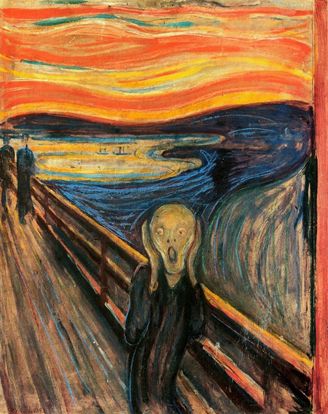
scream

Research, of course, is the answer. I read extensively, both clinical accounts and memoirs of war induced stress.  Reuven suffers most of the standard symptoms, which are, as listed on a veterans’ website:

  • Feeling upset by things that remind you of what happened
  • Having nightmares, vivid memories, or flashbacks of the event that make you feel like it’s happening all over again
  • Feeling emotionally cut off from others
  • Feeling numb or losing interest in things you used to care about
  • Becoming depressed
  • Thinking that you are always in danger
  • Feeling anxious, jittery, or irritated
  • Experiencing a sense of panic that something bad is about to happen
  • Having difficulty sleeping
  • Having trouble keeping your mind on one thing
  • Having a hard time relating to and getting along with your spouse, family, or friends

Plus, Reuven is prone to taking excessive risks.

Apart from research, the big help was writing the chapter not from Reuven’s point of view, but that of his wife, Jyoti (though an earlier chapter takes Reuven’s point of view).

“The man who came back from the war to Jyoti the second time stumbled to a broken rhythm. He limped on a stick. He found it difficult to grasp things with the remaining two fingers of his right hand. He could not hold a mattock or a hoe so easily anymore, and fieldwork came hard to him. Swinging a scythe was near to impossible. It wasn’t just his amputated fingers that made a scythe impossible. His broken ribs had healed wrong, and when he swung his body, the pain in his side was as if the scythe was cutting through his own flesh, not the hay. Jyoti had to do the hay-making for him.

But this was not the thing that troubled Jyoti most. Something was broken inside her man. He started at sounds. In any room he insisted on positioning himself with his back to the wall, facing the door. He would say with a laugh that this was so nobody could sneak up on him. But Jyoti did not think he was joking. He was alert the whole time to dangers that only he perceived, as if he was still at war.”

Writing from Jyoti’s point of view simplified the problem. This is Reuven, as she sees him. She suffers because he is withdrawn and snaps at her. She blames herself. And then one night he confesses the incident that is at the root of his self-loathing. He has still not told her everything that the reader already knows – not about the battles, nor about his fear of what he might do, nor still yet about his pathological risk-taking.

It’s through Reuven that we see the excitement of war. “For common folk like us, war is exciting,” he tells Jyoti . “You can do anything, take anything. It felt like I had some power.” And, it is through Reuven that we see the cost of war.
Friday fictioneers – river of stars


antiques-along-the-mohawk

Photo Prompt: (C) Rochelle Wisoff Fields

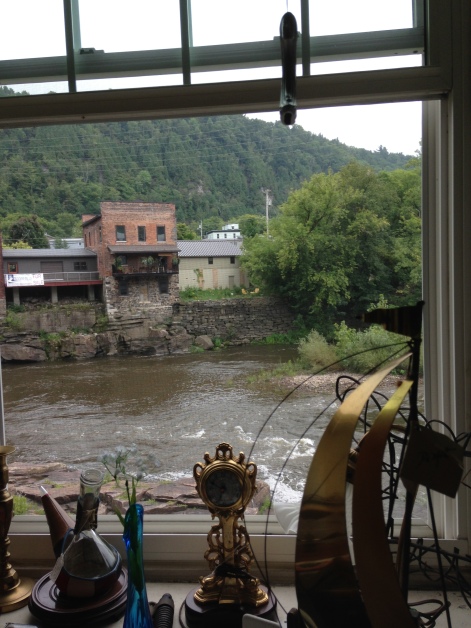
Below Jeno’s window, three girls washed clothes in the Vltava River. Voices raised in teasing laughter drifted through the open casement, along with the first warm breeze of spring. He ignored them, bending to his astrolabe and astrological calculations. The new Dutch telescope was trained, not on the stars but on Prague Castle across the river, on Countess Maria’s window. Jeno’s mind could span the heavens, but his heart feared the short crossing of the Vltava. This horoscope had to be without error if it was to gain him entry to the Emperor Rudolf’s court.

Friday fictioneers is a weekly challenge to write a 100-word story in response to a photo prompt. You can find It here.

62. How did she do that? – The Girl on the Train reverse engineered

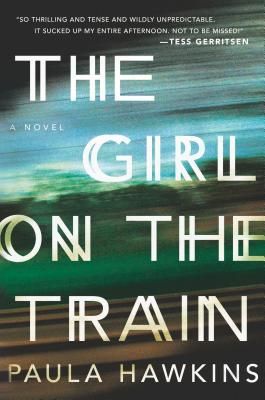
The Girl on the Train was one of the big publishing sensations of 2015. So it’s worth paying attention to how Paula Hawkins did this (apart from good writing and the normal quota of luck, of course). The novel is a thriller. But it’s a women’s thriller. By that I mean that it’s a confessional first-person glimpse of the emotional mess of the three main female characters. There’s a murder, but there’s also voyeurism, and the Barbie and Ken fantasy Rachel constructs about the couple she sees from the window of her commuter train every day.

Girl on the Train

Two things probably explain the book’s novelty. The commuter train is a masterstroke. We’ve all done it – peering from the train windows down other people’s back gardens and through their patio doors, comparing their lives with ours. This is a book written to be read on commuter journeys. The other thing that makes the book distinctive is that nobody, absolutely nobody, is likeable. Some readers hated that, but the truth is successful characters don’t have to be likeable, they just have to be interesting. That’s on trend. These days, we like our characters dark – black is the new white.

The requirements of the thriller format are scrupulously followed – secrets, mysteries, red herrings and danger. The plot gradually develops, folded-in with care like egg whites to the meringue of the confessional. In truth, the plot is not that complex, and it’s possible to glimpse the outcome from early in the read. But the inter-weaving is skilful.
The confessional style is also not new, though it is more Sylvia Plath than Brigid Jones.

And so, what about character? The story is told through three different points of view. Their narratives follow distinct timelines, converging on the climax. But the three characters, despite their different lives, are all very much the same person. This is probably intentional.

There is little by way of character development, which also disappointed some readers. Though, to be fair, Rachel emerges stronger at the end. Yet Hawkins’ crisp writing manages to keep us interested in the characters and the unfolding plot. She even manages, and this is no mean feat, the conceit of describing the murder in a first-person diary account by the victim and make it convincing.

Next long rail journey, pick up a copy of The Girl on the Train.

61. Spin again – Henry VII’s Star Chamber

This week’s instalment of Prize of Sovereigns  again deals with spin, and the attempts of rulers to bend history to their will. With the foreign war failing, Chancellor Terpanijan is afraid of strife and discontent at home. He has developed a plan, which he describes as a three-act play spanning decades, to save the realm. It starts with the creation of a special court, the Procurator Royal, to “put many in danger at the state’s pleasure.” He tries to enlist the Queen’s support:

‘In the first act comes the rule of the Procurator Royal’s Court. Peace and stability will be bought through fear and oppression. In the second act, comes the annunciation of the Promised One. And, as the Gods will it, we have just the bard to craft the annunciation; Guillem Moles. Your son will be groomed to be as facile with the pen as with the lance, he will be able to carouse with commoners, and to joust with knights. He will be a friend to all, going among the people, beloved by the people. And in the third act, he will ascend the throne, and fulfil his promise to rid the realm of oppression. He will champion justness, and equality before the law.’

Henry VII

Henry VII

The strategy is not completely fictional – I took the Court of the Procurator Royal from history. Henry VII of England, the first of the Tudors, created the court of the Star Chamber in 1487 as an instrument to control the fractious barons. And Henry’s son, Henry VIII, did indeed ascend the throne promising an end to an era of fear and tyranny.

If there was a first driving force behind writing this book, it was to explore the way power works. I didn’t start it as a historical novel, but I soon realised that it would be much more effective if I could make my leader characters absolute rulers. The question then was, if power is absolute and personal, what constrains it? And the answer the book gives is, many factors render it impossible even for the monarchs of history to bend events to their will. Events have this annoying springy power of their own. Stuff happens. The rulers like the Chancellor, the Queen and the King make plans. The common folk are on the receiving end of these strategies. And the common folk don’t always accept their allotted roles in the play.

In my book, Queen Brondah, abused and raped child bride, takes the place of Henry VII. She sees in the Chancellor’s idea a possibility to protect her two-year old son, and maybe to exact her revenge on her husband, the King. She is changing from a girl into a Queen as terrible and implacable as her husband. But the price will be heavy – it will cost her humanity

60. Foyles Discovery Day – speed dating with agents

Thirty seconds to pitch; six minutes of feedback from an agent on the first page of your novel. This was speed-dating with a vengeance. This was Discovery Day 2016, held at the historic Foyles bookshop in Charing Cross Road, London, with agents from Curtis Brown and Conville & Walsh. Was I discovered? Sadly, no. The small print read: “please do not expect to be offered representation by an agent in the one-to-one sessions. Representation is a big commitment for both agent and writer, and this is not a decision that should be taken in six minutes.”
speed dating

The queue to be seen stretched all the way up the stairs from the fourth floor to the sixth floor, all of us clutching our sheaves of precious paper. In fact, we formed two lines, one for adult fiction and one for children’s. Perhaps unsurprisingly, most of the children’s authors were women. After twenty minutes, we shuffled our way into the auditorium and were directed to our dates already sitting at tables. I don’t know that I learned anything new. The pitch, according to the agent, was good:

The Golden Illusion is a mystery story with a twist. The sleuth is a conjurer, RUARI, charming, manipulative and possibly a sociopath. Using deduction and mentalism to unravel the mystery, he believes he is hunting an ancient Egyptian illusion. Instead, he reveals a conspiracy concealing a crime that spans the centuries.

The first page passed muster, and the agent liked the twist of a conjurer as a sleuth. He liked my idea that I would like this to be the book the Magic Circle tries to ban since it gives away the secrets of several illusions. But he said his agency, Conville and Walsh, didn’t do much mystery. This seemed odd since two Conville and Walsh agents are on the list I compiled for this book, having said they were interested in the genre. He told me writing in more than one genre was dangerous, which I already knew, but hey, I can only write what I feel like writing. He asked me who I wrote like, and I didn’t have an answer for that. I’m not sure any of us would care to admit we write like anyone else. I don’t think I do, but you, as an impartial observer, might judge differently.

After the pitch, we had a fifteen minute group discussion with agents about the agent and publication process. There I did learn two things. One, agents do use literary festivals as a way of spotting new clients – Bath and Winchester were mentioned. Two, Conville and Walsh receive about 5,000-6,000 submissions a year. Of these, they take 20-30 new clients.

This makes the odds of getting an agent around half a per cent

That’s round about the same odds as the lifetime risk of dying in car crash, but much better than the one in 14 million odds of winning the UK lottery. So I press on in my bid to be discovered

59. The age-old art of spin

Spin doctors, we like to imagine, are a modern curse. I don’t agree. As long as there has been civilisation, rulers have tried to use wordcraft and images, monumental architecture and pageantry, to mould the attitudes of their peoples.

In my historical novel, A Prize of Sovereigns, currently being serialised, Guillem Marti Moles is a medieval spin doctor. He’s probably the character I had most fun writing. A charming rogue, amoral and with an eye to the main chance, he rises from itinerant storyteller to the dizzying and perilous position of Royal Bard.

In this week’s instalment, Guillem demonstrates the power of the printing press to the Chancellor, Terpanijan.

Guillem continued, ‘The truth is what people believe it to be. And with a thousand copies of my pamphlet in circulation for every hand-written account, people will believe what we tell them.’

Now Terpanijan laughed too. ‘And people say I am cunning.’ He shook his head. ‘With your block copying, it will be possible for a man to shape the thoughts of a nation.’

The trial of Marta, Maid of Mewwald on charges of witchcraft and heresy of event is drawing to a close. Guillem has written a pamphlet, The King and the Witch, intended to destroy Marta’s reputation, so that her nation will no longer follow her in resisting conquest. Marta is a Joan of Arc figure. In fact, much of the trial is taken from a real account of Joan of Arc’s trial.

Men like Guillem have, for millennia, written the words that inspire their nations to follow generals, exalt rulers, and condemn enemies.

Remember, for example, of how Alfred Lord Tennyson transformed into inspiring heroism the disastrous Crimean War blunder of the Charge of the Light Brigade towards the Russian cannons:

Half a league, half a league,
Half a league onward,
All in the valley of Death
Rode the six hundred.

Or consider of the Egyptian Pharaoh, Akhenaten. His power struggle with the temple priests of Karnak led to the brief erasing of Egypt’s ancient gods, and their replacement by the one state god, Aten. And don’t forget the priesthood’s terrible revenge, still visible in the statuary of that period with the face of Akhenaten erased.

None of this means that the ancient spin doctors necessarily supposed they were telling the truth. Guillem’s true sympathies lie more in the tavern than in the palace, and he secretly writes a true account of the Maid. But it does mean the stories that came down to us through the ages were shaped by the power struggles and ambitions of their rich patrons.

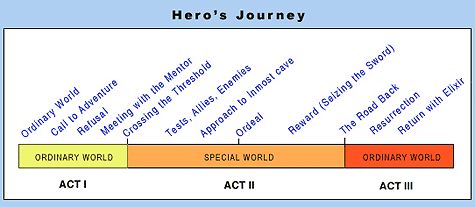
Joseph Campbell claimed that all stories are variants of a single story, often referred to as “the hero’s journey”. Campbell’s schema, which was slavishly copied by George Lucas in crafting the first Star Wars movie, has 12 stages.

Heros journey

But critics say this is evidence, not of the impossibility of alternative stories, but of powerful patrons wanting tales that cast them in the best light.

Guillem’s secret treason is testimony to the existence of other narratives.

58. Complexity, stories and the Trickster

Can stories give us a tool for understanding and exploring complexity? Or, do they just reduce everything to simple repeating narratives, an infinite number of vampires, coming of age, and heroes’ quests?

The world is full of complex systems. There are economies (remember the crash of 2008?), ecosystems (we’re on track to warm the planet by at least 3o C) and the enchanted loom of a brain. The study of complexity is now an academic discipline. Unlike the simple systems, which classical physics excelled at explaining, complex systems exhibit behaviour that nobody predicted. Bicycles are simple systems – you can take them apart and put them back together again. Frogs are complex systems – if you take a frog apart, you can never put it back together again. Isaac Asimov’s famous Foundation novels imagined a science of psychohistory in which the activity of large populations could be averaged and predicted. Though, even then, much of the drama of the novels comes from incidents where events escape the line forecast by the “Prime Radiant”.

So what role can stories play? Can they help us express something about the way new properties emerge from interactions? Or how small changes can lead to sudden big catastrophes (remember the flapping of the butterfly’s wings in the Amazon, leading to a tornado in Kansas). At their worst, stories repeat the mantras of our average-driven society, in which we strive to be exactly the same as everyone else only better. At their best, they illuminate the unique and the unexpected. For example, we’re taught to think of people as either good or bad, either white hats or black hats. These days, we want more complexity – we enjoy heroes, such as Sherlock Holmes, struggling with their flaws, and villains, like Hannibal Lecter, with a human rationale for their evil.

By showing us how evil is part of humanity, we might just learn to stop demonising our villains and instead discover how to prevent it. There’s no point in continually saying “never again” if we don’t understand that the perpetrators of atrocities are people pretty much like us. Stories are very good at revealing what goes with what, something with which academic analyses struggle.

Lest anyone thinks that I’m arguing that we’ve got more sophisticated in our demands of stories, here’s a cautionary note. In the Western literary tradition we have lost the complexity of the Trickster figure. Trickster exists in almost every culture, and his/her role is to break social and physical rules, disrupting normal life and recreating it on a new basis. In indigenous North-western American cultures, Coyote is an example. In the Norse myths, Loki is another Trickster, as is Monkey in Chinese literature and Nasrudin in the Middle East. European tradition had figures like Till Eulenspiegel and Reynard the Fox.

Till Eulenspiegel

Why did the Trickster vanish from our tradition? Nobody is sure, but the explanation I find most convincing is that an increasingly regulated European society wanted to draw rigid lines between good and evil, between creation and destruction. A Trickster figure who spanned and broke these boundaries was too subversive. Between the realms of the divine and the satanic, the frontier became impermeable. In this, at least, our ancestors embraced a more complex understanding of nature and human nature than we do. The Trickster shrivelled and all we are left with today is the impoverished and emasculated Jester figure.

One day, when I’m a good enough writer, I may try to resurrect the Trickster.

57. Kill your darlings

Is any advice harder? To delete your most treasured and self-indulgent passages for the betterment of your manuscript. I’ve been mutilating, if not killing, one of my darlings, and I can tell you, the deed was done with a heavy heart.

The passage in question is from my book, The Golden Illusion. This is a mystery story with a difference, where the detective is a hapless conjurer who believes he’s on the track of an ancient Egyptian illusion. I’ve been summoning up courage for months for the revision. I love the words, naturally. But reader after reader has said the scene drags and slows the story down (there was one fan, but only one of ten). Only when I advised another writer to delete a cherished passage, a product of diligent research, from her book did I know I had to do the same.

Research is my Achilles heel. I guess that’s because I was once an academic. You put your back into excavating some fascinating truth, you wash it clean, and reassemble the pieces. How could you not love it? How could everyone else not be entranced by it?

In the scene, the main character, Ruairi McNair, gives a lecture to psychology students about how suggestibility works, and unmasks the tricks of fake mediums. I laid everything out, just as I’d researched the topic. Dammit, I’d put a lot of work in. I saw myself giving that lecture.

And that, of course, is the trouble – it’s self-indulgent. One reader told me “you’re giving a lecture, not telling a story”. The scene prepares the ground for another, towards the end of the book, where he unmasks a psychic fraudster. But there was just too much stuff. I’ve slashed 500 words from the passage. Even this may not be enough, but I had no stomach for more carnage at the time.

By the way, I did some research for this post. I wondered who had first offered the “kill your darlings” advice. I had always vaguely believed it was Stephen King. And he did say it. But so did many others before him. The earliest known source seems to have been Arthur Quiller-Couch in his 1914 lecture, “On Style.”

If you here require a practical rule of me, I will present you with this: ‘Whenever you feel an impulse to perpetrate a piece of exceptionally fine writing, obey it—whole-heartedly—and delete it before sending your manuscript to press. Murder your darlings.’

Maybe I should delete the last paragraph before I post this.

56. The monthly challenge

I thought I’d try to describe the process of working on a story. I belong to an online writing community, at Webook. Every month, they offer a story challenge. Unless I’m busy with something else, I enter the challenges. Not always because I like the subject, but to hone my skill and hear the criticisms of other writers.

Last month’s them wasn’t to my taste – giving inanimate objects a voice. It lends itself too easily to Disney cuteness – friendly toasters, and malevolent cell phones. This month, it’s much more interesting. This is the challenge:

Angus is a vegetarian. Angus doesn’t like many people, but everyone seems to like him

Sarah ran away. Someone is looking for her, but she keeps outwitting them. Sarah loves the colour blue and ribbed sweaters.

Jake is a magician with a big secret. He likes poker and winning. Sometimes he tells lies just to get a reaction out of people.

Peter is having a very bad day. Peter has never loved anyone, but he would like to

Alexis is on a journey. Alexis hates sand and loves it when other people suffer misfortune

Carmen likes electro-swing and dancing. Carmen doesn’t like it when people tell her what to do
• Select a minimum of two characters from the set
• Place them in a scene of your own choice – the scenes do not have to relate to the photos in any way, although you may use them if you wish
• You must use all of the points shown on the character description within your story
• Tell us what happens in 1,000 words

I guess a greater focus on character is what I took away from the creative writing course last year, so this appealed. As the challenge says, “Talent will get you in the door, but character will keep you in the room”. Working with someone else’s characters is very different than developing your own. When a character springs from your soul, they share a part of you – they whisper their stories in your ear. It takes analysis to get to know a stranger’s characters.

The first character who piqued my curiosity was Alexis. Why did she hate sand? Why did she like it when other people suffer? And what was her journey? I decided to build the story around her. Angus and Peter would have offered an interesting dynamic, but that would probably have needed more words than my allotted 1,000.

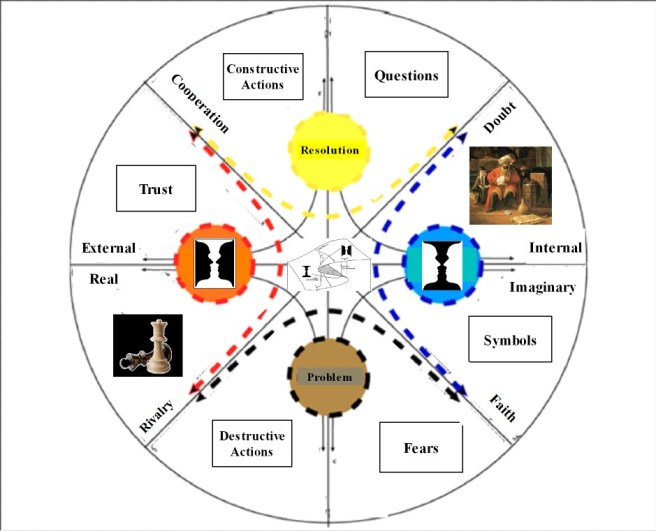
character 2

Alexis’ hatred of sand made the choice of setting obvious – a desert. Alexis is crossing a desert. She hates the sand because it’s uncertain, slipping underfoot, and she’s searching for secure bedrock. This brought me an image of a shimmer on the horizon, so far away it’s impossible to tell whether it’s a mountain range or a great city.

Why does Alexis love others’ misfortunes? I had to puzzle over this for quite a while. I rejected the obvious answers that kept crowding in like naughty schoolboys peering round the door and demanding admission. No, she hadn’t been bullied and damaged as a child. No, it wasn’t revenge for her isolation. Then the answer came to me. Her schadenfreude was love. Alexis believes that suffering is essential for making you a whole human being – pain carves out the bowl which contains joy. She rejoices at others’ misfortune because she loves them.

If there’s a desert, of course there has to be an oasis, a place where travellers gather to rest and swap tales. I populated the oasis with Sarah, her daughter Carmen, and Jake – all trapped there by the fear of setting out again into the wasteland. Each tells their tale. But Jake is not all he seems to be. Alexis wonders if he mightn’t be the one pursuing Sarah.
Jake says there is a city across the desert, called Rasoul. He pronounces it Rasool, but Alexis translates it as Ra Soul, the pitiless soul of the Sun God? He says he knows the way to Rasoul and leads them in singing “we’re off to see the wizard, the wonderful wizard of Rasoul”. Alexis thinks he may be the wizard of Rasoul.

Now all I needed was a plot line, which of course had to be determined by Alexis’ journey from suffering to joy, from the oasis to Rasoul. I’m still working on that, though my hunch is that Rasoul doesn’t exist, and may turn out to be another oasis, or perhaps even the same oasis. First attempts suggest that I have too many characters to make the story work.

I worry though that it may end up pretentious, freighted with trivial meanings. We’ll see.

55. A patchwork quilt – linking the impossible

A story may be simple, making its way logically like a river to the sea, beginning, middle and end.

Girl meets boy, girl loses boy, girl gets boy back again.

But a more complicated story may loop in time, with flashbacks and jumps.

Girl meets boy, girl remembers being hurt before and is frightened, girl loses boy, girl faces her fear and gets boy back again.

I find stories with complex structures more satisfying. But then, I’m a structure freak. I like stories where the ending is foreshadowed and where elements mirror each other.
And even more intricate structures are possible. Words can create illusions. They can bridge impossible gaps allowing magical connections to be made between unlinked things. This is the stuff of fantasy, but also the stuff of poetry and of magic realism. Imagination can stitch together things never connected in the real world.

Girl meets monster, girl remembers being hurt before and senses the monster’s hurt. She feels him a kindred spirit – they are both monsters. She kisses the monster, and he is transformed into a handsome prince.

Princes may become monsters in fiction, and metamorphose back through the power of love. Of course, as Marge Piercy says in her take on this trope “Though courtship turns frogs into princes, marriage turns them quietly back.”

Recurring words and images can stitch together these magic connections. Salman Rushdie employs this technique playfully in The Moor’s Last Sigh, by using different meanings of the same word. The superhero theme recurs in the novel, and he segues from Batman to bats in the belfry.

Metaphorical links join with mirroring to allow the leaps.

Girl meets monster, girl remembers being hurt before and senses the monster’s hurt. She feels him a kindred spirit – they are both monsters. She kisses the monster, and her spirit dances on air. A few tentative steps on the air and they have learned to fly, soaring over the towns and fields, the valleys and hills.

You see? From the (admittedly hackneyed) dancing on air metaphor, we have segued into flying. Cross-stitch a little more back and forth between love and flying, layering metaphors and repeat words. That’s all it will take for the two to be united seamlessly without the reader being able to see the join.

In the novel I’m working on now, the main character, Vincent is a man entirely invented by himself. He is whatever story he is telling at the time. This allows his story to intertwine with that of Don Vincent, a fifteenth century Spanish student. Once in the realm of the imagined, it is easy for Vincent/Don Vincent to encounter a pair of merchants, one of whom sells time and the other luck. I’m aiming for a nesting of stories within each other, self-similar as fractals, so it becomes unclear whose story we are reading.

Vincent has a secret, which I will not tell you. But I think I will reveal it early in the book, so that the mystery becomes, not the secret, but how he reacts to having to carry it. The end, in a sense, will come in the beginning. That was one bit of advice I gleaned from a creative writing course I recently did – if you have a secret, spill it early. Another nugget is that causality runs backwards in fiction. Whereas in our world causes produce effects, in the world of fiction the reverse is true – everything that happens is determined by the ending.

Building-in these ideas has taken me further than I have ever gone from a linear structure. My plan for the structure looks more like a mandala than a story. I’m not sure how much it’s really going to guide the writing.

Tears of Boabdil structure 3
I have only written two chapters of the book. It’s probably going to be the hardest thing I’ve written to date. I still have an incredible amount of research and mapping to do, even though the basic tale can be told In 1,000 words.

In particular, in the research vein I’m looking forward to reading Pedro Paromo by Juan Rulfo, which is already sitting seductively on my shelf calling to me. A mere 143 pages, some say it is the most complexly structured novel ever written. I understand it’s several ghosts telling their stories, each interrupting the other as one says something that triggers another. Perhaps, in that book, I will learn some secrets about how to spin bridges made of words over the abyss of impossibility.