145. The fiction of troubled times

With The Testaments, Margaret Atwood’s sequel to The Handmaid’s Tale, published and sales of Camus’ The Plague surging, in troubled times is the line between fact and fiction becoming blurred?

Yari Ostovany, Missa in Angustiis http://www.yariostovany.com/paintings/missa_in_angustiis/index.html

Some may say that all times are troubled. And yes, there are always troubles, but not all times are troubled. Contrast, for example, the societies emerging from World War Two and the present.

In the US, in particular, people in the 1950s expected the economy to grow, consumer goods to be plentiful, and life to get better and better (the Cold War notwithstanding). In much of the colonised world, there were struggles and hope for independence.

Today, we are anxious about our future in the face of pandemic, climate change, threats real or imagined which trigger waves of populism, and a sense of economic decline in which many people expect life to get worse and worse.

Maybe that’s why it’s important to write, especially in troubled times, when it all seems hopeless and full of senseless strife. Writers help us make sense of what’s going on and what it means. They probe the big questions of our time. When everything is beautiful, it’s good to share stories. When everything seems to be going to hell, we really need stories.

The Indian writer Geetanjali Shree has this to say:

“I am a writer. My writing has come to a standstill. I cannot see the value of, or think of writing about anything else except this that’s going on. But I cannot write about this, for really, we know less about it now than we did till yesterday. When we felt we were on top and saw ourselves as the force of current times. Visionaries for the future. Unchallenged. Suddenly everything is challenged and everything is changing too fast around us – new tones, new colours, new voices, new visuals. Killings go on. Other atrocities too. And fiery speeches by ‘religious’ politicians

….

I just stand, like many others, caught in the ‘moment’ which will not/cannot pass me by. I cannot wait for heart and mind to emerge clear and apart before I start writing. It is like being caught in a storm which has to be dealt with right there and then. Right here and now. An inevitability, an incumbency, an immediacy. But what sense can be made of scenes whipping around in a storm? Then leave that be, but record what you see flying around, quickly, it’s urgent, even without making sense maybe, to be able to make some sense in better, easier times maybe.”

138. Scenarios for the world after Covid

One thing is sure—we’re going to need new stories. Stories help us make sense of the world. And our world now is turned upside down in a way we haven’t seen for generations. How do we go forward from our lockdown societies?

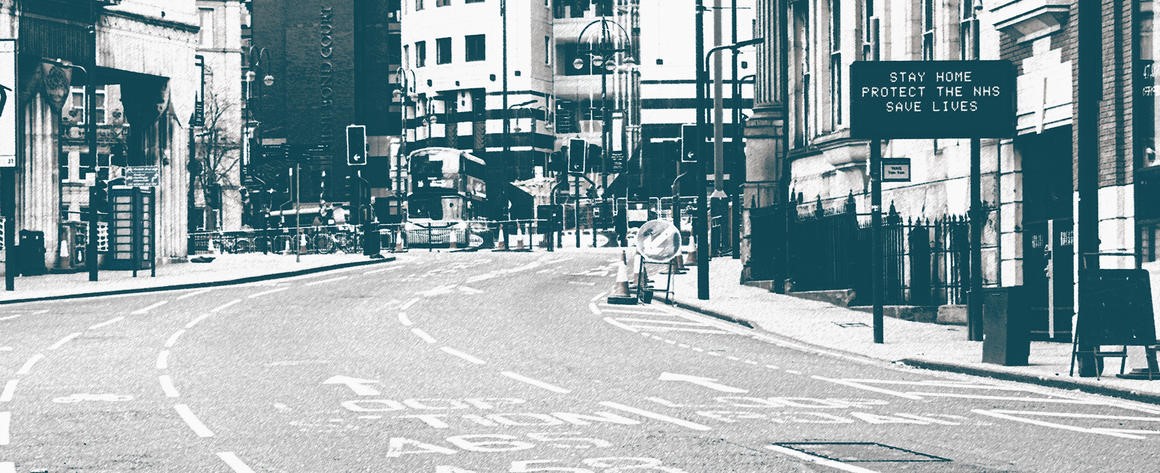
covid street

That’s where storytelling comes in. Scenario thinking accepts we can’t predict what’s going to happen. Instead, it looks at the forces that are driving change and constructs several alternative visions of what the future might look like. This allows us to rehearse what we might do in each of these futures. It may also allow us to make better choices now.

So, I built four scenarios of where we might end up. These feature in my book, The Scheherazade Code, about the power of story-telling.


Drivers of change

The first step was to identify the drivers of change.

Political ·         A mixture of nationalist competition and globalist cooperation. In some countries, leaders make use of the pandemic to introduce greater measures of control and surveillance

·         An increased awareness of who we depend on and support for a new dispensation. There is growing pressure to improve the wages and conditions for agricultural workers, nurses, care workers, delivery drivers, cleaners, and retail staff. This is strongly resisted by the corporations. In the end, expectations of cheap goods provide an easy lure to accept only token changes in wages. There is a much stronger support for decent social care and welfare systems.

·         Citizens’ acceptance of a more interventionist role for the state may be enhanced, though this is counter-balanced by growing distrust and opposition to restrictions

·         The EU will be further weakened by the beggar-my-neighbour initial response, though this may be mitigated by sharing of the pain on the route to recovery

·         Geo-politically, China emerges stronger and more expansionist from the crisis. This may make the US more bellicose and Russia more adventurous

Economic ·         Short term very sharp economic decline (worse than any previous crisis). Best outcome would be a V-shaped recover with a quick rebound. Equally possible is a U-shaped recover. Since there were no major underlying problems, an L-shaped curve is unlikely

·         The long period of the “new normal” favours sectors of the economy which don’t require mass gatherings (such as home entertainment). Mass communication technologies receive a huge boost, including in education. Much more retail goes online, spurring growth in delivery and logistics systems. Much more working from home in office jobs, though the renewed emphasis on national self-reliance also boosts industrial investment in critical areas

·         In the developed world, any hint of return to austerity is unacceptable. Higher levels of national debt and taxation are accepted

·         A renewed focus on national self-reliance in key areas such as food, energy, and critical technology

·         Countries that locked down on time and engaged in testing and tracing emerge early and have a competitive advantage. The US suffers long-term decline.

Social ·         A sense of social solidarity from the pandemic persists afterwards and demand to properly reward those we depend on leads to a new social contract

·         Conversely, a growing distrust of strangers provides fertile ground for nationalism and racism

·         A sense of guilt at that the way the elderly and the poor were abandoned. But also the young, ejected from the economy in the recession, form a lost generation. Age politics grows, as the young refuse to bear the burden of recovery.

·         A sense of pride at having come through the crisis by collective effort

·         Possession and wealth are no longer the mark of status and there is less celebrity culture and more celebration of ordinary people

·         A renewed respect for expertise and wider dreams among children of becoming a scientist. An increasing understanding that “the science” is a state of enquiring mind, not a definitive yes/no answer that politicians favour.

·         An awareness of the need to take care of the future and prepare for future threats. A willingness to debate more long-term issues.

Technology ·         Rapid growth in communications and distribution technology

·         Enhanced decline of the high street with long-term closure of pubs, restaurants, cinemas and gyms

·         A resurgence of some engineering industries

·         Enhanced public-private investment in epidemic preparedness

Environment ·         Dramatically reduced carbon release during the pandemic, cleaner air and environment, rebound of the natural world.

·         The valuing of nature and the belief that collective effort lead, especially among the young, to a willingness to take on the challenge of confronting the climate crisis

Health ·         Covid 19 is not eliminated, though societies learn to coexist with it by developing better systems of health surveillance. Poorer countries remain breeding grounds for the virus.

·         Treatments will become available, lessening the threat of the virus

·         Though there are positive signs that a vaccine could be developed (say by mid-2021) lasting immunity is not characteristic of other coronaviruses

·         Lasting mental health challenges and physical health complications


Key uncertainties

Analysing these drivers allows identification of the key axes of uncertainty about the direction the future might take.

These are:

Globalism             versus              Nationalism

Social change        versus              Business-As-Usual

Combining these leads to four possible futures:


Four futures

Post Covid Futures

Spur is a world in which the pandemic has prompted a sense of interdependence and cooperation, rebalancing values. The coronavirus response showed that rapid action is possible to decisively face challenges. There’s a renewed focus on the welfare of people and of the planet. Preparation for future pandemics us underway, as are efforts to tackle the climate crisis. Introduction of a universal basic income grant in many developed societies means nobody goes hungry, while international aid is helping to build a more equal world. This is a kinder, greener world.

Fortresses is a divided world. Walls that went up during the pandemic stay up. While there is a greater emphasis on social welfare within national boundaries, fear and distrust remain. There’s little international cooperation beyond that necessary for trade. There are only token attempts at tackling the environment crisis. This is an “I’m alright, Jack” world.

Return to Normality is, as the name suggests, a world in a hurry to return to things as they were. The welfare of capital takes precedence in efforts to get the economy restarted. The free market benefits the rich, leaving the poor behind. This is the world most like the one we left in 2019. It’s as if the pandemic never happened.

Beggar Thy Neighbour is a world based on fear. In an upsurge of new populism, autocratic rulers in many parts of the world have used the pandemic as cover for introducing tighter social control. Dissent is seen as “unpatriotic” and heavily policed. This is a devil take the hindmost world in which most of the benefits accrue to elite.

Of course, the real world may turn out to be a patchwork of all of these tendencies.

Which future will you opt to live in?


137. Risk and Fear. Coronavirus Narratives

coronavirus

In the UK, Prime Minister Boris Johnson locked the country down on 23 March 2020. The government communication slogan was ‘Stay at Home, Protect the NHS, Save Lives’. The aim of the messaging was to scare people into complying. It worked. It may have worked too well. We need to find a new way to decide on what we do and don’t do as lockdowns relax. The narrative of fear isn’t working anymore.

The fear message may have worked too well. As the country began to unlock in May, opinion surveys found that around 40% of people were scared to leave their homes. A month later, the figures had not changed much, with 41% of adults  say they did not leave their home on five or more of the previous seven days

This fear narrative became problematic in later stages. In June, when some school classes and some businesses were allowed to reopen in the UK, the government tried to reassure the public that this was now safe, so long as social distancing was maintained.

There was also intense pressure from business to reduce the social distancing guideline from two metres to one. The reasons are obvious. Most restaurants and pubs cannot operate profitably at the greater distance, but might be able to reopen with the shorter distancing. The government continued to say it was following the science. But there is no science that says two metres is safe while one is unsafe. The only guidance the scientific advisers could offer was about relative risk. Two metres is safer than one (about twice as safe), but if the rate of infection is low enough, one metre may be an acceptable risk. The right social distancing is a political, not a scientific, decision


A narrative of risk

Another approach was possible, but not taken. This was to focus on giving people advice about risk. People don’t readily grasp data about risk. It’s alien to our normal way of thinking. But it’s not complicated. We take calculated risks all the time. For example, we drive cars even though we know there’s a risk of dying in a car crash. That risk in the UK is, in fact around one in 20,000 per year

Here are some rough calculations of risk for coronavirus in early June 2020, compared with other risks. Reducing social distancing to 1 metre doubles the risk of infection, while wearing a facemask reduces the risk at this distance by 14.3%. At the infection level present in the middle of 2020, the risk of infection was one in 1,666, and the average risk of dying one person in 1.66 million.

Coronavirus risk

If you find an error in these calculations, please add your comment.

131. Writing through the lockdown

Lockdown isn’t totally unlike normal life for me. I get up, check e-mails, write, keep in touch with friends. Not so different from before.  I think coping with the social distancing depends a lot on a set of factors that writers probably have in spades:

  • Creating structure on your day and your week
  • The ability to enjoy isolation
  • The satisfaction that comes from accomplishing a task

My day, as I said, has structure. Though my writing group has stopped meeting, we continue to circulate drafts to each other as before once a week on Thursdays. Every Wednesday, I write a story for Friday Fictioneers.

Writing, though its product is an intensely social collaboration between author and reader, involves solitary hours communing with the keyboard. So the new isolation is much like the old isolation.

Isolation

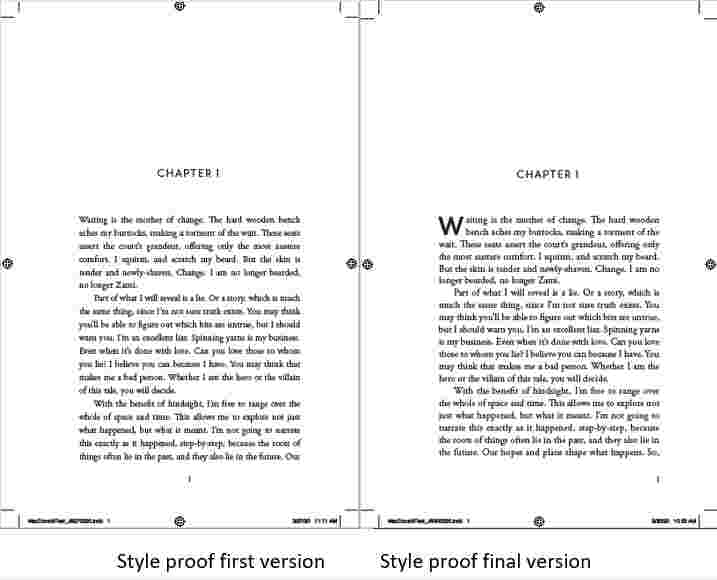
The act of writing is immensely satisfying, creating something that never existed before. For me, each story is an act of discovery, of wrestling meaning from an initial vague intuition. I accomplish tasks every day. And, with my novel The Tears of Boadbil going into production, I get to see my work taking physical shape. Last week I returned to style proofs for page layout. I asked for a change in font size, line spacing, and some other details, including drop caps at the beginning of chapters. I love drop caps. Working on my book production, publicity and marketing gives me a way to engage with a future beyond the pandemic.

Boabdil style proofs

I know, of course, that I’m immensely privileged. I can pay my bills, there are no small children to be entertained, and we have a garden to potter around in. For many others, it is much grimmer.

For writers this is a time to be producing. You’d think now is not be the time publishers will want pandemic books. But Penguin says sales of Albert Camus’ The Plague were up 150% in February compared with the previous year and at the end of March, the number two book on Amazon’s charts was The Eyes of Darkness by Dean Koonz, about the fictional epidemic virus Wuhan-400.

couple on seashore

The impact of the virus on our lives and our societies will necessarily provoke thoughts about what matters and how we should live our lives. It’s inconceivable coming out the other side of this emergency that the answers to these questions won’t be changed. And who better to reflect on them than writers?

What’s your self-isolation recipe?

129. How does a story mean?

The meaning of a story exists outside the text. I was struck recently by the way a story can be simple but its meaning can be perplexing.

sparkler

A story is a set of events linked by causality—the kingdom withered because the king died of grief. The king was sad because the queen had died.

Meaning depends on understanding how things fit together. The meaning of an event in the story (the queen died) lies in the part it plays in the whole, what it causes (the king died).

Stories tell us what goes with what, what is important and what is unimportant, who to praise and who to blame.

But the chain of meaning also extends beyond the story. To follow it, we need to know what a king is, what marriage is, what love is. This knowledge pre-exists and lies outside the tale. Meanings are social—they depend on how a particular community understands the world. These shared references and a stock of agreed narratives allow an audience to decode the story and clad it in meaning.

So, it is possible to create a story in which the chain of linked events is clear, but the meaning is opaque because it depends on assumptions that subvert social understanding of how to code events.

An example

This is what happened with a story I wrote. It imagines a world being destroyed by a race of giants. The giants are the offspring of people and angels. A man and his grandson are chased by a giant. The grandson says the angels have warned him a great flood is coming and that he should build a boat. The old man argues the important thing is not to survive the flood but to stop it by preventing the destruction of the world.  He believes the angels’ mischief is the root cause of the problem and decides the solution lies in taming the giants and putting their great strength to work in repairing the world.

giant

Simple, right?

Yet many readers were perplexed. I wondered why. One told me he didn’t understand bad angels—angels, he felt, were good. The Noah figure, with his Old Testament resonances, who wants to build the boat is young and credulous rather than old, wise, and virtuous. This too creates what psychologists call cognitive dissonance—the discomfort caused by trying to hold two contradictory beliefs.

If we lack the key to decode the story’s meaning, the story doesn’t work for us, even if all the events and the connections between them are clear. This, I believe, is what happened with my tale.

Allegory, unreliable narrators, and allusion

The allegorical implications also perplexed readers. Did the giants represent machines, they wondered? Were the angels fallen angels? In allegory, the meanings necessarily exist outside the story itself since everything in the story is doubled by a set of mappings onto another space.

But there are other circumstances than allegory where a simple story may have an opaque meaning. An obvious example is the unreliable narrator, where not only the credibility of the narrator but also of the events is brought into question. Another is stories that make extensive reference to other stories, which may not be familiar to the audience. The use of classical allusion, once readily understandable among educated people, may be an example here.

Plot, Story, and Narrative

Here’s a simple way of thinking about this.

  • Plot is the causal sequence of a tale (the WHAT of a tale).
  • Story is the way this sequence is told (the HOW of a tale),
  • Narrative is what it means (the WHY of a tale), the interpretation of events and characters within the tale.

Note that narrative can only come into existence when a work is read or heard. The writer may have intended something, but the reader may pick up quite a different interpretation. Meaning comes in existence through an interaction between the writer and from the reader, not from the text. Both writer and reader participate in the creation of meaning.  In an important sense then, meaning must always lie outside the story itself.

127. Twenty novels that shaped literature

The novel is a fairly recent invention. The history of fiction goes back much further with works such as Chaucer’s 1387 Canterbury Tales, Shishuo Xinyu’s fifth century A New Account of Tales of the World and Homer’s eighth century BCE Iliad.

Iliad

The novel, however, is a distinctly modern and European. Its earliest examples can’t be traced back further than the seventeenth century and its real flowering was in the eighteenth.

The word novel comes from the Italian “novella” meaning a story. A novel is a prose work longer than a short story in which the trials and tribulations of a central character is a major feature.

The rise of the novel reflects the growth of a middle class with the leisure to read and the money to buy books. It is no accident that many of the early novels were written in English in the United Kingdom, where the industrial revolution created such conditions.

The eighteenth century English novel was concerned with complex, middle class characters struggling with morality and circumstances. The first half of the nineteenth century was the era of romanticism, but the impact of industrialism forced a growing engagement with social reality in the Victorian era. In the twentieth century, two world wars, the struggle for the emancipation of women and the dismantling of the old European empires led to a flowering of new voices from those who had hitherto been silent and silenced in literature.

Though I can make no claim to full inclusivity or canonical justification, this is my list of the 20 most important novels that shaped the way we read and write.

  1. Don Quixote by Miguel de Cervantes’ (1605) can lay (contested) claim to being the first novel in the modern sense.
  2. Robinson Crusoe by Daniel Defoe (1719) is arguably the first modern novel in English, following over a century after Don Quixote. An adventure story, it invented many of the tropes of colonial literatureRobinson Crusoe
  3. Gulliver’s Travels by Jonathan Swift (1726) spawned the genre of social satire.
  4. Tom Jones by Henry Fielding (1749) is among the earliest coming of age stories.
  5. The Castle of Otranto by Horace Walpole (1764) is the first Gothic novel, combining magic with realistic settings.
  6. Sense and Sensibility by Jane Austen (1811) ushered in the realist novel, which dealt with everyday life
  7. Waverley by Walter Scott (1814) pioneered the first historical novel.
  8. Frankenstein by Mary Shelley (1818) though Gothic, can be seen as the first science fiction novel and also the first horror novel.
  9. The Pickwick Papers, Charles Dickens’ first novel (1836). Though less socially engaged than much of his later work, it nonetheless paints sharp portraits of English life. Like many of his novels, it was first written as a serial and thus introduces a succession of cliffhangers.
  10. Murders in the Rue Morgue by Edgar Allen Poe (1841) features the first fictional detective. He pioneered the rational analysis of truth which influenced the subsequent development of the genre.
  11. Uncle Tom’s Cabin by Harriet Beecher Stow (1852) is less significant for its literary quality than for the way it fused fiction with the abolitionist events of the day.
  12. Madame Bovary by Gustav Flaubert (1856) codified literary realism
  13. War and Peace by Leo Tolstoy (1869) broke new ground in Russian literature by abandoning narrative in favour of philosophical reflections in large parts of the book. Tolstoy did not even see it as a novel and regarded Anna Karenina (1873) as his first novel.
  14. The Sheik by Edith Maude Hull (1919) forged the tropes of the modern romance genre.
  15. Ulysses by James Joyce (1922) pioneered stream of consciousness writing
  16. The Lord of the Rings by JRR Tolkien (1936) is the first modern work of fantasy.
  17. The Catcher in the Rye by JD Salinger (1945) articulated the angst and rebellion of post-war teenagers. Though by no means the first coming of age story (among which might be included Henry Fielding’s 1749 Tom Jones, Voltaire’s 1759 Candide and Laurence Sterne’s 1759 Tristram Shandy) Salinger’s book arguably opened up the YA market.
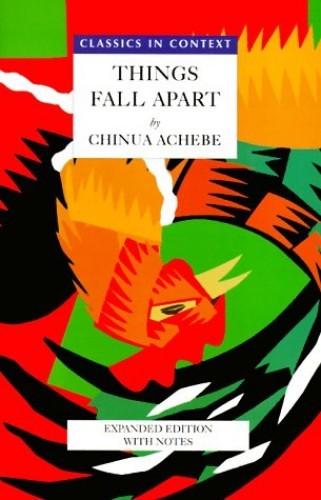
  18. Things Fall Apart by Chinua Achebe (1958) is a classic of post-colonial literature.Things Fall Apart
  19. Wide Sargasso Sea by Jean Rhys (1966) is an anti-colonial and feminist riposte to Charlotte Bronte’s Jane Eyre.
  20. One Hundred Years of Solitude by Gabriel Garcia Marquez (1967) is a seminal work of magic realism, using fantastical elements to express the absurdity of social reality.

126. The mystery rhythm of Sam was a Man

rhythm2

Mastering rhythm is important to any writing. If a sentence doesn’t sound right, something will go clunk in the reader’s head. This is why every fiction writer should read poetry. Rhythm is fundamental to poetry. Consider, for example, these line from John Masefield’s Cargoes:

Quinquireme of Nineveh from distant Ophir,

Rowing home to haven in sunny Palestine.

And

Dirty British coaster with a salt-caked smoke stack,

Butting through the Channel in the mad March days.


The first couplet has a stately rhythm, while second, full of short words and plosive consonants, is frenetic.

There is no doubt about the music of the lines, Speak the words aloud and they set the tempo.

But consider, ee cummings’ poem below. The rhythm appears staccato, broken. And yet, cummings was a master craftsman.

ee cummings

Is this simply a bad poem, or has he buried a secret in the heart of the words?

rain or hail
sam done
the best he kin
till they digged his hole

:sam was a man

stout as a bridge
rugged as a bear
slickern a weazel
how be you

(sun or snow)

gone into what
like all them kings
you read about
and on him sings

a whippoorwill;

heart was big
as the world aint square
with room for the devil
and his angels too

yes, sir

what may be better
or what may be worse
and what may be clover
clover clover

(nobody’ll know)

sam was a man
grinned his grin
done his chores
laid him down.

Sleep well

It’s a puzzle. There’s no obvious cadence when you read it aloud. Vincent Perischetti made a modernist choral arrangement of the poem

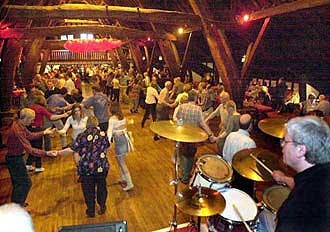
But I don’t believe cummings intended anything so cerebral. Instead, it’s a hymn to the (American) common man. Try reading the poem to the rhythm of an American barn dance caller and it suddenly makes sense.

barn dance


124. Does politics mar literature?

Let me get the answer out of the way right from the top—no, of course not. George Orwell said, “No book is genuinely free from political bias. The opinion that art should have nothing to do with politics is itself a political attitude.” Our lives are political, so what we write is also political. Even fairy tales are political. If storytelling wasn’t political, tyrants wouldn’t trouble to ban or burn books.

Alice

What does political mean?

So, next, a definition. I don’t mean political with a small “p”, party politics, though some stories may legitimately be about such partisanship. I mean political with a capital “P”—the way power is distributed and how it affects everyday life. If a character doesn’t have enough to eat and must choose between paying the rent and buying school kit, that is a political context. If a character is saved from domestic drudgery by a prince, that too is political.

Breaking writing rules

But doesn’t this cut across so many writing rules? Literature, after all, is art, not propaganda. Readers don’t want to be yelled at or told what to think.

Yes, fiction writing isn’t propaganda, or political science, or journalism. But this doesn’t mean fiction doesn’t deal with politics. It just deals differently with the subject. Fiction makes political situations personal.

Characters makes us care

Fiction is about character. Even in plot-driven stories, it’s the characters who make us care. A story in which the characters are simply vehicles for a political argument would be dull. The politics of Orwell’s 1984 isn’t particular subtle or nuanced. It’s the plight of Winston Smith that engages us. There’s nothing special about the role of politics here. This is not different than any other over-indulgence in plot or theme. If the characters spend the whole story blowing each other away or discussing particle physics, it would be equally dull.

Characters live in three circles. They have an inner life and a circle of intimates, friends and colleagues. But they also have a third circle—the social setting that defines their concerns, their view of the world, and their beliefs. Ideology is a strong determinant of the third circle.

Readers don’t like being told what to think

You get this comment a lot in discussions about political fiction.  And, when you come to consider it, this is odd. Nobody ever complains they feel manipulated when a writer equips a character with some other trait like selfishness or courage. Writers devote a lot of care to telling readers what to think.  They craft the characters to engage sympathy, structure the plot to create peaks and troughs of tension. So, maybe the principle is readers don’t like being told to think in ways that challenge their preconceptions.  But isn’t that precisely what literature is supposed to do?

“Some people will suggest that dealing with themes is ‘didactic.’  Don’t be fooled.  Those same writers will put themes in their own works, and usually they’re taking stands that oppose yours.  For example, if you argue that morality is innate and central to what a human is, they’ll argue that it’s situational and we’re all just animals.  They don’t oppose the idea of stories having themes; they may just be opposed to your views.  So make sure that your arguments are rigorous and persuasive.”

David Farland How to Win Writing Contests and Big Publishing Contracts

We tend to notice ideology and feel we’re being preached at when the text departs from our unconscious biases about the world. There is a saying that the ideology of the powerful is the belief that their view isn’t ideological, just common sense. What makes an ideology work is that it articulates a lived sense of the world. One person’s common sense is another person’s propaganda. Readers who react with fury to having an ideological viewpoint thrust on them by authors rarely respond in a similar vein to, say, thrillers or romance.  Yet both tend to have a fairly transparent ideology.

Thrillers typically pit a plucky hero against the forces of evil. Over time these forces have varied from the Nazis, the Soviet Union, Islamic fundamentalists, shadowy corporations, and elite cabals, depending on who the “enemy of the day” is. The politics goes unnoticed because it’s an assumption about the forces of good and evil shared between author and reader.

Less obviously, romance too contains an ideology about people and relationships. In the classic romance (consider Tristan and Isolde, Romeo and Juliet) love is a force that is stronger than human will, incompatible with everyday life, and its proper end is death. More contractual or rational bondings are out, as is working at a relationship.


Readers should be left to make up their own minds

This is the “writer as witness” idea and it’s really back to the “readers don’t like to be told what to think” argument. The notion is that the writer should present the facts and leave the reader to judge their meaning.  And it’s an odd view, because it applies more to journalism than to fiction. Though, it has become such a truism among fiction writers that it tends to be said without question.

In reality, most of us writers don’t operate like this. The writer surreptitiously shapes the reader’s perceptions in a thousand subtle ways. How could the reader come to their own conclusion? We select the contents, we craft the order in which they’re displayed, we polish and shape in order to create the effect we desire. Creative writing describes events in the light of the ends we ordain for them. The open-endedness is an illusion. Of course, no two readers ever render exactly the same story in their minds, I accept that. They may even disagree with our conclusions, depending on their own concerns and life experiences. Even so the writer is not only witness and advocate but also judge and jury.

Everything reflects an ideology

What could be more natural than a fictional world with protagonists and villains in which characters undergo an arc of change? This is, surely, the ABC of how to write a story. And yet this too is a product of a particular (wealthy and individualistic) social order. There are literary traditions in other cultures that use very different conventions. I argued in an earlier blogpost:

There is a view of the person and of development contained within these formulae.

  • We are individuals
  • We choose our own fate and can change

These principles of character arc seem so obvious we hardly even notice them as assumptions. But they come from a particular kind of society and, to other cultural traditions, they are far from obvious. How about these propositions:

  • People become people through other people. This is the core principle of the Ubuntu cultures of Southern Africa. In other words, humanity is a quality we owe each other. Or, in the European tradition, John Donne’s famous “no man is an island”.
  • The number of people on the planet who can choose their own fate is extremely limited. The starting conditions of wealth, gender, race, status and caste circumscribe our choices. For many people, change is unthinkable. Those who do escape their circumstances are not representative of their peers.

These differences are not only narrative, but moral. The first principles are individualistic, the second communitarian.


120. Stories that are hidden from us

A character arc is a fancy was of describing the changes a character goes through from the beginning to the end of a story. There is a hidden assumption in the idea of character arc that stops us seeing the possibility of other stories.

character arc

Consider the classic three act story. An individual is confronted by a problem (an external challenge or an internal flaw). They encounter trials and tribulations in which they are tested. They emerge better than before. Or, of course if the story is a tragedy, they succumb to the problem and emerge worse than before.

What does this remind you of? All those self-help and personal growth programmes perhaps? There is a view of the person and of development contained within these formulae.

  • We are individuals
  • We choose our own fate and can change

These principles of character arc seem so obvious we hardly even notice them as assumptions. But they come from a particular kind of society and, to other cultural traditions, they are far from obvious. How about these propositions:

  • People become people through other people. This is the core principle of the Ubuntu cultures of Southern Africa. In other words, humanity is a quality we owe each other. Or, in the European tradition, John Donne’s famous “no man is an island”.
  • The number of people on the planet who can choose their own fate is extremely limited. The starting conditions of wealth, gender, race, status and caste circumscribe our choices. For many people, change is unthinkable. Those who do escape their circumstances are not representative of their peers.

These differences are not only narrative, but moral. The first principles are individualistic, the second communitarian. What would character arcs be like if we used this second set of principles?

Let’s take an example of well-known tale. Here it is using the first formula. Follow the grid clockwise from top right to top left for the character arc.

Cinderella plot

Using the second formula, the story might look like this.

Cinderella communitarian plot

The Cinderella story has morphed into something more like The Handmaid’s Tale.

Other cultures’ story-telling traditions can be very different. While the modern Western tradition requires dualities between subject (the character who acts) and object (the world which is acted upon), protagonist and antagonist (who represent good and evil), this is not true of all cultures. Many use ambiguous Trickster figures who are neither good nor evil. The European tradition used to have Trickster figures but this has now been lost.

Similarly, some traditions don’t require the protagonist to undergo change. In some Japanese literature the character remains unchanged and the reader’s interest is maintained by growing understanding of the character. Similarly, in many Japanese stories the character’s goal is irrelevant: the plot is driven by causality.  Though Japanese literature recognises the Three Act structure, they also have a Four Act structure (introduction, development, twist, reconciliation) and Western readers may find it hard to recognise anything they consider as an ending.

Another way of representing the classic, individualistic, character arc of the Western tradition is:

  • Goal: what does the character want to achieve?
  • The Lie: misconception that prevents them reaching their true potential
  • The Truth: character rejects the lie and embraces the truth, leading to self-improvement

What if the conventional character arc is the lie? It describes a fantasy world in which most of us do not live.

In a complex modern economy, we are materially dependent on each other but socially indifferent. The goods and services on which we depend are furnished by strangers about whom we know and care nothing. This one fact contains the possibility for a huge variety of drama.

119. Brexit, uncertainty and the toast Jesus

In 2004, a woman in Florida sold for US$28,000 a grilled cheese sandwich on which she claimed to see the image of Jesus Christ. The toast Jesus phenomenon tells us something interesting about knowledge.

toast Jesus

Our brains are programmed to seek and find patterns in things. Not all the patterns we see are real. Random events can create an illusion of structure where none really exists. We think we’ve seen a signal in the noise but all we’ve seen is random noise.

Michael Blastland delivered a lecture at the Royal Society of Arts on this theme. One of his examples comes from the announcement in January 2018 by the Office for National Statistics that unemployment in the UK had fallen by 3,000 people to 1.44 million.  So far so certain. But in the methodology section of the report they acknowledge that statistically this figure has a 95% chance of being true, plus or minus 77,000. In other words, unemployment might have fallen by as much as 80,000, but it might just as easily have risen by 74,000.

Blastland argues that the great threat to progress is not ignorance, it’s the illusion of knowledge.

So how do we get from the toast Jesus problem to Brexit? Andrew Neil on 12 July 2019 interviewed the two candidates for leadership of the UK Conservative Party and hence for the Prime Ministership of the country. He took Jeremy Hunt to task for not being willing to promise that the UK would have left the European Union by the 31 October deadline.

Andrew Neil Jeremy Hunt

Hunt explained, not unreasonably, that nobody could know what would happen if no deal was agreed with the EU. He noted that Parliament might block a no-deal exit and that this might lead to an election. Hunt said he was simply being honest, but Neil accused him of being slippery and untrustworthy.

We human beings prefer certainty to uncertainty. At least for some things. It’s true that we prefer not to be told how a novel turns out before we read it. And we can cope with uncertainty in weather reports. But we don’t care for it much in our politicians. Perhaps we’ll only get the politicians we really deserve when we’re less insistent on easy certainty.